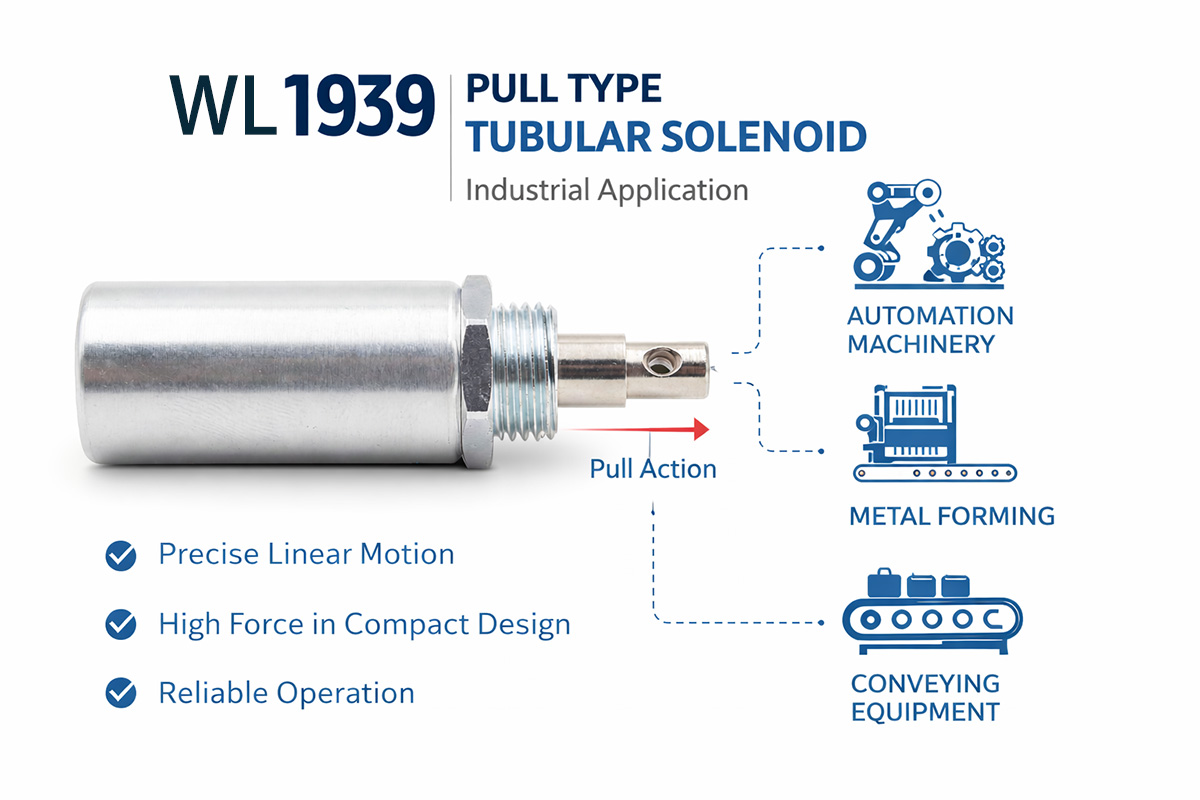
Pull Type Tubular Solenoid Advantages:
The main benefits provided by these solenoids are their small dimensions, excellent efficiency, and high pulling force. Moreover, the sealed metal cylinder housing of the electromechanical products increases their resistance to dust and foreign objects, contributing to an extended service life. They demonstrate rapid responses to changes in input voltage, making it possible to apply them to high-speed processes.
Furthermore, pull type tubular solenoids are energy-efficient and easy to integrate into complex systems. Simple design guarantees less necessity for maintenance and consistency when operating over multiple cycles. These solenoids can be customized to suit individual applications.
Pull Type Tubular Solenoid Disadvantages:
Unfortunately, pull type tubular solenoids also have certain disadvantages. First of all, the force of their action depends on direction; hence, return springs are usually needed. Besides, constant work results in significant heating that negatively impacts performance if not properly handled.
The stroke of these products is rather short, so they are unsuitable for systems that require long distances to cover. Force output reduces with the increasing stroke. Finally, correct power supply and effective control of duty cycle are critical factors determining longevity
Troubleshooting of Pull-Type Tubular Solenoid
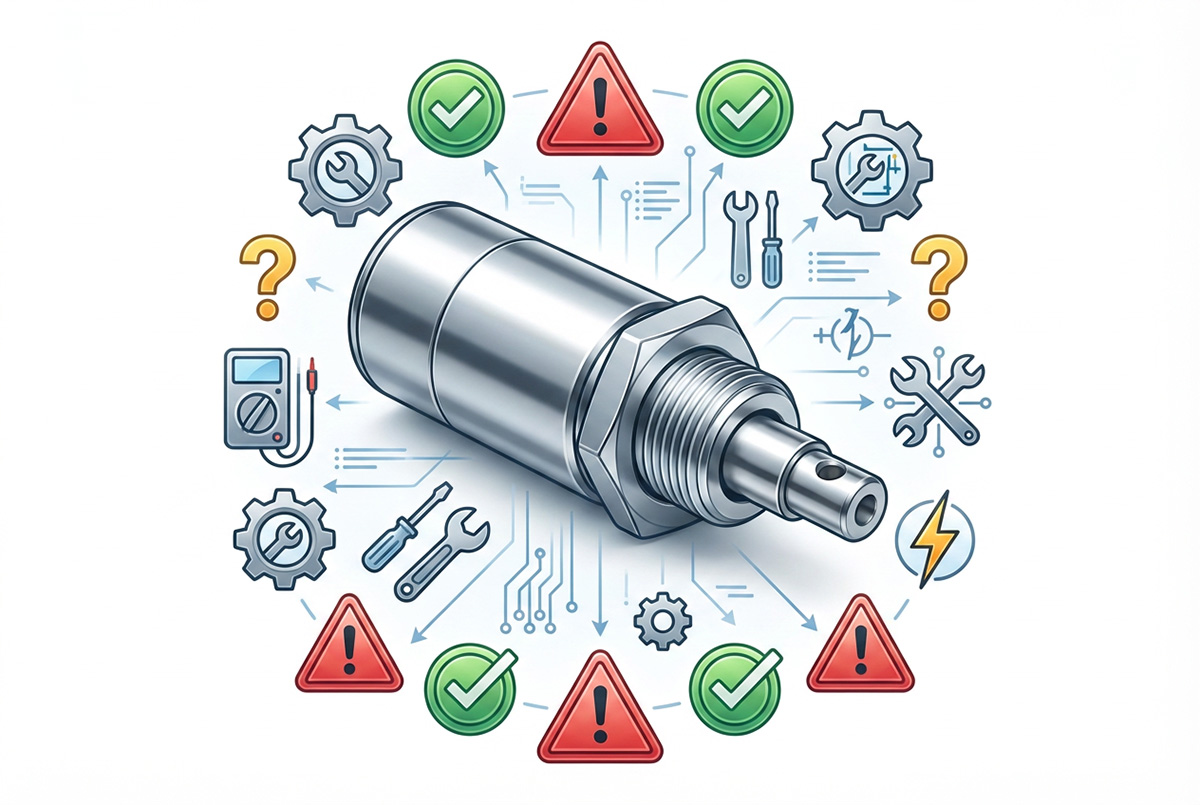
Pull type tubular solenoids are very dependable units. However, electrical issues, mechanical failures, or other factors may still cause various malfunctions. See below for an effective troubleshooting guide.
🔹 1. Solenoid Not Working
Potential causes:
– Lack of voltage supply
– Incorrect voltage
– Damaged wiring
– Burnout of the coil (open circuit)
– Faulty control signal
Potential solutions:
– Verify voltage supply with a multimeter
– Inspect wiring connections
– Measure coil resistance (infinite value means the coil is burned)
– Check if control signal is properly outputted
🔹 2. Solenoid Producing Low Pulling Force
Potential causes:
– Inadequate voltage/circuit
– Excessive stroke length
– Magnetic interference/air gap
– Damaged plunger
Potential solutions:
– Make sure rated voltage is supplied
– Reduce stroke length of select more powerful solenoid
– Ensure proper plunger alignment
– Replace worn-out or damaged internal components
🔹 3. Problem with Overheating
Potential causes:
– Excessively continuous use without proper rating
– Overvoltage
– Poor heat dissipation
– High ambient temperature
Potential solutions:
– Apply correct duty cycle (intermittent vs continuous)
– Ensure rated voltage is supplied
– Improve ventilation and/or cooling
– Choose a high-temperature solenoid
🔹 4. Delays in Actuating
Potential causes:
– Insufficient voltage supply
– Internal friction and/or contamination
– Insufficient return spring
– Residual magnetism
Potential solutions:
– Stabilize voltage supply
– Clean internal components
– Replace/reposition return spring
– Use non-magnetism design if needed
🔹 5. Problem with Noise/Vibration
Potential causes:
– Loose installation
– AC power supply causing vibration
– Misaligned plunger
– Mechanical wear
Potential solutions:
– Tighten installation
– Apply DC solenoid or rectifier
– Realign internal components
– Replace worn-out parts
🔹 6. Pull Type Solenoid Stuck Not Returning
Potential causes:
– Dust, debris, or other foreign particles inside
– Damaged, broken return spring
– Corrosion/rust
– Excessive side load on the plunger
Potential solutions:
– Clean the interior and apply grease
– Replace return spring
– Use corrosion-resistant materials
– Ensure proper alignment of plunger
🔹 7. Pull Type Solenoid Coil Burnout
Potential causes:
– Overvoltage/current overload
– Continuously energized beyond ratings
– Poor insulation/short circuit
– Ambient temperature being too high
Potential solutions:
– Use proper voltage/current protection measures
– Choose correct duty cycle solenoid
– Check insulation resistance
– Use thermal protection if required
🔹 8. Pull Type Solenoid Intermittent Operation
Potential causes:
– Loose wiring connections
– Unstable power supply
– Faulty control relay/switch
– Damage to internal coil
Potential solutions:
– Secure electrical wiring
– Stabilize power supply
– Replace faulty control components
– Check/replace solenoid
🔹 9 Pull Type Tubular Solenoid Precautions
Regular inspection of wiring/connectors
Keep solenoid interior free from dust
Avoid operation above rated voltage/duty cycle
Periodically check coil resistance
Ensure proper ventilation and cooling
🔹 10 Pull Type Tubular Solenoid Quick Check ✅
✅ Is proper voltage applied?
✅ Are all connections tight?
✅ Is the plunger moving freely?
✅ Is the duty cycle within limits?
✅ No visible signs of overheating?