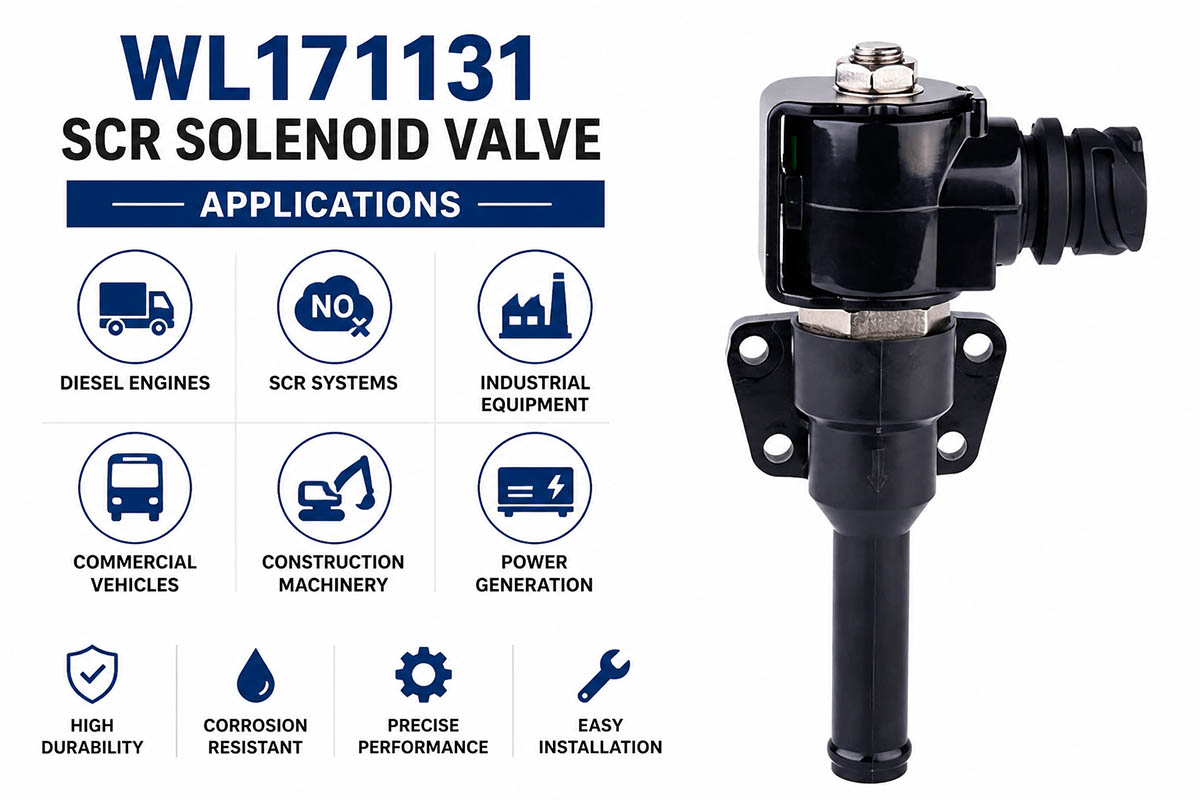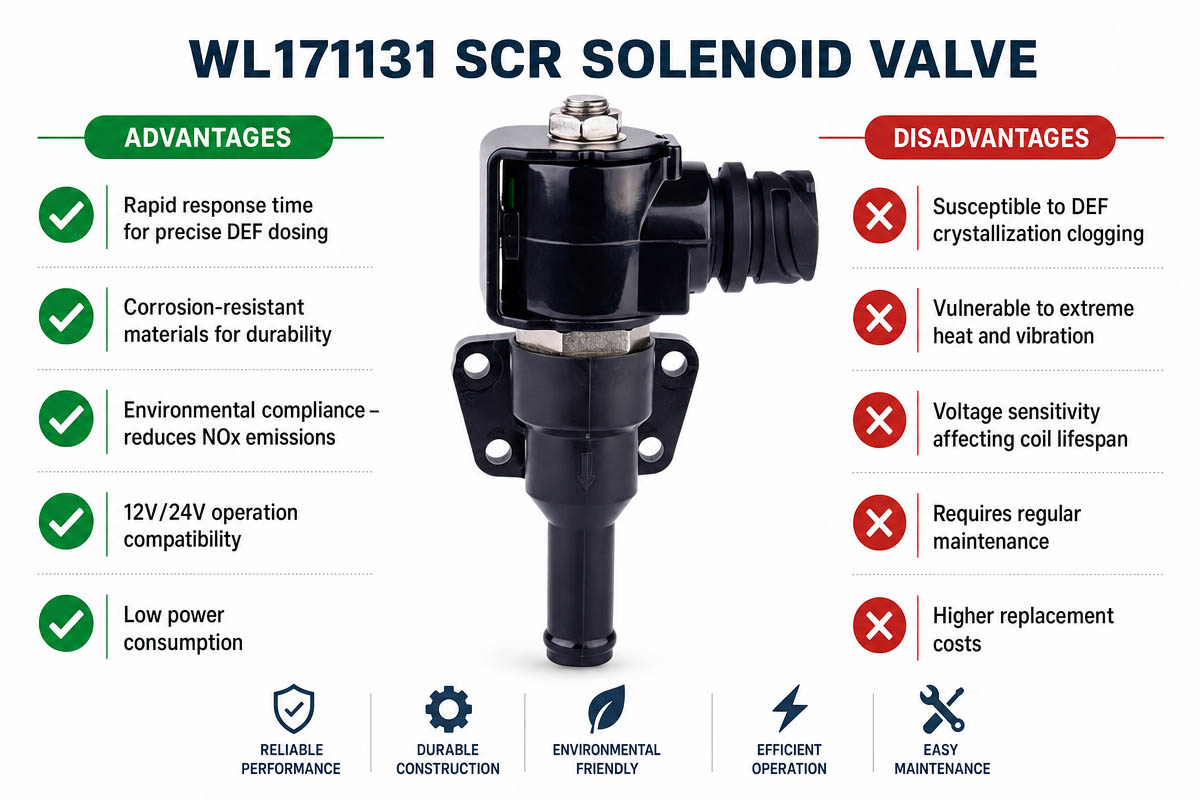
Advantages of SCR Solenoid Valve
- Fix DEF Injection Control
The SCR solenoid valve ensures accurate and fast control of diesel exhaust fluid (DEF) injection to achieve optimal NOx reduction.
- Substantial Emission Cuts
It is crucial for the reduction of NOx emissions to meet strict standards such as Euro VI and EPA regulations for diesel engines.
- Fast Reaction Time
The electromagnetic actuation opens and closes the valves rapidly and adjusts depending on the load, temperature, and exhaust parameters.
- Extreme Durability in Harsh Environments
These valves are durable and can withstand automotive and industrial applications exposed to high temperatures, vibrations, and DEF fluids.
- Improved Fuel Economy
SCR systems with solenoid valves optimize combustion and emission processes to enhance engine efficiency compared to other emission control systems.
- Compact and Easy to Integrate.
The SCR solenoid valves are compact and lightweight and thus easy to install in modern engine and exhaust systems.
- Low Power Usage
They require low amounts of electrical power and are suitable for energy-efficient vehicle systems.
________________________________________
❌ Solenoid Valve SCR Disadvantage
- Sensitive to DEF Quality
Contaminated or poor DEF quality affects its performance and causes valve clogging or malfunction.
- Maintenance Requirements
Regular inspection and cleaning are necessary to avoid deposits affecting valve operation in harsh conditions.
- Complex System
The SCR systems that incorporate solenoid valves involve a complex design with integrated sensors, an ECU, and catalysts.
- Higher Initial Cost
The initial capital invested in the SCR system, including the solenoid valves, is higher than basic emission control systems.
- Crystallization Risk
DEF tends to crystallize during bad shutdowns or low temperatures, causing valve blockages.
- Dependence on Electrical Control
The valve relies heavily on ECU signals and is thus prone to errors during electronic malfunctions.
- Poor Performance in Extreme Conditions
Extreme heat or cold impacts DEF properties and valve responses if the design is inadequate.
Guide to Troubleshooting SCR Solenoid Valve
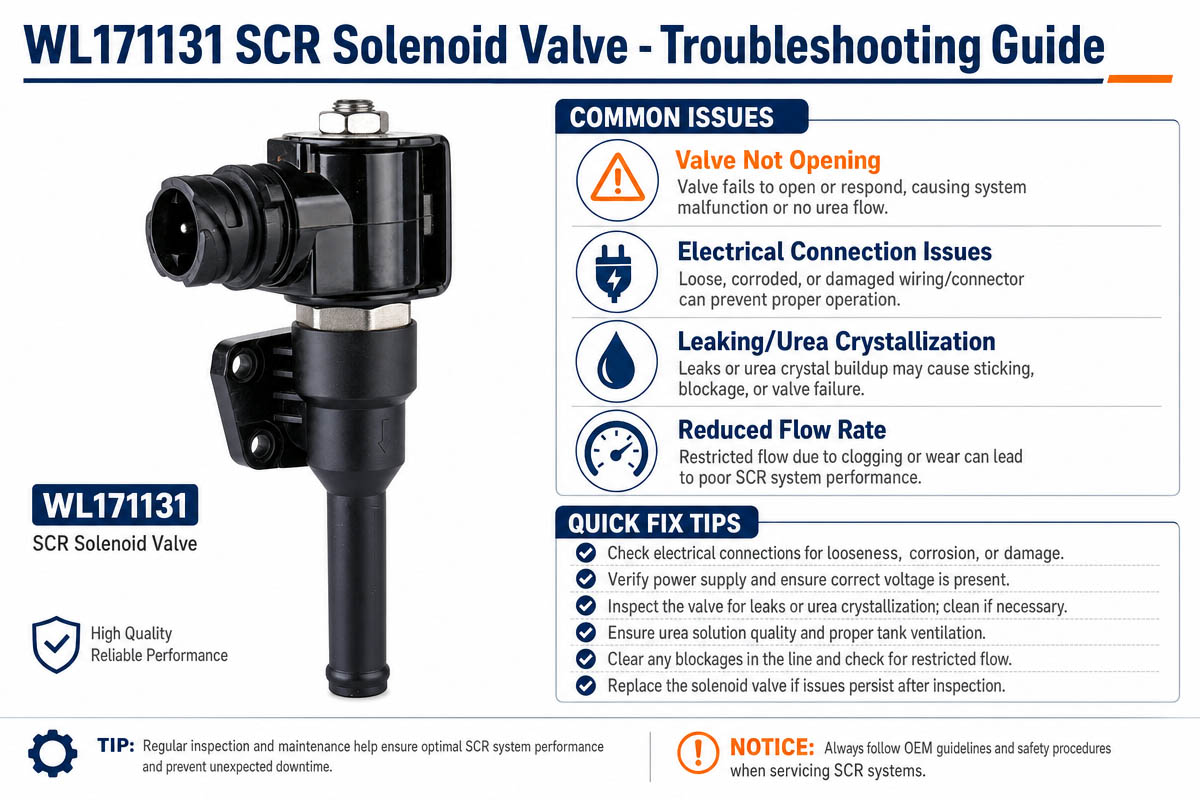
🔹 1. Possible Faults and Causes
❌Valve Won’t Activate
Reasons:
Problem with the power or wiring
Burnt-out coil
Not receiving the signal from the ECU
Plunger blockage due to deposits or crystallization
Solutions
Testing of wiring continuity and voltage supply
Measuring the resistance of the coil
Checking the out signal of the ECU
Replacing the valve if stuck
________________________________________
❌ Improper DEF Dosing
Reasons:
Crystal buildup
Polluted or low-quality DEF fluid
Improper command signals
Worn out valve components
Solutions
Clean or flush the valve.
Replenish with new, high-quality DEF
Calibrating or checking ECU settings.
Replacing worn parts.
________________________________________
❌ Def Leaks
Causes:
O-ring or seal degradation
Cracked valve housing
Fasteners not tightly fitting.
Solutions:
Replacing gaskets or seals
Tightening all connections.
Replacing valve body
________________________________________
❌ Slow Response Time
Probable Causes:
Weak electromagnetic coil
Drop in voltage
Internal contamination
Solutions:
Ensure stable voltage supply
Cleaning up internal elements
Replacing an old or weak coil.
________________________________________
❌ Buzzing or clicking sounds
Possible Causes:
Unstable power supply
Vibration or wear
Loose connection
Solutions:
Stabilizing the voltage
Safe mounting
Replating old parts.
________________________________________
🔹 2. Diagnostics – Step-by-step Procedure
Step 1: Inspecting the unit
Checking for leaks, corrosion or other damages
Verifying wiring harnesses and connector integrity
Step 2: Testing the electrical elements
Resistor check on coil (comparing results with specification)
Testing the voltage supply and ECU signal
Step 3: Function testing
Opening valve and verifying its work
Listening for clicking noise (indicates motion)
Step 4: Checking the flow
Measuring the flow rate
Looking for obstructions
Step 5: System diagnostics using tools
Using diagnostic tools to detect error codes
Monitoring NOx sensor and DEF dosing rates
________________________________________
🔹 3. Preventive Maintenance Tips
✅ Using high-quality ISO-certified DEF
✅ No DEF accumulation in the system for long periods of time
✅ Periodic flushing of the system
✅ Protecting from overheating and cold exposure
✅ Regular inspections and cleaning
4. Quick Troubleshooting Table
| Problem |
Likely Cause |
Recommended Action |
| No valve movement |
Power or coil failure |
Check wiring and replace |
| Poor DEF dosing |
Clogging or ECU issue |
Clean / recalibrate |
| Leakage |
Seal damage |
Replace seals |
| Slow response |
Low voltage / deposits |
Clean / stabilize power |
| Noise |
Loose or worn parts |
Tighten / replace |
🔹 5. Pro Tips (Experience in Field)
DEF crystallization accounts for 95% of cases; make sure to check for it first.
Connector damage by corrosion often causes electrical failure in harsh conditions.
Many “valve failures” aren’t valve problems but sensor or ECU calibration issues.
________________________________________
🔹 Resume
Most likely sources of failure are electrical faults and DEF contamination or crystallization. Proper diagnostics and maintenance routines will quickly detect and solve any problem. Inspection, electrical, and flow tests.
Longevity and reliable emission performance require preventive maintenance.