


How to Choose the Right Push-Pull Latching Solenoid
-
Determine your needs.
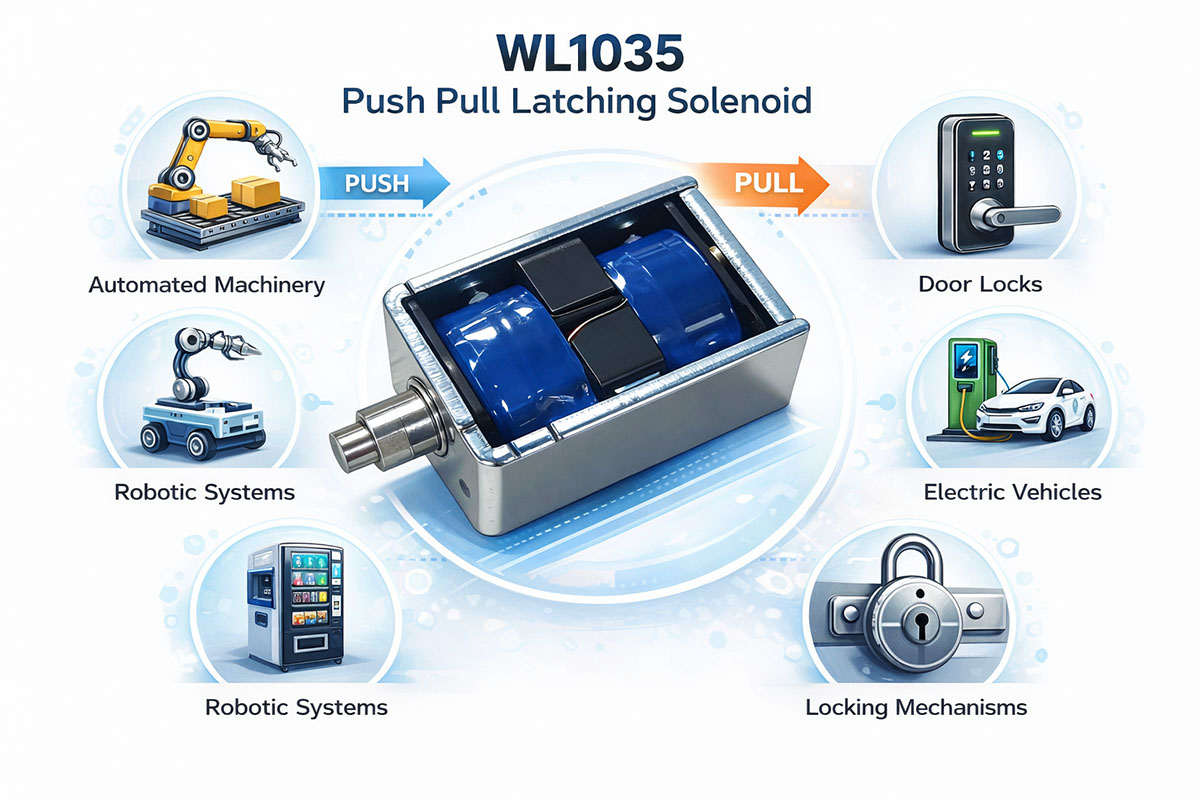
What type of action is required? Is it a “push” action, a “pull” action, or both? Push-pull latching solenoids will perform both functions, but one or the other might be more critical for your specific application.
What is the stroke length? Determine how far the armature or plunger must travel to function properly.
What is the operating cycle? Determine how often the solenoid will be required to operate. Solenoids that will cycle many times are required for high-frequency operation.
-
Review the electrical specifications.
Determine if the solenoid will operate with your system voltage (e.g., 12VDC, 24VDC, 48VDC).
Determine if the current and power requirements are acceptable for your system.
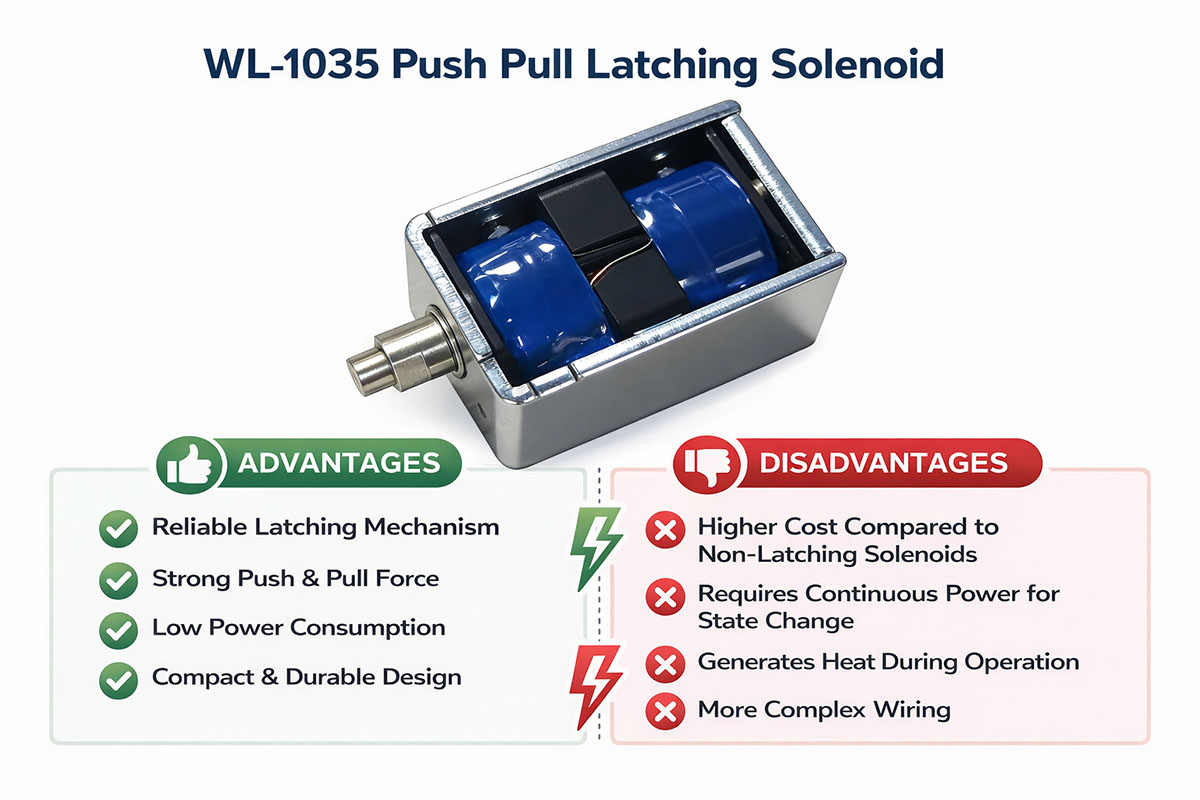
Push-pull latching solenoids use a magnetic latch to hold their position without continuous power. This is more energy-efficient. Make certain your control system is able to supply the correct pulse for latching or unlatching.
-
Consider the mechanical aspects.
Force output: Make certain that your solenoid is able to push or pull enough for your specific requirements. Manufacturer’s graphs show force required for each stroke.
Options for Installation: Consider the type of mounting that will work best for your assembly. Consider whether you need a rod-style, hollow, or custom-shaped plunger.
-
Thinking About the Environment
Temperature: Consider whether the solenoid will work well in the environment in which you live. Extreme heat can damage the insulation of the coil.
Protection Rating: Consider solenoids with enclosures that have IP ratings for use in wet, dusty, or corrosive environments.
Vibration and Shock Resistance: Consider solenoids that can withstand vibrations, especially in applications that are mobile or used in industrial settings.
-
Thinking About Durability and Maintenance
Duty Cycle: Consider whether continuous or intermittent operation is required. Latching solenoids are more efficient in applications that do not require constant operation.
Selecting the Right Materials: Consider stainless steel plungers, robust coil construction, or strong housing materials to prolong life expectancy.
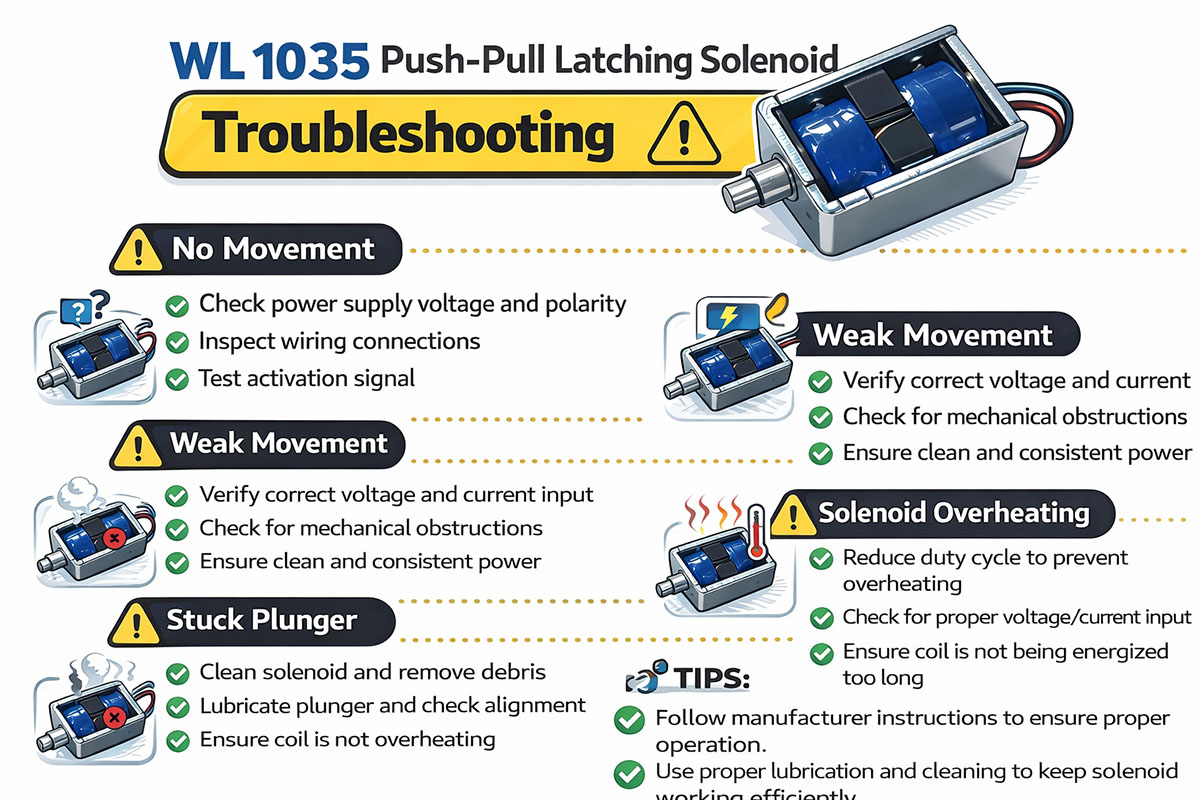
Push-Pull Solenoids require little maintenance, but it is necessary to think about the moving parts.
-
Thinking About Control and Integration
Driver Circuit Compatibility: Consider whether the control circuit can handle the pulse that will lock and unlock the door.
Feedback: Some solenoids come with switches that can be used to connect to other systems.
Physical Space: Consider whether the solenoid will fit into the assembly without interfering with other components.
| Factor | Consideration |
| Stroke | Required travel distance |
| Force | Push/pull load requirements |
| Voltage & Current | Match system supply & driver |
| Duty cycle | Intermittent or frequent actuation |
| Environment | Temp, moisture, vibration |
| Mounting | Compatibility with assembly |
| Latching type | Bistable or reversible polarity |


