


How to Choose a DC Push Pull Solenoid?
Choosing a mini push-pull solenoid properly is critical since it can affect its operating life, efficiency, and reliability.
1. DC Voltage Input
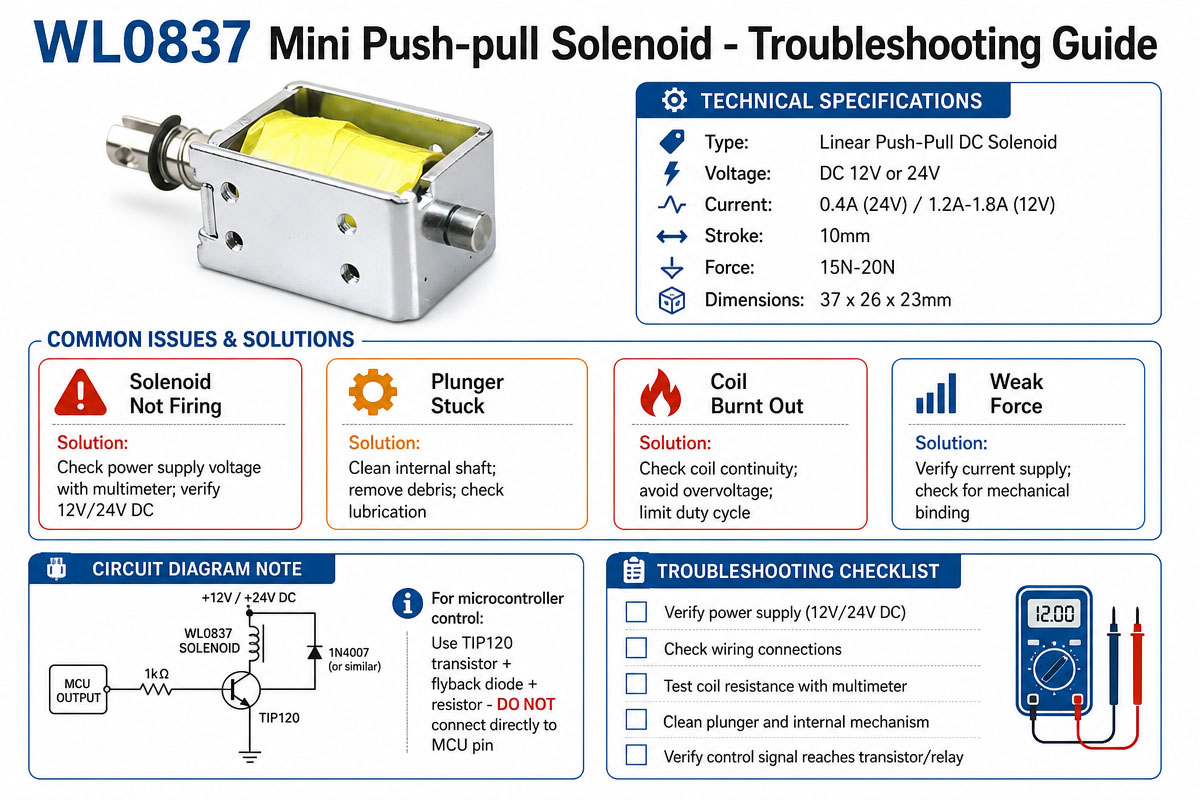
Select the appropriate type of DC voltage, which is 3V, 6V, 12V, or 24V, depending on your application. Using the wrong DC voltage can result in a lack of power or overheating of the solenoid.
2. Required Force to Push or Pull
Define the needed output force of the mini push-pull solenoid according to the requirements of load force, friction, and safety margins.
3. Verify Stroke Length
The stroke length is the travel of the plunger inside the solenoid housing. Mini push-pull solenoids provide stronger force when the stroke is short and vice versa.
4. Duty Cycle
The solenoids can be operated periodically or continuously depending on the duty cycle. A continuous solenoid needs enhanced thermal design.
5. Installation Space
Since the mini push-pull solenoid is a relatively small device, you must define the installation space.
6. Environmental Condition
To ensure that the device operates normally in particular environmental conditions, pay attention to the protective coatings and waterproof designs. Furthermore, pay attention to the temperature of the environment.
7. Response Time
Fast-response models that feature optimized electromagnetic structures should be considered for fast-acting applications.
8. OEM Customization
Some industrial applications require custom-made mini push-pull solenoids that fit particular characteristics. The customization includes specific voltage and force ratings, special mounting brackets, custom plungers, and special connectors.
Why are the DC push pull solenoids getting so popular?
The increased demand for DC push-pull solenoids is facilitated by several factors, including technological trends as well as inherent advantages that make them a good choice in many applications. With the trend towards automated processes and precision actuation, DC push-pull solenoids play an important role in many applications.
The key reasons that make them popular include:
1. 🎯 Key Factors for Their Popularity
The drive for automation: The most important factor driving their popularity is the trend towards automation of processes in many industries. DC push-pull solenoids are the core element of automated manufacturing systems, automotive production lines, and packaging machines. They allow reliable actuation of processes involved in clamping, sorting, and rejecting functions.
2. Improved Performance:
DC push-pull solenoids offer many advantages compared to traditional methods of actuation:
3. Speed and Precision:
They feature a swift switching rate for rapid on-off actuation. Furthermore, they offer precise actuation with very high repeatability.
4. Excellent Reliability:
Built to last, these actuators can run reliably for up to 25 millioncycles. They need no maintenance or lubrication, which makes them virtually maintenance-free.
5. High Force in Compact Size:
They offer powerful push-pull force (some can generate up to 1,600 N) in a compact size. This is very useful for applications where space constraints are important.
6. High Degree of Customization:
Solenoids are very versatile. There are models with custom stroke lengths (up to 50 mm), output force, and operating voltages (such as 12 V and 24 V). Furthermore, different types are available, including latching solenoids.
7. Cost-Effective:
Solenoids are a relatively inexpensive and easy way to accomplish many on-off tasks compared to more complicated systems, such as pneumatic systems.
8. ⚙️ Where to Find Them
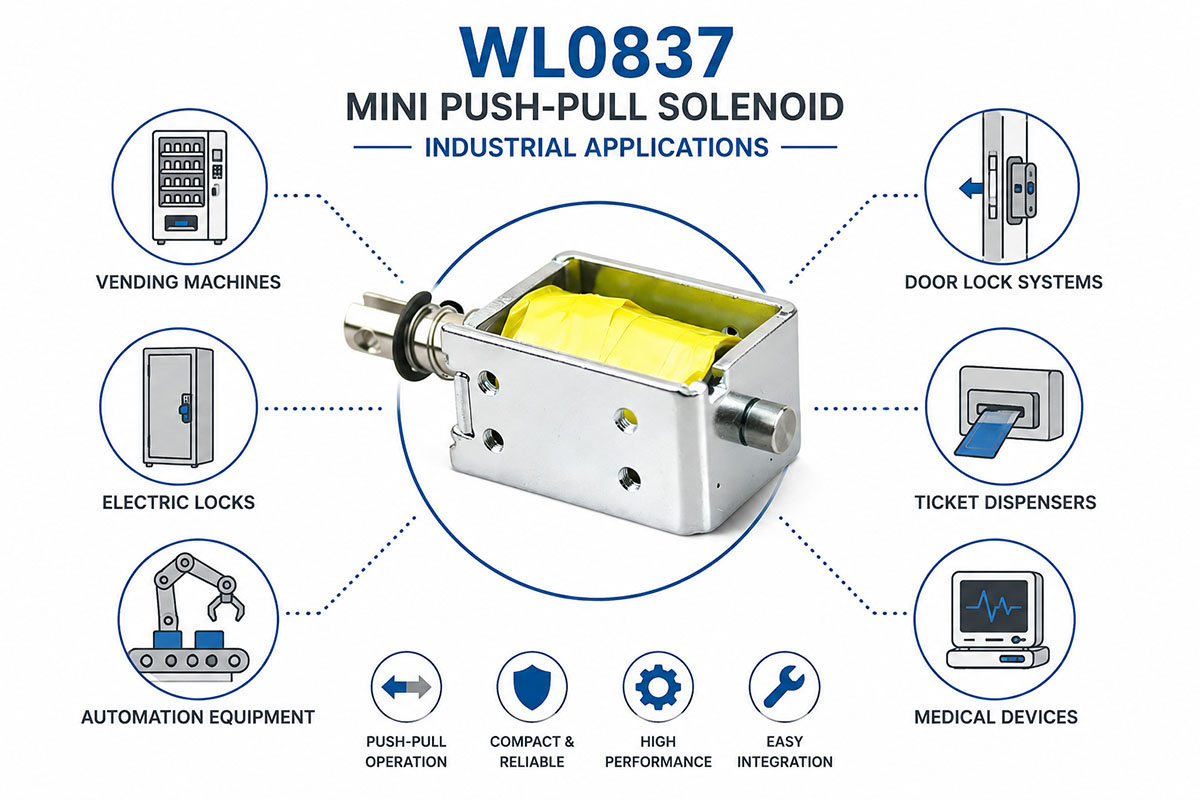
These devices are widely used in many industries because of their unique properties of low cost, high reliability, and precise actuation. Some examples of places you may see them include:
🏭 Factories & Manufacturing Facilities: Actuated by DC push-pull solenoids, many processes happen in factories, including conveying, sorting, and packaging operations.
🚗 Automotive Industry: Very important in today’s cars, especially in electric vehicles, their main applications include door locks, EV charger latches, and other functions.
🏥 Medical Equipment: Used in various diagnostic equipment, dental machines, and other applications in the healthcare industry because of reliability and precision.
🔐 Security & Access Control: The key component in any lock, including hotel room door locks, ATMs, and electronic door interlocks, these DC actuators make your everyday life possible.
🏠 Consumer & Office Equipment: Ranging from smart home lock systems to office supplies and commercial vending machine actuators, these components perform many functions silently.
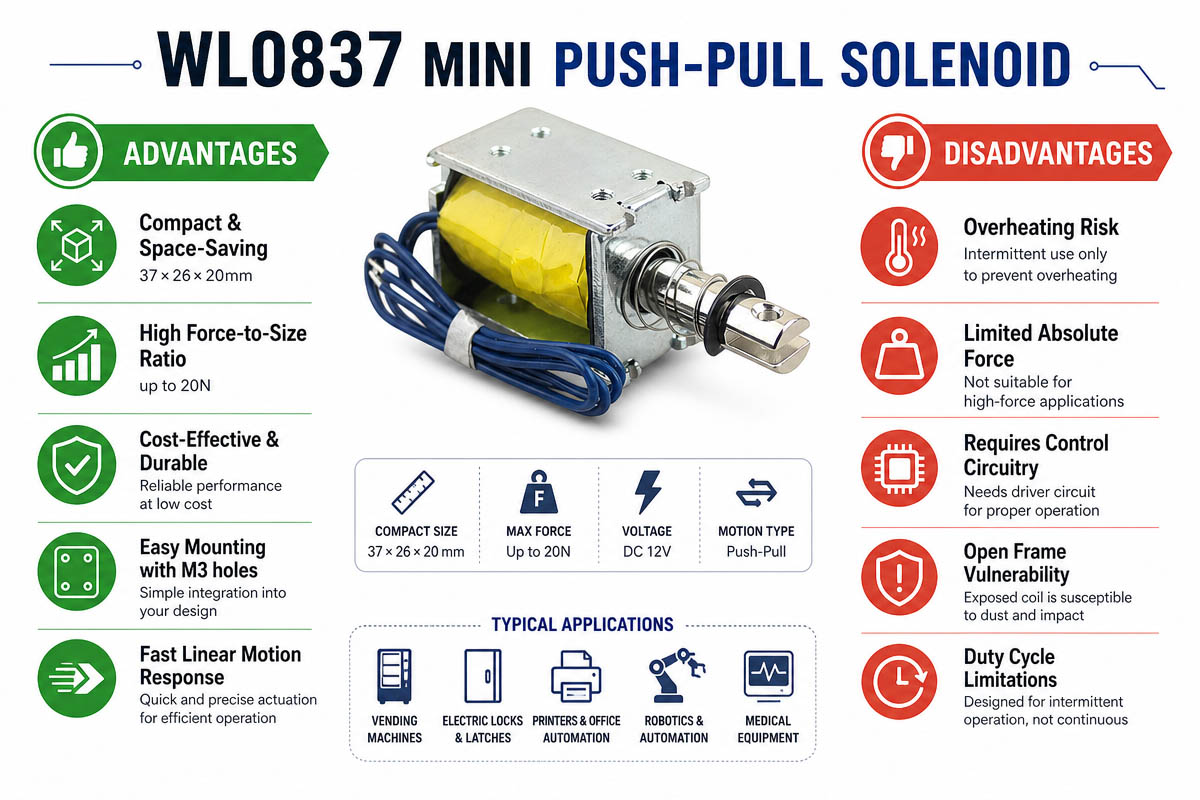
9. ⚠️ Possible Drawbacks
Very useful, but there are two drawbacks that need attention during the design process.
Heat Generation: When used continuously or extensively, these devices will become heated. Selecting the correct duty cycle for your application is crucial since overheating can negatively impact their performance.
DC Power Needed: Contrary to AC solenoids that plug into electrical outlets, DC solenoids need an appropriate power supply. Adding a new power line can be a little troublesome.
Voltage Sensitivity: The force applied by the device is dependent on the voltage supplied. For proper operation, the power supply should be steady, since power fluctuations will negatively affect performance.
10.💡 Conclusions
So, DC solenoids are really not some random phenomenon of today’s industry, but rather an essential part of our lives. They are inexpensive, reliable, efficient, and easily customizable electromechanical actuators that help automate processes in many areas.
Do you consider using DC push-pull solenoids for some applications?


