

Automotive Headlamp Solenoid for Vehicle Lighting Systems
Automotive Headlamp Solenoid for Reliable Beam Control
Automotive Headlamp Solenoid for Modern Car Lighting
Automotive Headlamp Solenoid for Beam Switching Systems
Automotive Headlamp Solenoid for High Low Beam Control
Automotive Headlamp Solenoid for Automotive OEM Projects
Automotive Headlamp Solenoid for Vehicle Lighting Systems
Automotive Headlamp Solenoid for Reliable Beam Control
Automotive Headlamp Solenoid for Modern Car Lighting
Automotive Headlamp Solenoid for Beam Switching Systems
Automotive Headlamp Solenoid for High Low Beam Control
Automotive Headlamp Solenoid for Automotive OEM Projects

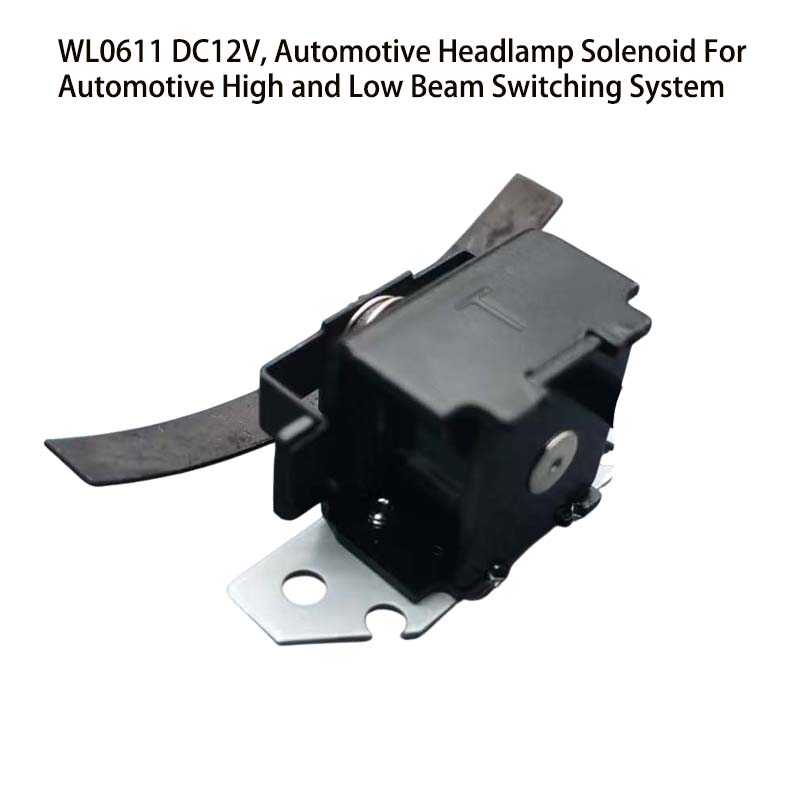
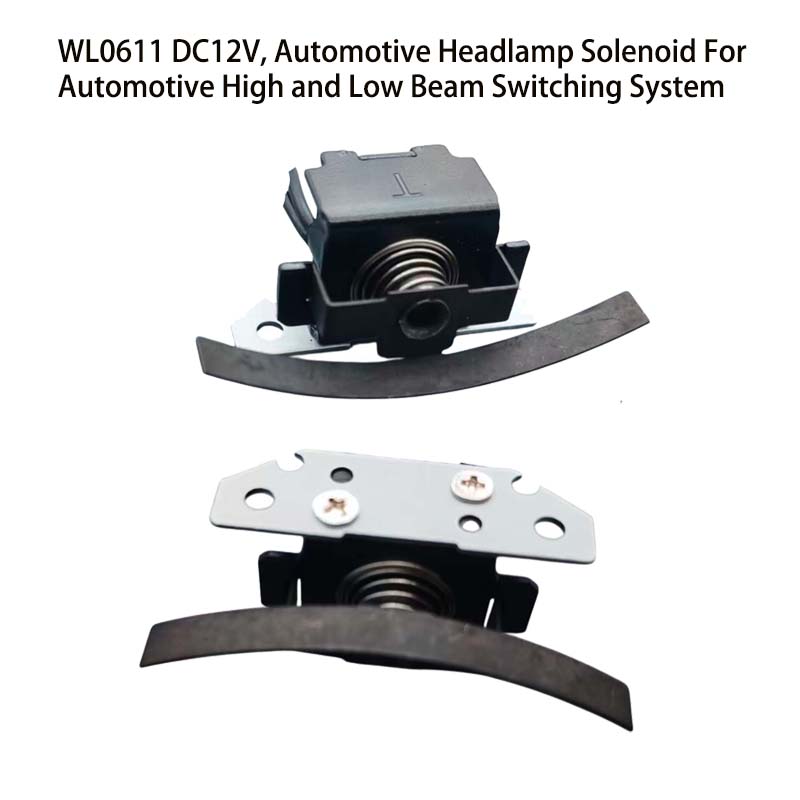
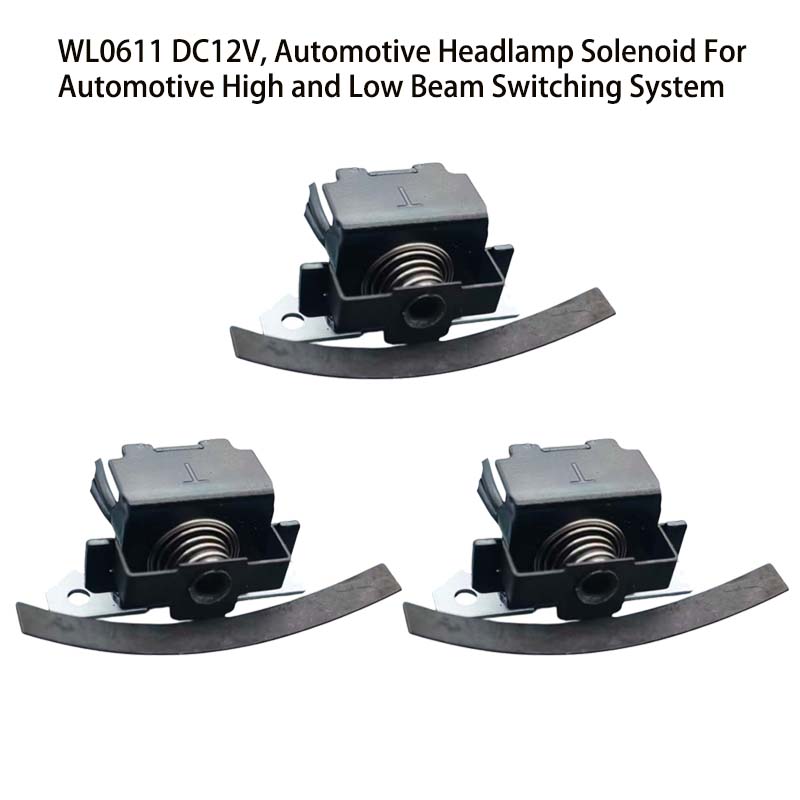
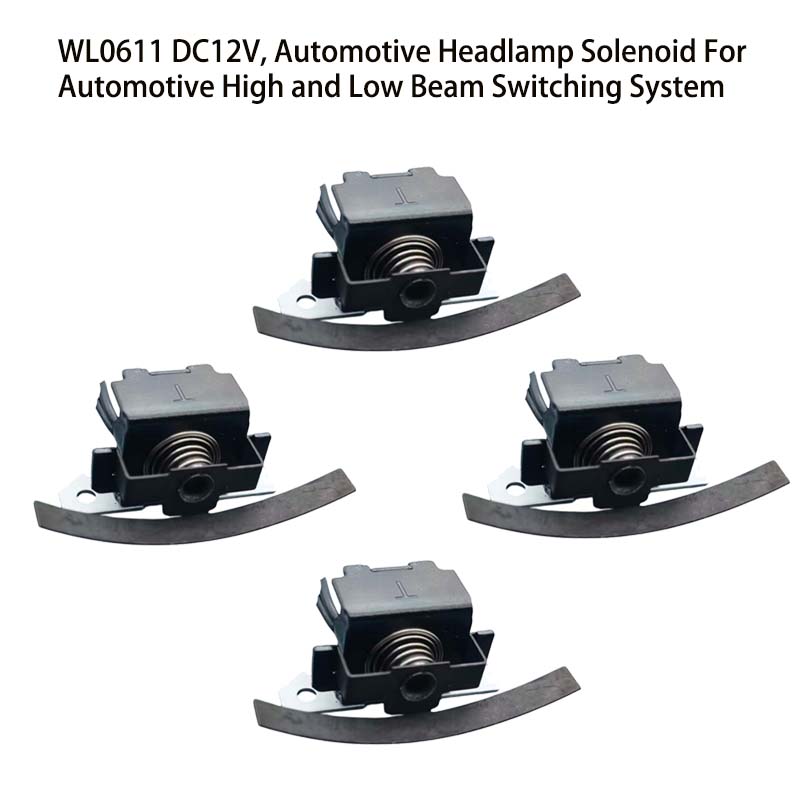
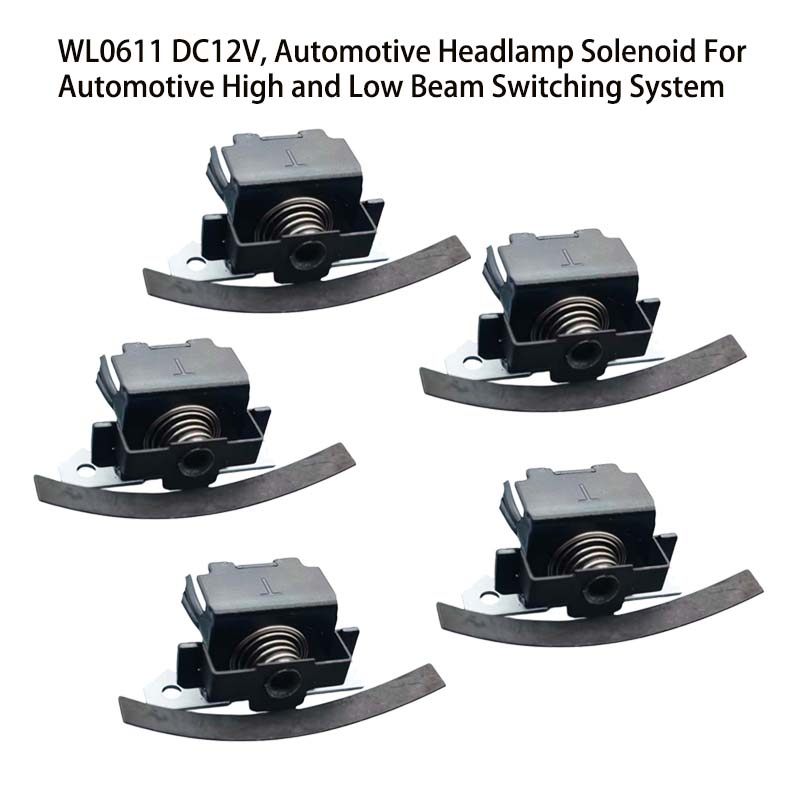
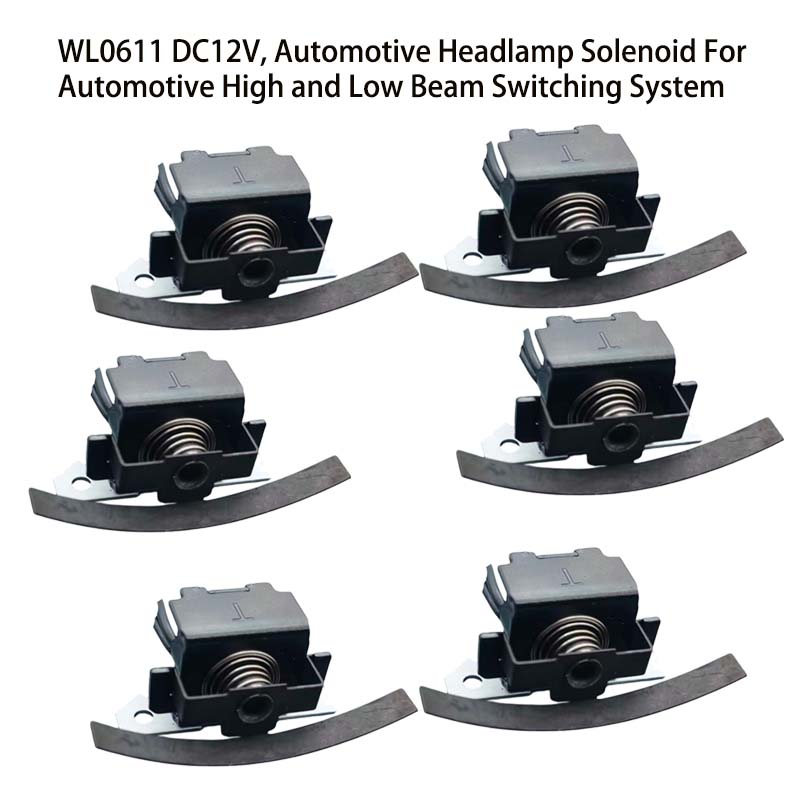
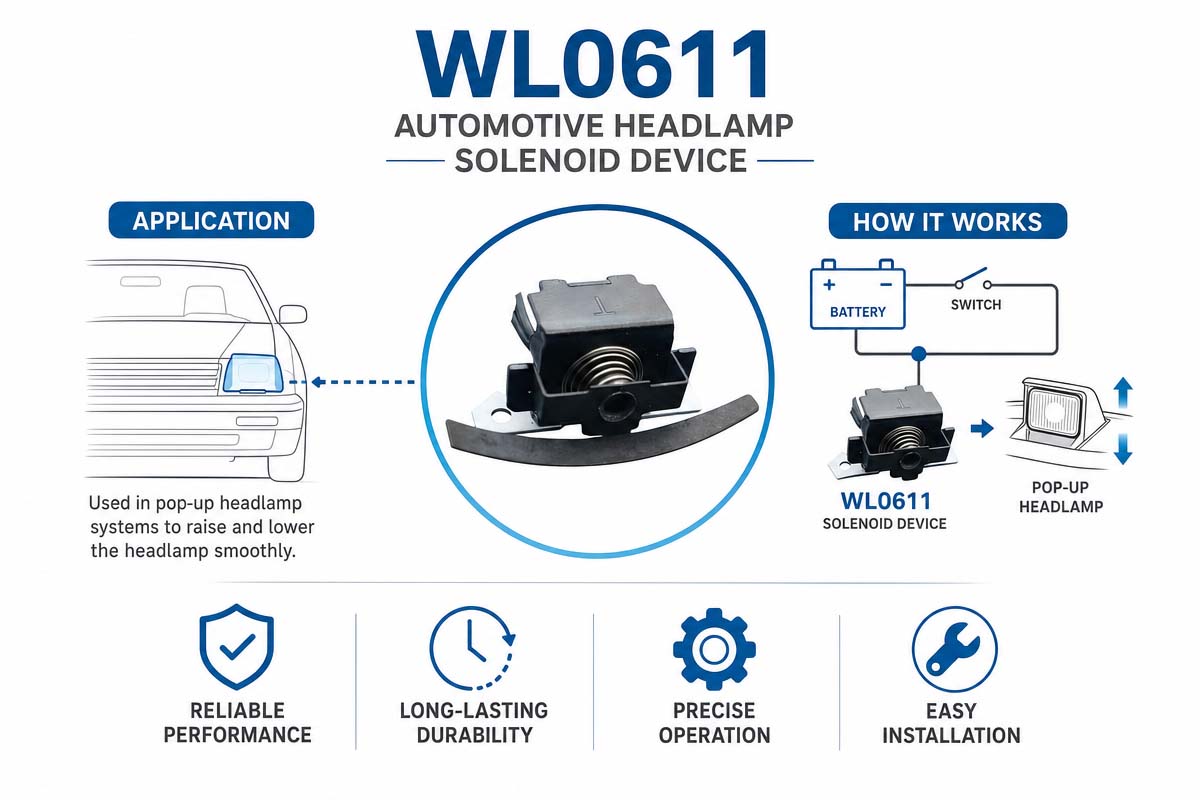
WL0611 Automotive Headlamp Solenoid for headlight Beam solutions

The automotive headlamp solenoid is a small-size electro-mechanical device to actuate mechanical motion in automotive lighting systems. The automotive headlamp solenoid acts as an actuator, converting electrical energy to linear motion via magnetic fields. The automotive headlamp solenoid can drive shutters, beam control units, reflectors, and other headlight elements.

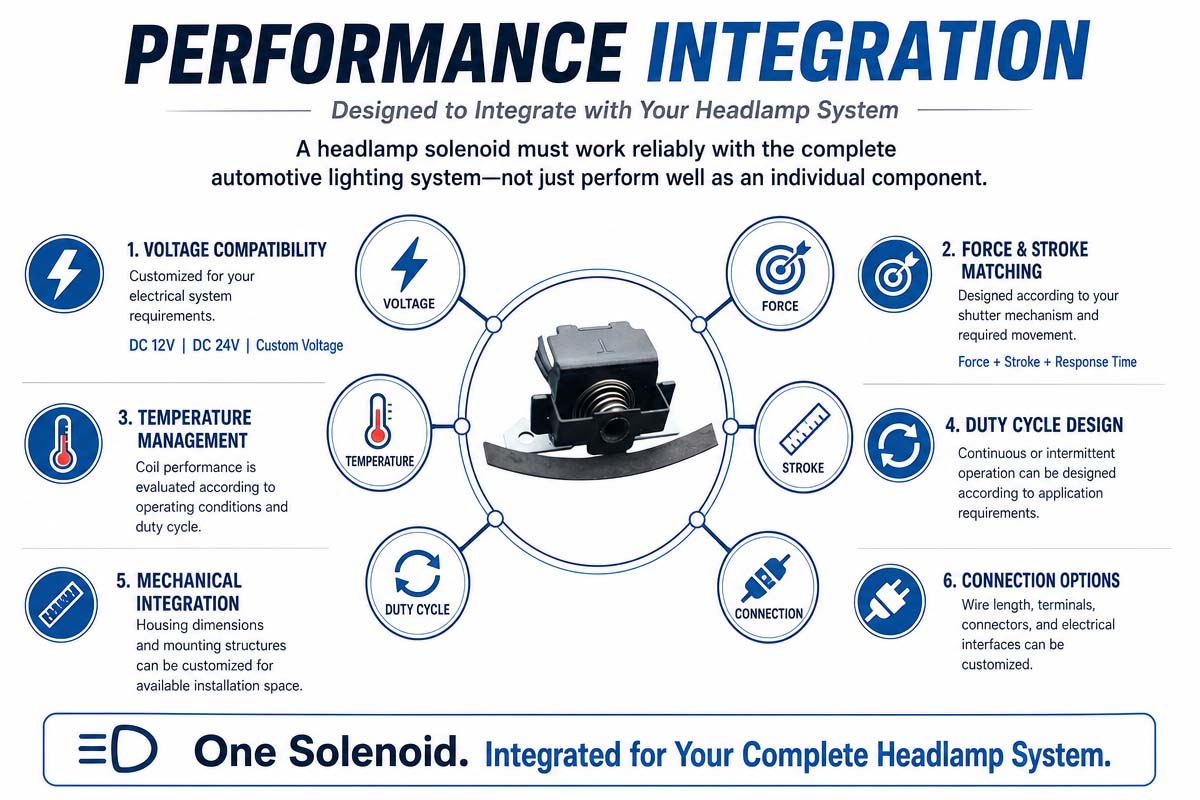
Modern automotive lighting systems require a compact solenoid with rapid response, good stability, and long service life. Automotive headlamp solenoids can be designed for different DC voltages such as 12V and 24V, depending on the application. Special design features include stroke, force, mounting, connectors, and duty cycle.

The right design of the headlight solenoid increases the accuracy of the beam switching and reliability of the lighting system. It is used in projector headlights, bi-function lighting modules, adaptive headlamps, and other advanced lighting systems with controlled electromagnetic motion.

Automotive Headlamp Solenoid Product Overviews

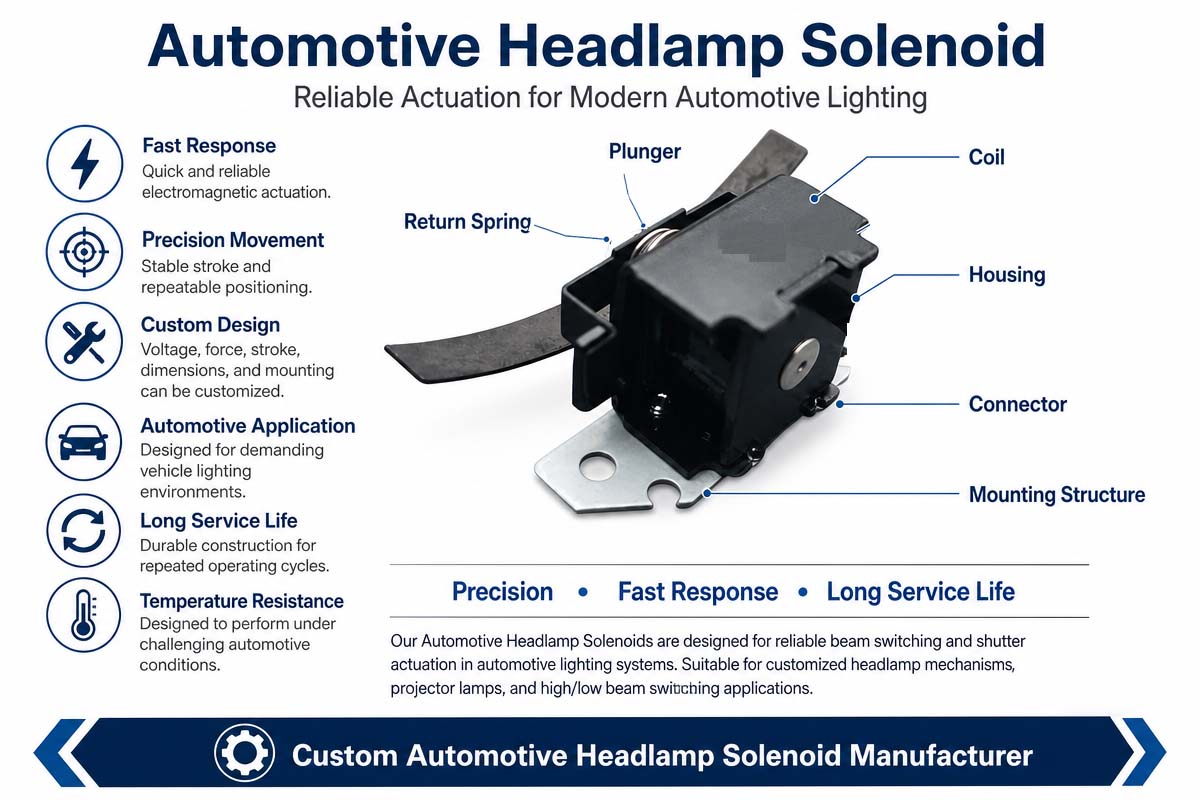
An automotive headlamp solenoid is a small electromagnetic actuator providing fast, reliable, and precise mechanical motion in vehicle lighting systems. It converts the electrical energy to linear motion by generating a magnetic field with the energized coil. The magnetic field displaces the plunger or shaft. This allows the solenoid to control components such as beam shutters, projector mechanisms, reflectors, and high/low beam switching systems.

Headlamp solenoids are widely used in bi-function projector headlamps, adaptive lighting systems, LED headlamp modules, and other automotive lighting systems where there is a need for movement. Their small size and fast response make them ideal for modern vehicle headlamp assemblies where there is little installation space.

The product can be designed for particular requirements such as operating voltage, force, stroke, duty cycle, mounting dimensions, shaft design, connector, and return spring. Using high-quality copper coils, durable magnetic material, and suitable insulation provides stable performance under automotive operating conditions.

With proper engineering, an automotive headlamp solenoid provides reliable operation, fast response, compact installation, and long service life. It is a cost-effective solution for OEMs and custom automotive lighting manufacturers.

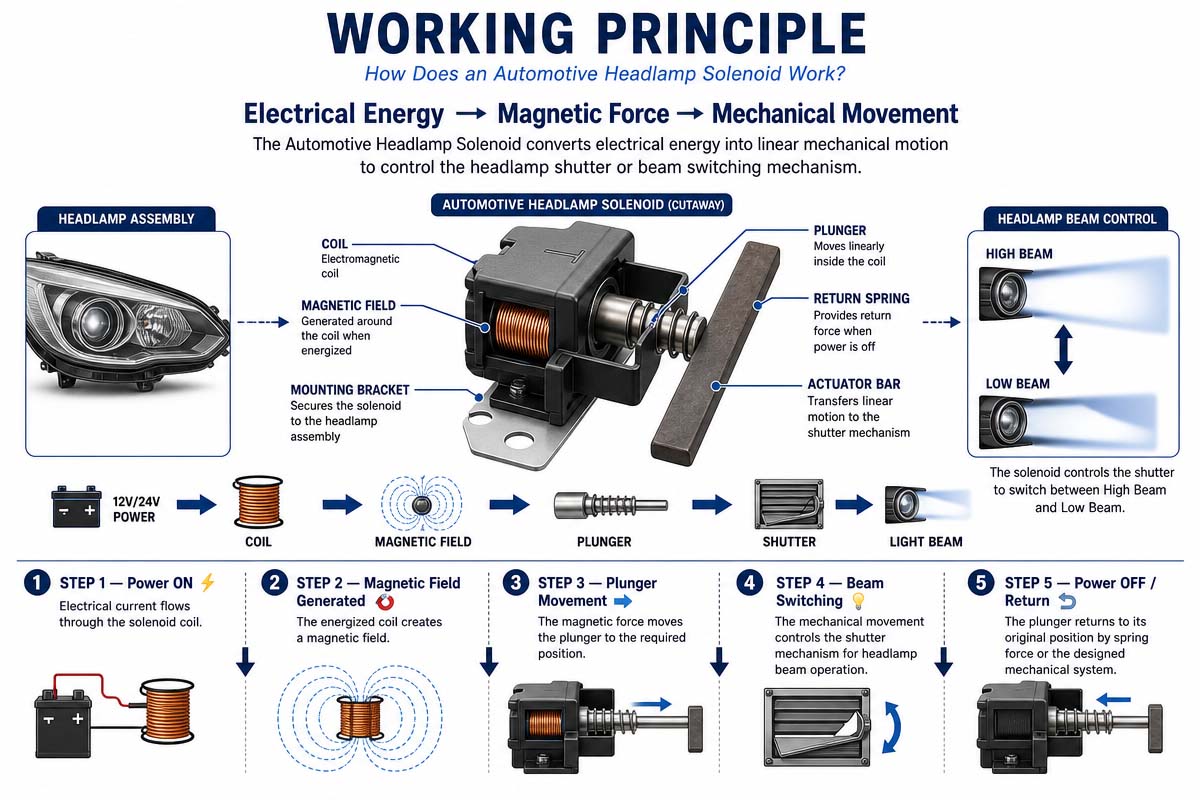
How Does an Automotive Headlamp Solenoid Work?

An automotive headlamp solenoid works on the principle of transformation of electrical energy into a magnetic field.

Step 1: Electrical Power Supply

When the vehicle lighting system supplies electrical current to the headlamp solenoid, it is energized.

Step 2: Magnetic Field Generation

When the electrical current flows through the copper coil, a magnetic field is formed in the solenoid housing.

Step 3: Plunger moves up.

A magnetic field attracts the ferromagnetic plunger into the center of the coil. This provides the linear movement.

Step 4: Headlamp Operation

Plunger motion controls a shutter, shield, reflector, or a beam control mechanism. In a bi-function projector headlamp, for example, it changes the light beam from low beam to high beam.

Step 5. Power Is Turned Off

When the electrical power is turned off, the return spring or some other mechanical device retracts the plunger to its initial position.

The basic electromagnetic principle allows the creation of the headlamp solenoids, which allow fast and repeatable beam control.

Key Characteristics of Automotive Headlamp Solenoids

Headlamp solenoids are small-size, quick-response, provide accurate linear motion, and provide reliable operation in electromagnetic fields. They generate well-controlled push or pull force for shutters, reflectors, and beam control mechanism activation. Special design features include custom voltage, stroke, force, mounting dimensions, connectors, and return spring. Due to the high-quality copper coil and insulation materials, which can resist the automobile operating temperatures, the electromagnetic motion is reliable. The long service life and switching cycles are provided by durable housing and a plunger. The headlamp solenoid can be resistant to vibration, temperature changes, humidity, and other conditions typical of automobile environments, which makes it perfect for OEM automotive lighting.

Automotive Headlamp Solenoid Product Video

Automotive Headlamp Solenoid Product Detail Display

Automotive Headlamp Solenoid Technical Datasheet

Brand Weilong Technology Model Number WL0611
Rated Voltage (V) DC 12 V Rated Power (W) 5-10 W
Work Mode Frame Type RoHS Compliance
Stroke (mm) Customized Reset Time(s) 1S
Service Life 200 Thousand Times Certification CE, ROHS, ISO9001,
Material Carbon Steel Housing Lead Wire Length (mm) 200
Install Style mounted screw hole for easy setup Tolerance of Dimension ± 0.1 MM
Suction Force 100 GF Insulation Class 180 Degree
Hi-Pot Test AC 600V 50/60Hz 1s Non-excitation Holding Force 0
Working Temperature -10°C-100°C Duty Cycle 1-100%
Thread Depth (mm) / Payment Term TT, or LC at sight
Sample Order Yes. Warranty 1 Year
MOQ 1000 pcs Supply Ability 20000 pcs per week
Delivery Time 30 Days Port of Loading Shenzhen

Automotive Headlamp Solenoid vs. LED Headlamp Actuator

Automotive Headlamp Solenoid vs. LED Headlamp Actuator

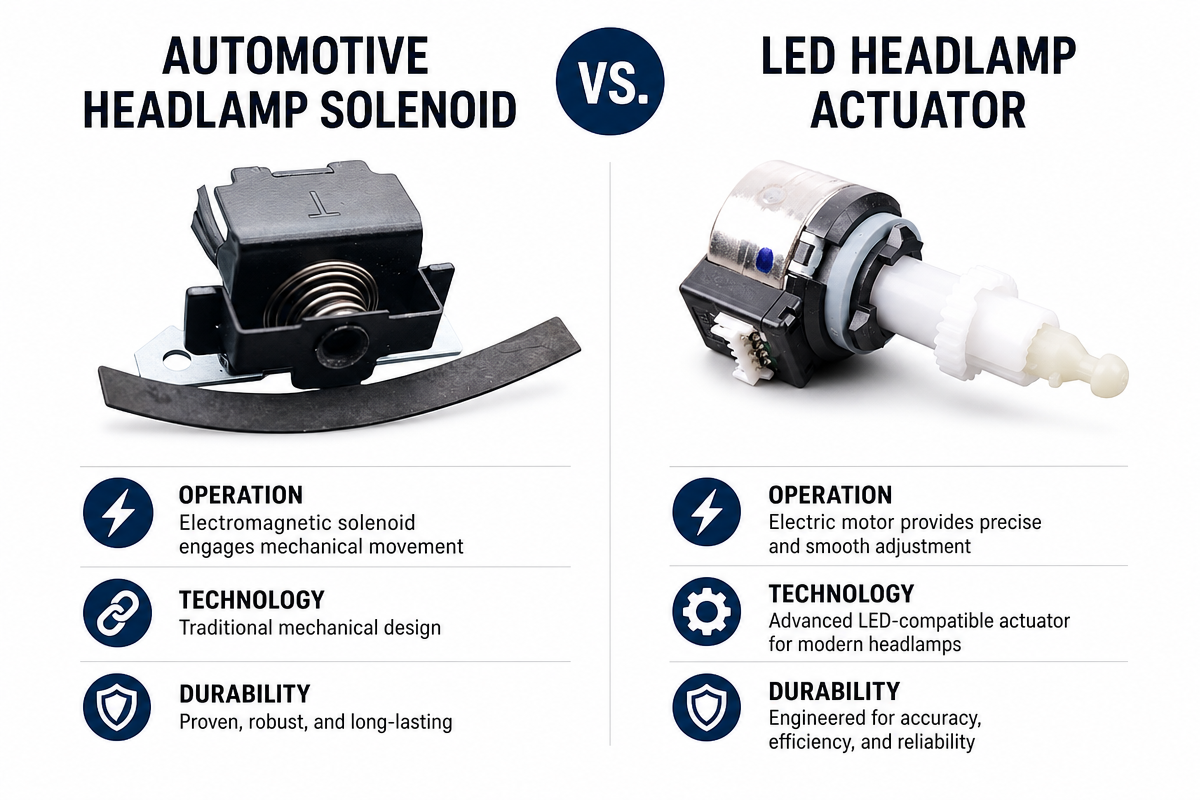
Automotive headlamp solenoid and LED headlamp actuator both provide motion or control functionality in modern automotive lighting systems. However, they work differently and have distinct advantages and disadvantages.

Automotive headlamp solenoid:

uses the power of electromagnetism to generate linear motion. A magnetic field is generated as a result of the current passing through the coil, which moves the plunger. The motion is used to activate the shutter, screen, or other mechanical part in the headlamp.

A bi-function projector headlamp is an example. The solenoid is used to move a mechanical shutter in order to switch between low beam and high beam beam patterns.

LED headlamp actuator:

is a more generic term, however. It might be a motor, stepper motor, servo actuator, solenoid, or other electrically controlled device that provides motion or adjustment of components in an LED headlamp system.

Principle of Operation

Headlamp solenoid: it is a fast linear movement by the electromagnetic attraction. It usually has a simple structure that comprises a coil, plunger, housing, shaft, and possibly a return spring.

Other LED headlamp actuators may use the motors and gearboxes. Such systems provide more complicated motion and might be suitable for multi-position adjustment or rotation.

Response Time

Solenoids usually provide very fast motion since the plunger is directly moved by the magnetic field. This makes them the suitable solution for fast switching applications.

The gears and rotating parts have to move via the mechanical system, so motorized actuators may have slower response times.

Movement Capability

A solenoid is suitable for the short linear motion. It is great for switching between positions (for example, opening and closing a shutter).

Motorized actuators are capable of providing longer travel and more complex motion. They are suitable for leveling headlamps, directional motion, or adaptive lighting systems requiring multiple positions.

Size and Structure

Automotive headlamp solenoids are usually very compact and have a simple mechanical structure. It is helpful in case there is a limited space for the installation.

Motorized LED actuators may have more components, such as gears, sensors, and control electronics. Therefore, these systems may be more complicated.

Power Consumption

A normal solenoid consumes power while being energized. This might produce some heat, especially if the holding period is long.

Some motorized actuators consume power only during the motion and do not need constant power to hold the mechanical position. In case when holding power consumption needs to be decreased, latching solenoids may be used as the alternative.

“Cost and Reliability”

The relatively simple structure of a standard solenoid makes it the cost-effective solution. Manufacturing can also be less complicated with fewer mechanical parts.

Motorized actuators allow more mobility but may need more parts and a more complicated control.

What is the best solution?

The optimal solution is application dependent.

When you need an automotive headlamp solenoid:

Fast, straight motion

Flashing high and low beams

Small mount

Easy mechanical operation

Short stroke motion

Economical electromagnetic actuation

Use the powered LED headlamp actuator when you require:

Various positions

More distance to travel

Regulated rotation

Fine directional adjustment

Intricate adaptive lighting movement

In many complex automotive lighting systems, both technologies can even be used together. The final decision should consider stroke, force, speed, power consumption, installation space, temperature, lifetime, and the overall headlamp system requirements.


Automotive Headlamp Solenoid Application Guide

Automotive Headlamp Solenoid Application Guide

Headlamp solenoids are widely used in various applications where there is a need for controlled mechanical motion in automotive lighting systems. For example, one of the most common uses is in the bi-function projector headlamps, where the solenoid moves a shutter mechanism to switch low/high beam lighting modes.

Headlamp solenoids can also be used in adaptive headlight systems. In these systems there is a need for movement of some mechanical components depending on the vehicle operating conditions. The solenoid provides quick electromagnetic motion, which can be used to operate shutters, beam patterns, and other optical components.

Another use of the solenoid is dynamic beam steering. Modern cars use advanced lighting technology to increase road visibility and reduce glare for other drivers. Some mechanical components in the lighting can be quickly moved by the solenoid.

Headlamp solenoids can also be used in various other projector retrofit systems, specialty vehicles, trucks, buses, motorcycles, and commercial vehicles. Automotive headlamp solenoids

The solenoid can be specially designed for OEM applications to meet installation space, voltage, force, stroke, duty cycle, temperature, and service life requirements. Proper engineering guarantees the compatibility of the electromagnetic actuator with the mechanical characteristics of the whole headlamp assembly.

Automotive lighting technology is constantly evolving, and headlamp solenoids are becoming even more important components for moving lighting mechanisms.

Why are automotive solenoids the preferred solution for the movable vehicle lighting applications?

Modern automotive headlamp solenoids become increasingly popular in relation to the increased complexity and compactness of vehicle lighting systems. Traditional headlights are similar in the way that they just need to provide the fixed lighting functions, but modern automobiles require more advanced functions such as shutters, adaptive beams, projector modules, and intelligent lighting systems.

A solenoid provides fast and direct electromagnetic motion without the use of complicated gear mechanisms. Hence, it is suitable for fast beam switching and repetitive motion applications.

Also, another significant advantage is that they are small in size. In modern automotive headlamp assemblies there is very little space, especially when there is a combination of LED modules, optical components, heat sinks, electronics, and sensors in the same housing.

Customizability is also a valued characteristic of automotive headlamp manufacturers. Headlamp solenoids may be designed to the specific force, stroke, voltage, mounting space, and mechanical requirements.

Taking into account the growing demand for intelligent and movable automotive lighting systems, reliable electromagnetic actuators will continue playing an important role. Automotive headlamp solenoids are the practical solution for many movable vehicle lighting applications due to their combination of fast response, compact structure, controllable movement, and relatively simple construction.

Automotive Headlamp Solenoid Advantage and Disadvantage

Automotive Headlamp Solenoid Advantage and Disadvantage

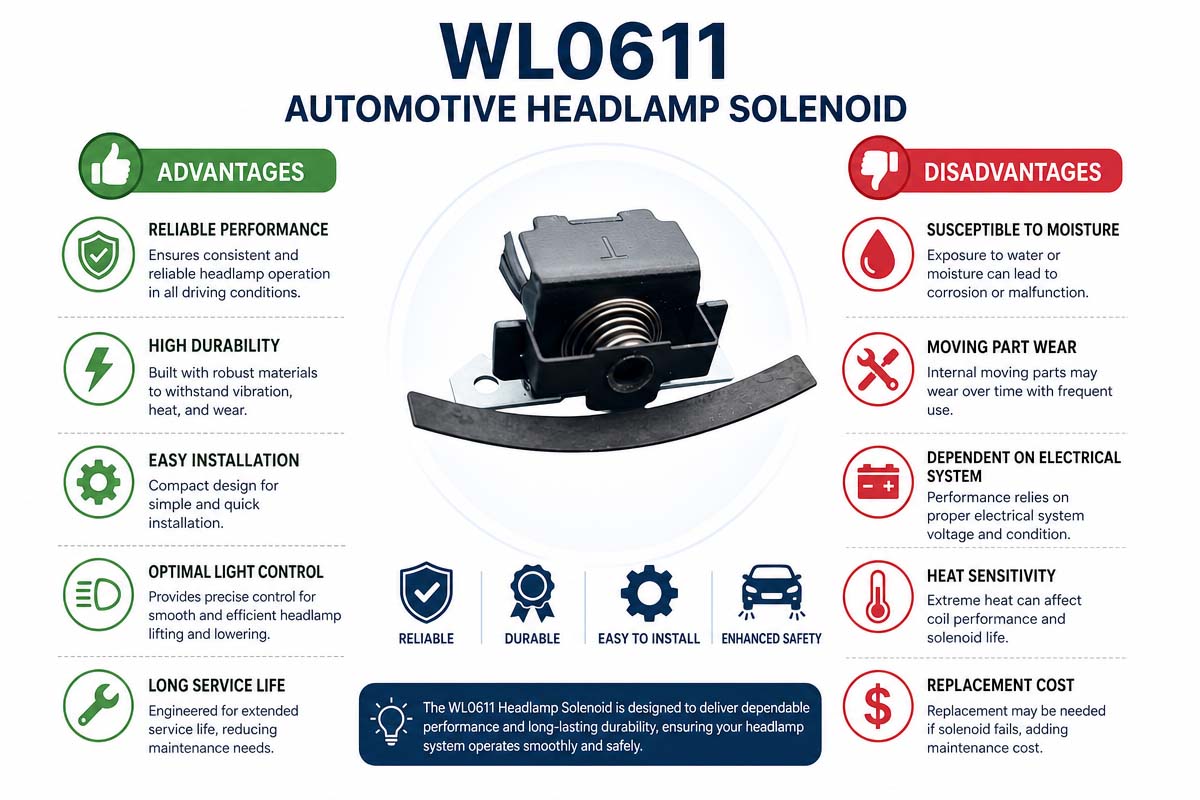
Automotive Headlamp Solenoid Advantage

There are numerous benefits associated with automotive headlamp solenoids. For instance, they feature quick response to electromagnetic forces, are capable of producing dependable linear movement with relatively simple mechanical design. They are small in size which makes them the perfect candidates for installing into modern headlamp assemblies where space is a limiting factor. Customizable solenoids can vary in voltage, stroke, forces, mounting structure and connector type.

One of the major advantages is that solenoids are repeatable. Under proper design a solenoid is capable of operating a shutter or beam control mechanism multiple times in a consistent manner. Besides, their direct electromagnetic operation allows certain applications to avoid complicated motor and gear systems.

Automotive Headlamp Solenoid Disadvantage

However, there are some limitations with automotive headlamp solenoids. While energized, they consume electrical power unless there is an appropriate latching or other holding mechanism. The heat generated during continuous energization has to be properly managed in compact headlamp assembly.

Furthermore, the force of a solenoid depends on the position of the stroke. Normally the maximum force is available at small magnetic air gap and long strokes require extra care.

Besides, the plunger of a solenoid may produce mechanical noise while moving. Moreover, the vibration, contamination, friction and misalignment affect the long-term performance of the solenoid. Thus, successful applications of automotive headlamp solenoids depend on proper electrical, thermal and mechanical design.

Automotive Headlamp Solenoid Troubleshooting Guide

Automotive Headlamp Solenoid Troubleshooting Guide

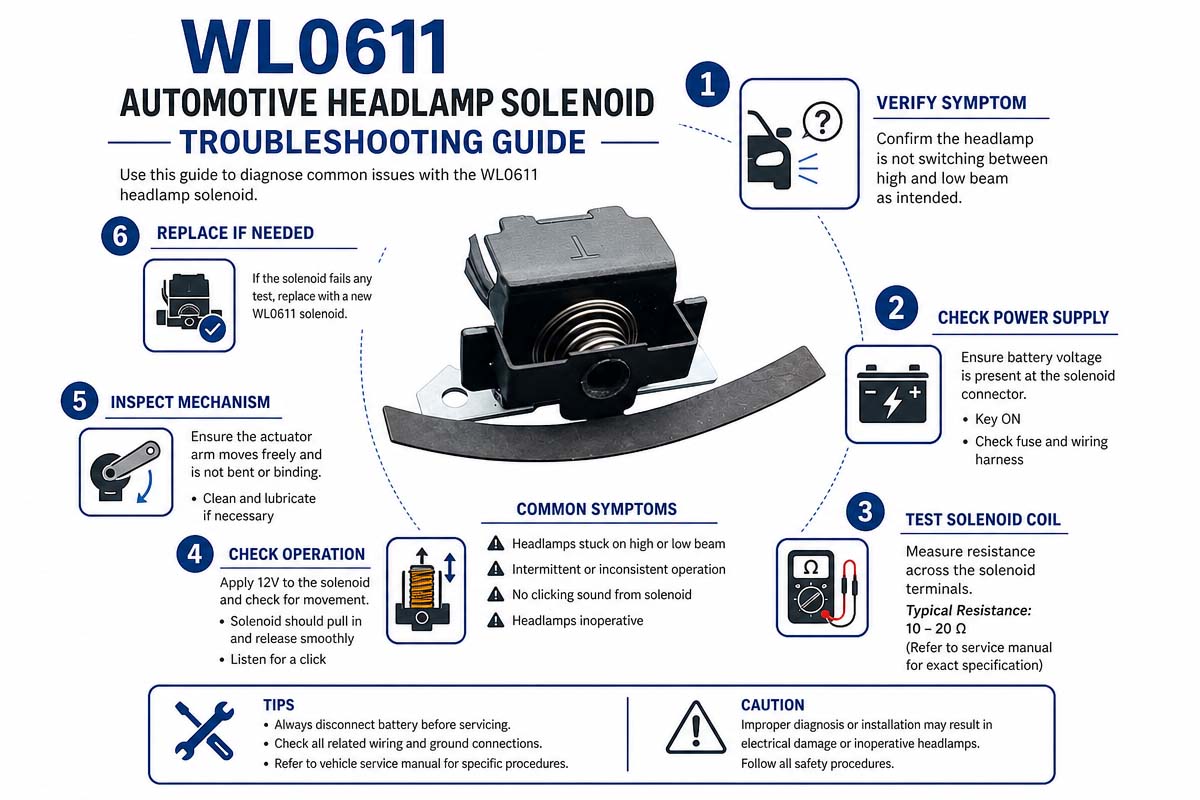
Automotive headlamp solenoids are employed to raise and lower the headlamps. They are regulated by the headlight switch and the vehicle’s computer system. If the headlamps are not being raised, then there might be a problem with a solenoid. To check the solenoid, disconnect the electrical connector and apply 12 volts to the solenoid. If the solenoid works fine, then the problem lies somewhere else. However, if the solenoid does not operate, it has to be replaced.

First of all,

Remove the headlamp switch. Afterwards, take out the solenoid from the mounting bracket. In order to install the new solenoid, one has to perform the removal process in reverse order. If the headlamps are being raised but not lowered, then the problem could be associated with the vehicle’s computer system. The computer system regulates the solenoids using the ground signals. If the computer does not ground the solenoids, then the problem will have to be diagnosed.

Power Supply

This is the very first thing that needs to be checked in case the automotive headlamp solenoid is malfunctioning. Firstly, check whether the correct voltage is provided to the solenoid. Low voltage may not produce enough force to move the plunger.

Afterwards, measure the resistance and the current of the coil. The open circuit indicates the broken connection of the coil. Very low resistance means damaged insulation or a short circuit.

Moreover, in case of the energized coil and the immobile plunger, one should check the mechanical system. Dirt, corrosion, misalignment, excessive friction, or deformation may cause an inability of the normal movement of the plunger.

Another frequent problem is the overheating. One should make sure that the solenoid is not being operated outside its duty cycle or using the too high voltage. The coil temperature might be too high as a result of the continuous energization.

In case of the intermittent operation of the solenoid, one should check the electrical connectors, wiring, and control signals. It leads to the erratic performance because of the weak connections.

For the weak motion, one has to check the force that is required at the particular stroke of operation. The mechanical load may exceed the solenoid design specification.

At last, one has to check the return spring and the moving headlamp mechanism. The return movement is impossible in case of a broken spring or too much resistance of the mechanical component.

One may test the solenoid individually and afterwards test it in the complete headlamp assembly in order to figure out whether it is an electrical, mechanical, or system integration problem.

Automotive Headlamp Solenoid FAQs

1.Automotive Headlamp Solenoids ? What voltage is used ?

Operating voltage depends on the vehicle and application design. The most commonly used voltages are DC 12V and DC 24V. OEM requirements can also be fulfilled through the custom voltage design.

2. What is the Use of Solenoids in Automotive Headlamps?

They are commonly used for high and low beam switching, bi-function projector headlights, movable beam shutters, adaptive lighting systems, and other automotive lighting mechanisms that require fast and controlled movement.

3. Can the automotive headlamp solenoid be customized?

Yes. Automotive headlamp solenoids can be tailored to your specifications for voltage, force, stroke, duty cycle, dimensions, mounting structure, shaft design, connector type, and return spring requirements.

4. What is the lifespan of an Automotive Headlamp Solenoid?

Lifetime depends on the design, operating conditions, duty cycle, mechanical load and environmental requirements. A properly designed solenoid can provide reliable operation for a large number of switching cycles.

5. Why does an Automotive Headlamp Relay get hot?

As the current passes through the coil, it heats it up. Overheating can be caused by excessive voltage or energization time or operating outside of the specified duty cycle. You need good thermal and electrical design.

6. Choosing the right automotive headlamp solenoid?

Operating voltage, required force, stroke, duty cycle, installation space, operating temperature, response time, mounting method, and expected service life are the important factors. Providing the manufacturer with these specifications will help ensure the solenoid is designed for the application.

How to Select an Automotive Headlamp Solenoid

Selecting the right automotive headlamp solenoid requires understanding of electrical and mechanical requirements.

First,

You need to know the operating voltage. While a 12V electrical system is common for most passenger vehicle applications, the design of the solenoid may differ depending on the driver circuit and lighting module.

Secondly,

Determine the force. The solenoid should be able to produce sufficient force to reliably move the shutter, reflector, or other component of the headlight assembly. The required force should be greater than that required for the friction, spring force, vibration, and any other mechanical resistance.

Third,

Find out the necessary stroke distance. The plunger stroke should match the mechanical travel distance in the lighting system. A longer stroke means the smaller electromagnetic force available, so both force and stroke should be considered.

The fourth,

Its requirement is duty cycle. If the solenoid is operated continuously, then the heat generation will become considerable. Different coil and thermal designs are required for continuous running and for short intermittent operation.

Also, you should consider the installation space available. Modern automotive headlamps become more compact, and, therefore, the solenoid diameter, length, installation position, and shaft design should be taken into account.

Environmental requirements are also very important. The solenoid may experience vibration, temperature variations, humidity, and long-term service in the vehicle. Therefore, appropriate materials, an insulation system, a surface finish, and mechanical construction should be chosen.

Finally,

Do not forget about the expected service life and the number of operation cycles. OEM automotive applications typically require reliable and repeatable performance during the product lifetime.

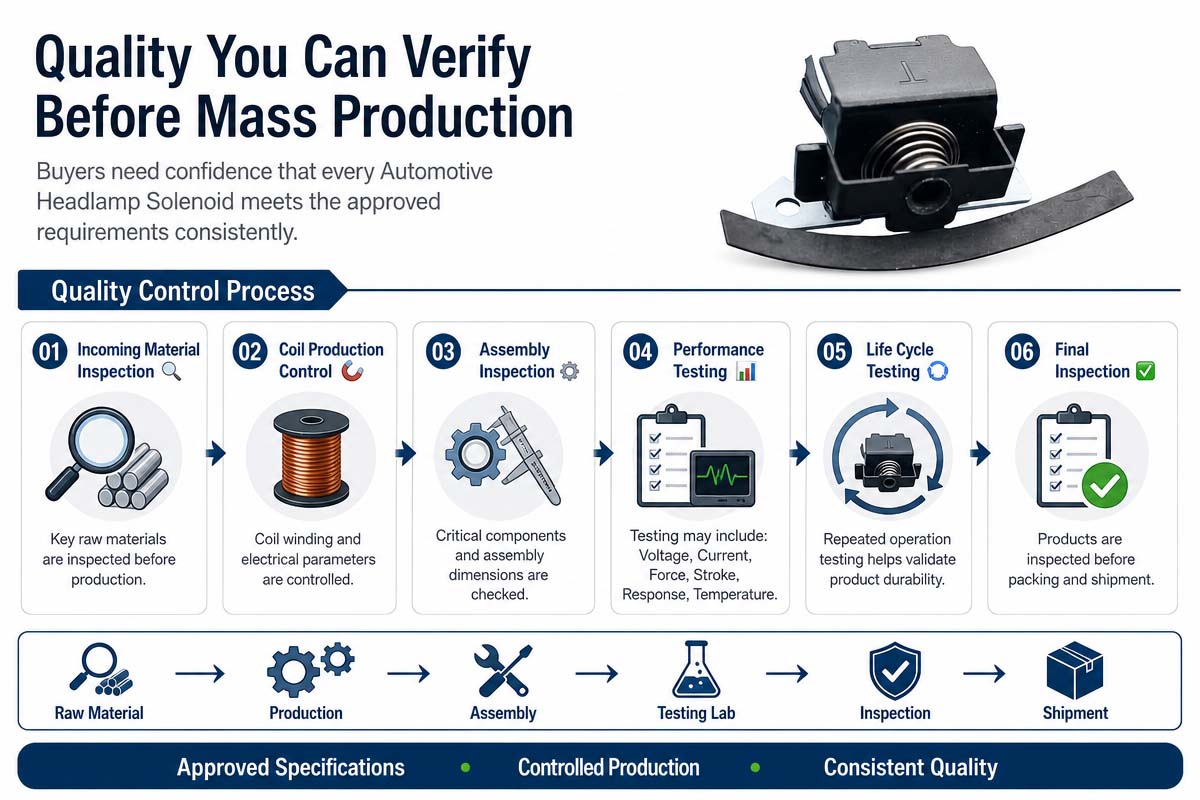
Before the production, provide the manufacturer with all necessary specifications: voltage, force, stroke, duty cycle, operating temperature, installation dimensions, connector, lifetime, etc. Prototype testing is highly recommended before production.

Tips to Avoid Common Mistakes When Designing Automotive Headlamp Solenoids

1. Don’t Mention Stroke without Force

The force of the solenoid highly depends on the position of the plunger. Always indicate the force required at the exact stroke length.

2. Don’t Ignore Temperature

The continuous energization causes excessive coil temperature. The careful calculation of the power consumption and thermal performance is required.

3. Don’t Just Select the Voltage

The 12V specification is insufficient. Current, resistance, power consumption, duty cycle, and control method should be defined.

4. Don’t Underestimate Force Margin

Friction, vibration, and mechanical tolerance can increase the required operating force.

5. Don’t Forget Return Mechanisms

Please specify if the plunger returns due to a spring, gravity, magnetism, or some other mechanical component.

6. Think About Automotive Vibration

The solenoid should be securely mounted and continue to operate reliably under vibration.

7. Check the Installation Space First

Limited installation space of the headlamp assembly. Please check dimensions before finalizing the solenoid design.

8. Don’t Consume Too Much Power

High power consumption increases the heat generation and load on the vehicle’s electrical system.

9. Real Operating Conditions Test

Bench testing only may not represent the real operating conditions of the headlamp.

10. Check Lifetime Requirements

Specify the expected number of cycles and test the durability before mass production.
Get A Free Quote Now

Contact Form

Related Products

Related News

Scroll to Top

Get A Free Quote Now !

Contact Form
If you have any questions, please do not hesitate to contact us.
Weilong Solenoid Company Culture