Watering Solenoid Valve for Automatic Irrigation
Automatic Watering Solenoid Valve Solutions
V 6V Watering Solenoid Valve for Irrigation
High Quality Watering Solenoid Valve Systems
Watering Solenoid Valve for Smart Irrigation
Watering Solenoid Valve for Automatic Irrigation
Automatic Watering Solenoid Valve Solutions
V 6V Watering Solenoid Valve for Irrigation
High Quality Watering Solenoid Valve Systems
Watering Solenoid Valve for Smart Irrigation

WL0102 Watering Solenoid Valve for Gardens

The watering solenoid valve is an important device used for modern irrigation systems, and its main function is to automate water flow using an electric current. This device is connected to a timer or controller, and water flow is automated according to the timer setting.

The watering solenoid valve operates on low voltage, which makes it very safe with low power consumption costs. With waterproofing, the watering solenoid valve enables it to be installed outdoors. The valve is made of strong plastic or brass, which makes it very durable and able to withstand corrosion and outdoor weather conditions. The valve is compact, which makes it very easy to install. The valve can be connected to timers and smart controllers, which makes it very useful in irrigation systems. The valve has a very long cycle life, which makes it very reliable. The valve also has high sealing performance, which prevents leaks

DC Watering Solenoid Valve for Irrigation

Designing a watering solenoid valve requires consideration of water pressure, water flow, voltage, and environmental conditions. The watering solenoid valve must work properly under low or medium water pressure, which is usually the case. The selection of the voltage required by the watering solenoid valve, whether 6V,12V or 24V, is also very important. The watering solenoid valve must also be designed to be waterproof, which means that the design must have an IP65 or higher rating. The watering solenoid valve must also be designed using durable materials such as nylon or brass. The water flow channels must also be designed properly to prevent pressure loss. The diaphragm must also be designed properly to ensure that the watering solenoid valve works properly and for a longer period.


Electric Irrigation Watering Solenoid Valve

Outdoor Watering Solenoid Valve Solutions

Fast Response Watering Solenoid Valve Units

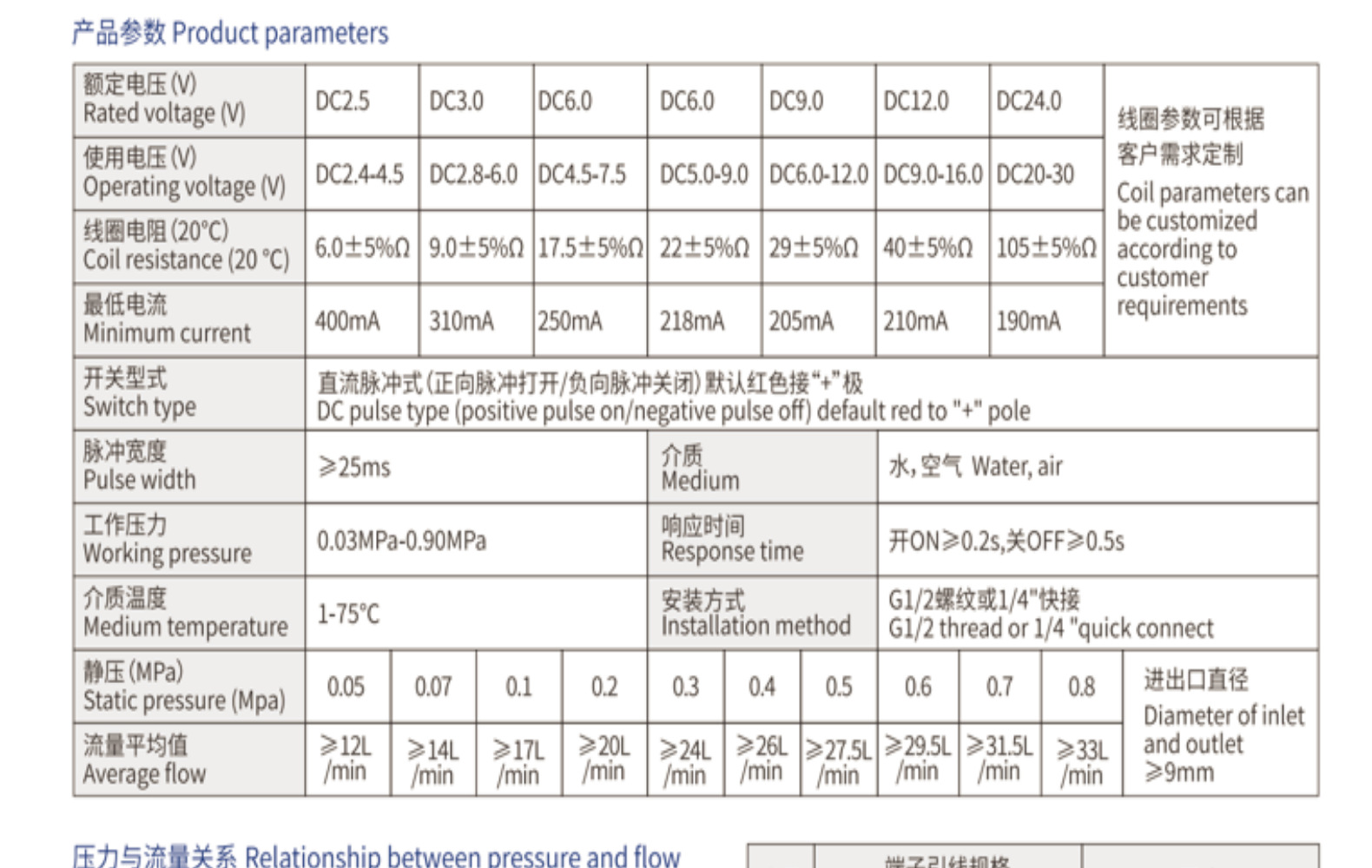
Datasheet of Wl0102 Watering solenoid valve

Agricultural Watering Solenoid Valve System

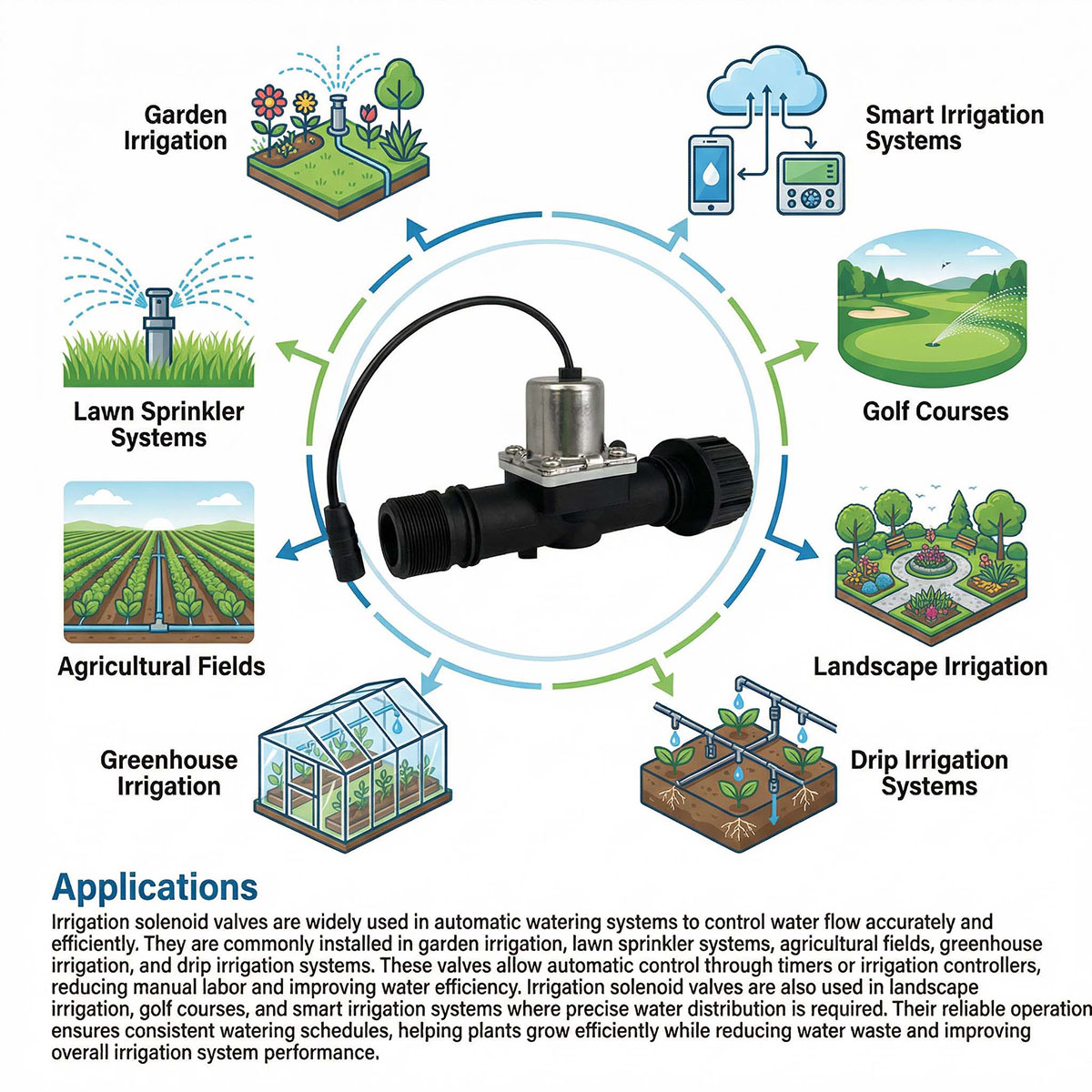
Irrigation Solenoid Valve Applications

Watering solenoid valves are commonly used in automatic irrigation and control systems. The valves ensure the control and flow of water in both domestic and industrial setups.

In the installation of garden irrigation systems, watering solenoid valves regulate the sprinklers and the drip lines. The valves ensure scheduled watering, promoting healthy growth and conserving water at the same time.

In agricultural irrigation, watering solenoid valves regulate the supply of water to the crops. The use of automatic irrigation helps in the reduction of labor costs.

In the installation of greenhouse irrigation systems, watering solenoid valves ensure the maintenance of the required moisture levels for the growth of the plants. The valves can be connected with humidity and soil moisture sensors.

In the installation of landscape irrigation systems, watering solenoid valves regulate the supply of water to the different watering zones. Each zone can be controlled separately using the master controller.

In the installation of smart irrigation systems, watering solenoid valves, timers, and WiFi controllers can be used. The use of timers and WiFi controllers allows the remote operation of the valves and the scheduling of the watering systems.

Other applications of watering solenoid valves include lawn irrigation, nursery watering, and automatic plant watering.


Smart Controller Watering Solenoid Valve

Irrigation Control Valve Advantages and Disadvantages
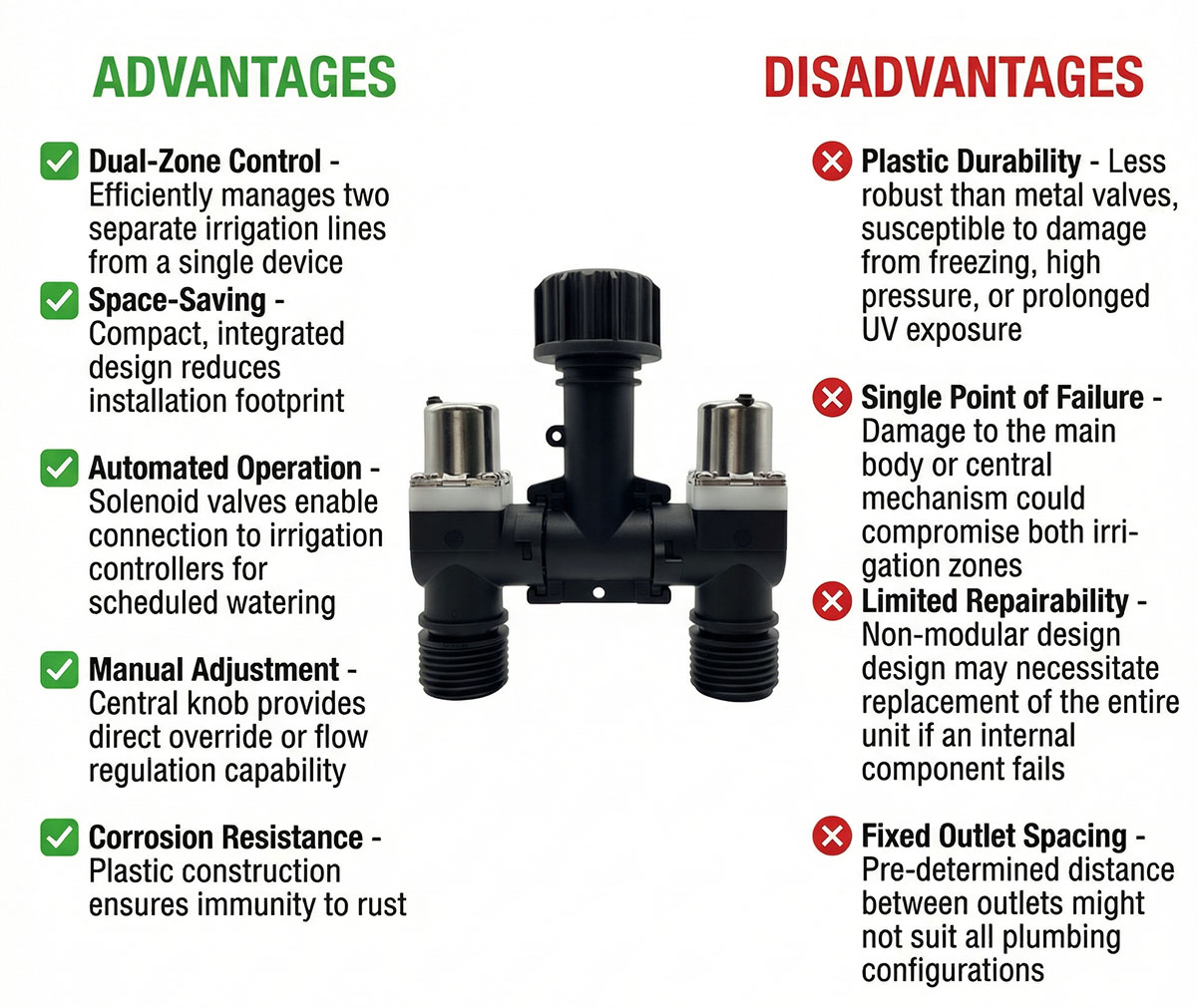
Watering Solenoid Valve Advantages and Disadvantages

Advantages

The advantages of using a watering solenoid valve include:

It is automatic and does not require manual operation. This means that the irrigation system will operate according to a predetermined schedule.

It improves water efficiency by ensuring that water is only supplied when needed. This means that there is no water wastage.

It operates on low voltage, making it safe for outdoor use. The valves operate on 12V or 24V.

It is compact and can easily be integrated into an irrigation system due to its standard pipe thread.

It is reliable and has a long lifespan if well maintained.

Disadvantages

The disadvantages of using a watering solenoid valve include:

It requires power in order to operate. This means that if power goes out, irrigation will stop.

It requires a minimum amount of water pressure in order to function properly.

It is vulnerable to dirty water, which may cause blockage or damage to its diaphragm.

It has a lifespan and may leak if of low quality.

It has to be waterproof if installed outdoors, and this means that electrical connections have to be waterproof.

Watering Solenoid Valve FAQ

Q1: What is a watering solenoid valve?

Watering solenoid valve is an electrically controlled valve used to control water flow. It opens or closes when an electric current is applied to the solenoid coil.


Q2: What voltages are available for watering solenoid valves?

Watering solenoid valve

The voltage rating for watering solenoid valve is as follows:

DC 6V

DC 12V

DC 24V

AC 24V

Out of these, DC12V and DC24V are most frequently used.

Q3: What is the typical working pressure range?

Watering solenoid valve

The typical range for working pressure is:

Minimum working pressure: 0.02 MPa

Maximum working pressure: 0.8 MPa

Some of these valves may be used at near zero pressure.

Q4: What materials are used in watering solenoid valves?

Watering solenoid valve

The materials used for making watering solenoid valve are:

Plastic

Stainless steel

Rubber

Copper

Q5: Can watering solenoid valves work continuously?

Yes. The majority of irrigation solenoid valves are designed to provide long operating cycles and can be used continuously if properly cooled and voltage levels are within the rated voltage.


Q6: Are the watering solenoid valves waterproof?

Yes. The majority of irrigation solenoid valves are designed to be used outdoors and are rated to the following waterproof levels:

IP65

IP67

Q7: What affects the lifespan of the watering solenoid valves?

The main factors are:

Water quality

Operating pressure

Voltage stability

Switching frequency

Ambient temperature

Q8: Can the watering solenoid valves be battery-powered?

Yes. Low voltage DC-powered solenoid valves can be used in battery-powered irrigation timers.

Typical battery-powered irrigation timers:

AA battery-powered timers

9V battery-powered timers

Solar-powered timers

Q9: What types of threads are available?

Typical types of threads:

1/2 inch

3/4 inch

1 inch

Q10: How fast does the watering solenoid valve respond?

Typical response time:

Valve opens in: 0.1 to 0.5 seconds

Valve closes in: 0.1 to 0.5 seconds

How to Select a Watering Solenoid Valve ?

It is essential to select an appropriate watering solenoid valve for an irrigation system. There are several technical issues that have to be considered before selecting a valve.

Firstly, the operating voltage of the valve is considered. The operating voltage of an irrigation controller is 12V DC or 24V AC. The valve has to operate within this range.

Secondly, the valve’s pipe size is considered. The common pipe sizes are 1/2 inches, 3/4 inches, and 1 inch. The valve’s pipe size has to match this requirement.

The working pressure of an irrigation system is another technical factor that has to be considered. The working pressure of an irrigation system is 0.02 MPa to 0.8 MPa. The valve has to operate within this range.

The flow rate is another technical factor that has to be considered. The valves have to operate within a specific flow rate requirement.

The material of the valve is another technical factor that has to be considered. The valve’s material has to be durable. The plastic valve is light in weight and has corrosion resistance. The brass valve is stronger than other valves.

The quality of water is another technical factor that has to be considered. The valves have to operate within this requirement.

Environmental conditions are another technical factor that has to be considered. The valve’s coil has to be waterproof.

The valve’s duty cycle rating is another technical factor that has to be considered. The valve has to operate continuously.

The power consumption of a valve is another technical factor that has to be considered. The valve has to operate within this requirement.

The valve has to be selected from an experienced company that has stable quality control and reliable performance.

It is recommended that samples are tested before mass purchase.

Get A Free Quote Now

Contact Form

Related Products

Related News

You wake up in the morning and grab a drink from your refrigerator. Next, you take a shower and drive […]

Scroll to Top

Get A Free Quote Now !

Contact Form
If you have any questions, please do not hesitate to contact us.
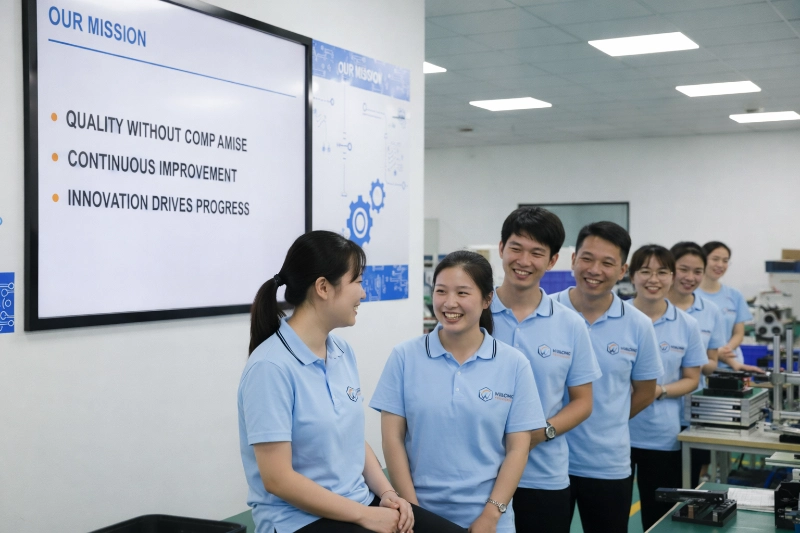
Weilong Solenoid Company Culture