How to Select a Small Proportional Valve
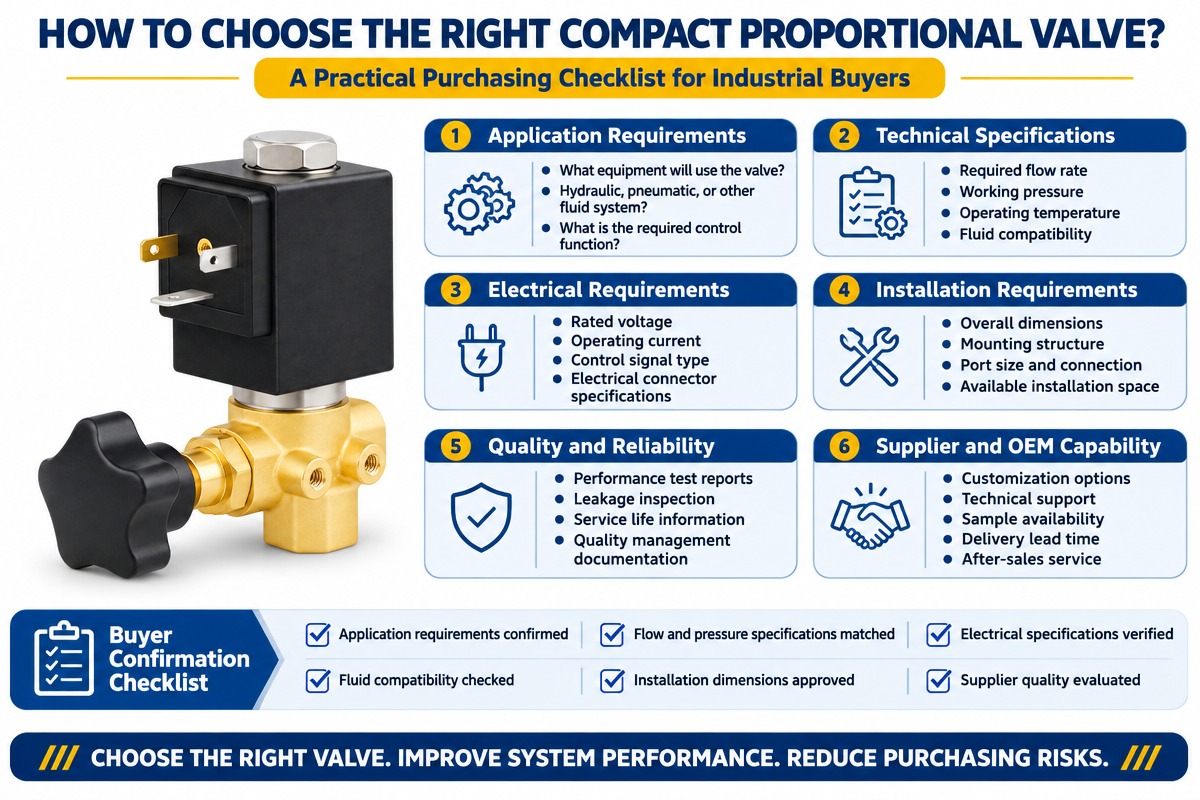
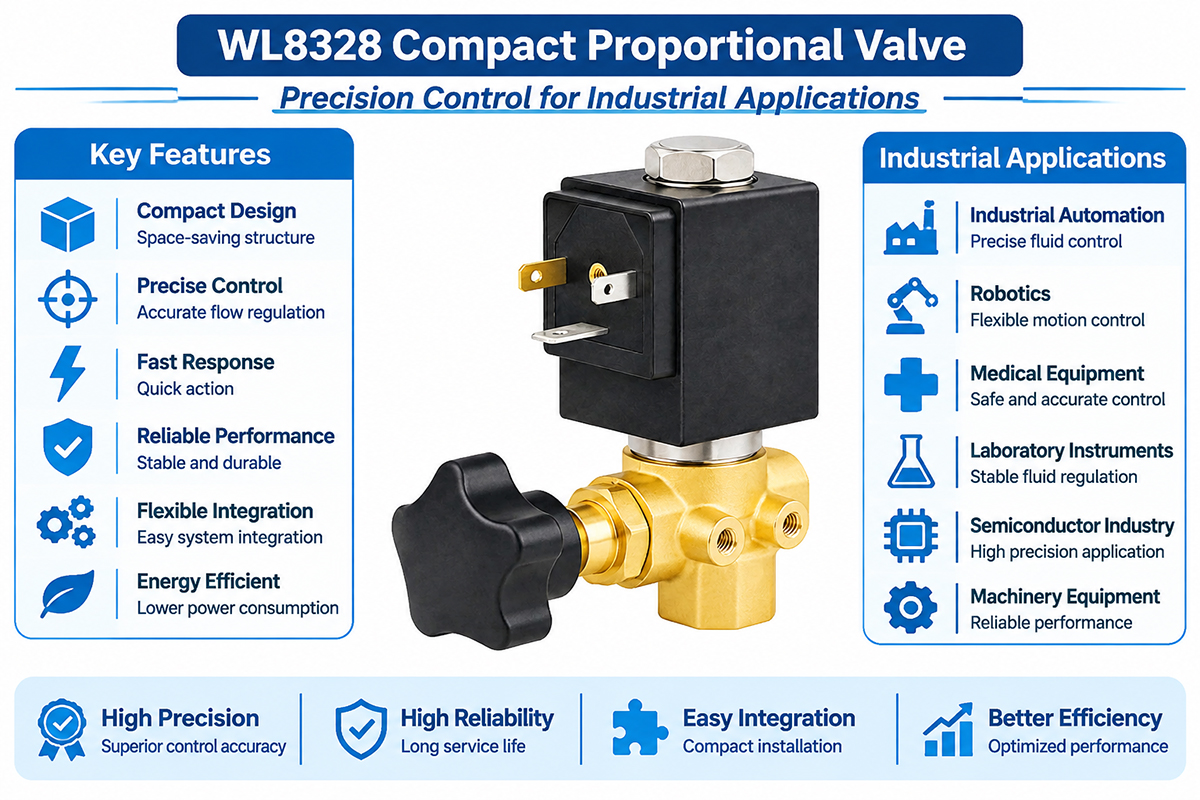
Selecting the suitable compact proportional valve is essential for achieving precise fluid control, reliable performance and efficient integration with equipment. The buyer should consider the following things when purchasing.
1.Determine the Application
Determine the valve’s application in hydraulic, pneumatic or special fluid systems. Determine the control function, operating conditions and equipment requirements.
2.Verify Flow Capacity
Determine the required flow rate and select the right valve capacity. Oversized valve can limit the control resolution while undersized valve can limit the system performance.
3.Check the operating pressure
Determine the minimum and maximum operating pressure, differential pressure and pressure rating. Ensure that the selected valve operates within the limits.
4.Fluids Compatibility Check
Determine the working medium: hydraulic oil, compressed air, water or others. Test the valve body materials, sealing materials, corrosion resistance and working temperature.
5.Check Electrical Specifications
Determine the rated voltage, operating current, power consumption, connector type and control signal. Ensure that it matches the existing controller and electrical supply.
6.Accuracy of control
Evaluate response time, hysteresis, repeatability, linearity and flow control performance for precision applications.
7.Check Installation Dimensions
Determine the overall dimensions, port sizes, installation positions and connections. Measure the available installation space.
8.Operating Environment Assessment
Consider requirements for vibration, humidity, dust, temperature and protection. Choose appropriate materials and enclosure design.
9.Evaluate Supplier Capabilities
Choose the supplier that offers technical information, product testing, customization, quality control and after-sale services.
10.Compare Total Cost of Ownership
Consider the purchase price, power consumption, maintenance frequency, service life and replacement.
Well-selected compact proportional valve is the key to improve the system performance, the equipment integration and to reduce unnecessary operating costs.
Tips to Avoid Common Compact Proportional Valve Design Mistakes
Compact proportional valve design requires interaction between electromagnetic properties, mechanical design, fluid dynamics and electronic control. Mistakes in the design that should be avoided for the reliability and better performance of the product.
1.Ignore the Requirements for Real Flow
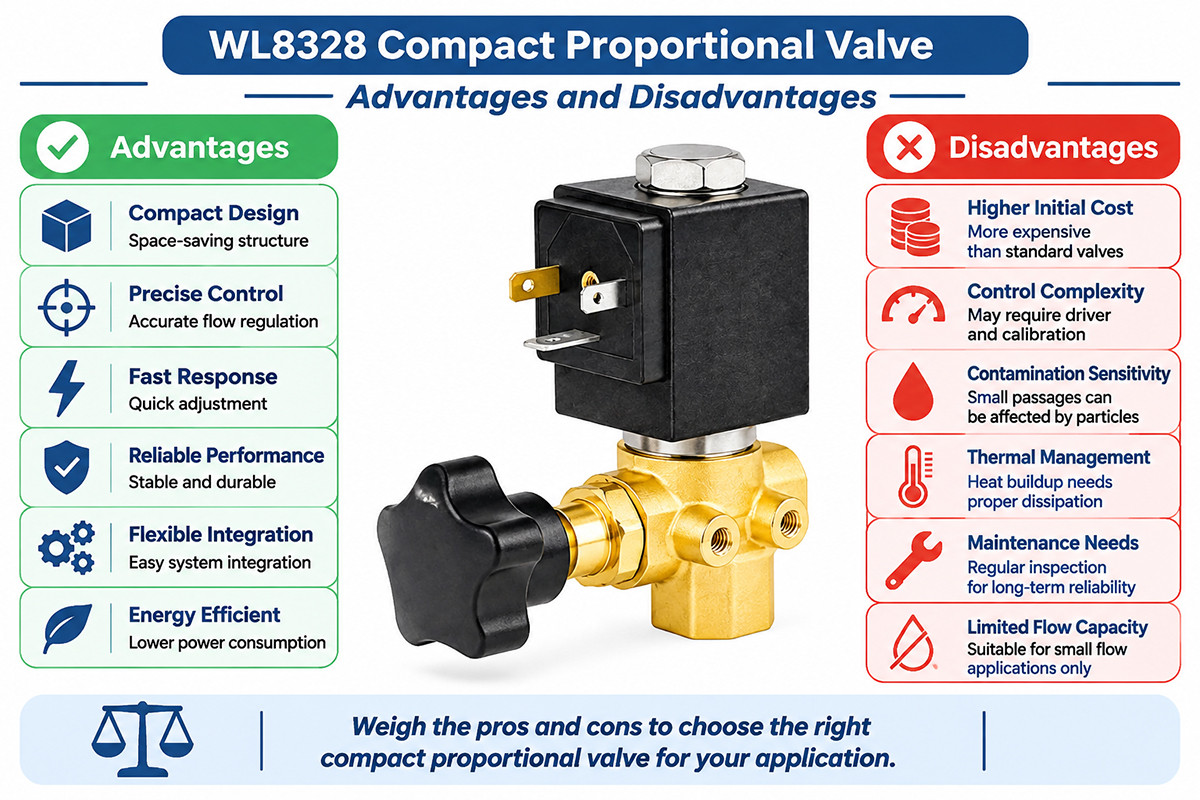
Improper sizing can result in lack of fluid delivery or instability in regulation. Determine the required flow rate before selecting the internal passage dimensions.
2.Use Incompatible Materials
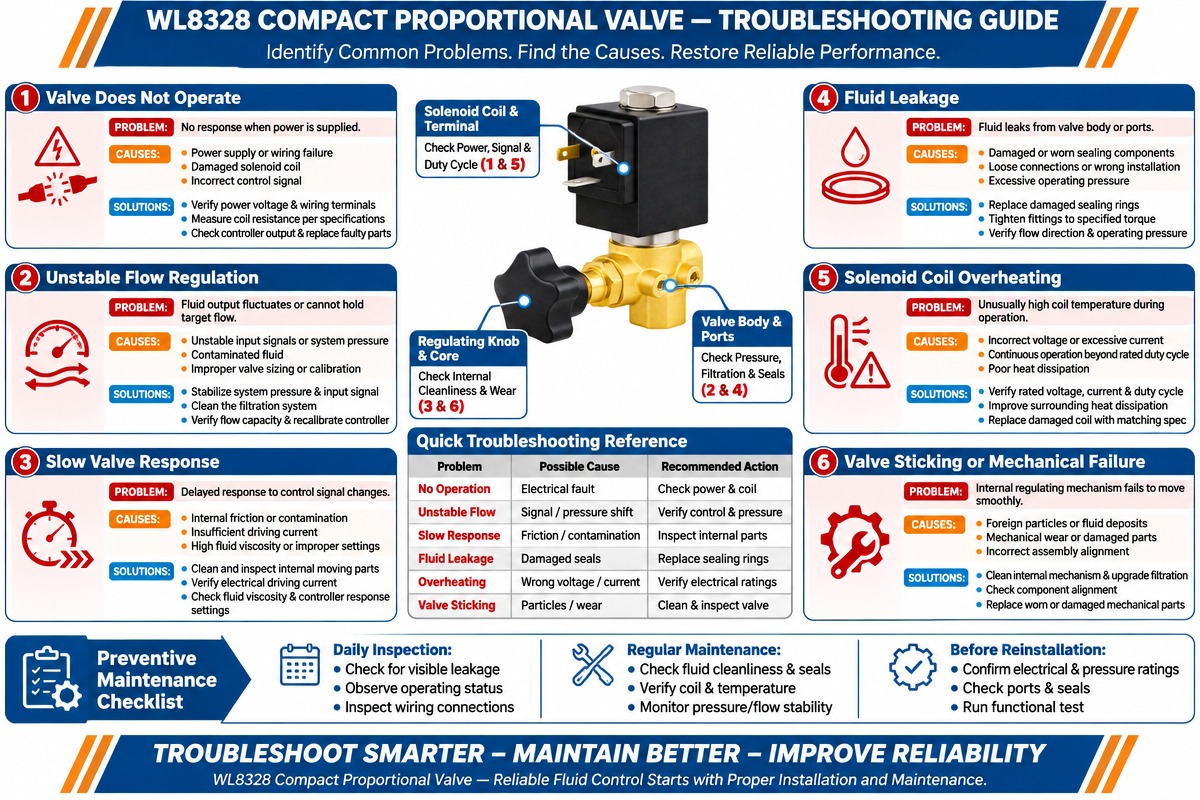
Use of incorrectly matched valve body or sealing materials can result in corrosion, swelling, leakage or premature failure. Ensure fluid and temperature compatibility always.
3.Underrate Electromagnetic Force
The actuator must be able to produce the required electromagnetic force across the entire operating range. Consider the coil data, magnetic circuit design and counteracting spring force.
4.Mechanical Friction: Ignore
Excessive friction and uneven tolerances can lead to sticking, hysteresis and poor repeatability. Apply proper machining tolerances and surface finish.
5.Ignore Heat Dissipation
Temperature can increase due to continuous coil energization. Pay attention to thermal management, insulation ratings and power consumption.
6.Ignore Fluid Contamination
Particles and deposits can be sensitive to small internal passages. Design the system according to applicable filtration requirements.
7.Forget about Controller Compatibility
The malfunctions can be caused by inappropriate electrical signals or driver configuration. Review the specifications of the controller and the valve.
8.Inadequate Performance Testing
Test the flow, pressure, leak, response, temperature and endurance under real operating conditions.
9.Poor Installation Design
Poor installation space and improper port connections increase maintenance difficulties and decrease the efficiency of the system.
10.Lack of Long-Term Reliability Evaluation
Test the valve under repetitive operation to find wear, performance change and possible failures prior to mass production.