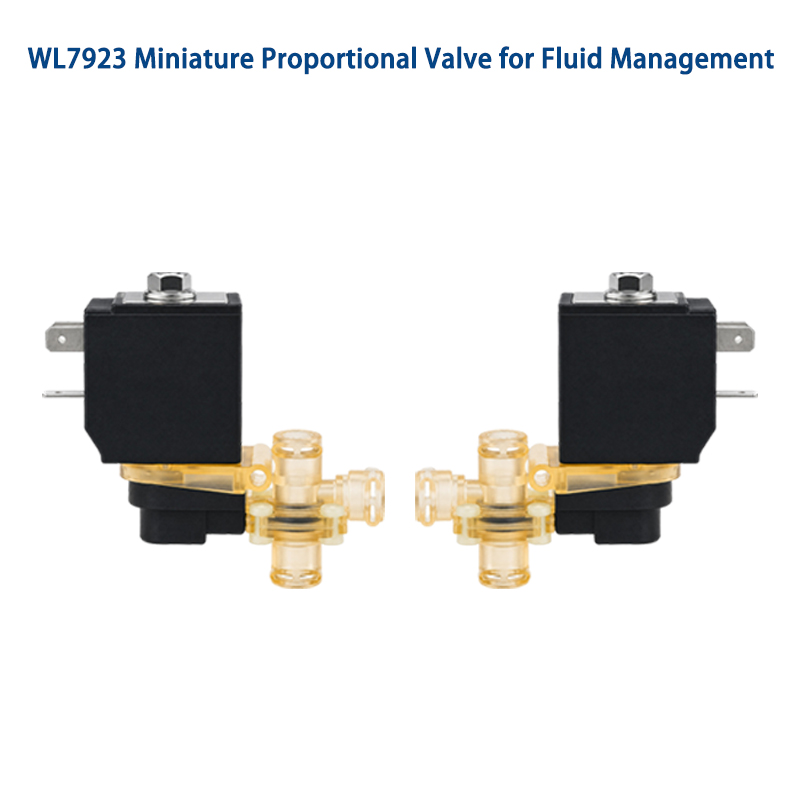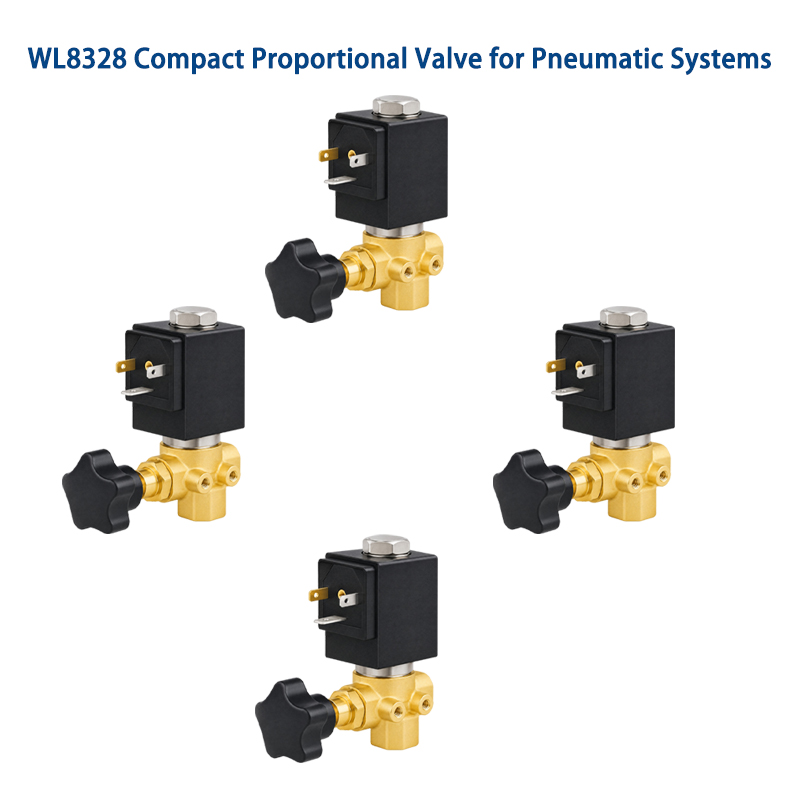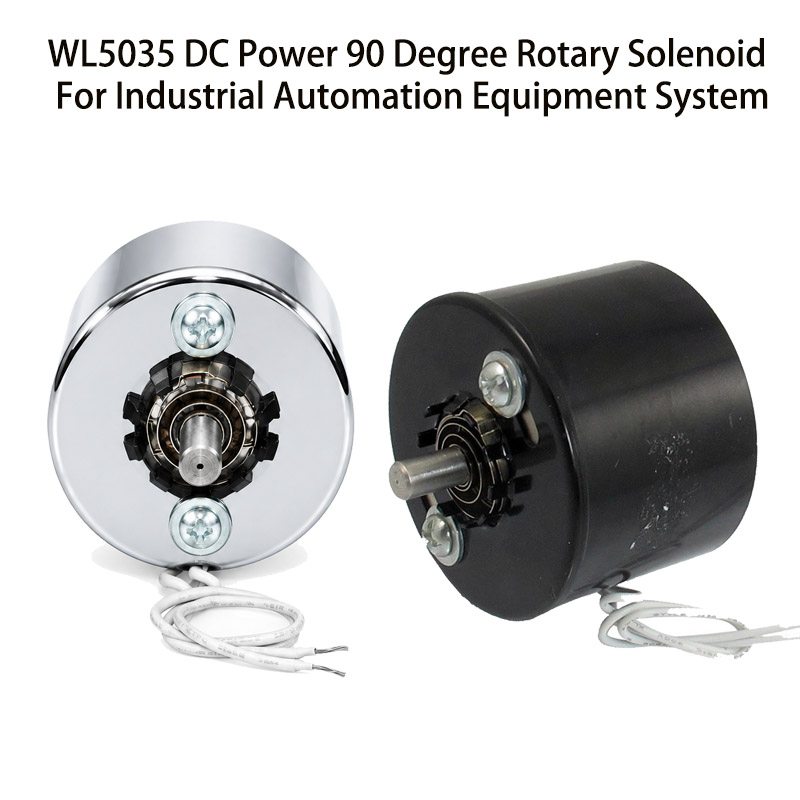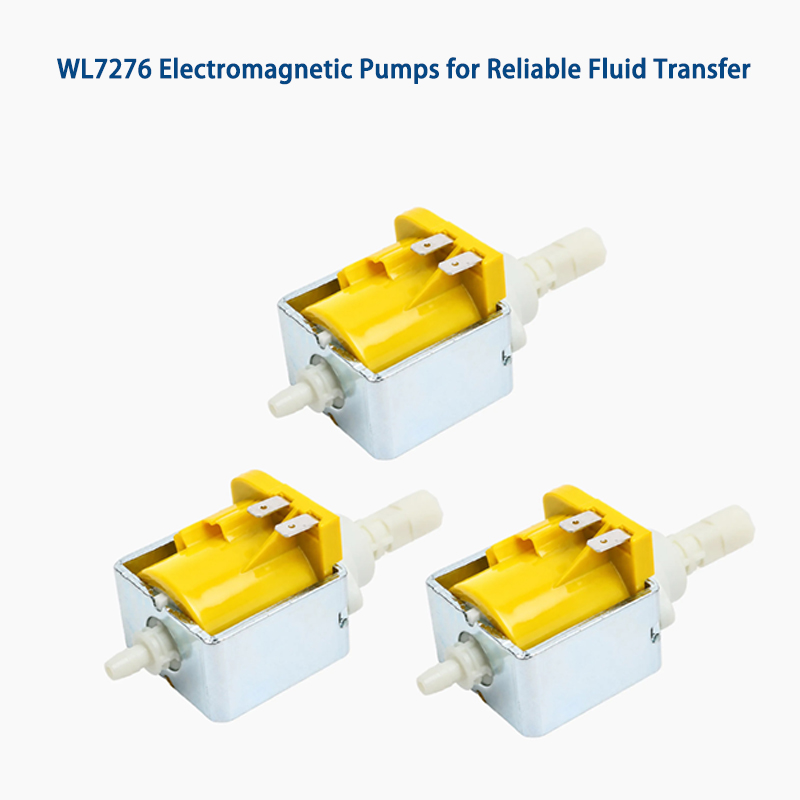
How to Select a Miniature Proportional Valve
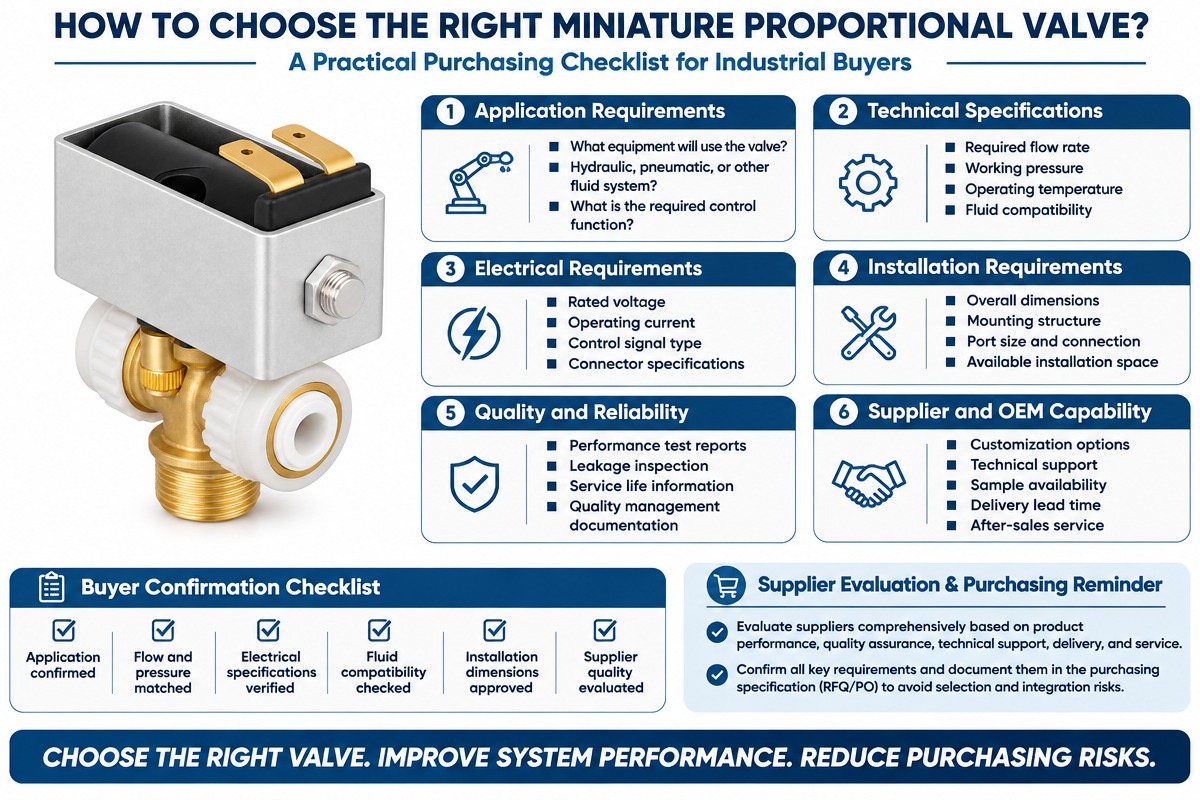
Selection of the appropriate miniature proportional valve is important for precise fluid control, reliable performance and easy integration of the valve with the equipment. There are a number of factors that should be considered by industrial buyers or engineers before purchase.
1.Identifying the Application Requirements
First, it is necessary to determine what system (hydraulic, pneumatic or specialized fluid system) the valve will work with. It is also necessary to consider the required control function, the operating environment, the installation space and the equipment operating conditions.
2.Checking Flow Capacity
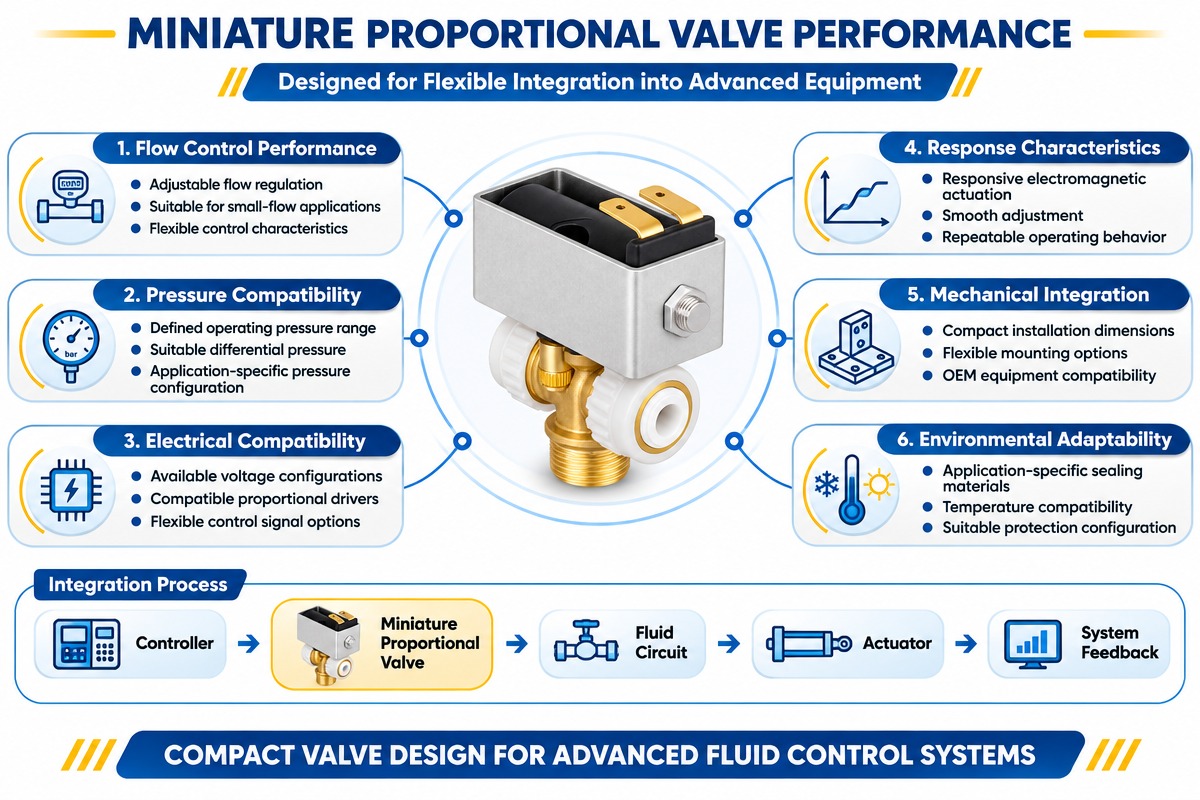
Flow capacity is important for the system performance. Select the valve with flow range that meets the required conditions. The valve can be either too big (limits the control resolution) or too small (limits the system performance).
3.Evaluating the Working Pressure
It is necessary to check minimum and maximum operating pressure, differential pressure and the pressure range. The valve should meet all the actual operating requirements but should not exceed the rated values.
4.Checking the Fluid Compatibility
The valve body and seal are made of different materials depending on the fluid. Check the compatibility with hydraulic oil, compressed air, water, chemicals and other service media. Check also the temperature, viscosity, seal performance and corrosion resistance.
5.Reviewing Electrical Parameters
Check the voltage, current, power consumption, the type of the connector and the control signal. Ensure that the valve is compatible with the equipment controller and power supply.
6.Considering the Response Time and Accuracy
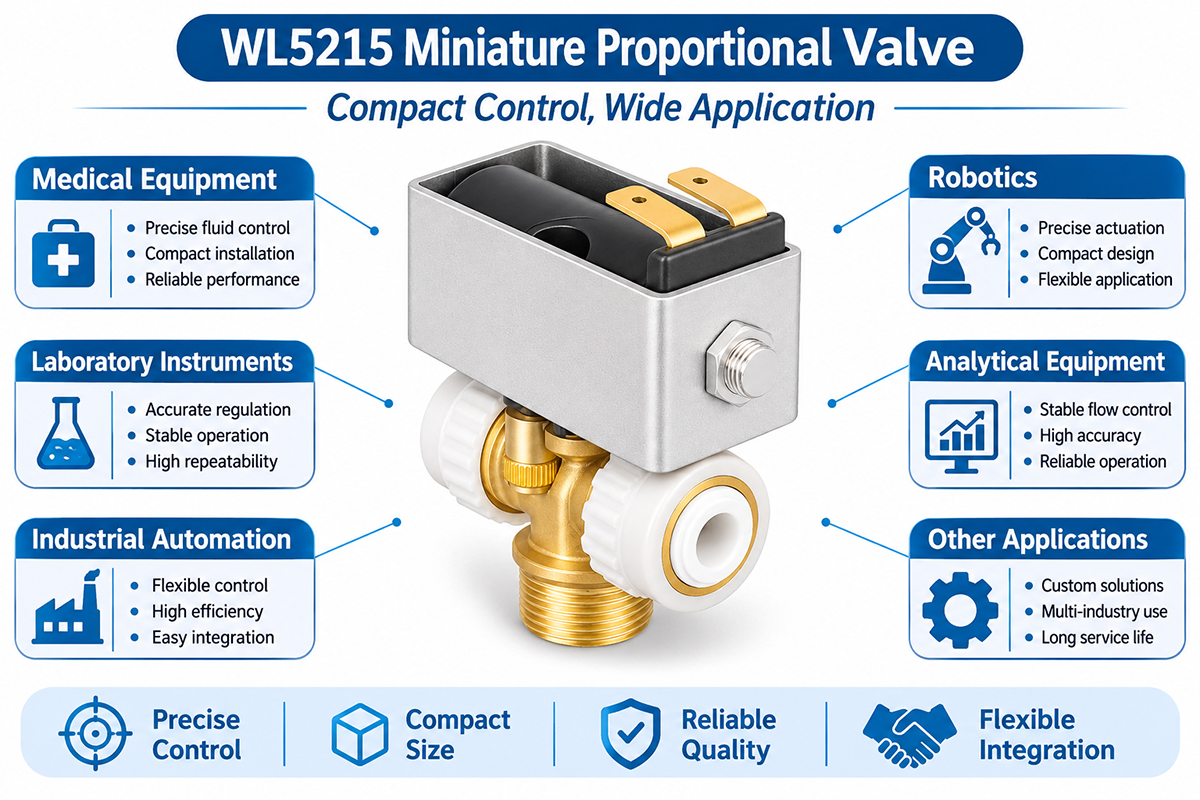
The response time and regulation accuracy are especially important for robots, laboratory equipment and automation. Hysteresis, repeatability, linearity and control stability should be checked.
7.Checking the Installation Dimensions
Check the overall dimensions, mounting locations, port dimensions, connection type and the access for maintenance. The valve should fit the available installation space and not to restrict the piping.
8.Taking into Account the Environmental Conditions
It is necessary to consider the enclosure protection requirements, exposure to dust, moisture, vibration and ambient temperature. Select the right construction for the real operating environment.
9.Evaluating the Manufacturer’s Capabilities
Select the manufacturer who will provide documentation, performance testing, quality control, customization and after-sales support.
10.Considering the Total Operating Cost
Compare the purchase cost, energy consumption, maintenance needs, service life and availability of replacements.
The right selection of miniature proportional valve increases performance, simplifies the integration and ensures the reliable equipment operation.
Design of Miniature Proportional Valves: Avoiding Common Mistakes
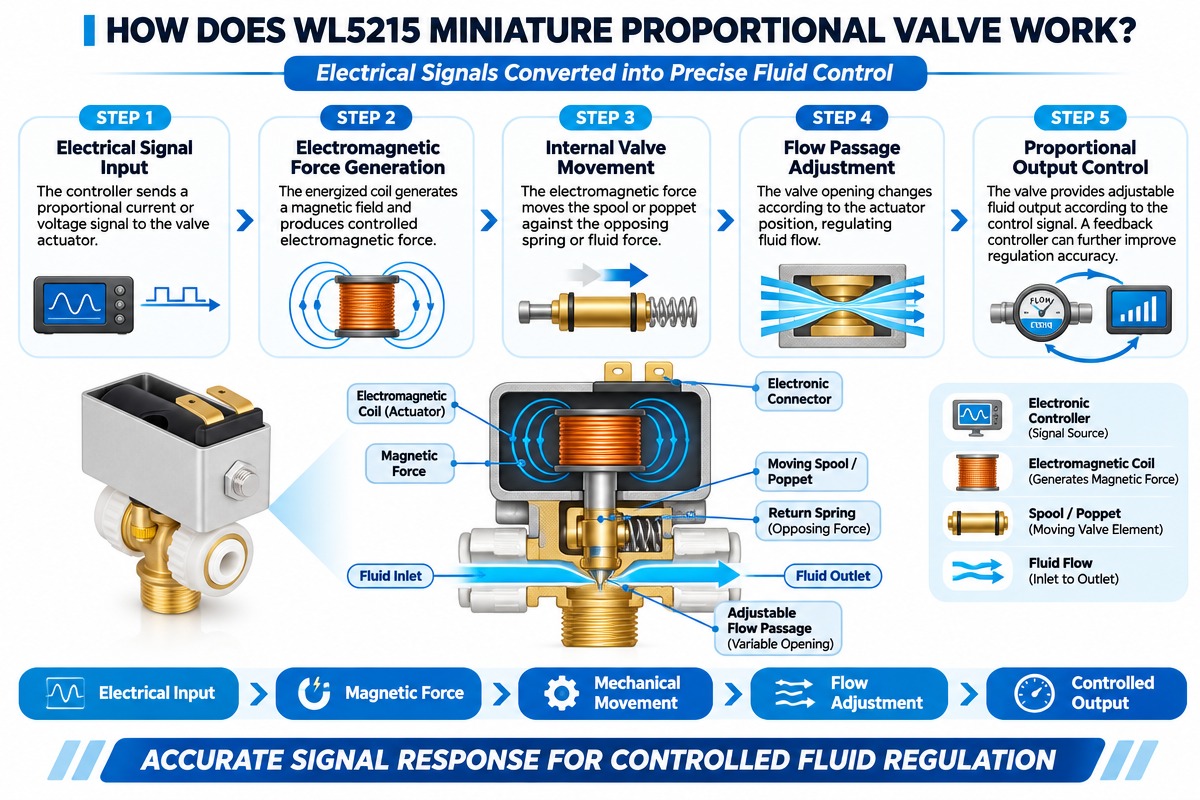
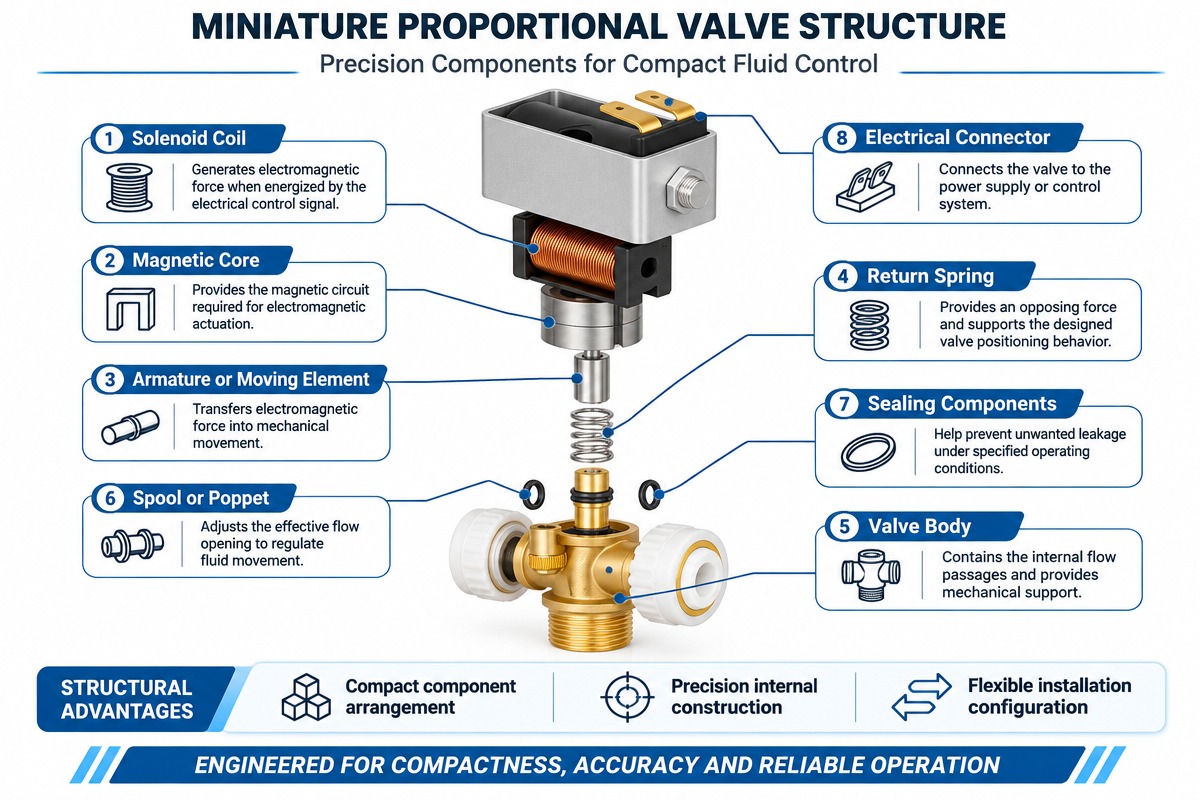
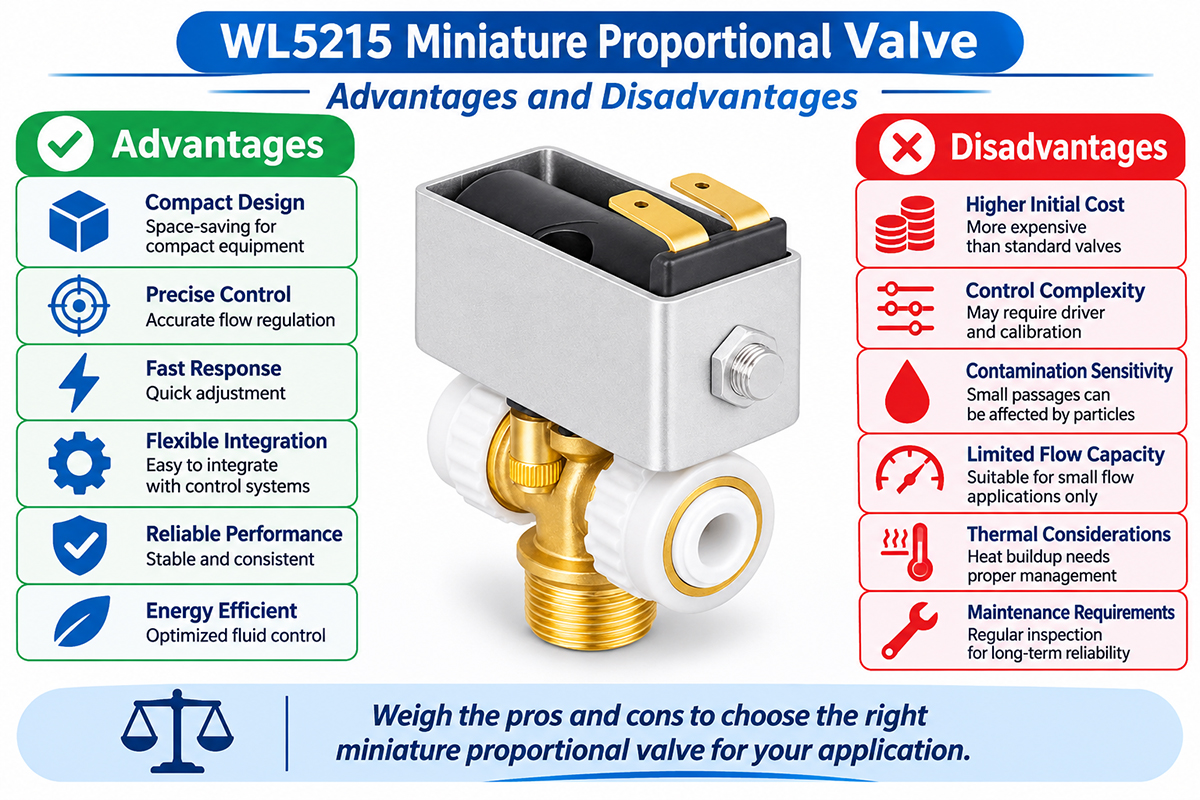
The designing of the miniature proportional valves requires taking into account the mechanical construction, electromagnetic performance, fluid dynamics and control accuracy. Otherwise, reliability and operating efficiency may be reduced.
1.Overlooking Flow Requirements
Incorrect flow capacity will mean either too much or insufficient fluid delivery or poor regulation. First, it is necessary to calculate the required flow rate and then choose the valve orifice and internals.
2.Selecting the Incorrect Material
Wrong materials for the valve body or seals can lead to corrosion, swelling, leakage or early breakdown. Always keep in mind the fluid compatibility and operating temperature.
3.Underestimating the Electromagnetic Performance
The solenoid should be capable of generating sufficient force in the working range. Engineers should take into account such parameters as the coil resistance, magnetic circuit design, heating and operating current.
4.Forgetting about Friction and Mechanical Tolerances
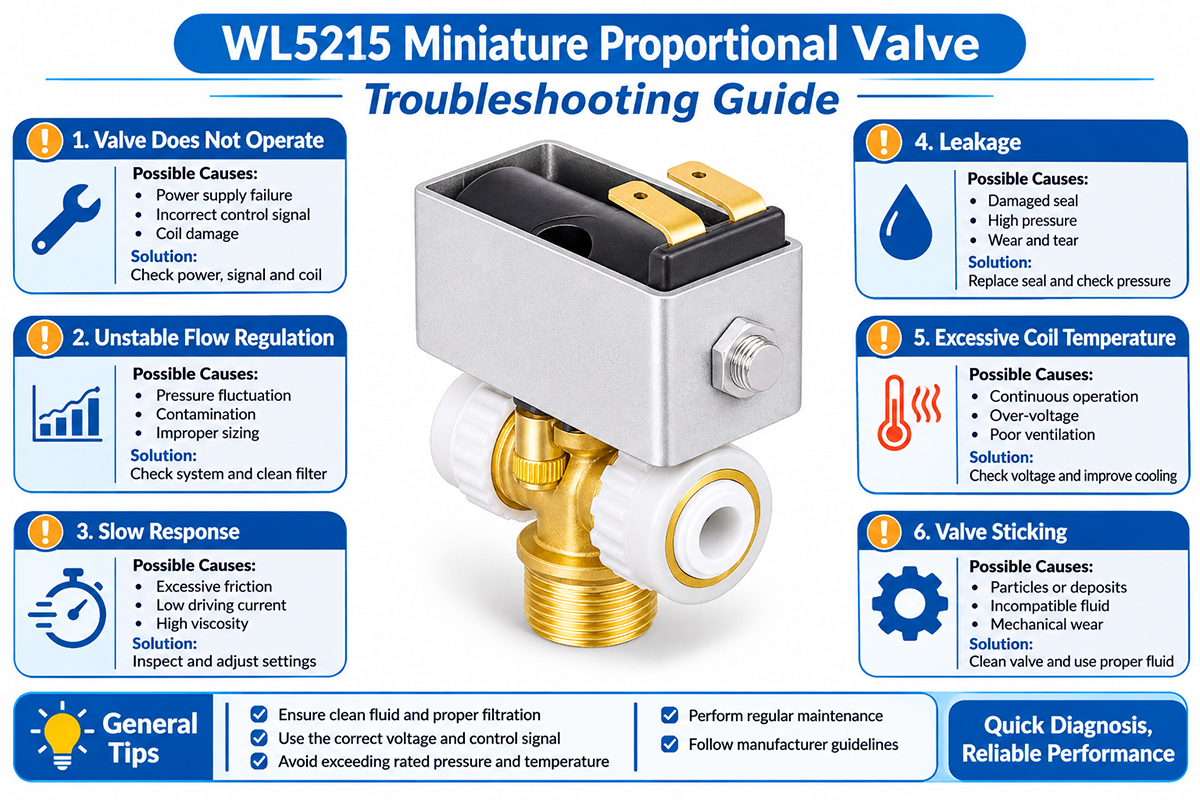
Too much friction and tolerance can cause hysteresis, sticking and unstable movement. Precision machining and surface finishing are very important.
5.Forgetting about Thermal Management
Heating due to continuous energizing can lead to insulation degradation and performance instability.
6.Not Designing the Valve for Contamination
Small passages of the valve are easily clogged by particles and debris. Proper filtration and contamination control protect the valve components.
7.Overlooking Control Compatibility
The valve design should be compatible with the control signals, controller characteristics and feedback requirements.
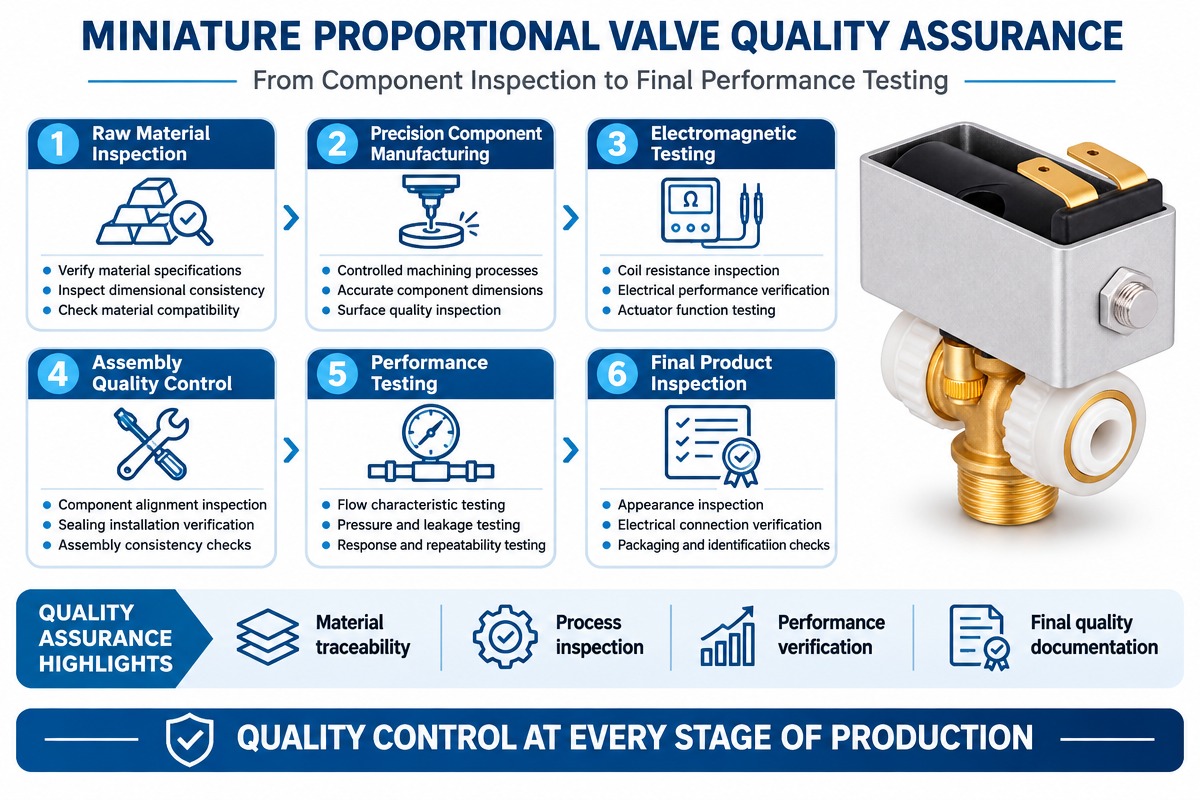
8.Insufficient Testing
It is necessary to test for flow, pressure, leakage, response, endurance and temperature under the representative conditions.