Choosing a Solenoid Pump Controller
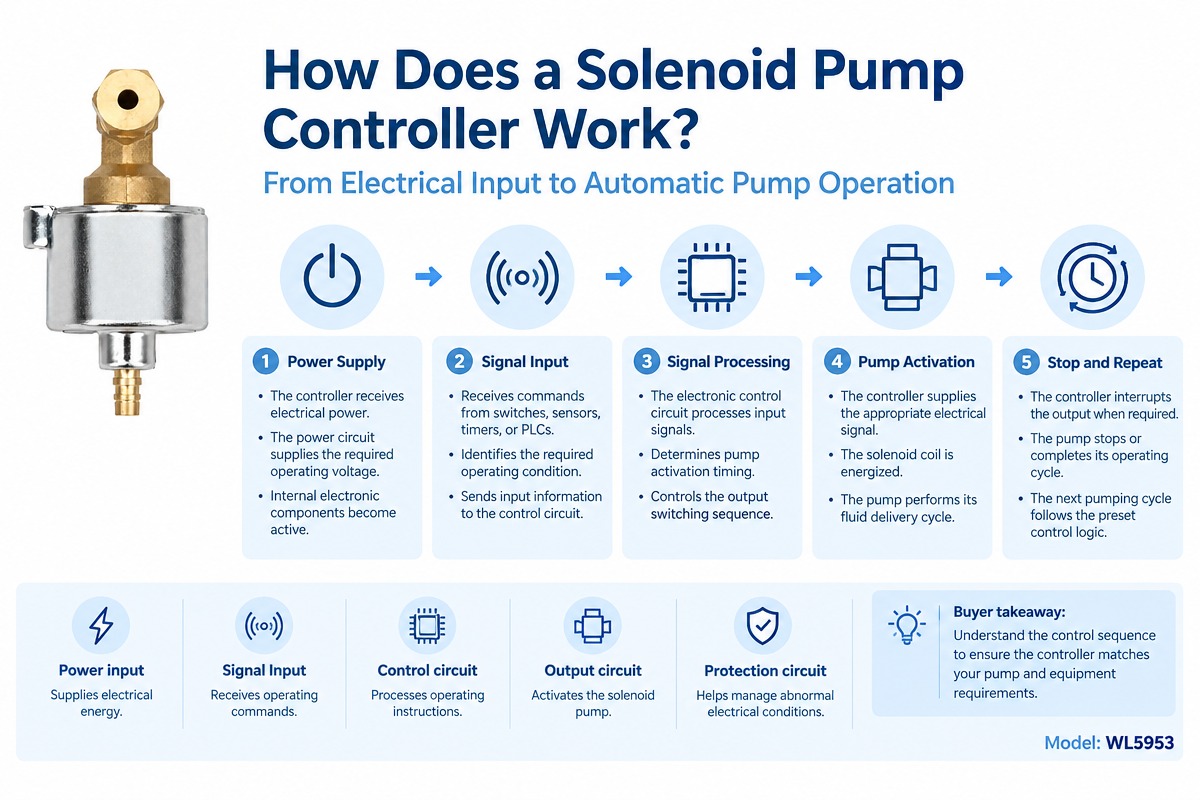
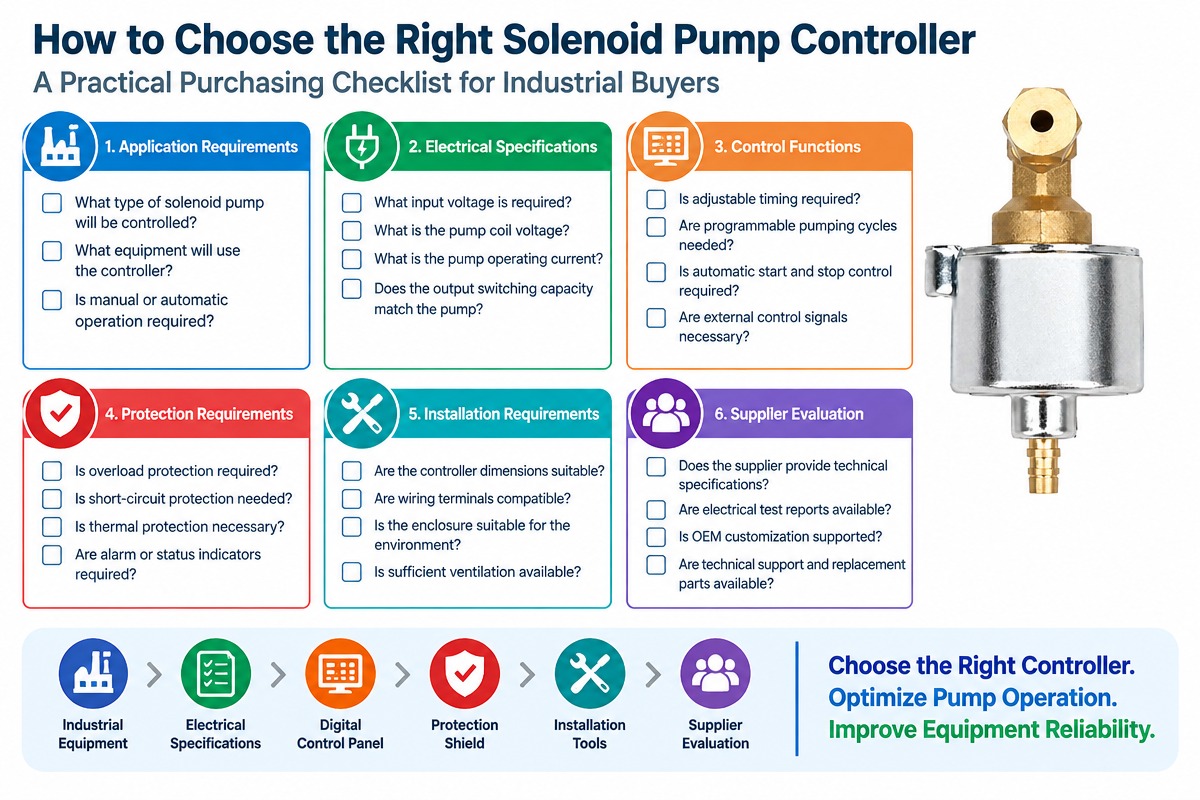
Choosing the right solenoid pump controller is critical for the stable operation of the pump, precise fluid dispensing and reliable connection of equipment. The following points need to be considered when buying.
1.Matching Verification
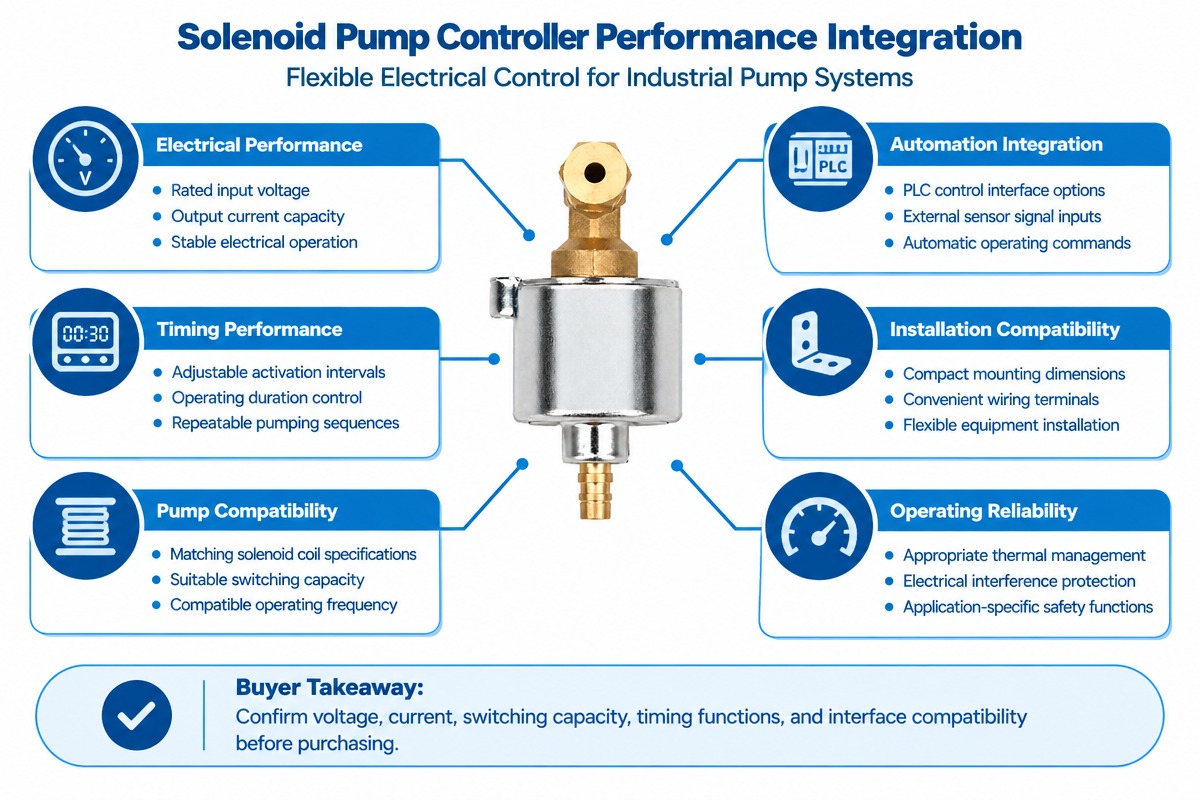
First, it is necessary to specify the model of the solenoid pump and its electrical specifications. The controller should be compatible with voltage, current, power consumption and operation requirements of the pump. Incorrect matching may lead to unstable operation or electrical damage.
2.Input Voltage Check
It is necessary to check whether it is AC or DC power. Find out rated input voltage, permissible voltage variations and electrical connection requirements.
3.Assess Control Functions
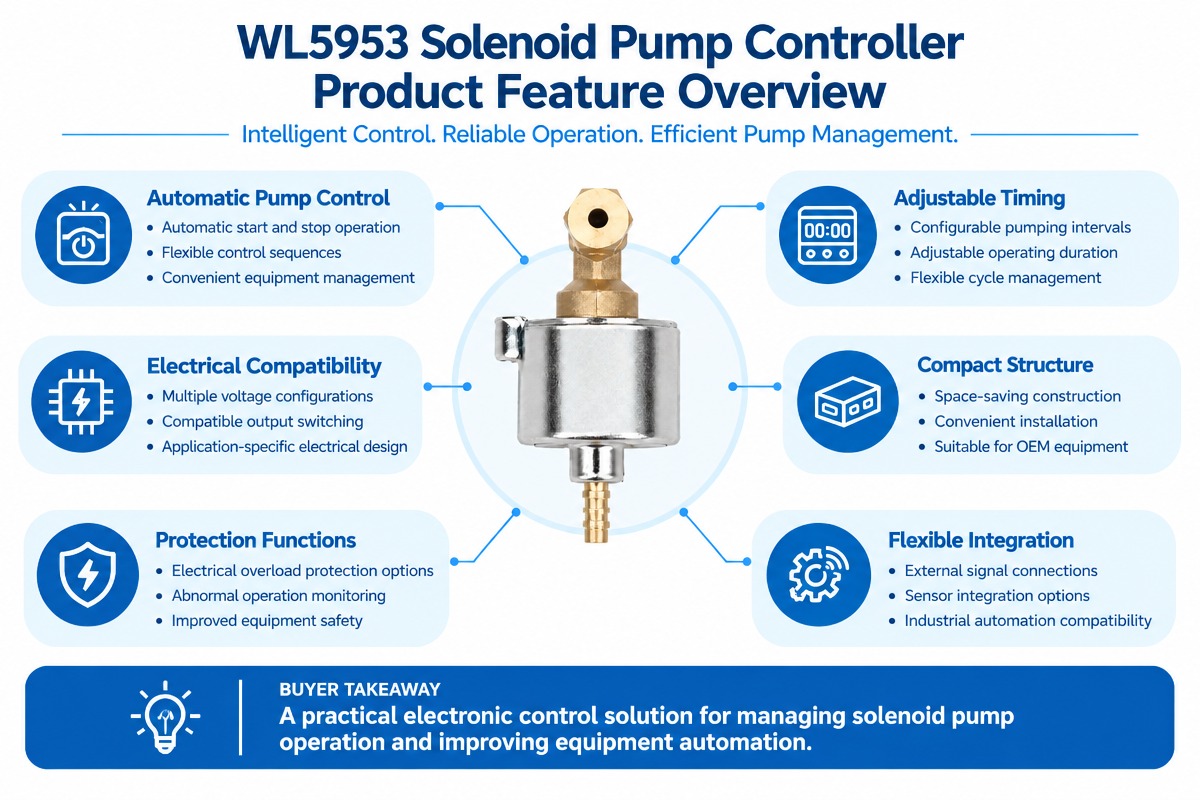
Different applications require different types of control. It is necessary to understand what kind of control is required: manual operation, automatic start and stop, timed operation, adjustable intervals or programmable pump cycles.
4.Consider the control precision
For chemical dosing and precision dispensing, the consistency of the timing and repeatability of the pump activation are critical. Check timing resolution and stability of operation of the controller.
5.Output Capacity Verification
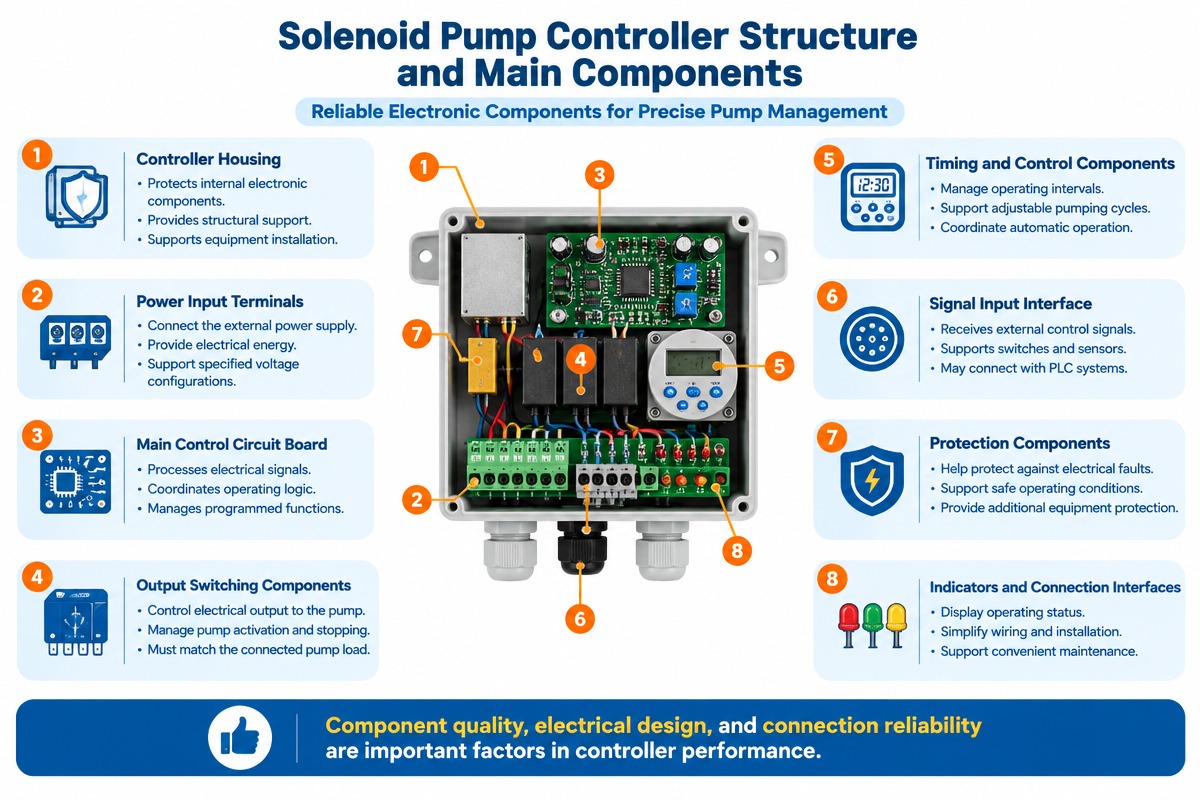
It is necessary to ensure that the output switching capacity of the controller corresponds to the electrical load of the pump. Consider the coil current, switching frequency and electrical protection requirements.
6.External Signal Compatibility Assessment
Some industrial systems require the interface with the PLCs, sensors, switches or other automation equipment. Verify that the input and output interfaces are appropriate.
7.Safeguard Features Assessment
Consider the availability of such functions as overload protection, short-circuit protection, over-temperature monitoring and abnormal operation alarms if it is applicable. These functions will help to protect the equipment and increase the safety of operation.
8.Installation Requirements Review
Check the sizes of the controller, the mounting methods, wiring terminals, enclosure protection and the available installation space. It is necessary to ensure that the controller is easily mountable in the equipment.
9.Operating Environment Assessment
The operating environment includes such factors as temperature, humidity, dust, vibration and electrical interference which may affect the performance of the controller. Select the appropriate housing and environmental class.
10.Evaluation of the Supplier and Customization Support
In OEM projects, it is necessary to clarify whether the manufacturer offers customized voltage, timing functions, control interfaces, wiring configurations and product dimensions.
Careful selection of the solenoid pump controller will help to increase the compatibility, reduce electrical problems, simplify operation and increase the reliability of the equipment.
Tips to Avoid Common Mistakes in Solenoid Pump Controller Design
The electrical compatibility, accuracy of control, operating conditions and protection of the equipment need to be considered carefully during the design of the solenoid pump controller. In order to improve the reliability of the product, avoid the following mistakes.
1.Wrong Voltage Selected
The wrong input or output voltage may damage the controller or the pump. Verify electrical specifications prior to the circuit design.
2.Disregard the Coil Current Requirements
The output of the controller must be capable to drive the solenoid coil operating current and switching. Install appropriate driver components if necessary.
3.Lack of Protection of the Circuit
The absence of the protection of the circuit against overload, short circuits and inductive voltage spikes leads to component failure. Consider protection devices and the design of the circuit.
4.Wrong Timing Configuration
If the activation time or pumping intervals are not adequate, the delivered amount of liquid may be incorrect. Adjust the timing parameters to the pump operating characteristics.
5.Poor Heat Management
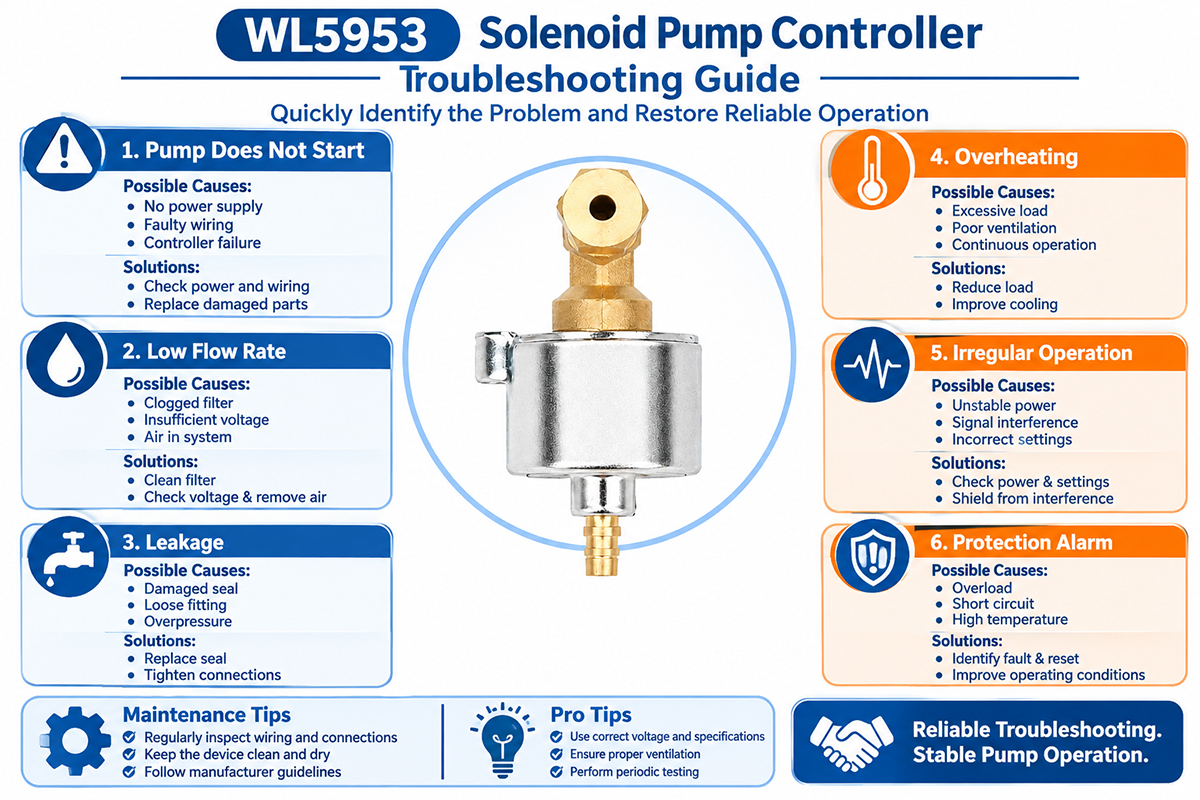
The heat generation by the switching devices and electronic components. Ensure appropriate thermal design and do not exceed the temperature limits of the components.
6.Incompatible Control Signals
The communication with the external controllers may be unreliable due to the wrong input signal levels or interfaces. Check PLC, sensors and switches compatibility.
7.Ignorance of Electromagnetic Interference
Electrical interference is generated by switching solenoid coils. Ensure the proper protection of the circuit, wiring scheme, grounding and filtering.
8.Absence of the Environmental Protection
Dust, moisture, vibrations and changes in temperature affect the electronics. Use the proper enclosure protection.
9.Insufficient Testing
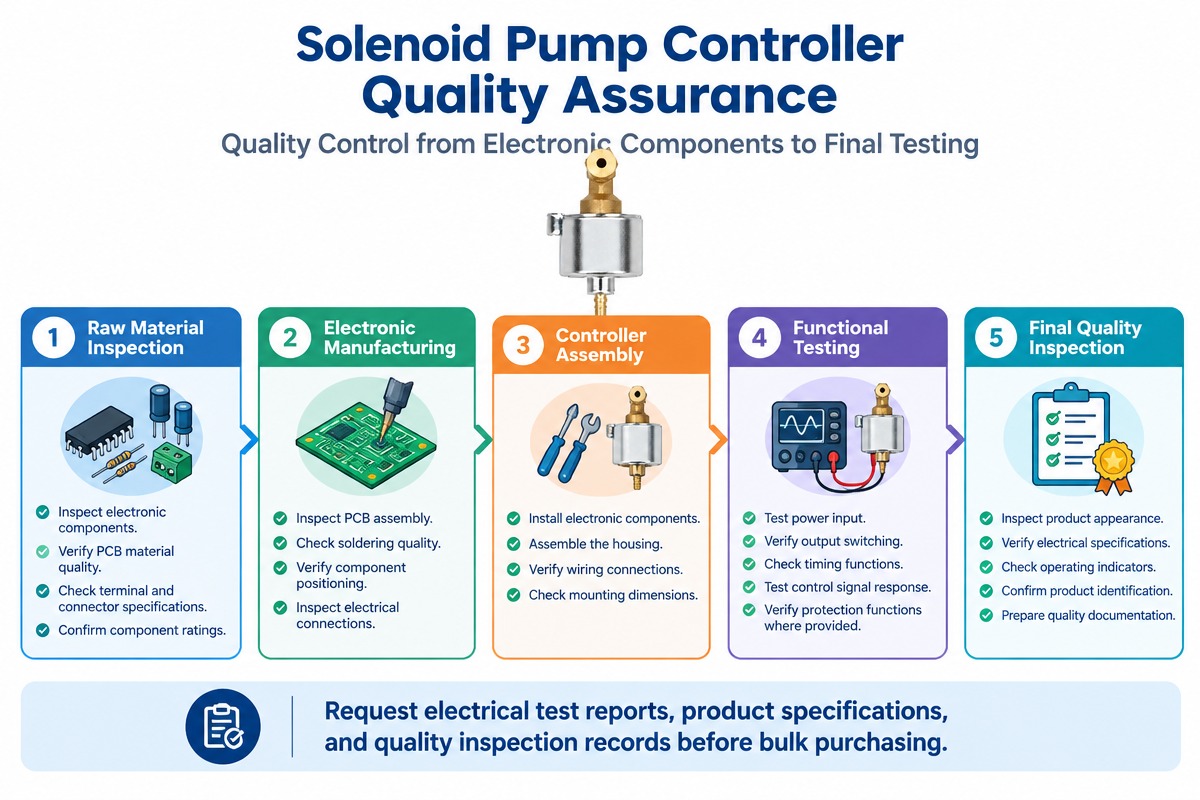
Always perform functional, electrical, thermal, switching and endurance tests under representative operating conditions.
The good design is the compromise between control accuracy, electrical safety, thermal stability, pump compatibility and easy installation.