Skip image slider
Corrosive Media Solenoid Valve for Industrial Design
Corrosive Media Solenoid Valve for Process Equipment
Corrosive Media Solenoid Valve for Chemical Storage
Corrosive Media Solenoid Valve for Precision Control
Corrosive Media Solenoid Valve for Corrosive Fluids
Corrosive Media Solenoid Valve for Harsh Environments

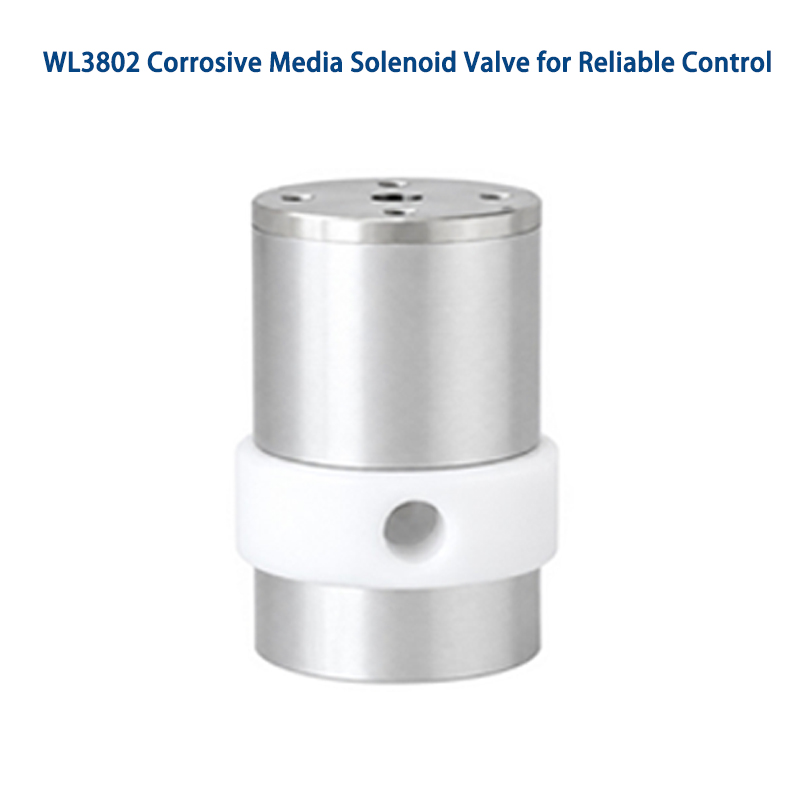
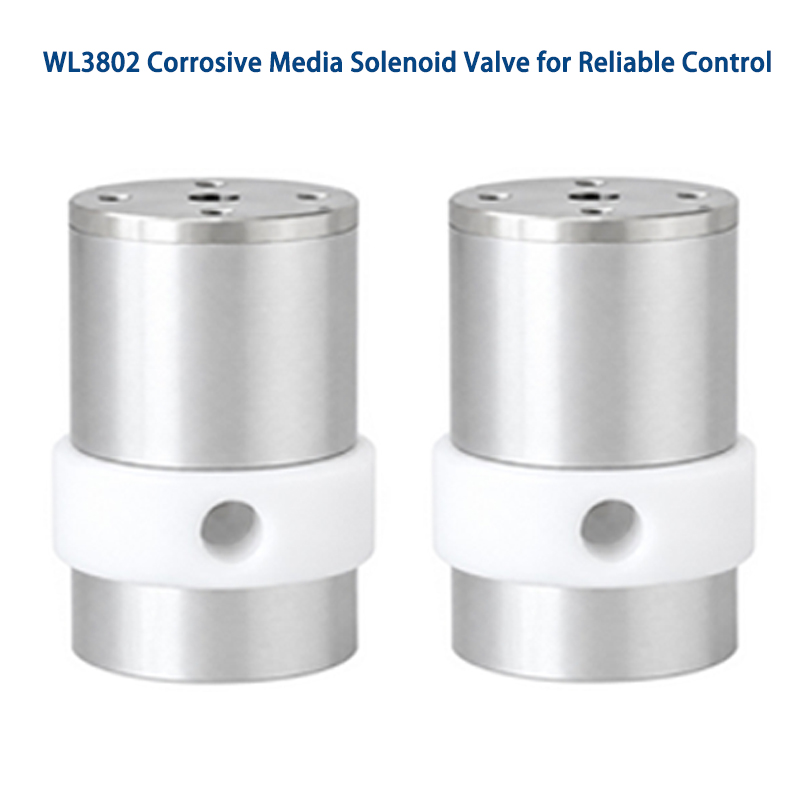
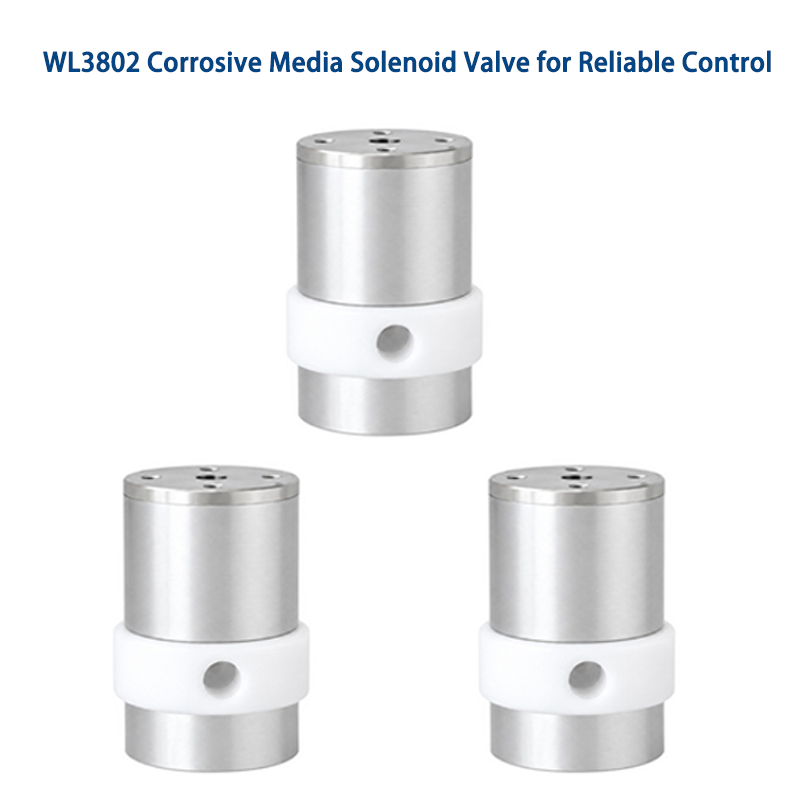
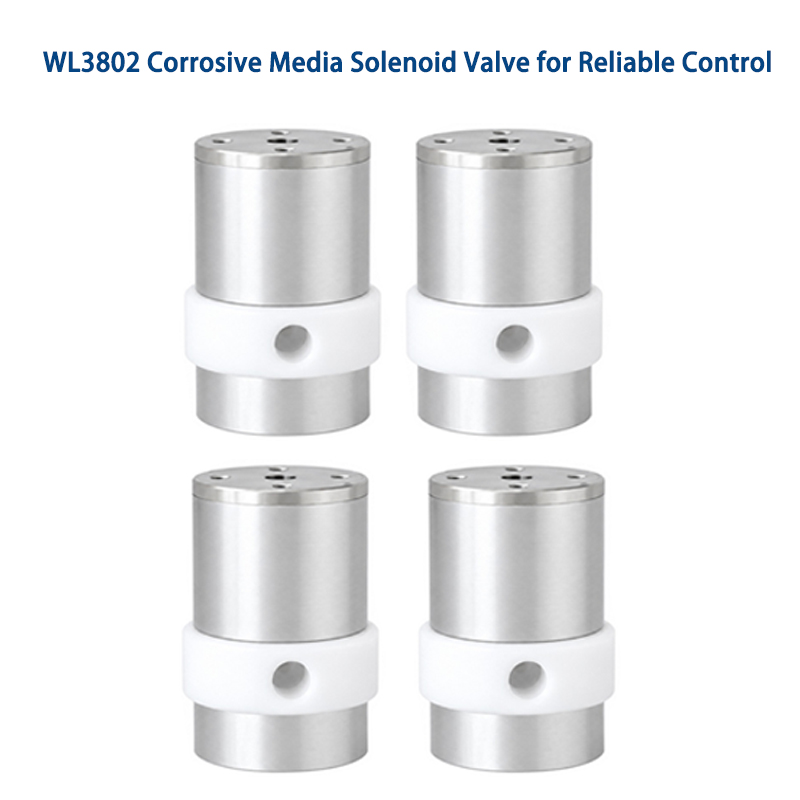
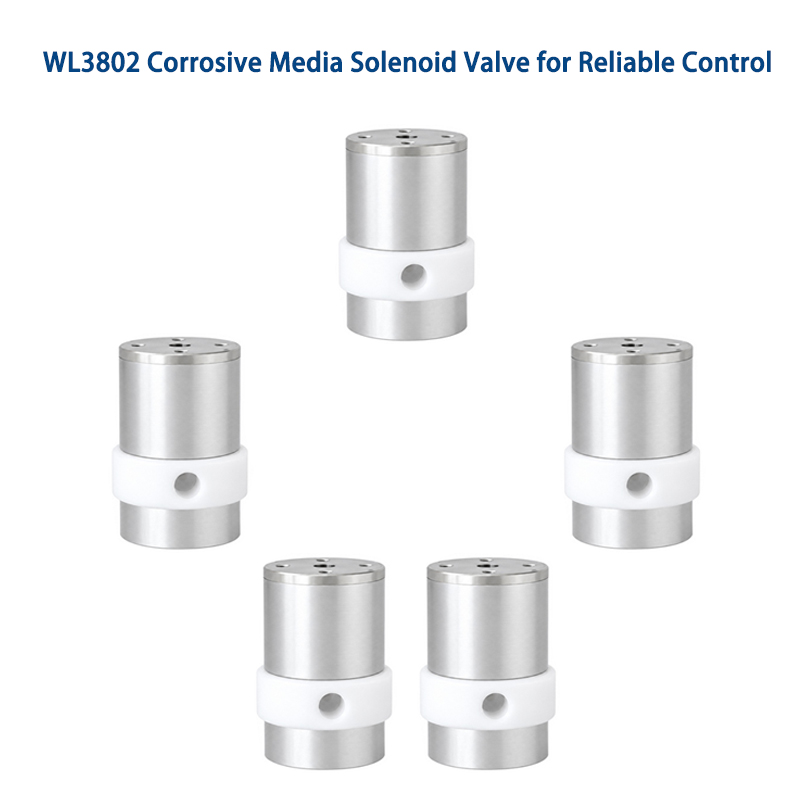
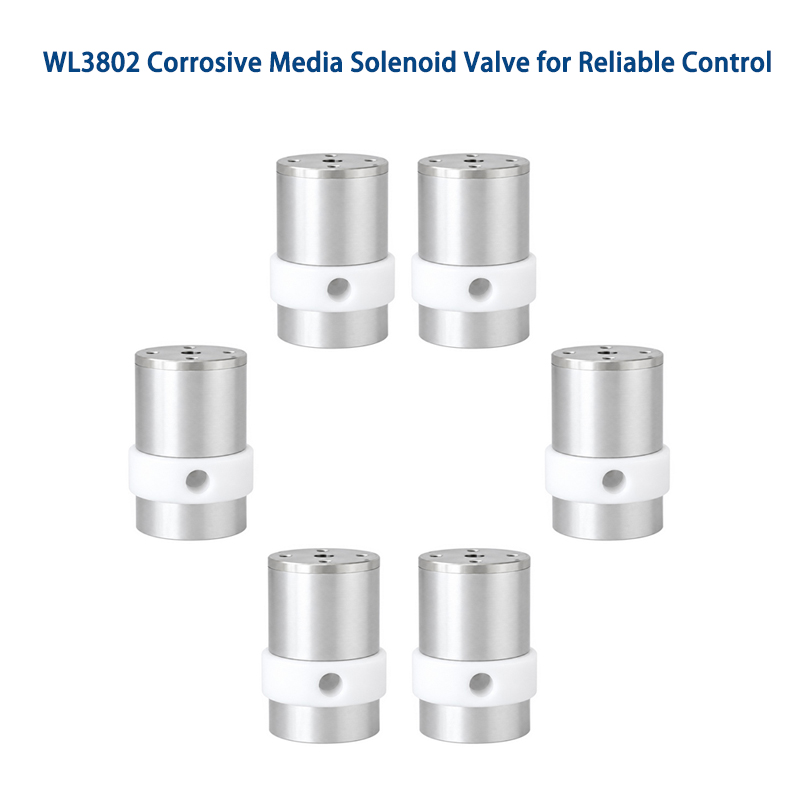
WL3802 Corrosive Media Solenoid Valve for System Integration

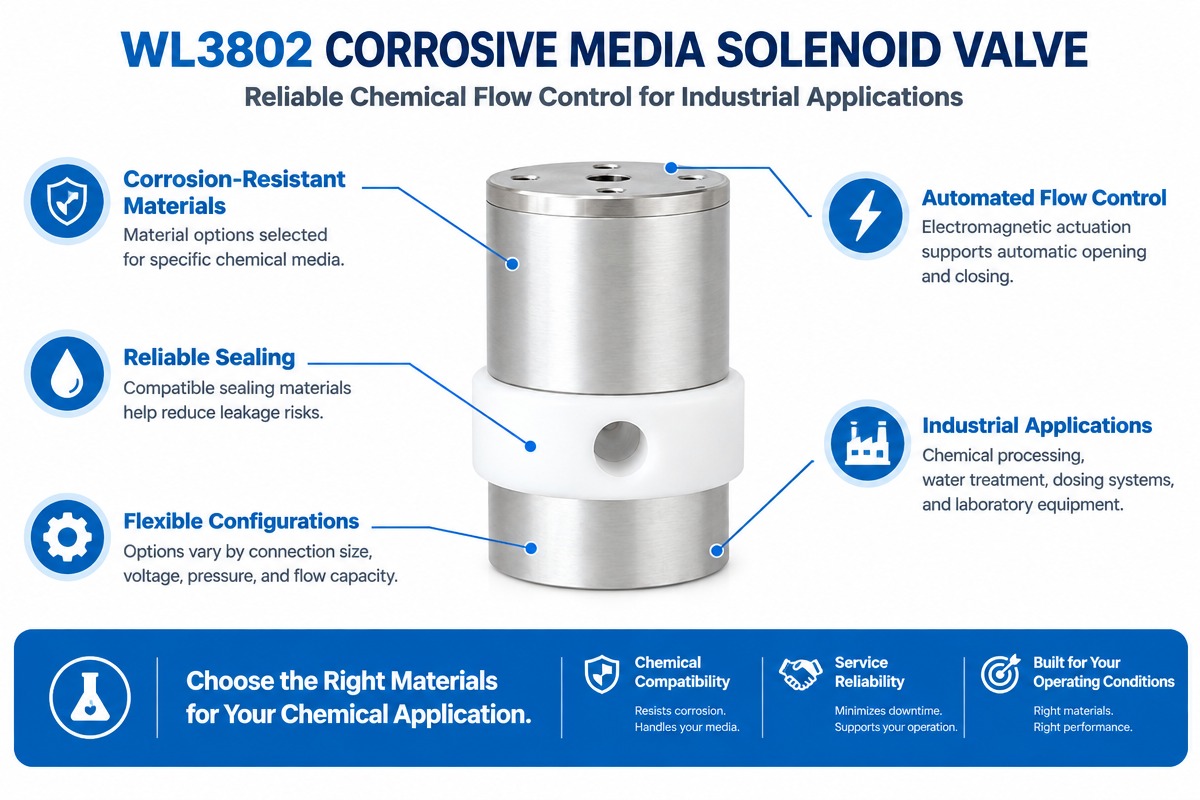
Corrosive Media Solenoid Valve A Corrosive Media Solenoid Valve is an Electrically Operated Valve that Controls the Flow of Aggressive Liquids and Gasses in Industrial Systems. It is widely used in chemical processing, water treatment, pharmaceutical production, laboratory equipment and automated fluid handling applications. Depending on the medium, operating conditions and valve design, suitable wetted materials can be PTFE, PVDF, PVC, stainless steel or other chemically compatible materials. Selection of seals is also important because elastomers that are incompatible can swell, crack, leak or degrade in service. The valve is driven by an electromagnetic coil that triggers an internal mechanism, which enables the flow passage to be automatically opened or closed. Important selection factors are chemical concentration, temperature, pressure, flow rate, connection size, voltage and the required operating cycle. Using the right materials and proper installation can extend service life, reduce the risk of leaks and provide better control over the process. “Buyers should check chemical compatibility, pressure ratings, certification requirements and manufacturer recommendations before buying the valve for demanding applications.”

Corrosive Media Solenoid Valve Description

What is a Corrosive Medium Solenoid Valve?

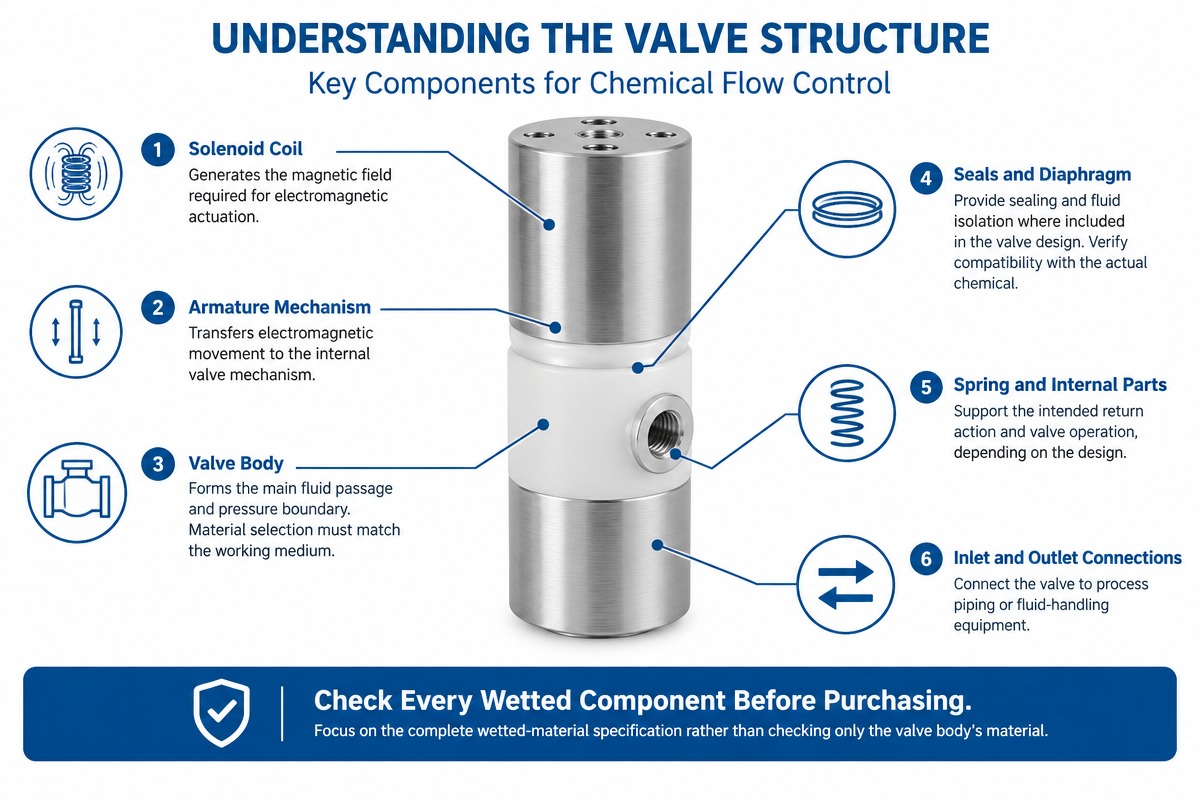
Corrosive Media Solenoid Valve A Corrosive Media Solenoid Valve is an electrically operated valve used to control fluids that are corrosive to normal valve materials. These fluids include acids, alkalis, oxidizing solutions and industrial chemical mixtures. The valve consists of an electromagnetic actuator and a fluid handling body, seals and internal moving parts chosen according to the medium to be handled. Wetted parts can be fluoropolymers, engineered plastics, stainless steel or other compatible materials depending on the application. The valve supports automatic fluid switching, dosing, isolation and process control. The right choice of materials is essential to avoid chemical degradation, leakage, premature failure and unpredicted maintenance cost during industrial service.

How a corrosive media solenoid valve works?

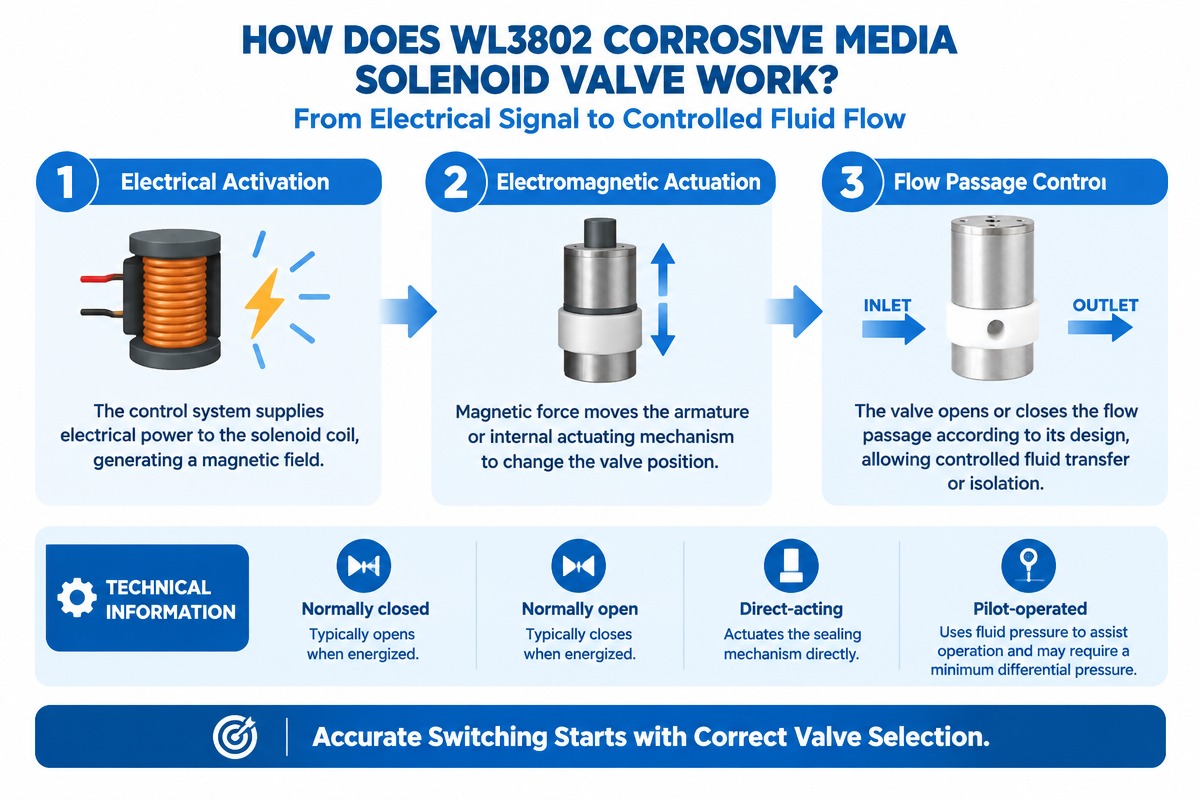
Electromagnetically Operated Corrosive Media Solenoid Valve The control system applies electrical power to the coil, and the resulting magnetic field moves an armature or actuating mechanism. The movement opens or closes the internal flow passage according to the design and normal position of the valve.

Normally closed valves usually open the passage when the coil is energized and close when power is removed. The normally open design is just the opposite. Direct-acting valves are moved directly by electromagnetic forces acting on the sealing element. Pilot-operated valves use fluid pressure to assist in operation and may require a minimum differential pressure.

The valve is made with chemically resistant materials for the body, seals and internal parts to resist degradation from the specified medium. Proper operation requires the use of compatible materials, suitable pressure and temperature conditions, and a suitable electrical supply and installation according to the manufacturer’s instructions.

Corrosive Media Solenoid Valve Video

Corrosive Media Solenoid Valve Detail Display

Corrosive Media Solenoid Valve Data Shee

Brand Weilong Model Number WL 3802
Rated Voltage (V) DC12V or 24V Rated Power (W) 3.8W
Work Mode Air or Liquid Control Valve Working Pressure (MPa) 200 kPa
Air-Flow Rate 0 L/minute Reset Time(s) 0.25 S On, 0.25 S Off
Service Life 200 Thousand Times Certification CE, ROHS, ISO9001,
Pipe Gate ย inside: 2 mm Lead Wire Length (mm) 38 MM
Install Style Screw Tolerance of Dimension ยฑ 0.1 MM
Water-proof None Insulation Class B
Hi-Pot Test AC 600V 50/60 Hz 2s Non-excitation Holding Force 0
Working Temperature -50ยฐC-180ยฐC Duty Cycle 1-100%
Thread Depth (mm) / Payment Term TT, or LC At Sight
Sample Order Yes. Warranty 1 Year
MOQ 1000 pcs Supply Ability 5000 pcs per week
Delivery Time 30 Days Port of Loading Shenzhen

Why So Popular Is the Corrosive Media Solenoid Valve?

Corrosive Media Solenoid Valves are attracting attention as industries are in need of automated and reliable control of aggressive fluids. Precise fluid control is essential in chemical processing, water treatment, pharmaceutical manufacturing, electronics production, and environmental engineering.

An important one is automation. Electrically operated valves can be connected to controllers, sensors and automated dosing systems, which reduces the need for repetitive manual intervention. This results in consistent process flows and a more efficient operation.

Another point is material specialization. Manufacturers offer a variety of body materials and sealing options and internal configurations for specific chemical environments. When specified correctly, these options can help increase service life and reduce maintenance related to corrosion.

Compact installation also makes solenoid valves suitable for laboratory instruments, analytical equipment, compact dosing units and integrated machines. The electrical actuation allows for remote switching and integration into modern control architectures.

Furthermore, industries are under growing pressure to improve process consistency, reduce unplanned downtime and control chemical consumption. The right valve can help with repeatable dosing, reliable isolation and improved equipment availability.

However, popularity does not mean that every solenoid valve is suitable for every chemical. Compatibility is determined by the particular medium, concentration, temperature, pressure and materials of the components. Buyers who consider these factors closely can choose a solution that meets application requirements, while balancing reliability, maintenance and total operating cost.

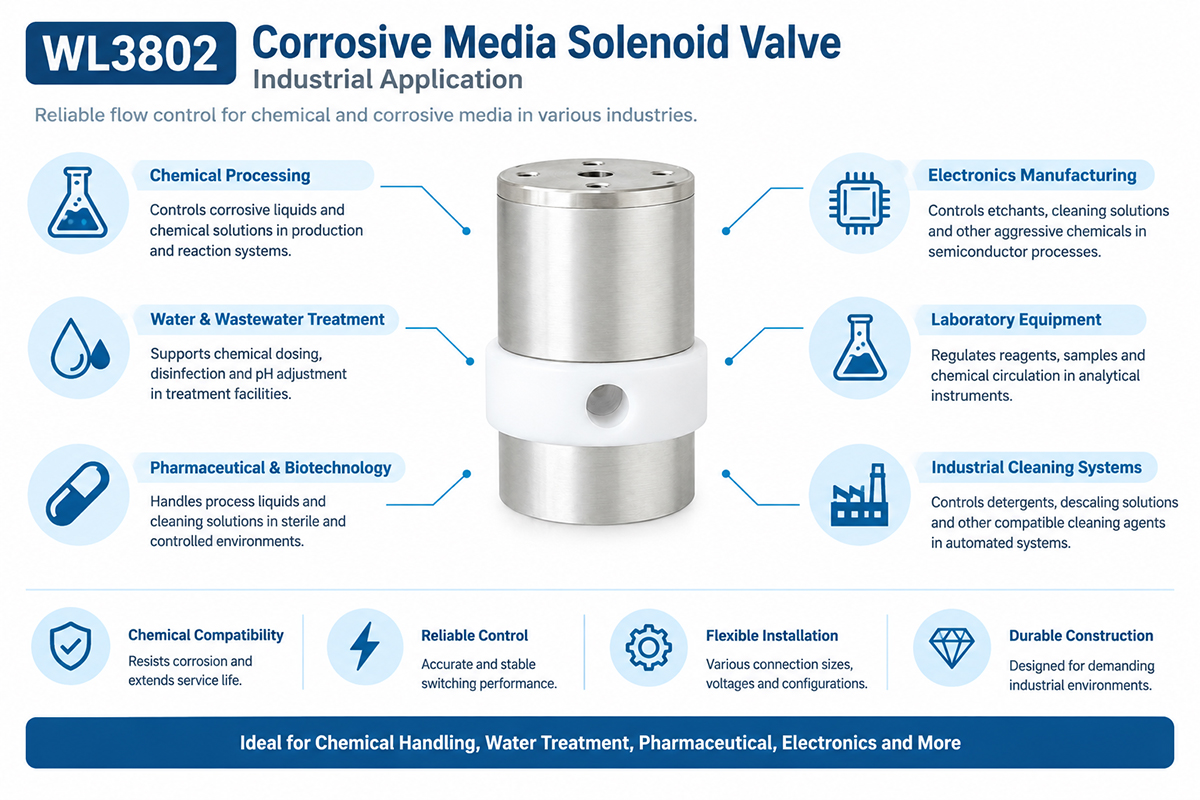
Corrosive Media Solenoid Valve Applications

Corrosive Media Solenoid Valve for OEM Applications

Corrosive Media Solenoid Valves are used in industrial environments where aggressive liquids or gasses need to be switched, isolated or dosed in a controlled manner. Their suitability is a function of proven chemical compatibility with the operating specifications of the model selected.
Chemical processing plants: These valves control compatible acids, alkalis, chemical additives and process solutions in automated production lines. They allow for liquid transfer and dosing, and isolation of equipment.
Water and wastewater treatment: Chemical dosing equipment may be used in treatment systems to supply disinfectants, pH-adjustment chemicals and other treatment solutions. The materials of the valve must correspond to the actual chemicals and concentrations used.
Pharmaceutical and biotechnology equipment โ€“ Compatible solenoid valves can control cleaning solutions, process liquids and specialized chemical feeds. Equipment must be correctly designed and qualified for use in applications where hygienic construction is required.
Electronics manufacturing: Aggressive cleaning solutions, etchants and other specialty chemicals may be used in semiconductor and electronics processes. Material purity, contamination control and chemical resistance are key selection factors.

Laboratory and analytical instruments: Compact valves are used to control reagent delivery, sample preparation and chemical circulation in automated testing systems.

Industrial cleaning equipment. Automated cleaning systems control detergents, descaling solutions and other compatible cleaning agents with appropriate valves.
Agricultural and environmental systems โ€“ Valves that are resistant to corrosion are frequently employed in chemical dosing, pollution control and water management systems to regulate fluid flow.
Engineers must verify chemical compatibility, temperature, pressure, flow requirements, electrical specifications and applicable safety standards for these applications prior to installation. Choosing correctly helps to ensure reliable operation and to minimize the risk of leakage.

Corrosive Media Solenoid Valve Adv. & Disadv

Corrosive Media Solenoid Valve for Industrial

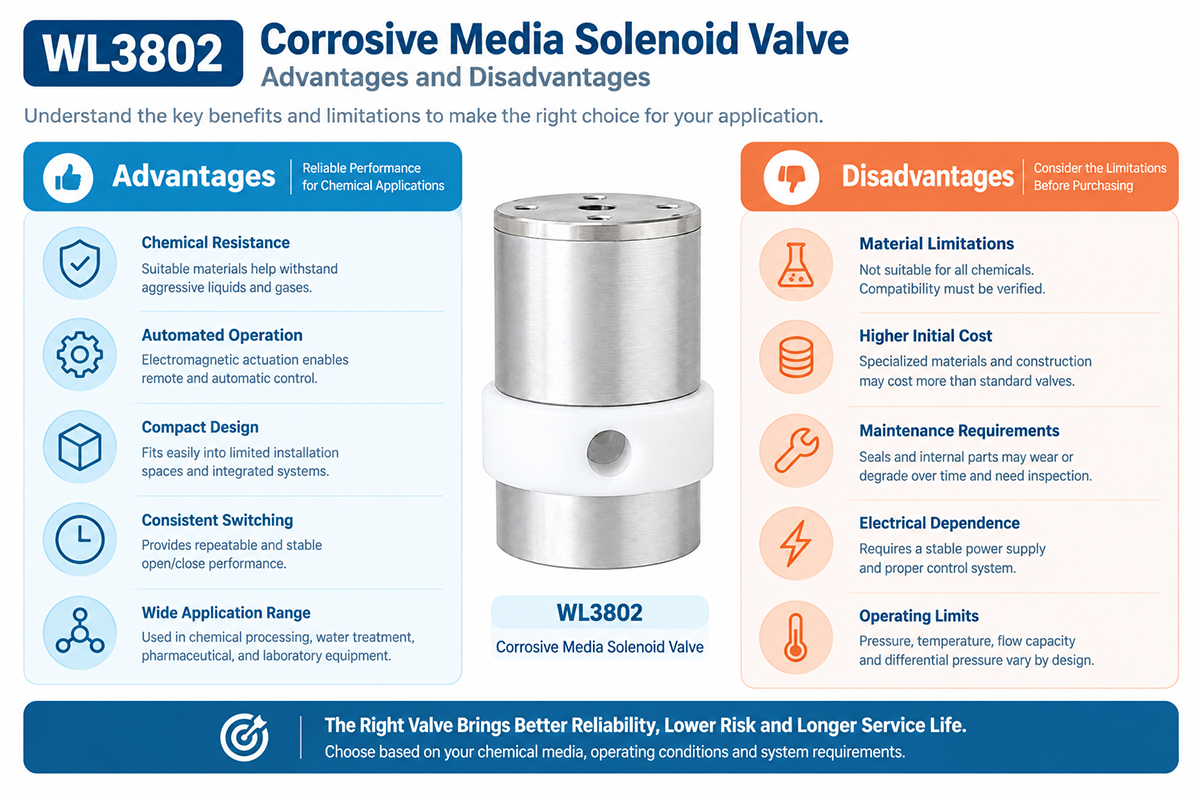
Advantages and Disadvantages of Corrosive Media Solenoid Valves

Corrosive Media Solenoid Valves provide some benefits in industrial chemical handling applications, but the drawbacks should be considered when designing a system.

Benefits

1.Automated operation: Electrical actuation allows integration with programmable logic controllers, timers, sensors and automated dosing equipment.

2.Chemical-resistant construction: Compatible body and seal materials are capable of withstanding specified corrosive media, with less premature deterioration than incompatible conventional materials.

3.Compact design: Many models fit into limited installation spaces, useful in laboratory instruments, dosing skids and compact machinery.

4.Repeatable switching. Choosing the right valves guaranties that they will open and close reproducibly over the process cycles.

5.Reduced manual intervention: Chemical transfer and dosing operations can be simplified through remote control, which reduces the need for frequent manual valve operation.

Downsides

1.Material Limitations No single valve material will be compatible with all acids, alkalis, solvents or chemical mixtures. You’ll need to check compatibility carefully.

2.Higher initial cost: Specialized materials, seals, and construction may be more expensive than standard solenoid valves.

3.Maintenance required: Periodic inspection is required because deposits, contamination, seal wear, and chemical degradation can impact performance.

4.Electrical dependence: Models that are electrically actuated need a suitable power supply and the right control arrangements.

5.Operating limits: Maximum pressure, temperature, flow capacity and minimum differential pressure vary with design.

Overall these valves can offer good control of chemical flows if correctly specified. Their long term value is dependent upon the right materials, installation, operating conditions and preventive maintenance.

Corrosive Media Solenoid Valve for Factory Automation

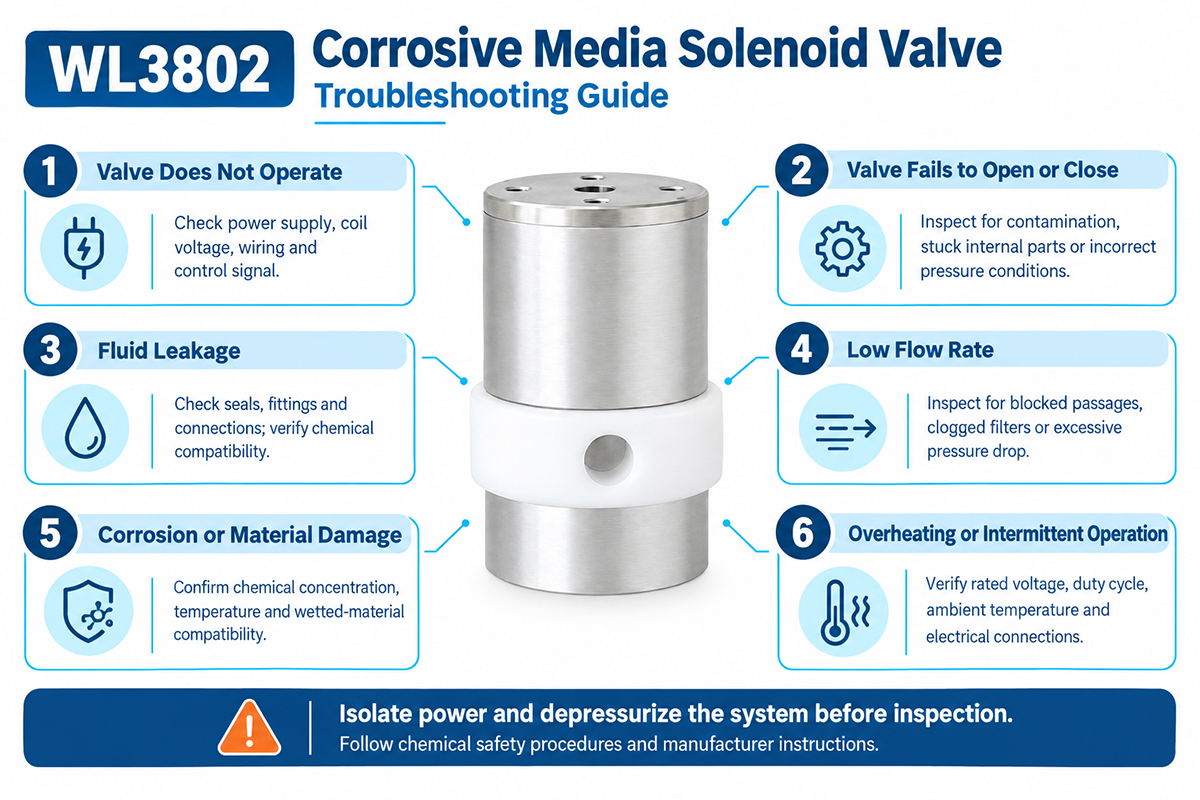
Troubleshooting Corrosive Media Solenoid Valves

To troubleshoot Corrosive Media Solenoid Valve, the first step is to identify the symptom and check the system against the manufacturer’s specifications. Isolate and depressurize the line before inspection and use proper chemical-handling and electrical safety procedures.

1.If valve does not open, check power supply, coil voltage, wiring, controller output and electrical connections. If electrical conditions are OK, check for blocked passages, stuck armature or wrong operating pressure.

2.Valve doesn’t close: Ensure that the coil is de-energized when needed. Look at trapped particles, damaged sealing surfaces, improper installation or incompatible seals that have degraded.

3.External leakage: Inspect body connections, seals, fittings, and installation surfaces. Replace damaged components with approved compatible parts and tighten connections per the manufacturer instructions.

4.No flow: Check for plugged filters, restriction in piping, undersized valve, too much pressure drop or pressure conditions outside specified range.

5.Coil Overheating: Verify that the supply voltage and electrical duty are appropriate for the coil rating. Check for excessive ambient temperature, improper wiring, improper conditions for continuous operation.

6.Corrosion or rapid degradation โ€ข Re-assess chemical composition, concentration, temperature and compatibility of all wetted components. Use a known compatible configuration instead of unsuitable materials.

7.Intermittent operation Check control signals, loose wiring, contamination, unstable pressure, fluctuating power supply.

Perform appropriate leakage and functional tests after corrective work before returning the equipment to service. If the cause is not apparent contact the manufacturer before operating a potentially unsafe valve.

FAQ

1. What is Corrosive Media Solenoid Valve?

Corrosive Media Solenoid Valve is the electrically operated valve that is applied for regulation of aggressive media including acids, alkalis and some chemical solutions. In order to prevent corrosion and provide reliable regulation of fluid, materials chemically resistant to the media and compatible with it are used as the body and seal materials.

2. Which materials should be used for Solenoid Valve for Corrosive Media?

The selection of the suitable materials depends on chemical composition, concentration, temperature and pressure of the medium. Some of the common materials are PTFE, PVDF, PVC, stainless steel and some specialty elastomers. Wetted parts of the valve including valve body, seals and inner parts should be checked for the chemical compatibility.

3. Where Corrosive Medium Solenoid Valves are used?

They are widely used in chemical industry, water and waste water treatment facilities, pharmaceuticals manufacturing, electronics industry, laboratory devices, industrial cleaning facilities and automated chemical dosing stations. Switching and fluid delivery are available for any application where there is necessity to regulate aggressive media using compatible materials.

4. What is the operation principle of Corrosive Media Solenoid Valve?

When the electricity is supplied to the coil of the solenoid valve, the magnetic field moves the internal armature or mechanism and opens or closes the flow passage. Typically, after the electricity removal, the valve returns to its initial position. Operation principle depends on whether the valve is normally open or normally closed and direct acting or pilot operated.

5. How to select the right Corrosive Media Solenoid Valve?

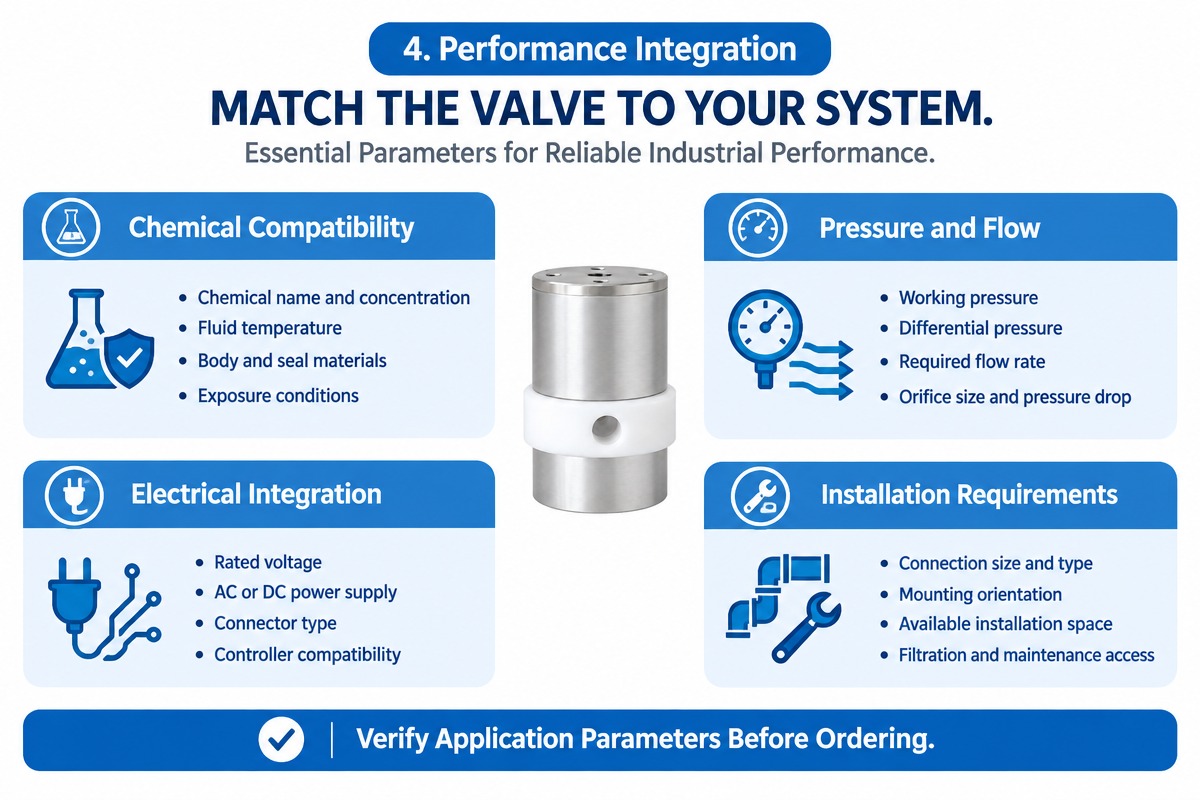
It is necessary to specify the chemical of the media, its concentration, fluid temperature, operating pressure, desired flow rate and connection sizes. It is also needed to check the chemical compatibility of the body and seals, operation principle, coil voltage, duty cycle and protection level of the valve in the environment. You should consult the manufacturer’s technical literature for the selection.

6. Can Corrosive Media Solenoid Valve be used for the strong acids and alkalis?

Yes, there are the special valves that can work with specific strong acids or alkalis, if the wetted materials of construction are compatible with the chemical and operating conditions. But there is no single valve which can be used for all corrosive media. Before installation it is necessary to consider the concentration of the chemical, temperature and exposure time.

7. What are the common problems with Corrosive Media Solenoid Valves?

The problems may be inability to open or close, internal or external leakages, low flow, heating up of the coil, blockage of passages and rapid deterioration of the material. The reasons are the electrical problems, contamination, incorrect pressure, incompatible seals and unsuitable operating conditions. The regular inspections and correct choice of materials will minimize these problems.

8. How to extend the service life of Corrosive Media Solenoid Valve?

It is necessary to use the materials chemically compatible with the media, operate at the correct pressure and temperature ranges, install the valve correctly and apply the filtration where needed. To extend the life, it is also recommended to check regularly the seals, connections, coils and inner parts of the valve.

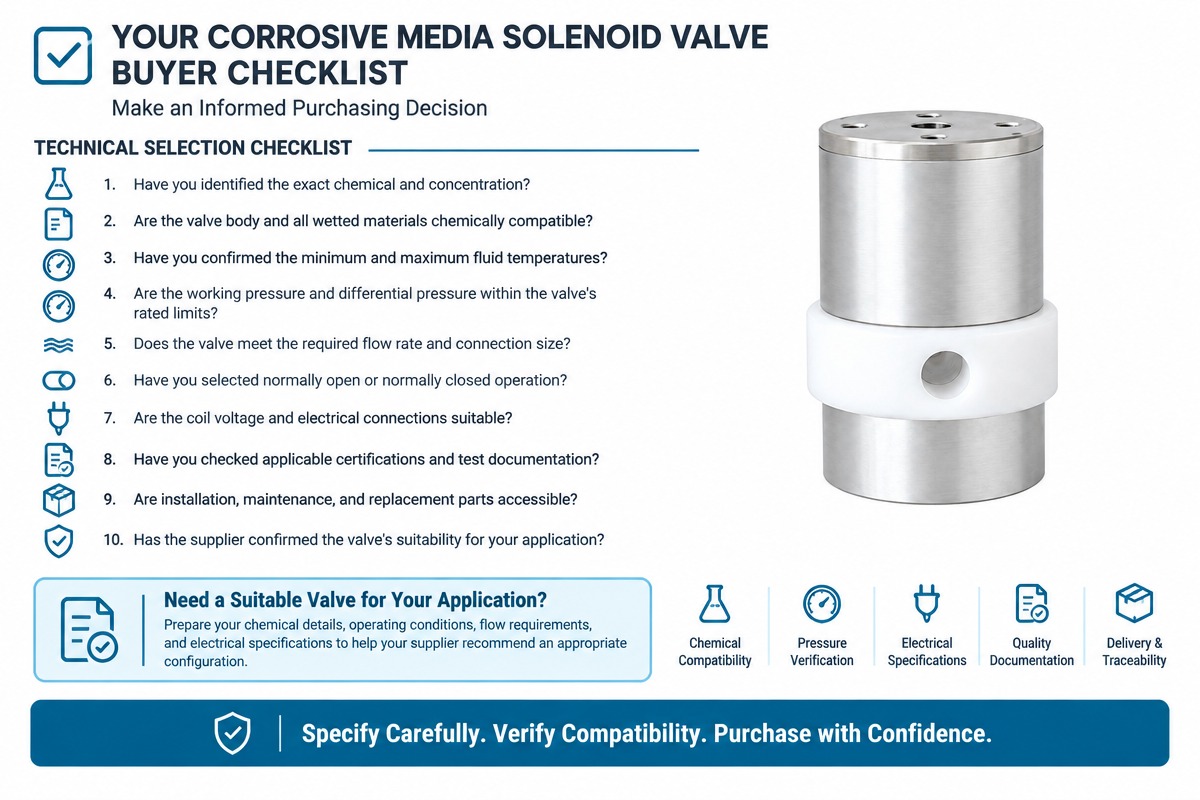
How to Select a Corrosive Media Solenoid Valve

The factors to consider when selecting a Corrosive Media Solenoid Valve are chemical compatibility, operating conditions, valve construction and control requirements. Choosing the right products increases reliability and reduces maintenance and the chances of leakage or unexpected equipment failure.

1.Determine the working fluid. Determine the precise chemical name, concentration, purity, and possible contaminants. The same chemical, at different concentrations, may affect materials differently. Determine if the medium is acid, alkaline or oxidizing, or mixed.

2.Check compatibility of wetted material. Check valve body, seals, diaphragm, armature enclosure, spring and other parts in contact with the medium. Different materials such as PTFE, PVDF, PVC, stainless steel etc. have different limits of chemical resistance. Do not assume that corrosion resistance of the body means compatibility of all internal components. Check manufacturer’s recommendations and reliable data on chemical compatibility.

3.Check temperature and pressure. Check minimum and maximum fluid temperatures, ambient temperature, working pressure and pressure fluctuations. Select the valve so that it will be within its rated limits under actual operating conditions.

4.Determine the necessary flow capacity. Calculate the required flow rate, fluid viscosity, connection size and allowed pressure drop. Select a suitable orifice and flow coefficient. Poorly sized or oversized systems can impact control performance and system efficiency.

5.Choose the working principle. Direct-acting valves can be used in low-flow applications and systems with little or no differential pressure, depending on model specification. Pilot operated valves can handle higher flow rates but may require a minimum pressure differential.

6.Select electrical properties. Match the match coil voltage, AC/DC supply, power consumption, connector type and electrical protection rating to the control system and the installation environment.

7.Check the installation requirements. Think about orientation for mounting, piping arrangement, back pressure, filtration, access for maintenance and whether normally open or normally closed operation is appropriate.

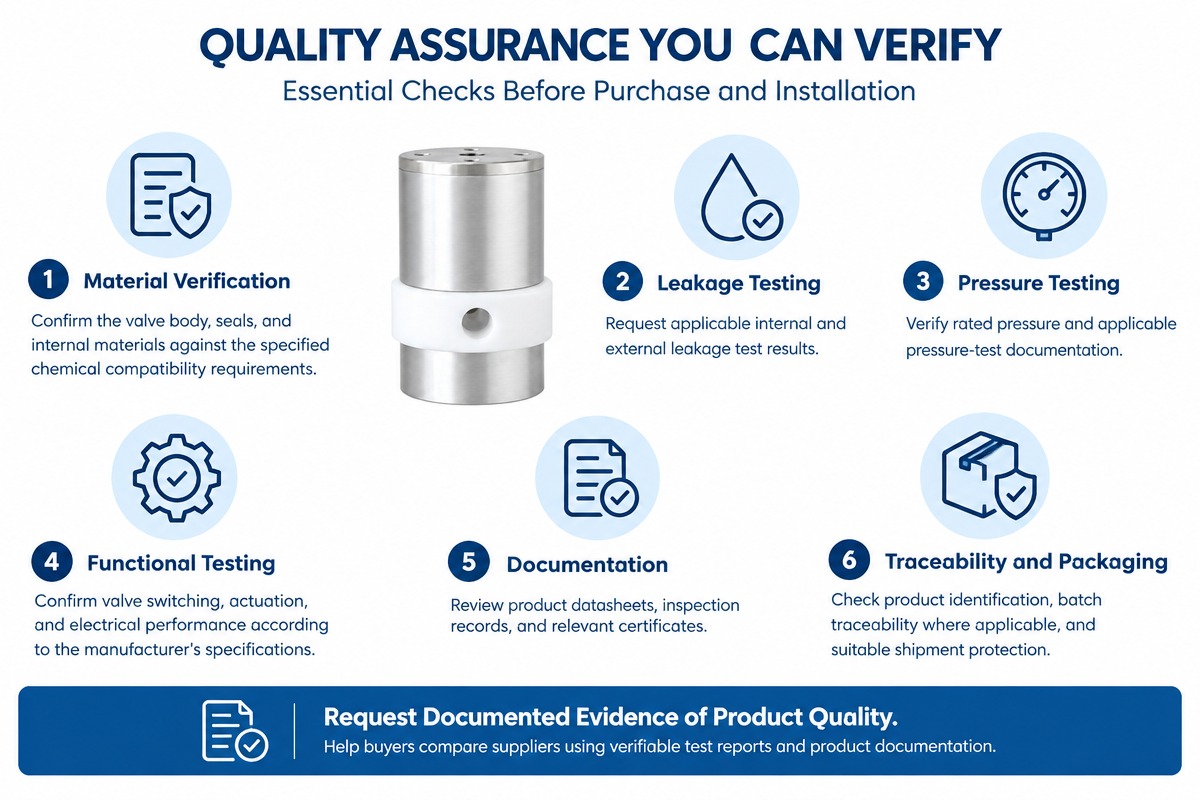
8.Assess quality and lifecycle costs. Check pressure ratings, leakage specs, cycle life, relevant certifications, availability of spare parts and manufacturer support.

Finally, inform the supplier the chemical, concentration, temperature, pressure, flow rate and electrical requirements. Confirm the complete wetted-material spec before ordering.

Tips to Avoid Common Mistakes in Design

You can’t just select a valve that has chemical-resistant on it to design a reliable Corrosive Media Solenoid Valve system. There are several common mistakes that can compromise safety, performance and service life.

-Chemical concentration disregard: Material resistance is a function of concentration, temperature and exposure time. Assess the actual process fluid rather than its generic chemical name.

– Checking only the valve body: Seals, diaphragms, springs and internal parts can come into contact with the medium and have to be checked separately for compatibility.

– Wrong seals: A seal made of the wrong elastomer can swell, harden, crack or lose its sealing force. Real world seal compatibility check.

– Ignored pressure requirements: Check max working pressure, pressure surges, back pressure and min differential pressure for pilot operated designs.

– Valve oversizing: An orifice larger than necessary will increase costs and make the system harder to control precisely.

– Don’t ignore temperature limits: it’s not only the temperature of the fluid, but also the surrounding environment including heat produced close to the coil.

– Selecting a wrong default position: Decide whether the valve should be normally open or normally closed in the event of a power failure according to the process risk assessment.

– Electrical protection is often overlooked. Match the coil and enclosure for moisture, dust, ambient conditions and any hazardous-area requirements.

– Contamination neglect: Particles can clog small passages or deteriorate sealing surfaces. Use suitable filtration when recommended by the manufacturer.

– Skipping validation: Test the assembled system under representative operating conditions and follow applicable safety procedures before putting it into service.

Good design starts with a complete specification sheet and documented compatibility of materials. Involving the valve manufacturer early can help to avoid costly redesigns, minimize downtime and improve the reliability of chemical handling equipment.
Get A Free Quote Now

Contact Form

Related Products

Related News

Scroll to Top

Get A Free Quote Now !

Contact Form
If you have any questions, please do not hesitate to contact us.
Weilong Solenoid Company Culture