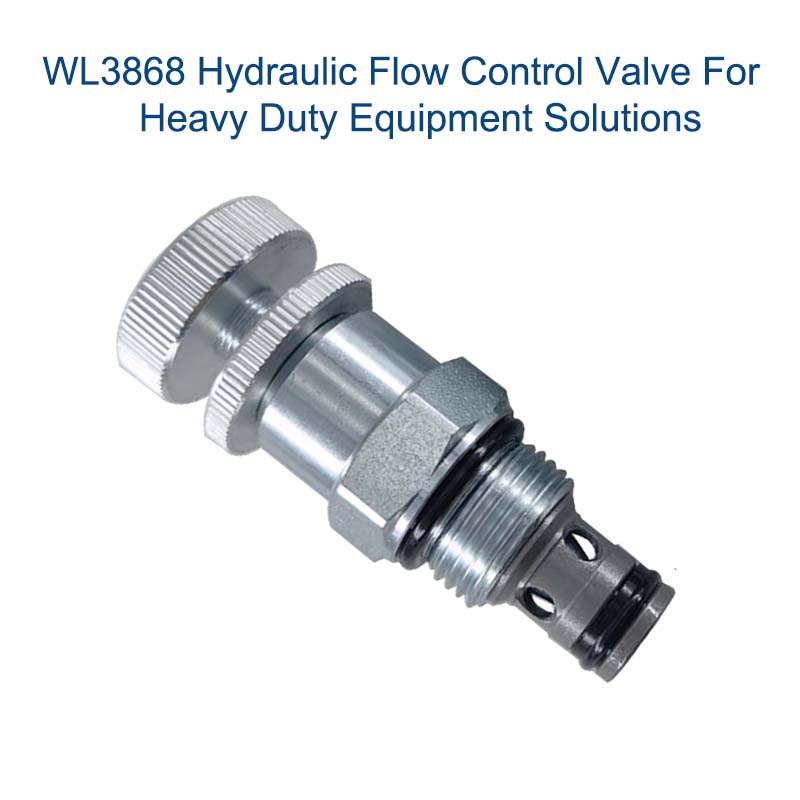
How to Pick a Hydraulic Flow Control Valve
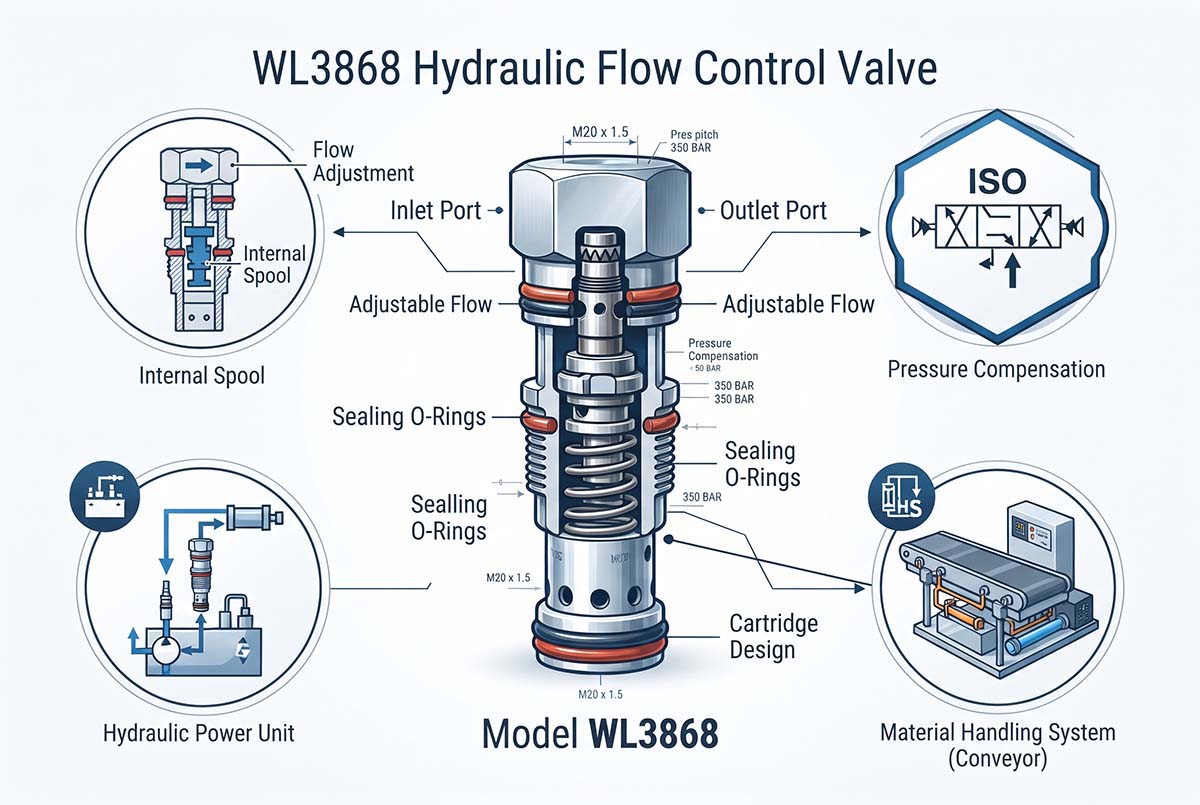
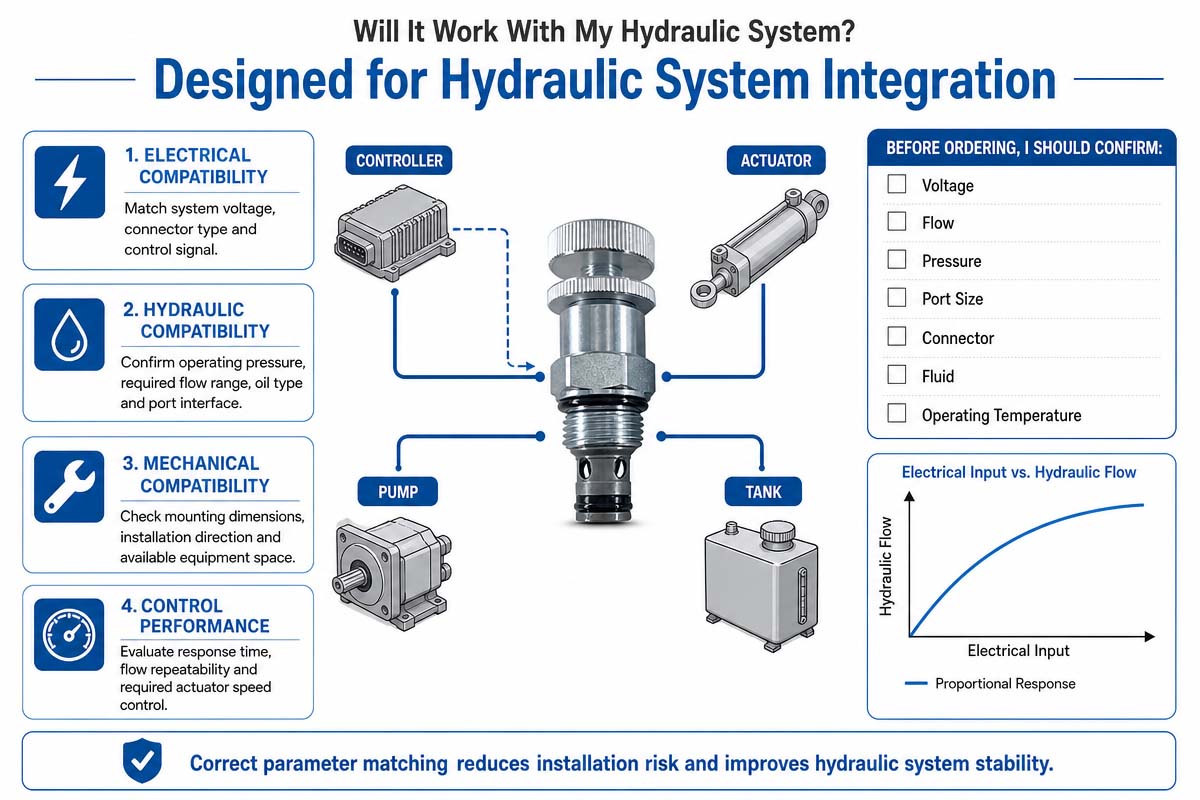
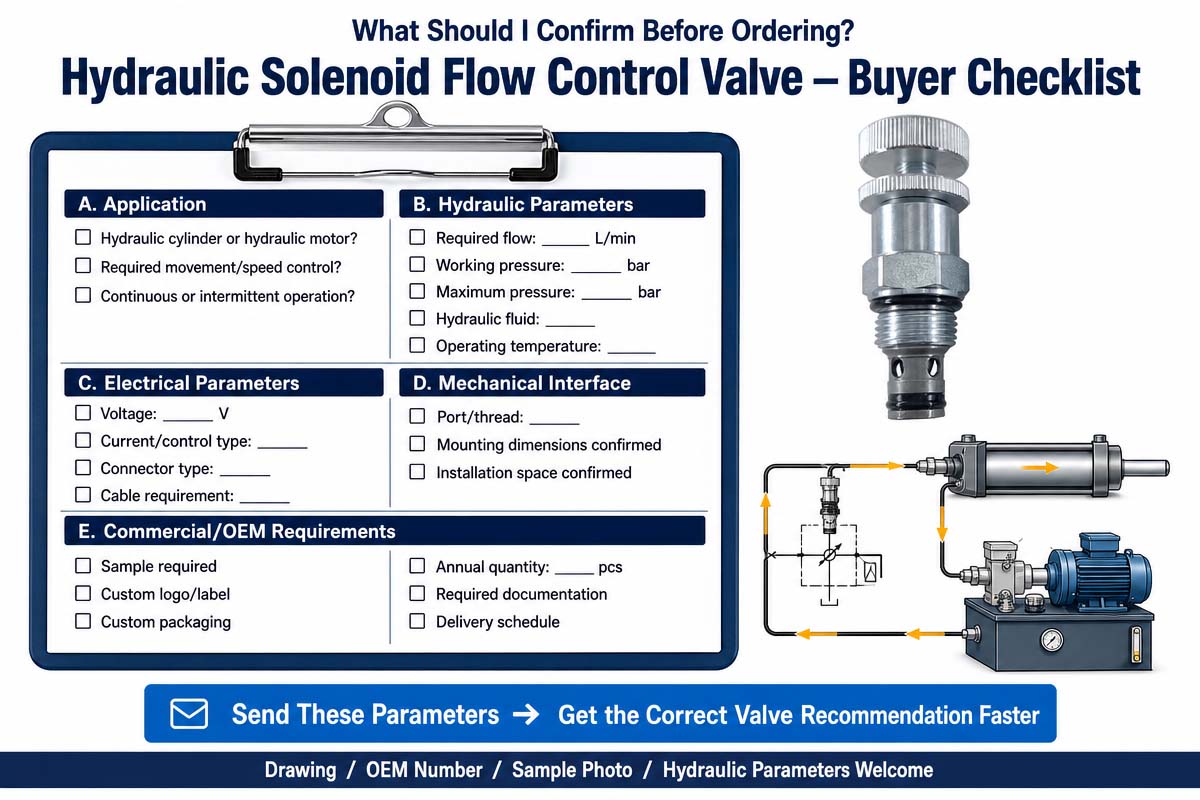
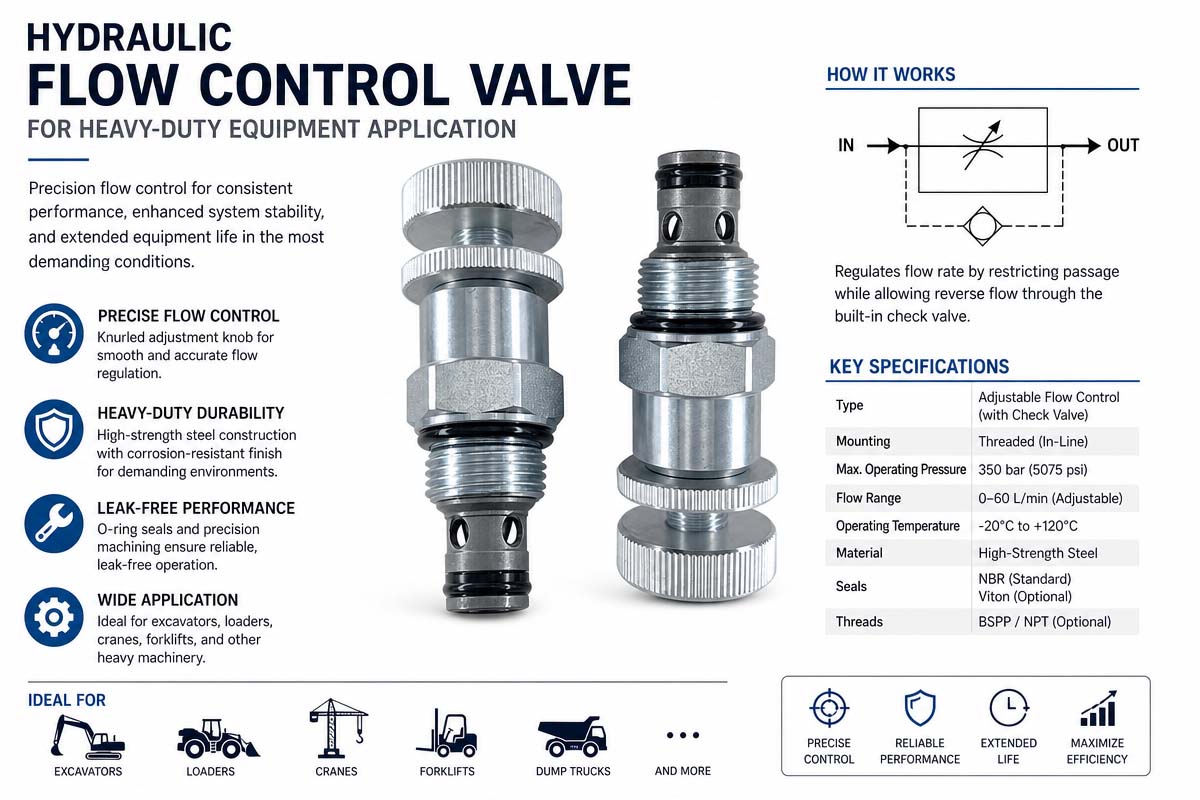
Matching of the port size of a hydraulic flow control valve alone is not enough to select the proper valve. The valve should be selected for the whole hydraulic circuit and its working principle.
1. Calculation of flow rate required
Calculate the minimum, normal, and maximum flow rates. The flow range of the valve should cover the requirements of the application with minimal pressure drop.
2. Inspection of the operating pressure
Calculate the pressure in the system, normal and maximum. Then select a valve with the proper working pressure rating and sufficient safety factor.
3. Determine the speed requirements for the actuators
The speed of actuators, especially of cylinders, depends greatly on hydraulic flow and effective piston area. Select the valve and then calculate the required extension and retraction speed.
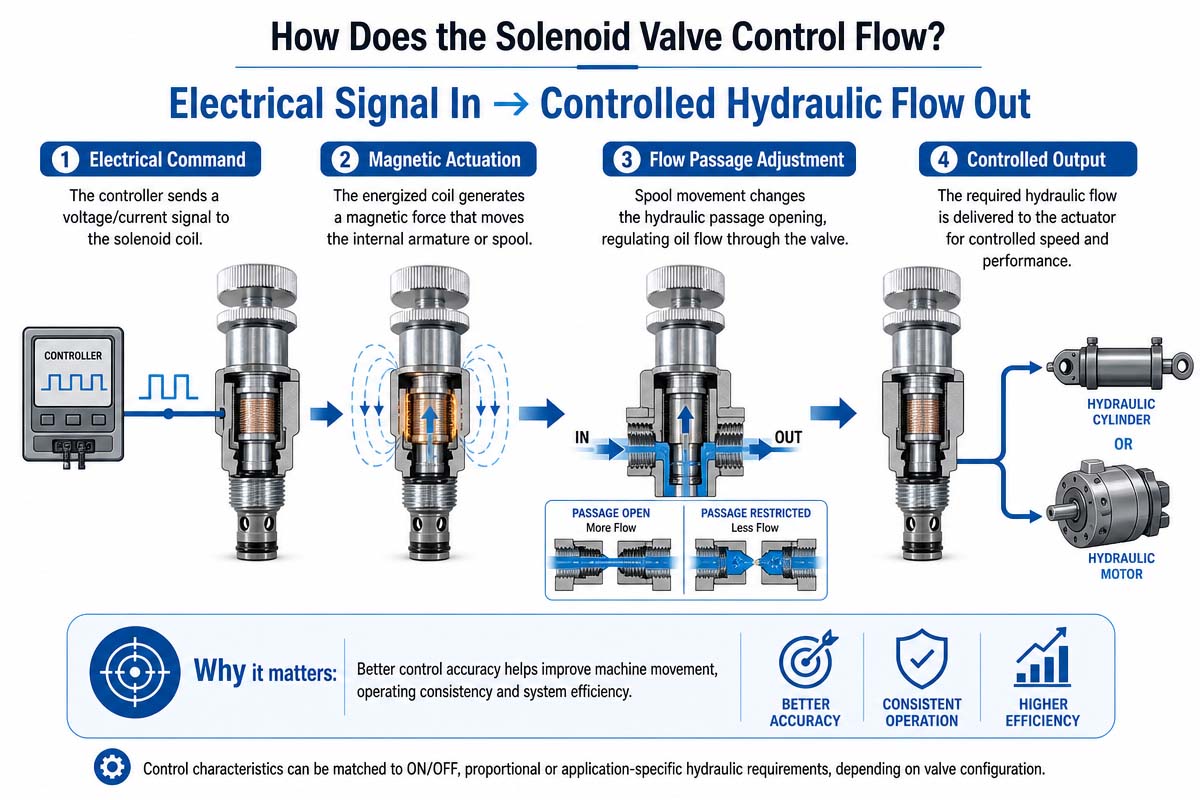
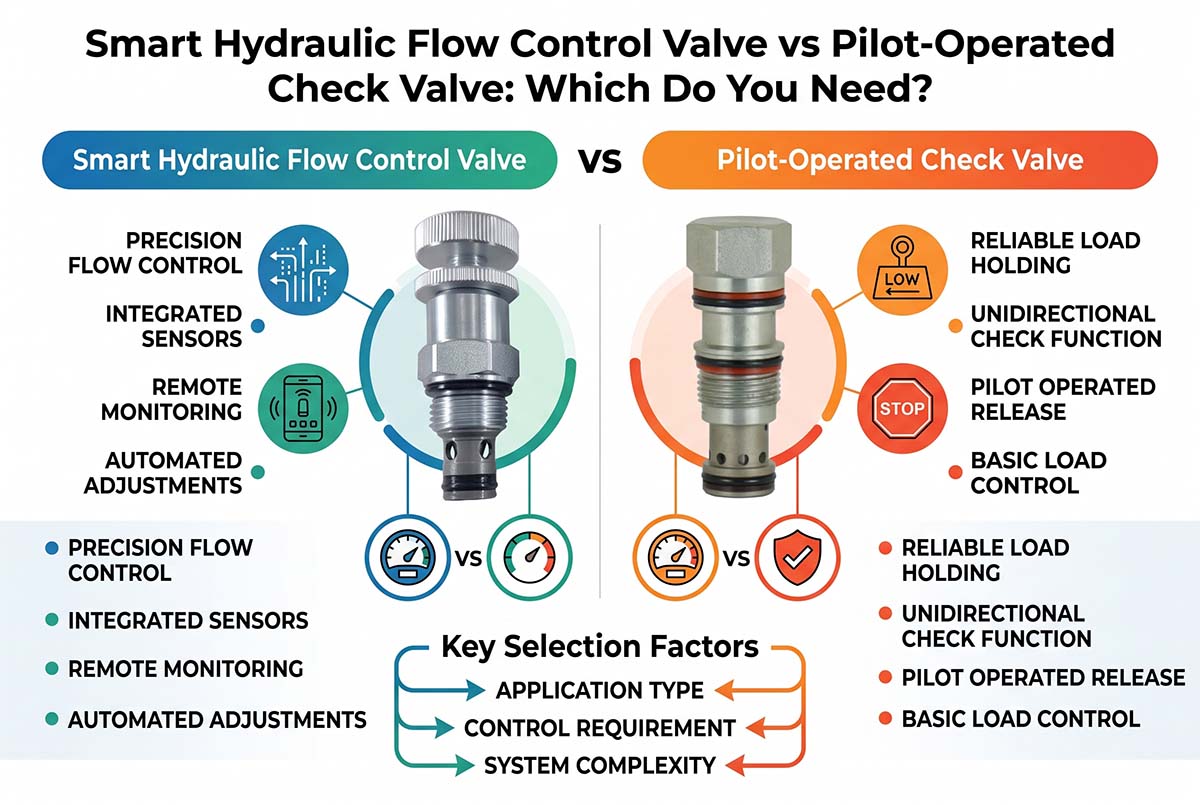
4. Selection of the control method
Choices:
- Fixed flow control
- Manual adjustable flow rate
Pressure-compensated flow control
- Proportional flow control
- Control of electric flow
The proportional or electronically controlled valve can be more suitable for automated equipment.
5. Consider load variation
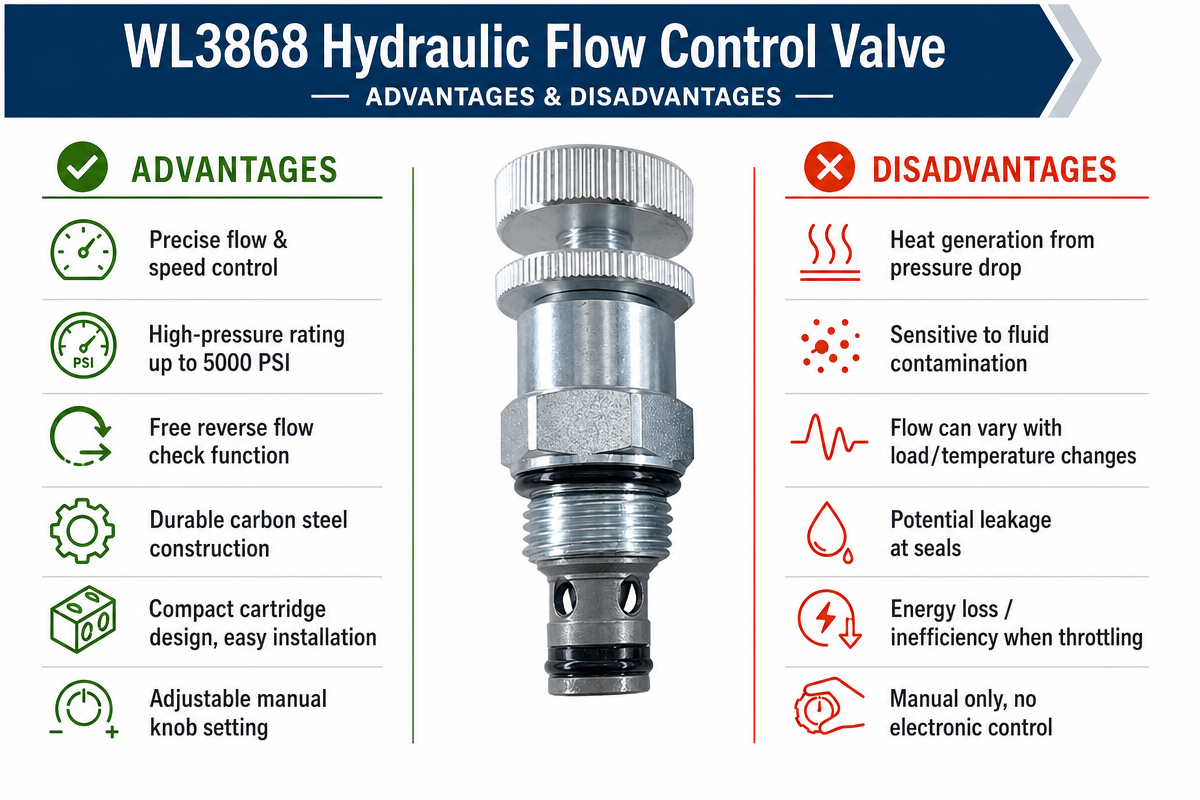
A simple restrictive valve may provide inconsistent speed if the actuator undergoes significant changes in the load pressure. A pressure-compensated flow control valve can provide stable flow under varied load conditions.
6. Verify reverse-flow requirements
Some applications require free reverse flow. The flow control valve with an integral non-return valve may be appropriate for such situations.
7. Check the hydraulic fluid
Verify the compatibility with hydraulic oil, viscosity range, temperature, and contamination level.
8. Selection of the proper connection
Check the port size, thread standard, mount configuration, installation orientation, and available space.
9. Consider accuracy of response and control
Accuracy, repeatability, response time, hysteresis, and controllability are critical for machines with precise motion requirements.
10. Assess the environmental conditions
For mobile equipment, you must consider factors such as vibration, shock, dust, moisture, temperature extremes, and corrosion.
Thus, the proper valve is the one that satisfies the requirements of flow, pressure, actuator velocity, control precision, environment, and the system architecture simultaneously.
How to Avoid Common Mistakes in Hydraulic Flow Control Valve Design
Some design mistakes can make the hydraulic system less efficient and unreliable.
1. The valve size shouldn’t be selected only based upon the port size.
But a large port doesn’t mean that the valve can handle the required flow properly. You have to always look at the manufacturer’s rated flow and pressure drop curves.
2. Reduce pressure loss
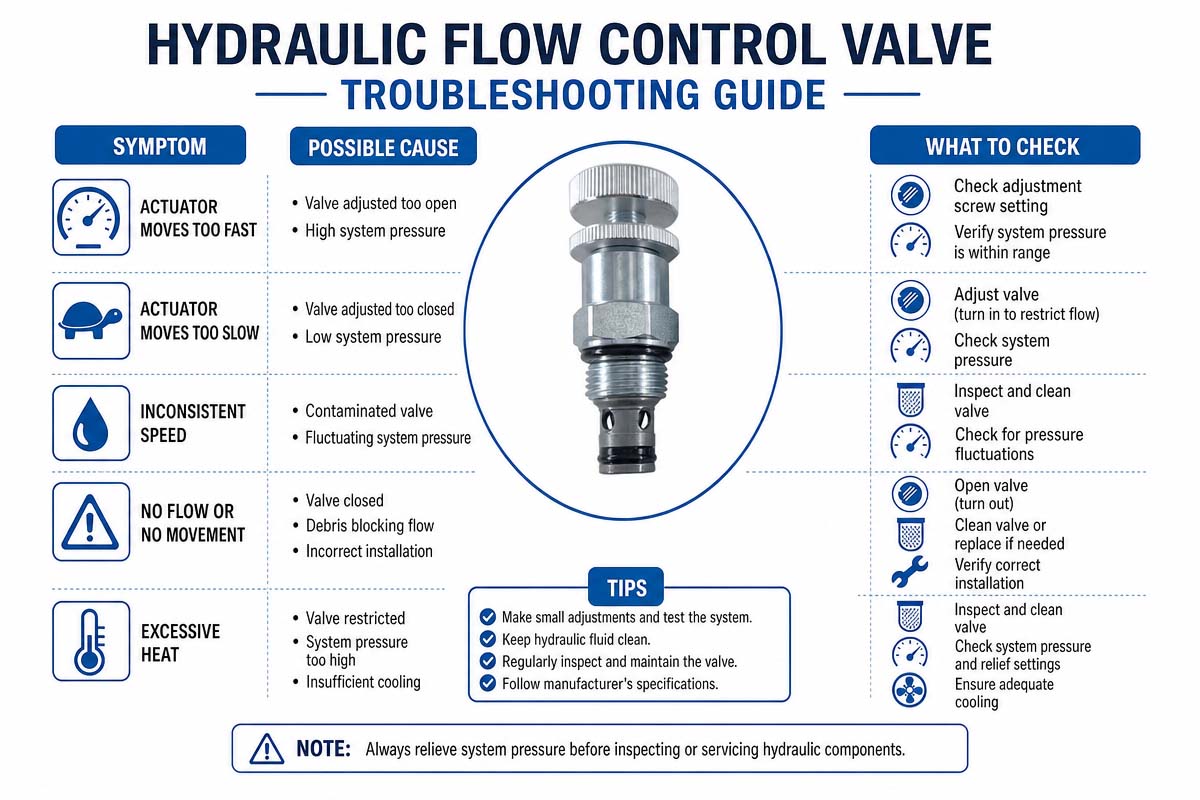
A too-tight valve wastes energy and creates heat. Select the proper flow range and don’t create unnecessary restrictions.
3. Don’t forget about load variation
The simple throttle valve may not provide the consistent actuator speed in case of great load variations. You have to consider the necessity of pressure compensation.
4. Watch the cavitation risk
Overrestriction, especially of the return or inlet side of an actuator, may result in significant pressure drop and cavitation.
5. Be careful about the contamination
Contamination in the hydraulic system can cause spool sticking, flow instability, leakage, and early valve failures. Filtration has to match system requirements.
6. Don’t forget about heat generation
The pressure losses transform hydraulic energy into heat. The whole circuit has to be evaluated from the perspective of thermal balance.
7. Define practical tolerances
The manufacturing tolerances are so tight that they just increase the cost and don’t provide any improvements in system performance.
8. Consider dynamic behavior
The valve response in rapid load change is important for mobile machinery. Static flow specifications may not describe the real-world behavior completely.
9. Ensure compatibility with control architecture
The hydraulic valve has to be compatible with the intended control strategy in case the machine uses electronic control, sensors, and CAN-based communication.
10. Test in real operating conditions
The prototype testing has to include the maximum load, minimum temperature, maximum temperature, pressure fluctuations, vibration, and contamination.