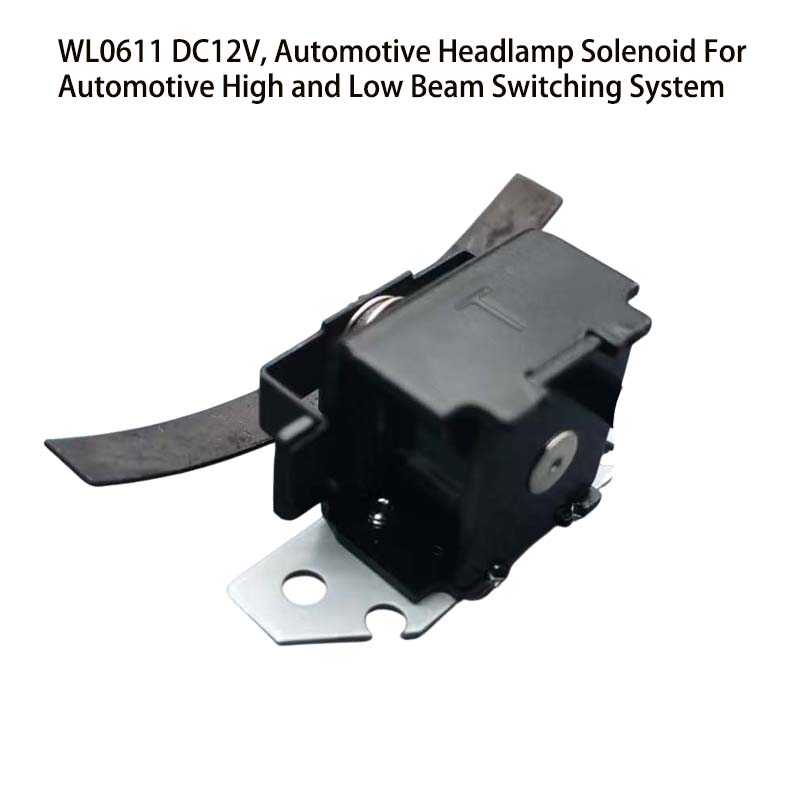
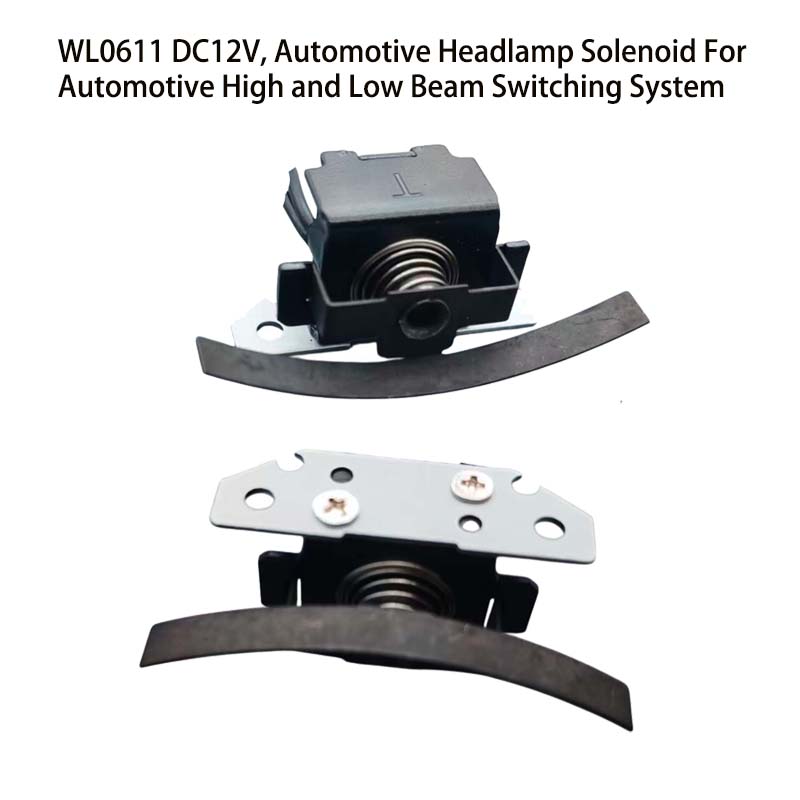
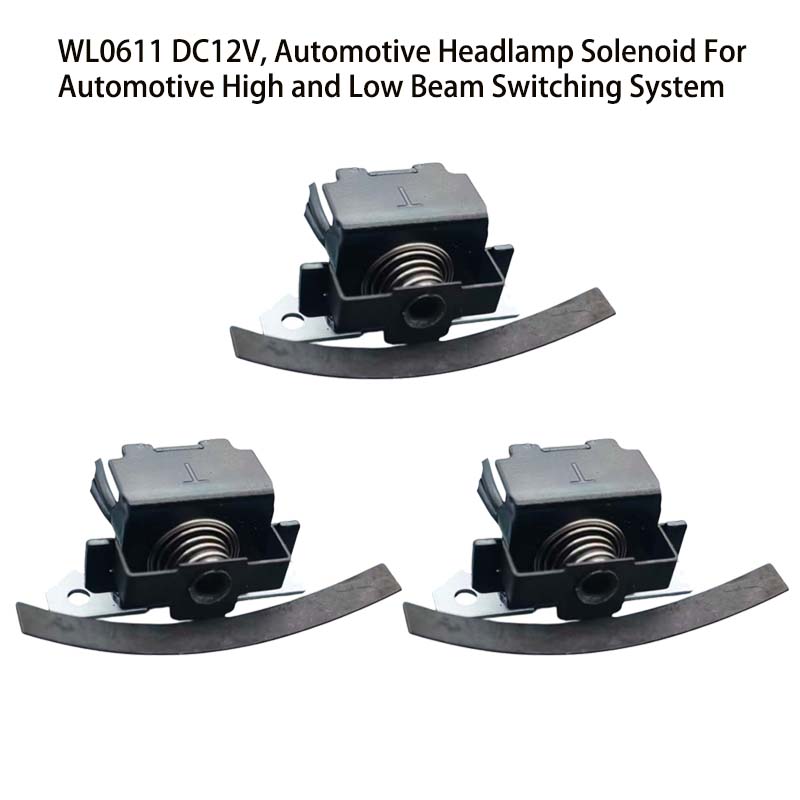

How to Select an Automotive Headlamp Solenoid
Selecting the right automotive headlamp solenoid requires understanding of electrical and mechanical requirements.
First,
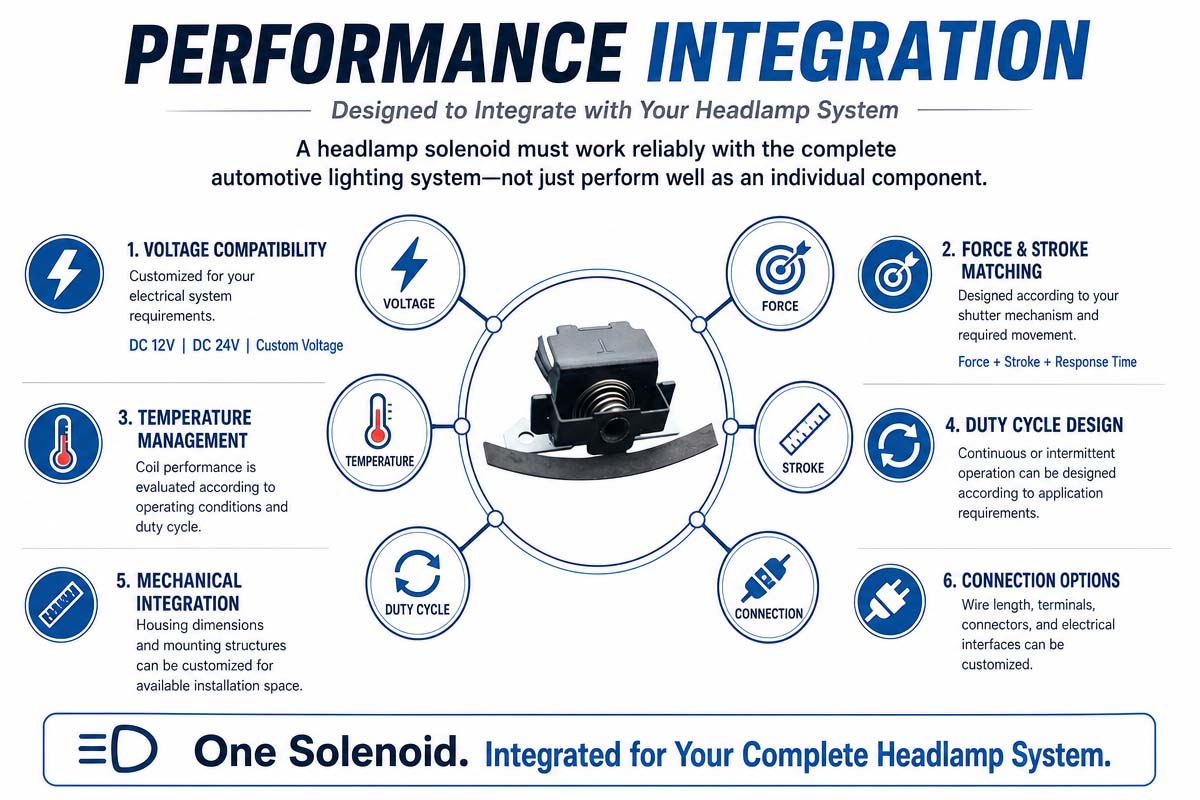
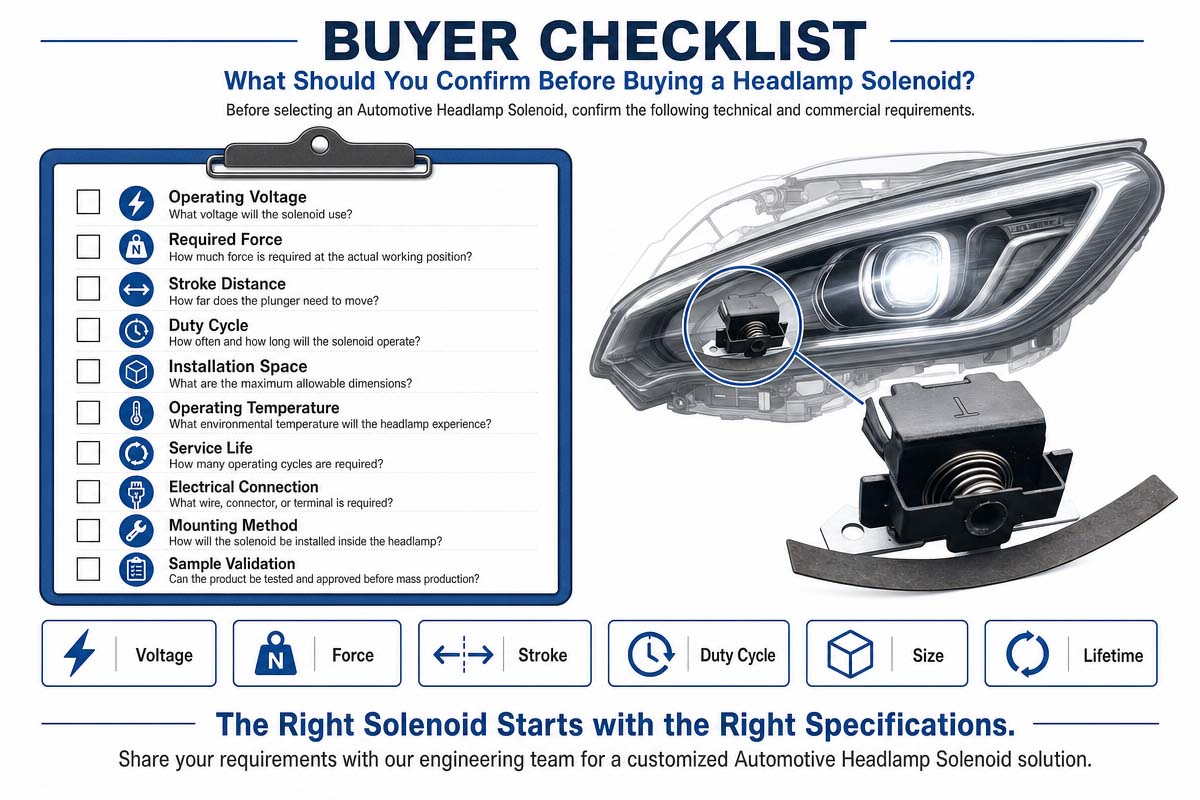
You need to know the operating voltage. While a 12V electrical system is common for most passenger vehicle applications, the design of the solenoid may differ depending on the driver circuit and lighting module.
Secondly,
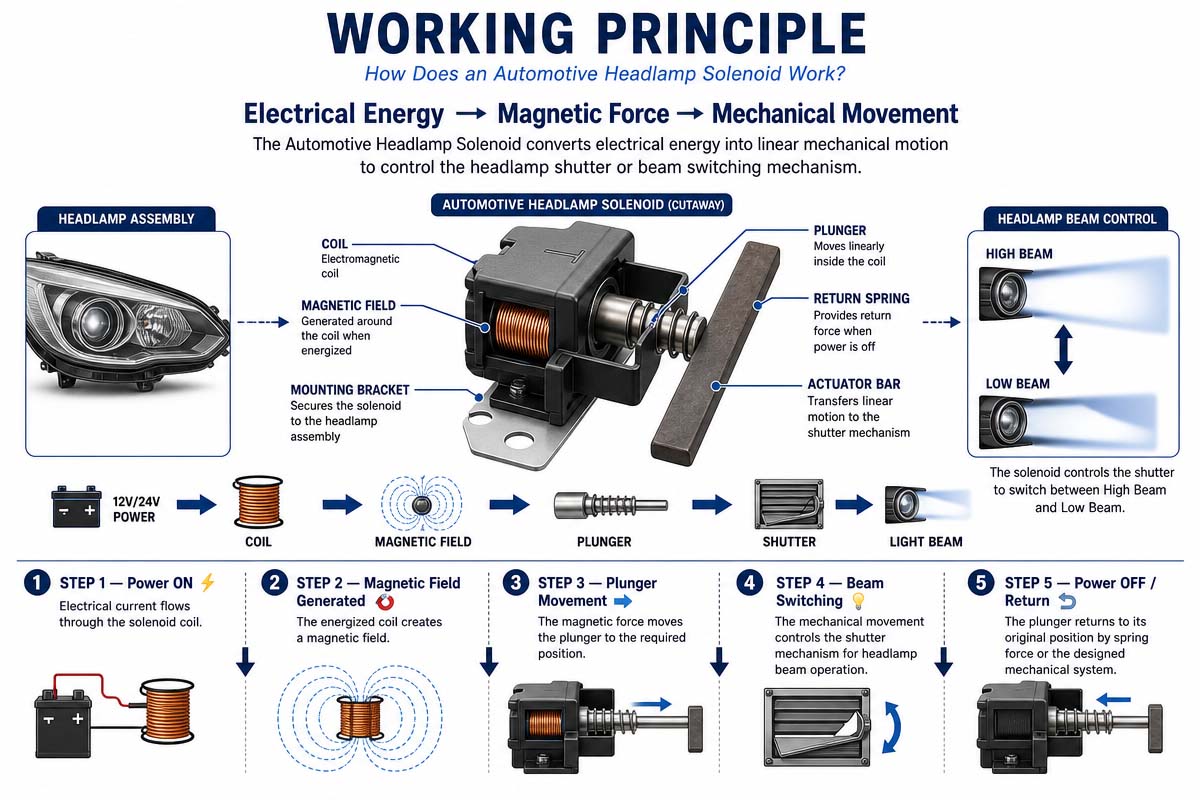
Determine the force. The solenoid should be able to produce sufficient force to reliably move the shutter, reflector, or other component of the headlight assembly. The required force should be greater than that required for the friction, spring force, vibration, and any other mechanical resistance.
Third,
Find out the necessary stroke distance. The plunger stroke should match the mechanical travel distance in the lighting system. A longer stroke means the smaller electromagnetic force available, so both force and stroke should be considered.
The fourth,
Its requirement is duty cycle. If the solenoid is operated continuously, then the heat generation will become considerable. Different coil and thermal designs are required for continuous running and for short intermittent operation.
Also, you should consider the installation space available. Modern automotive headlamps become more compact, and, therefore, the solenoid diameter, length, installation position, and shaft design should be taken into account.
Environmental requirements are also very important. The solenoid may experience vibration, temperature variations, humidity, and long-term service in the vehicle. Therefore, appropriate materials, an insulation system, a surface finish, and mechanical construction should be chosen.
Finally,
Do not forget about the expected service life and the number of operation cycles. OEM automotive applications typically require reliable and repeatable performance during the product lifetime.
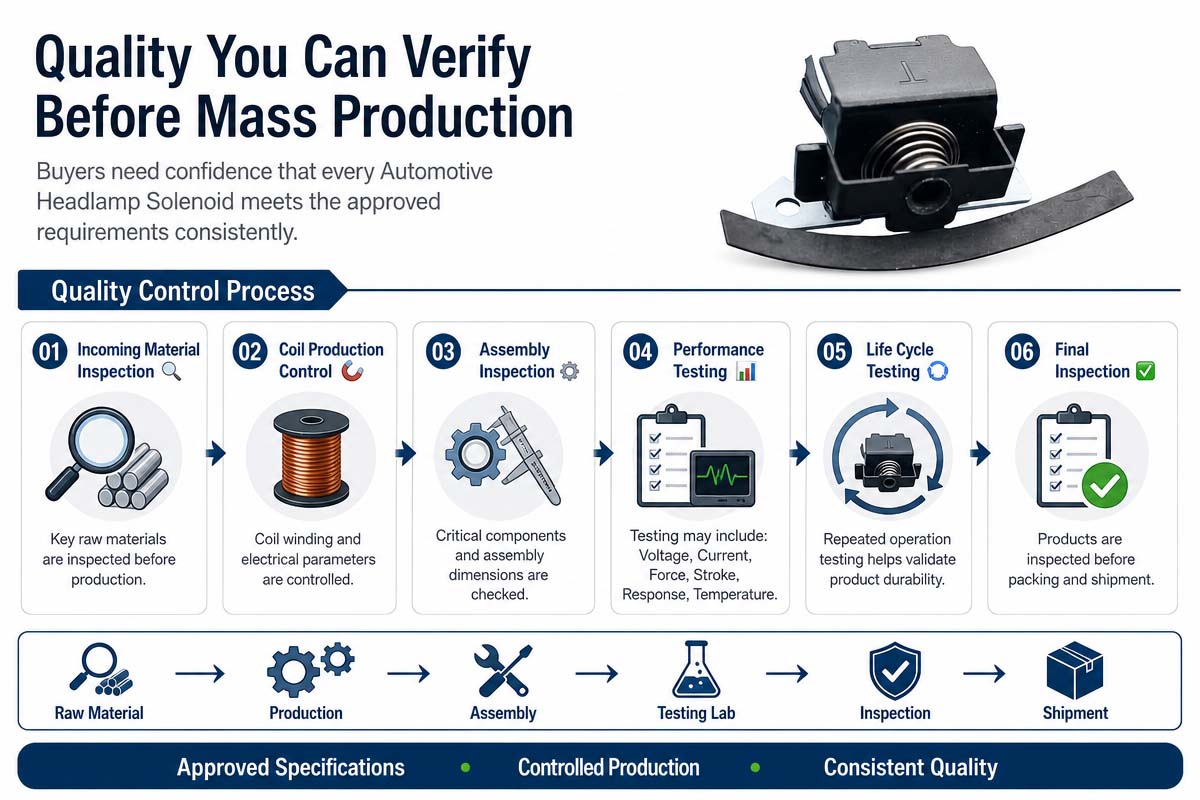
Before the production, provide the manufacturer with all necessary specifications: voltage, force, stroke, duty cycle, operating temperature, installation dimensions, connector, lifetime, etc. Prototype testing is highly recommended before production.
Tips to Avoid Common Mistakes When Designing Automotive Headlamp Solenoids
1. Don’t Mention Stroke without Force
The force of the solenoid highly depends on the position of the plunger. Always indicate the force required at the exact stroke length.
2. Don’t Ignore Temperature
The continuous energization causes excessive coil temperature. The careful calculation of the power consumption and thermal performance is required.
3. Don’t Just Select the Voltage
The 12V specification is insufficient. Current, resistance, power consumption, duty cycle, and control method should be defined.
4. Don’t Underestimate Force Margin
Friction, vibration, and mechanical tolerance can increase the required operating force.
5. Don’t Forget Return Mechanisms
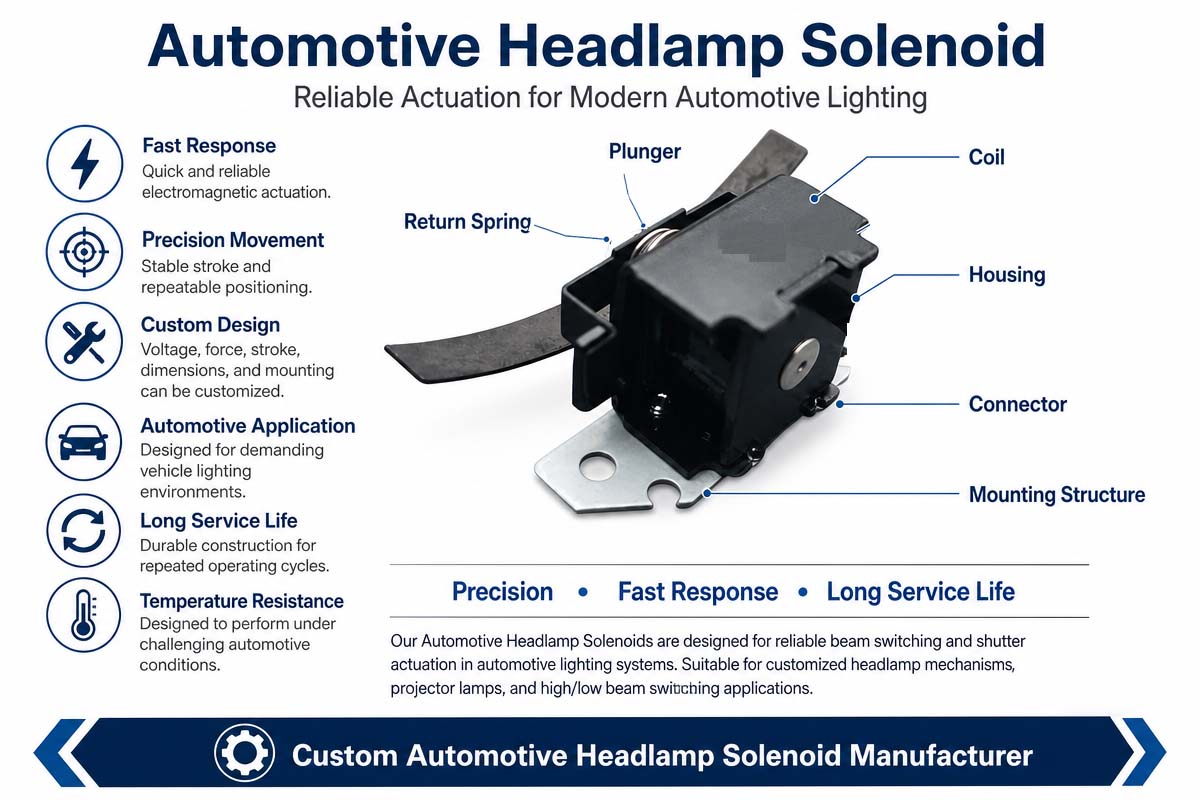
Please specify if the plunger returns due to a spring, gravity, magnetism, or some other mechanical component.
6. Think About Automotive Vibration
The solenoid should be securely mounted and continue to operate reliably under vibration.
7. Check the Installation Space First
Limited installation space of the headlamp assembly. Please check dimensions before finalizing the solenoid design.
8. Don’t Consume Too Much Power
High power consumption increases the heat generation and load on the vehicle’s electrical system.
9. Real Operating Conditions Test
Bench testing only may not represent the real operating conditions of the headlamp.
10. Check Lifetime Requirements
Specify the expected number of cycles and test the durability before mass production.