How to Select a Pilot Operated Check Valve
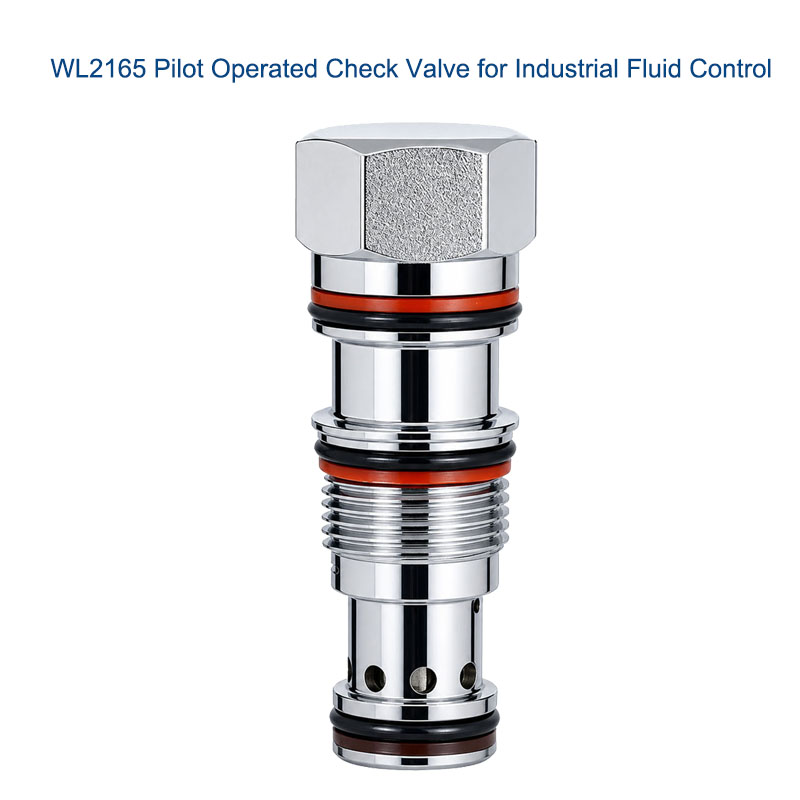
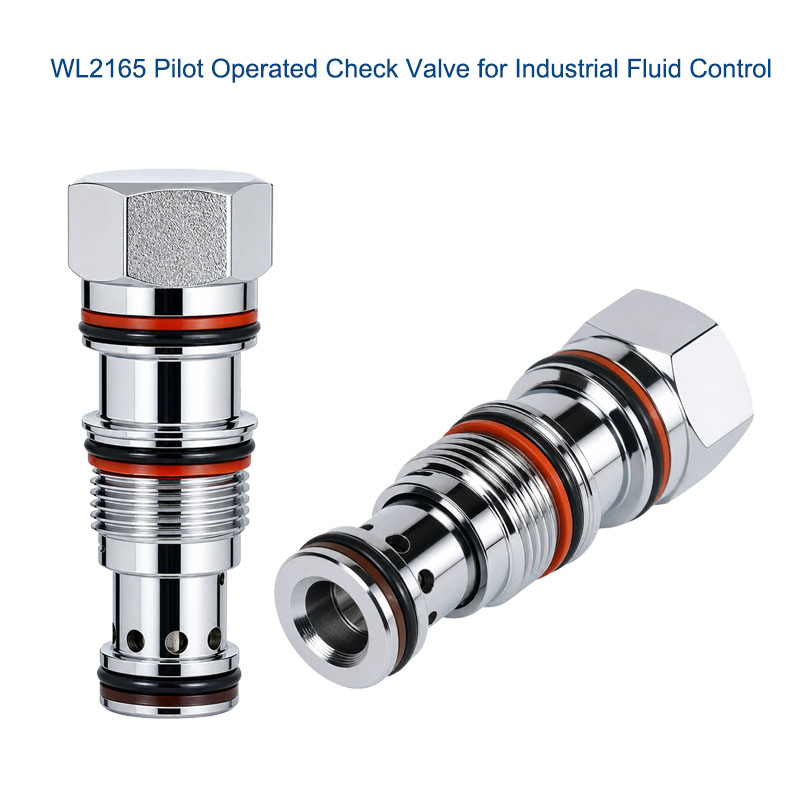
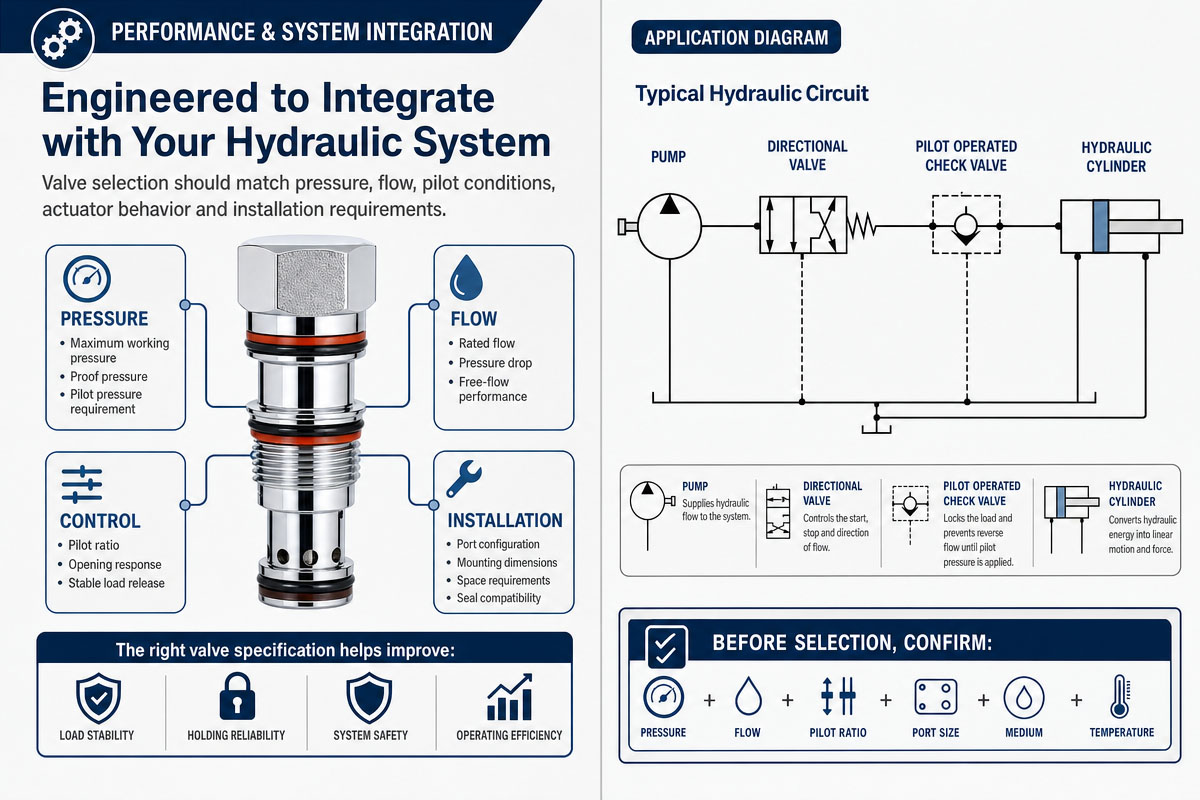
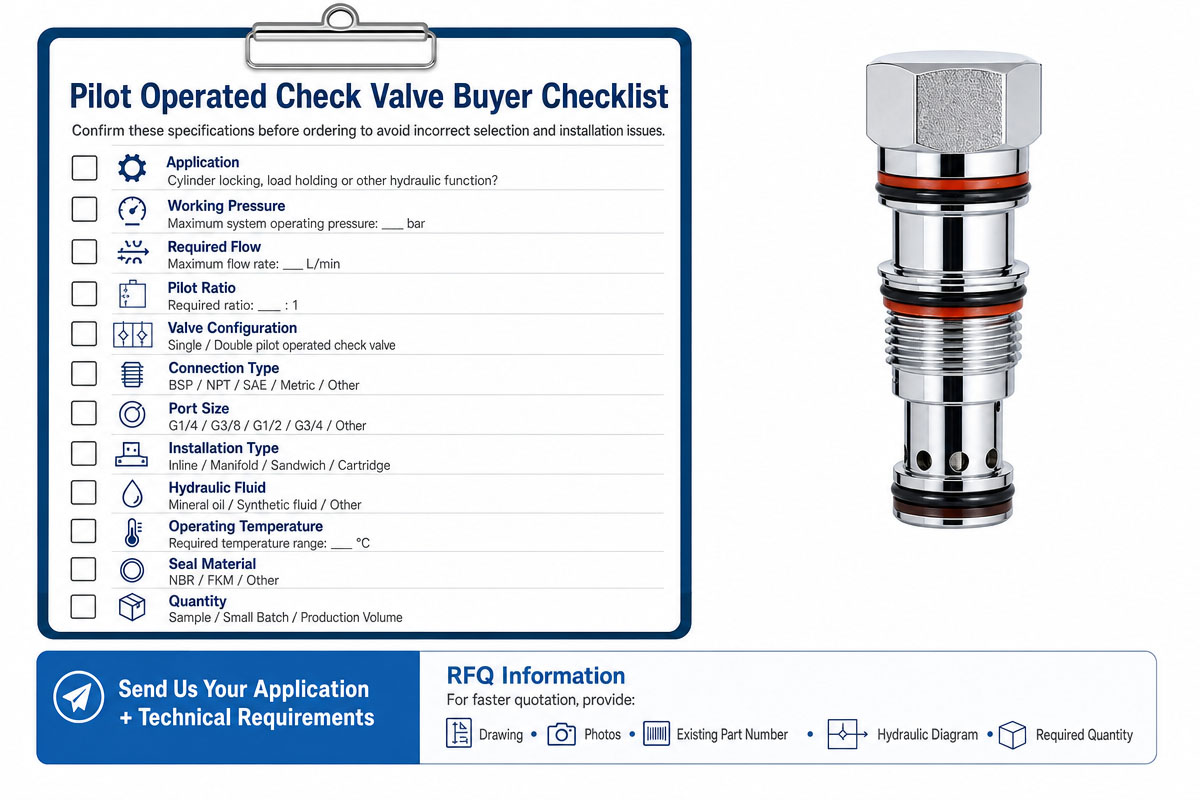
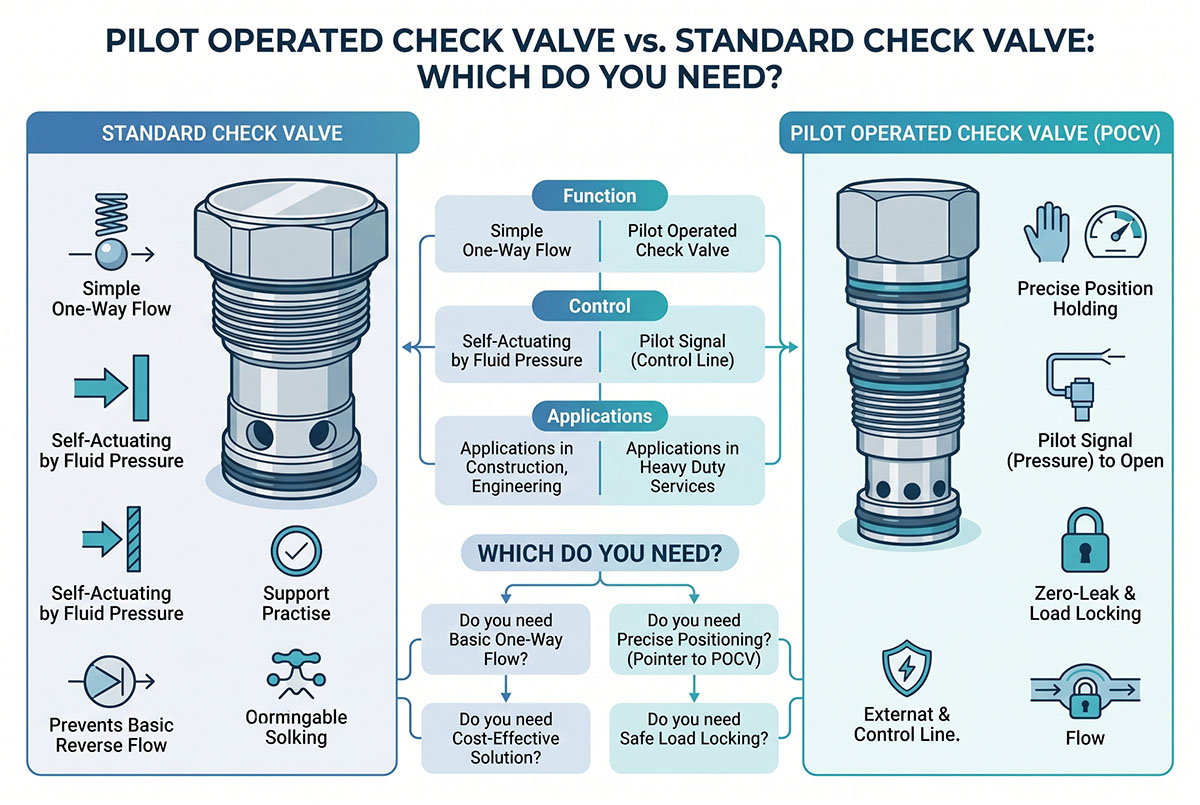
The first step in the selection of a pilot operated check valve is understanding the hydraulic circuit function. First of all, you need to establish whether the valve is needed to lock a cylinder, hold a static load, prevent drift, or control reverse flow. This helps to determine whether the valve is sufficient or a counterbalance valve or other load-control device is needed.
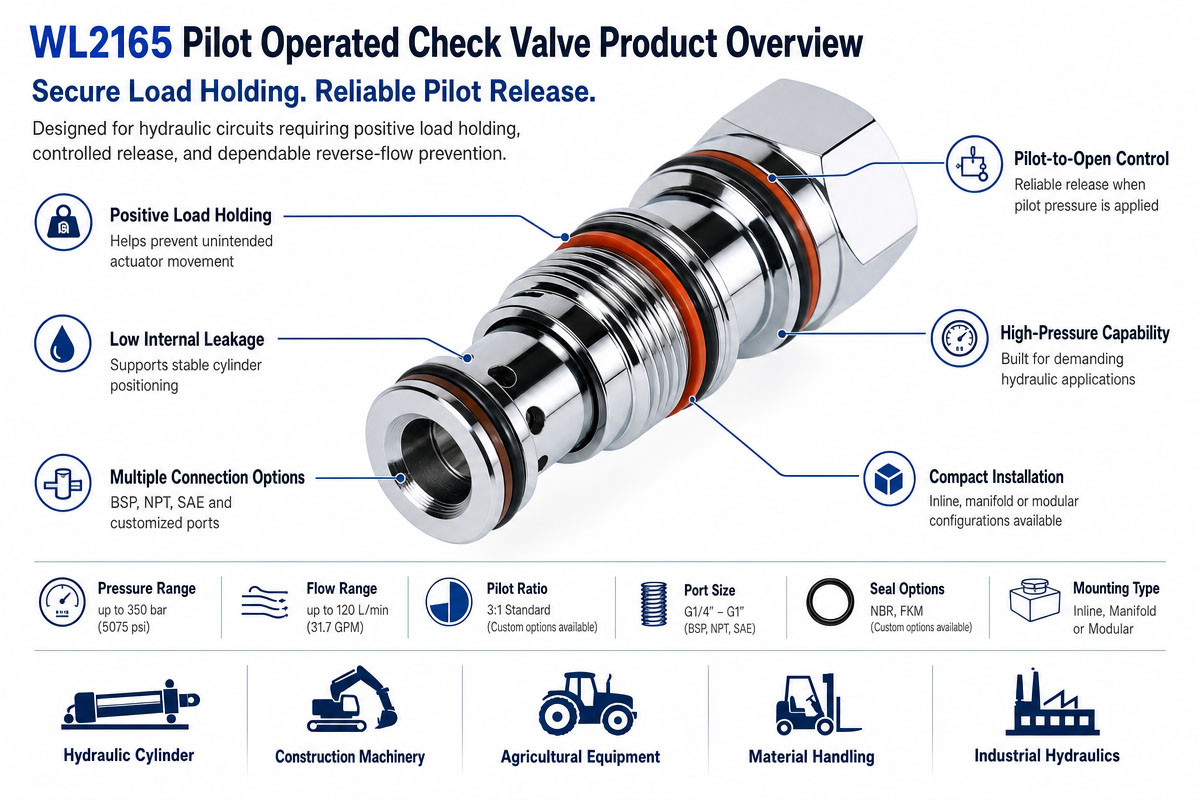
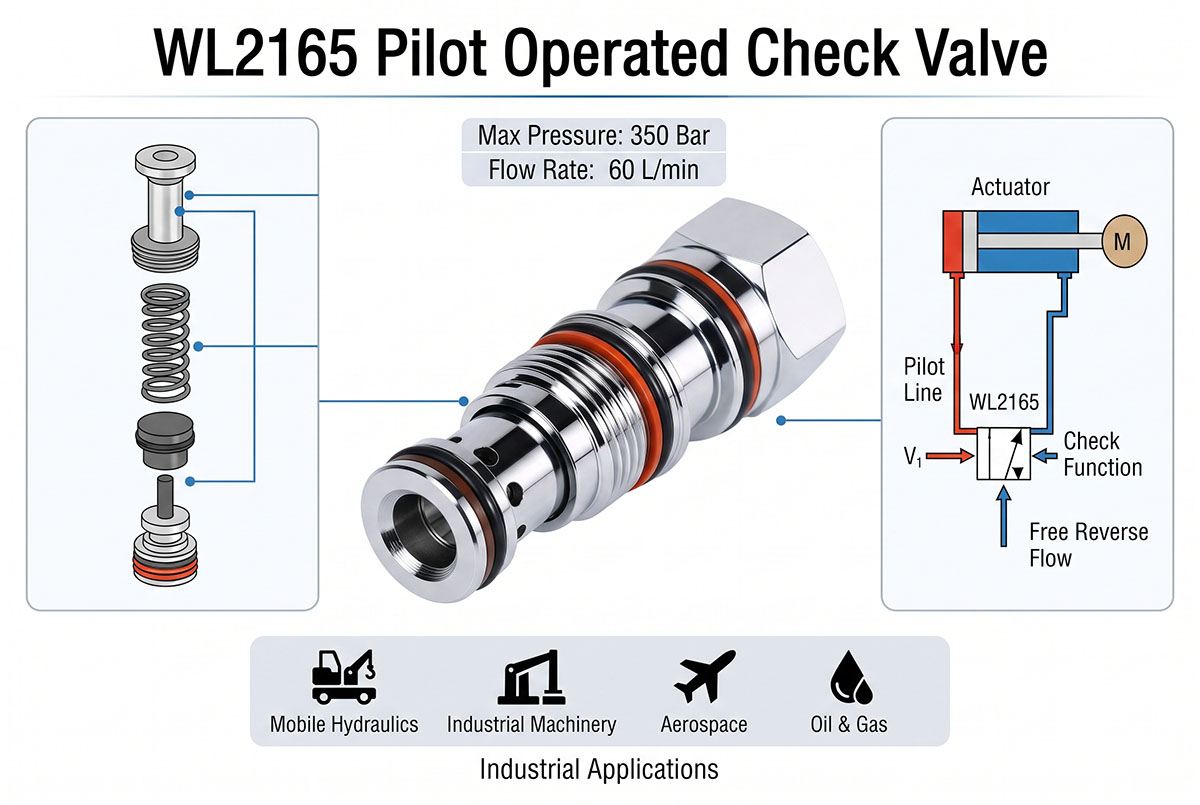
After that you need to check the maximum operating pressure and the expected flow rate. You need to choose a valve with an appropriate pressure rating and flow capacity, and the pressure drop should be in the suitable range. Also, you need to check the cracking pressure of the valve. Excessive cracking pressure will result in energy loss, while too low cracking pressure will affect the stability in some circuits.
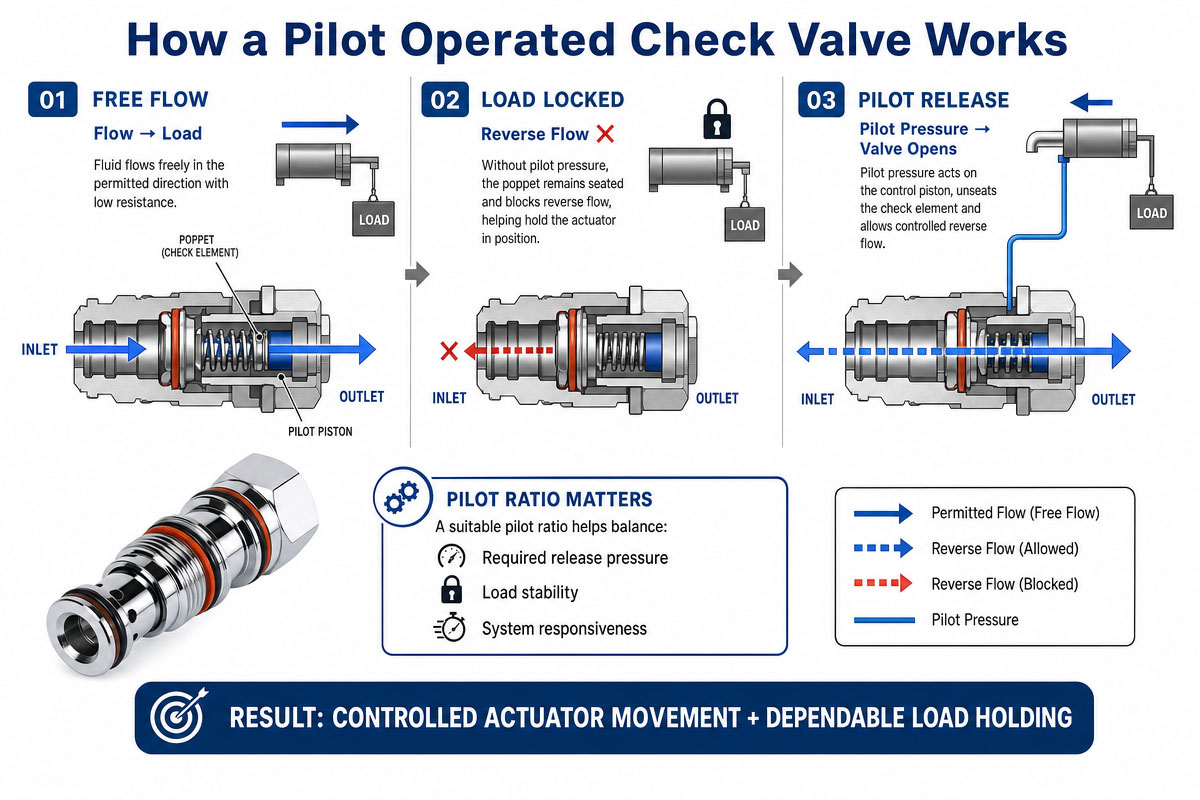
The pilot ratio is also important. A large pilot ratio usually requires lower pilot pressure to open the check element but may increase sensitivity to pressure changes. A lower pilot ratio will increase holding stability but requires higher pilot pressure to release. You always need to compare the available pilot pressure to the load-induced pressure.
Then you need to check the port size, mounting style, installation space, hydraulic fluid, temperature range, seal compatibility, contamination level, and internal leakage. For mobile machinery, consider also vibration, shock, corrosion exposure, and maintenance access.
And finally, you need to see the whole circuit, not only the valve data sheet. You need to check whether there is any backpressure at the outlet. You need to check whether the pilot pressure is taken from a reliable point. Check whether pressure intensification can occur in the trapped cylinder volume. For suspended, personnel-related, or safety-critical loads, check applicable machine safety requirements and consider redundant load holding or hose burst protection. The best valve is the one that combines hydraulic performance, safety, packaging, serviceability, and lifecycle requirements.
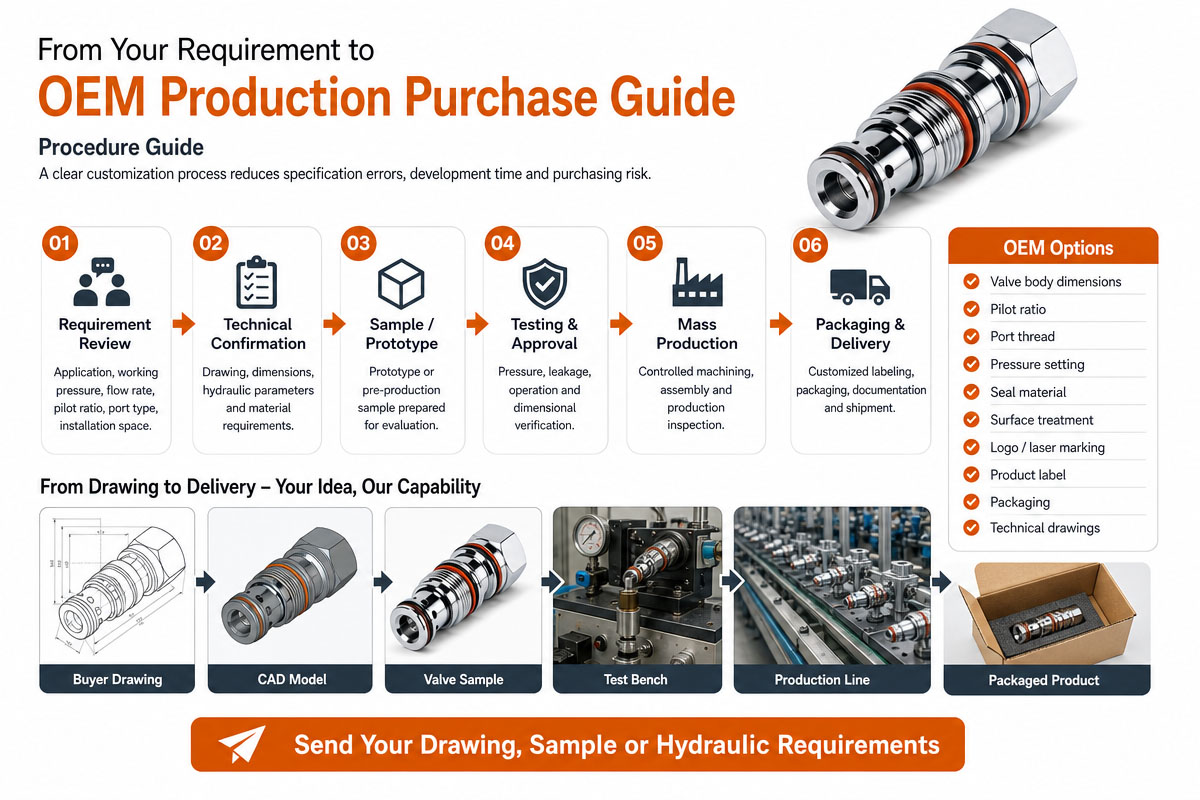
When comparing suppliers, pay attention to pressure-flow curves, pilot-port limits, leakage data, material specifications, test standards, dimensional drawings, spare-part availability, and technical support to validate the selected valve prior to production or field installation.
Tips to Avoid Typical Design Mistakes
One of the common mistakes is choosing a pilot operated check valve depending only on the port size. Port size does not determine whether the valve has sufficient flow capacity, acceptable pressure drop, and correct pilot ratio. Always consult the manufacturer’s hydraulic performance data.
Another mistake is ignoring the load-induced pressure. Pressure generated by the cylinder load directly affects the pilot pressure to open the valve. If there is not enough pilot pressure, the cylinder will be locked even after moving of the directional valve.
Designers should also pay attention to backpressure. Forces inside the valve can be affected by the pressure in the return line or downstream port, making it harder to open the pilot.
Pilot lines shall not be connected to unstable or unreliable pressure sources. The delayed valve response may occur because of long, restricted, leaking, or improperly routed pilot lines.
Don’t think that a pilot operated check valve should be used in each load-holding application. Overrunning or suspended loads may require a counterbalance valve or other specially engineered load-control solution for smoother and safer motion.
Another often ignored problem is pressure intensification. Temperature changes or external forces may cause a large pressure increase on the trapped hydraulic fluid.
Finally, don’t forget about safe pressure release provisions for maintenance. The pilot operated check valve can retain hydraulic pressure even if the machine is shut down. This should be considered on circuit diagrams, maintenance procedures, test ports, pressure relief provisions, and operator instructions.
P