


How to Avoid Common Mistakes When Selecting an Industrial Tubular Solenoid
A wrongly selected tubular solenoid leads to inefficiency and premature failure of these actuators. Engineers usually overlook the stroke requirement and just check the voltage rating when selecting solenoids. Actually, the pressure at the operational stroke length must be measured.
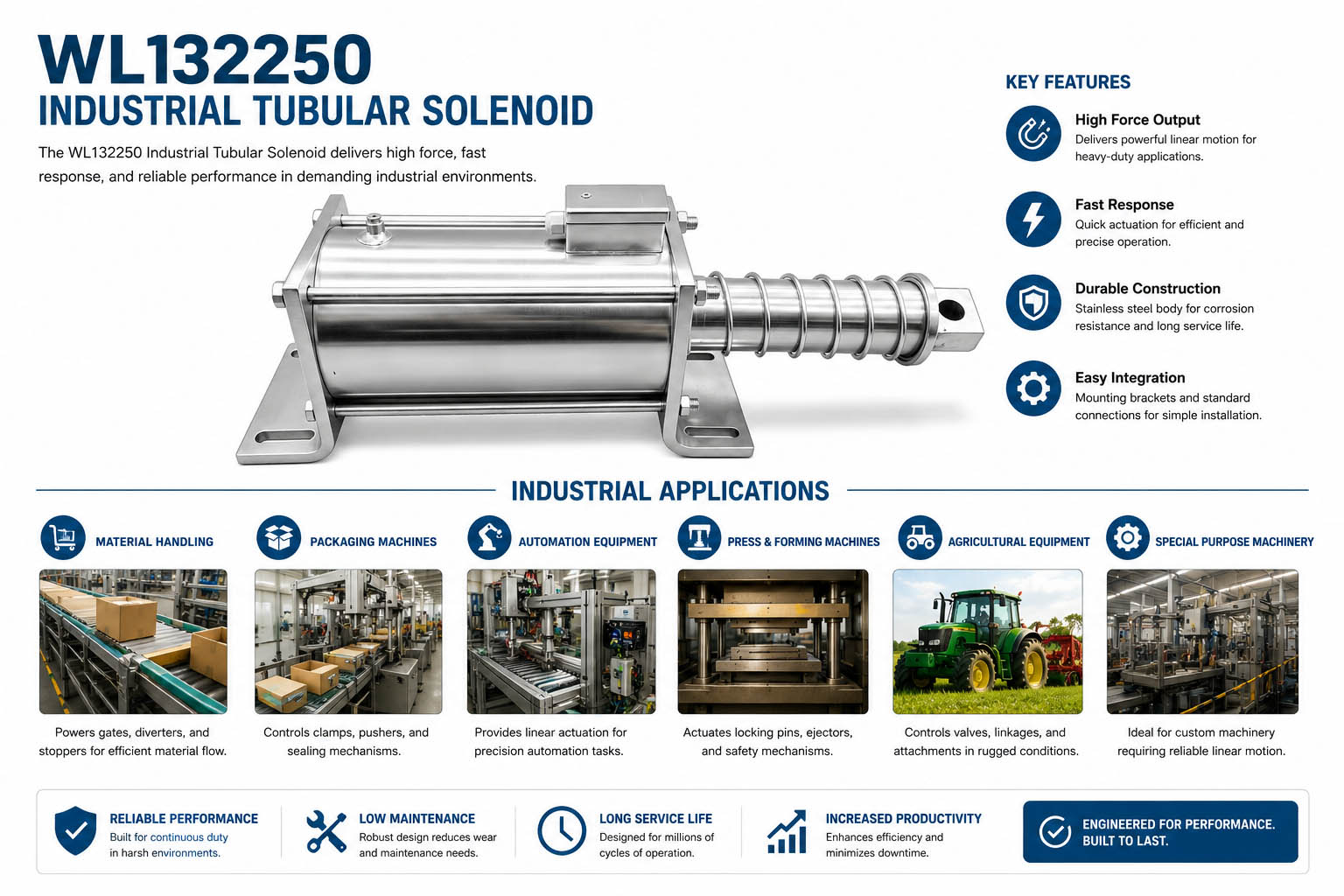
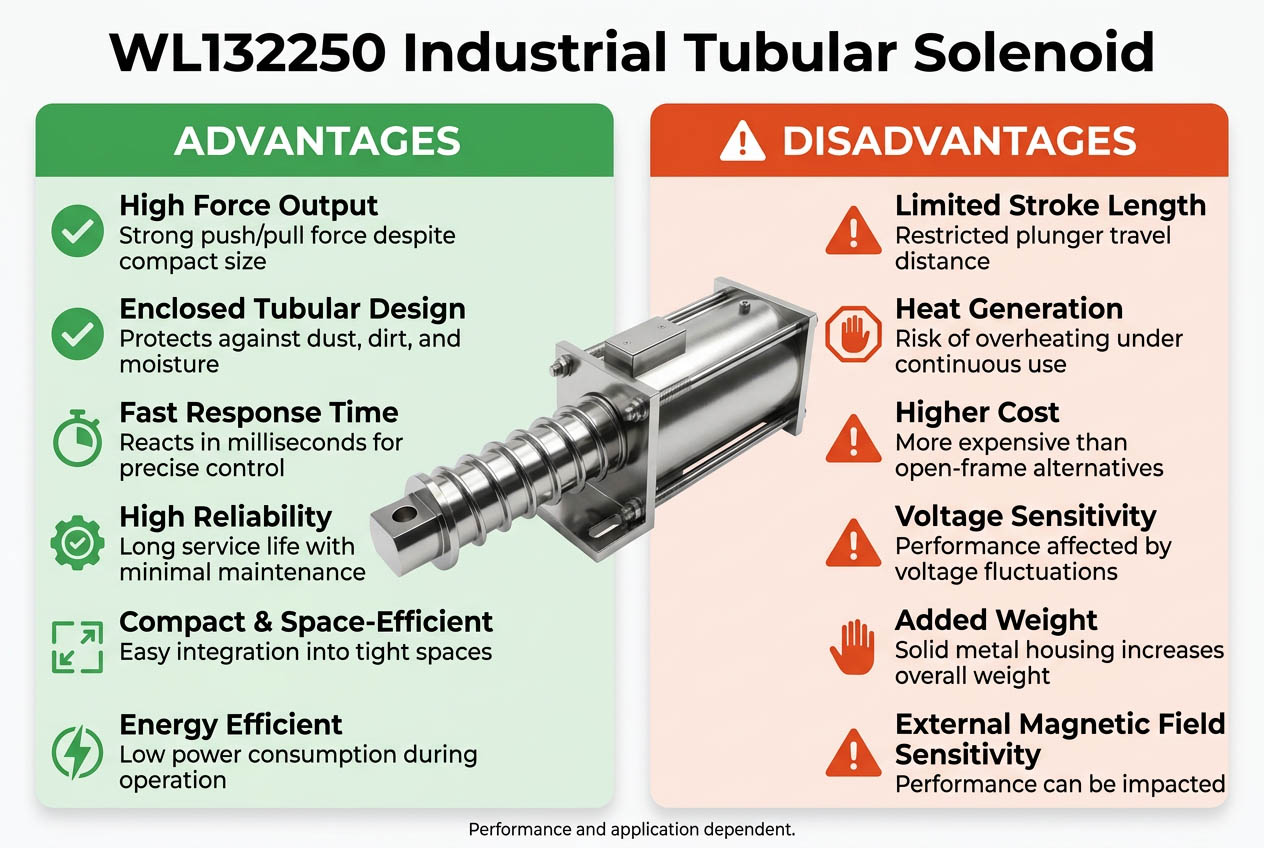
Duty cycle is one of the most commonly overlooked aspects when selecting industrial solenoids. A tubular solenoid designed for intermittent use becomes overheated when used continuously. Moreover, engineers fail to consider the environmental factor. Moisture, high temperatures, vibrations, and dust affect solenoid performance and need certain protection.
Mounting of the industrial tubular solenoids must be properly done. Engineers sometimes neglect to consider space requirements and mechanical alignment, which reduce energy consumption and decrease efficiency. At an earlier stage, cable length, connection type, and electrical interface must be determined.
Life-cycle requirements are another factor that engineers usually overlook. To achieve high efficiency with a long service life, engineers tend to choose products that are not able to endure millions of cycles.
How to Choose an Industrial Tubular Solenoid
Selection of industrial tubular solenoids requires taking account of certain electrical, mechanical, and environmental factors.
1. Check for type of motion
Firstly you need to establish whether the system works on a push, a pull, or both. It defines the appropriate plunger and magnetic circuit design.
2. Define the required force
This means calculating the force necessary to perform desired work plus friction allowance and safety margins.
3. Establish the stroke length
Determine the actual stroke length required and measure the force where it is needed, as force characteristics differ depending on the stroke length.
4. Choose voltage and power
Standard voltages include DC 6V, 12V, 24V, and 48V and, less commonly, AC 110V and 220V. Available voltage determines the design and efficiency of the coil.
5. Consider duty cycle
Will it be an intermittent or continuous duty state? Thermal management should be taken care of in continuous-duty applications.
6. Consider environmental conditions
Temperature range, humidity, dust protection, vibrations, waterproofing, etc.
7. Consider installation limitations
Space is available for mounting and fixing, as well as for the cable layout and connectors used.
8. Estimate solenoid’s service life
Predict the total number of operational cycles required during the service period of the device. High-performance applications require special treatment during the designing and manufacturing process.
9. Make requests for customization
Specialized products include customized stroke length, force characteristics, cable assembly, mounting brackets, waterproofing features, etc.
10. Cooperate with a specialist industrial solenoid manufacturer
Such a company will offer you professional consultation, performance testing, prototyping, and production optimization services. As a result, it will guarantee high performance, increased lifespan, and low-cost operations. To accomplish these goals, buyers will consider their requirements and constraints before choosing.


