


Checklist for Choosing a Linear Tubular Solenoid Summary
Here is a checklist that you can use to make the process more efficient by talking to the manufacturer or examining the datasheet for the product you need.
Mechanics: How long is the stroke needed, and how much force is required at the end of that stroke, in terms of length in mm and force in Newtons?
Action: Is it required to pull or push, and is it required to be safe or latch?
Electronics: What is the supply voltage, in Volts? What is the required duty cycle?
What is the environmental temperature range? Are there issues with dust and water? Are there issues with corrosion?
Lifecycle: How many times will the product need to be used during its lifespan? Note that some solenoids can be cycled up to 25 or 50 million times.
By going through these factors, you can quickly narrow down the thousands of linear tubular solenoids available to the one that will work best, last the longest, and be the most efficient for you. Before you finish the design, it is always a good idea to examine the datasheet for the product, and if possible, to actually try out the solenoid in the real world.
1 What exactly is a linear tubular solenoid and how does it work?
A linear tubular solenoid is an electromechanical device that converts electrical energy to linear mechanical motion. It consists of a copper wire wound in a cylindrical shape around a hollow cylinder referred to as a yoke, as well as a movable ferromagnetic plunger. Whenever electric current flows through the copper wire, a magnetic field develops that causes a linear motion of the plunger either in pushing or pulling action. Whenever the electric current is switched off, the magnetic field disappears, and a return spring causes the plunger to move back to its original position.
2, What are the main advantages of the tubular design compared to other solenoids?
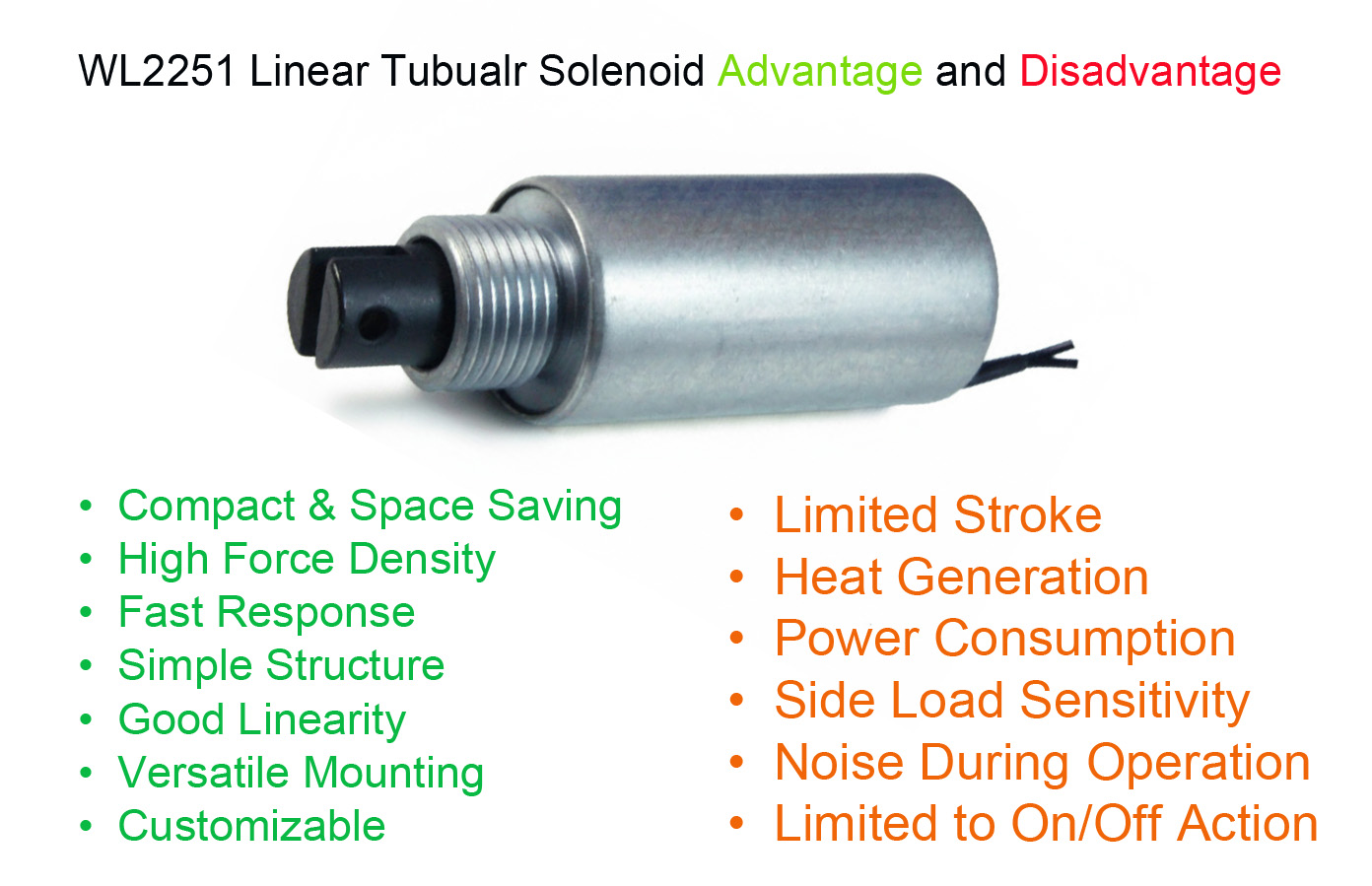
The tubular configuration has several advantages compared to other conventional solenoids. Some of the advantages include:
Magnetic Efficiency: This type of configuration is efficient in this regard.
Durability: This type of configuration is also efficient.
Force: This type of configuration is efficient.
Smooth Motion: This type of configuration is efficient.
3. What are the typical applications for these solenoids?
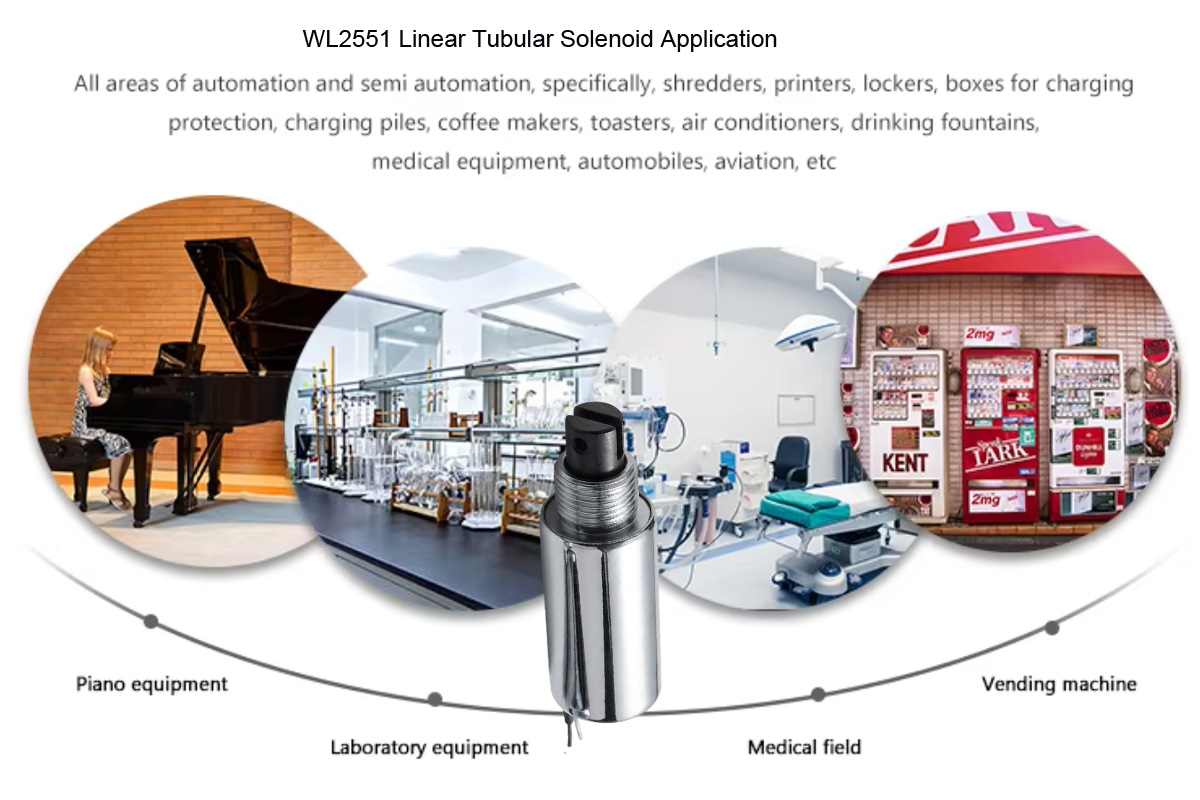
Tubular linear solenoids have a wide range of uses in different industries, including:
Automation: These types of solenoids are used to control conveyor belts.
Medical: These types of solenoids are also used to control medical equipment, such as infusion pumps.
Locking and Safety Products: Electronic locks, door latches, and access control devices .
Automotive Systems: Fuel injectors and transmission control .
Office and Vending Machines: Printers, copiers, and vending machine dispensers .
4. What key specifications should I consider when choosing a tubular solenoid?
When selecting a solenoid, the application requirements must be carefully evaluated. The key specifications are:
Stroke Length: The distance the plunger must travel to accomplish the task .
Force Output: The force required to move the load the required stroke length. The force decreases with stroke length .
Voltage: The available voltage supply (usually 12V DC or 24V DC) .
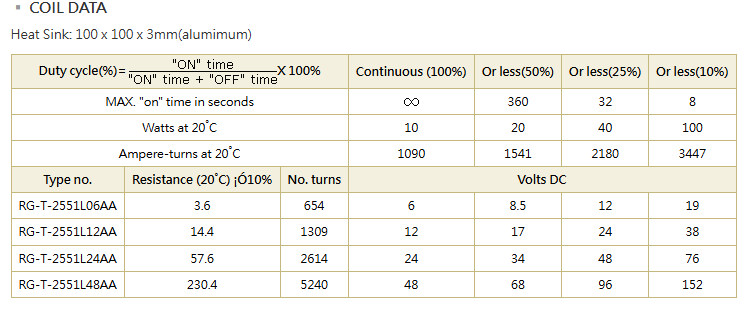
Duty Cycle: The ratio of “on” time to “off” time. This is important in thermal management because a continuous duty cycle is different from a short duty cycle .
Operating Environment: Temperature, humidity, exposure to dust or moisture .
5. Can tubular solenoids be customized for specific needs?
Yes, flexibility is a major advantage of tubular solenoids. Manufacturers offer a wide range of customization options to meet the needs of the application .
Common customizations are:
Electrical Parameters: Custom voltages and power supplies .
Mechanical Specifications: Custom stroke lengths, force curves, and mounting styles .
Connector Types: Custom lead wires or connectors .
Shaft Types: Custom plunger shaft sizes, lengths, and end styles .
6. What are the common voltage options available?
However, custom voltages are also available. The standard operating voltages for DC tubular solenoids are 12V DC and 24V DC .
7. How much current will this solenoid draw, and will it run continuously?
The amount of current drawn by the solenoid will depend upon its resistance value and the applied voltage. Since the formula for finding the value of the current drawn by the solenoid is I = V/R, the more the required value of the force, the more will be the value of the current drawn by the solenoid. It will run continuously only if its duty cycle is 100%. It will run continuously only if it is designed for continuous operation, as it will then be able to dissipate the heat. It will fail if it is designed for intermittent operation only, as it will then be unable to dissipate the heat .
8. Do these solenoids require any maintenance?
Tubular linear solenoids are designed for minimum maintenance, as they are enclosed types . However, for better performance, it is recommended that they be checked regularly. It is recommended that they be checked regularly for better performance and longer life. Special kits are available for use in automotive transmissions, as they are considered to be critical components. These kits are required for replacement of bushings for smooth operation of the solenoid. However, for general industrial applications, they are considered “fit and forget” types, as they will continue to run for their life without any problems.


