


How to Choose a Machine Holding Magnet
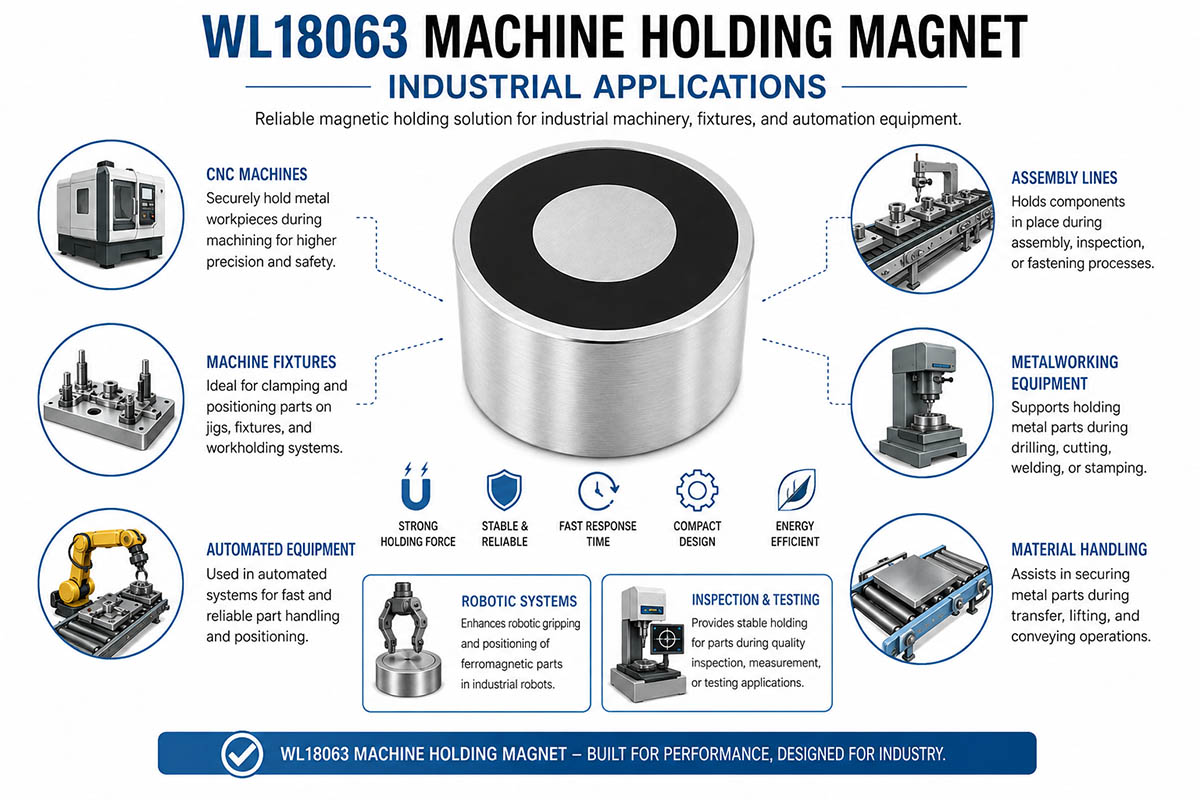
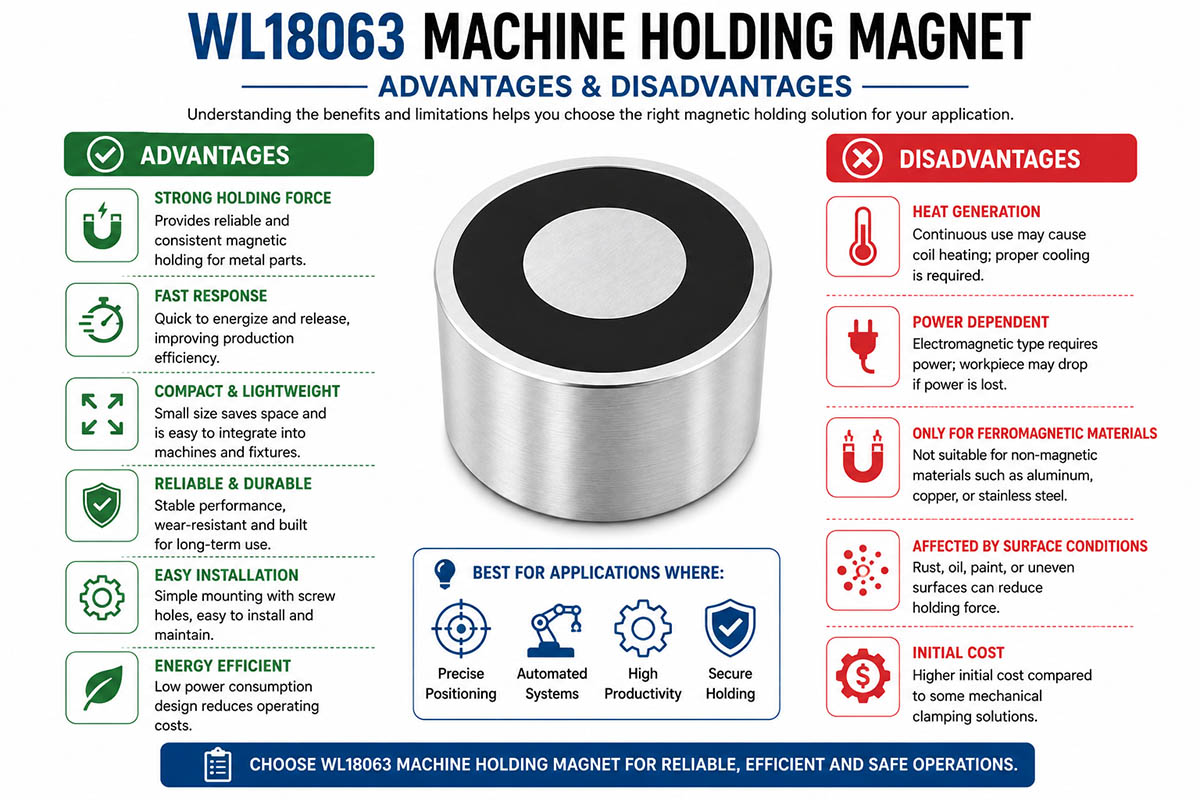
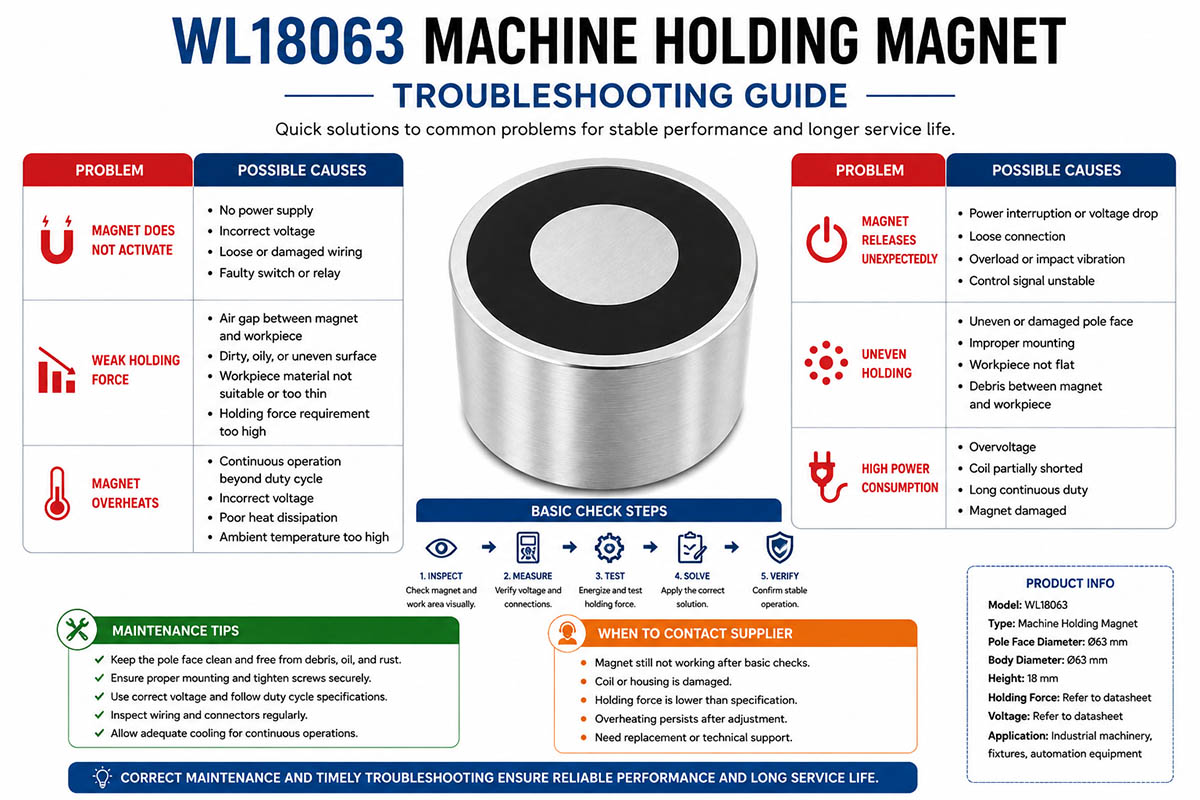
The choice of a machine holding magnet should be based on operating environment and not only holding force as claimed by a magnet.
1.Determine the holding force needed.
Determine the weight and acting forces of the workpiece. Take into account acceleration, cutting forces, impact, movement, vibration. Instead of operating always at the maximum capacity of the magnet, select an appropriate safety margin.
2.Check material of workpiece.
Machine holding magnets work best with ferromagnetic materials like steel or iron. Stainless steel and other alloys have different magnetic properties. Check the actual material of the workpiece.
3. Determine contact surface.
Magnetic holding performance is highly dependent on surface flatness and cleanliness. Paint, rust, oil, chips, uneven surface and air gap can affect the magnetic force. What seems to be strong magnet in laboratory may not pull with such force in the machine.
4. Choose the right voltage.
For electromagnetic machine holding magnets select magnet rated voltage which matches voltage of the available control-system. There are various voltages in many industrial systems and you should check electrical compatibility.
5. Consider the duty cycle.
Will the magnet be permanent or pulsed? If you run it continuously you can heat the electromagnetic coil. You should select a magnet which is appropriate for duty cycle and temperature conditions.
6. Verify physical dimensions.
Check for available mounting space, bolt pattern, magnet height, pole-face dimensions, cable location and clearance to moving machine parts.
7. Consider the environment.
Temperature, humidity, dust, oil, vibration, coolant and corrosive substances affect performance and service life. You should select the proper housing and protection for the application.
8. Consider release requirements.
In case of quick electrical release it is better to choose electromagnetic machine holding magnet. If you want to hold the workpiece without power, then you should select a permanent magnetic magnet.
9.Consider control integration.
Make sure that the magnet works correctly with relays, PLCs, sensors, switches and safety circuits used by the machine.
10. See manufacturer specifications.
Before purchasing make sure that the magnet has the rated force, voltage, dimensions, temperature, mounting arrangement and expected life according to the actual machine requirements.
Tips for Avoiding Common Mistakes in Machine Holding Magnet Design
Don’t choose a magnet based on the max holding force.
Don’t forget about the actual workpiece material and magnetic properties.
Don’t consider the rated holding force as constant in the presence of an air gap.
Keep magnetic contact surfaces clean and properly aligned.
Ensure adequate safety margin for vibration and dynamic loading.
Please make sure the magnet has the correct operating voltage if you are connecting an electromagnetic model.
Don’t forget about the continuous operation coil heating.
Don’t install the magnet where surrounding machine parts can interfere with the magnetic circuit.
Mounting bolts and structural supports should be checked for full loading.
Don’t forget about the corrosion, coolant, dust, oil, temperature in the design.
Consider the requirements for emergency release.
Make sure magnet is compatible with PLC and machine-control systems.
Route the cable to avoid mechanical damage.
Don’t run a magnet beyond its duty cycle.
Test the assembly in a real operating environment before going into full production.
Follow manufacturer’s dimensional and electrical specifications.
Use suitable secondary retention where necessary for safety-critical applications.


