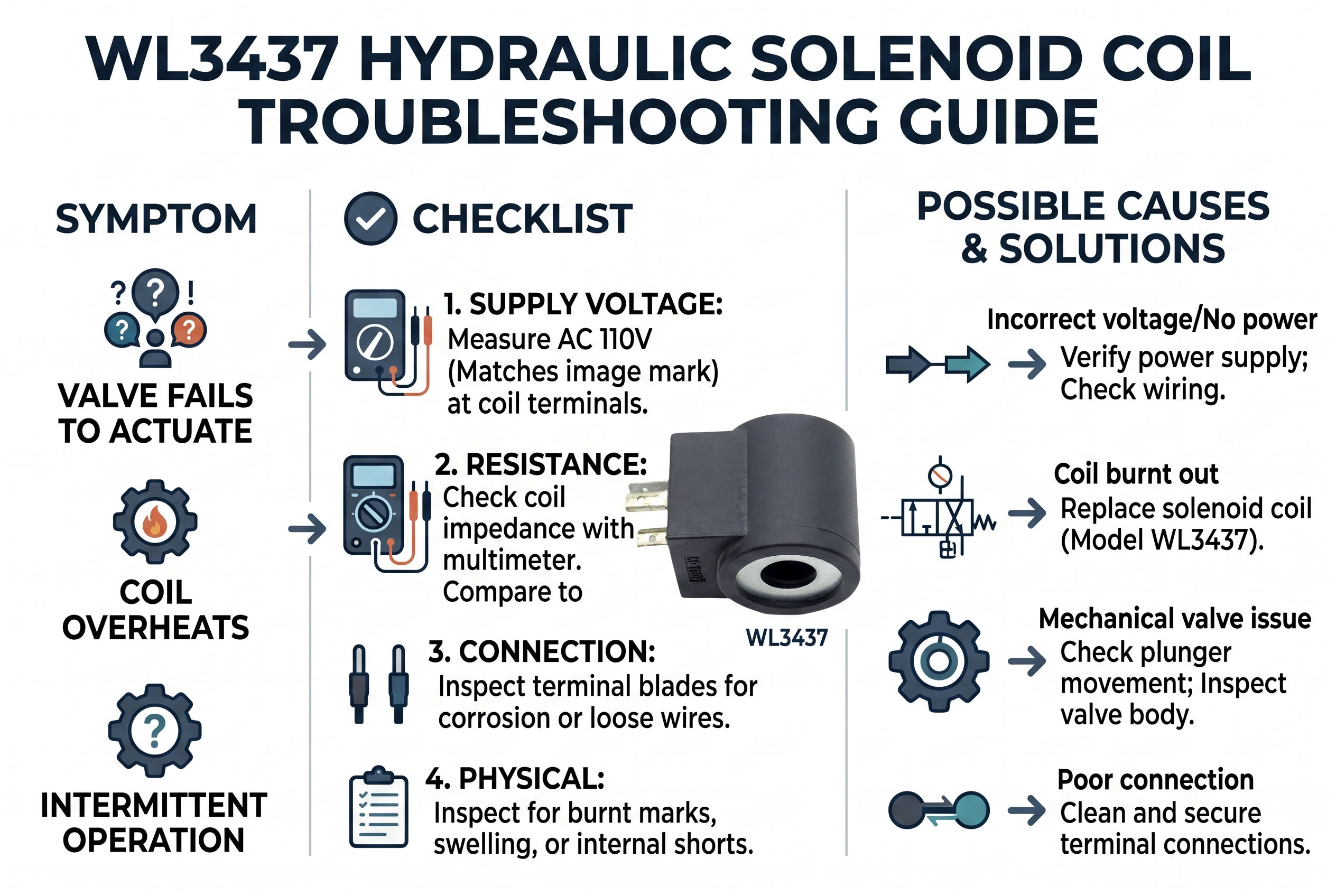
How to select a hydraulic solenoid valve coil
The right selection of the hydraulic solenoid valve coil implies more than just voltage. The coil must be compatible with the hydraulic valve, control system, and environment.
1. Check the Valve Interface
First, check the specifications of the valve manufacturer, the coil dimensions, the mounting way, the armature tube diameter, and the mounting space available. Sometimes even a small mismatch of dimensions will prevent the right mounting.
2. Verify Operating Voltage
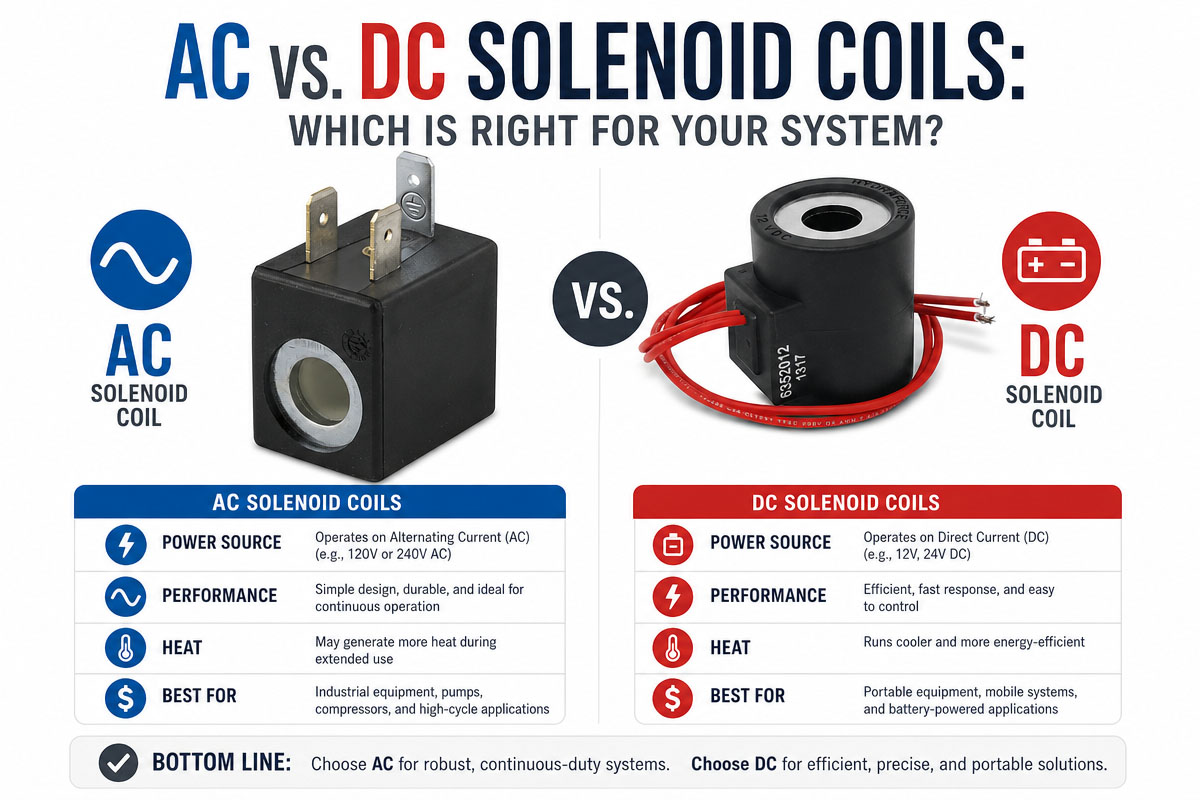
Verify whether the control system is powered by AC or DC voltage. 12 VDC or 24 VDC are commonly used in industrial applications. Other systems may have other voltages.
3. Calculate Power & Current
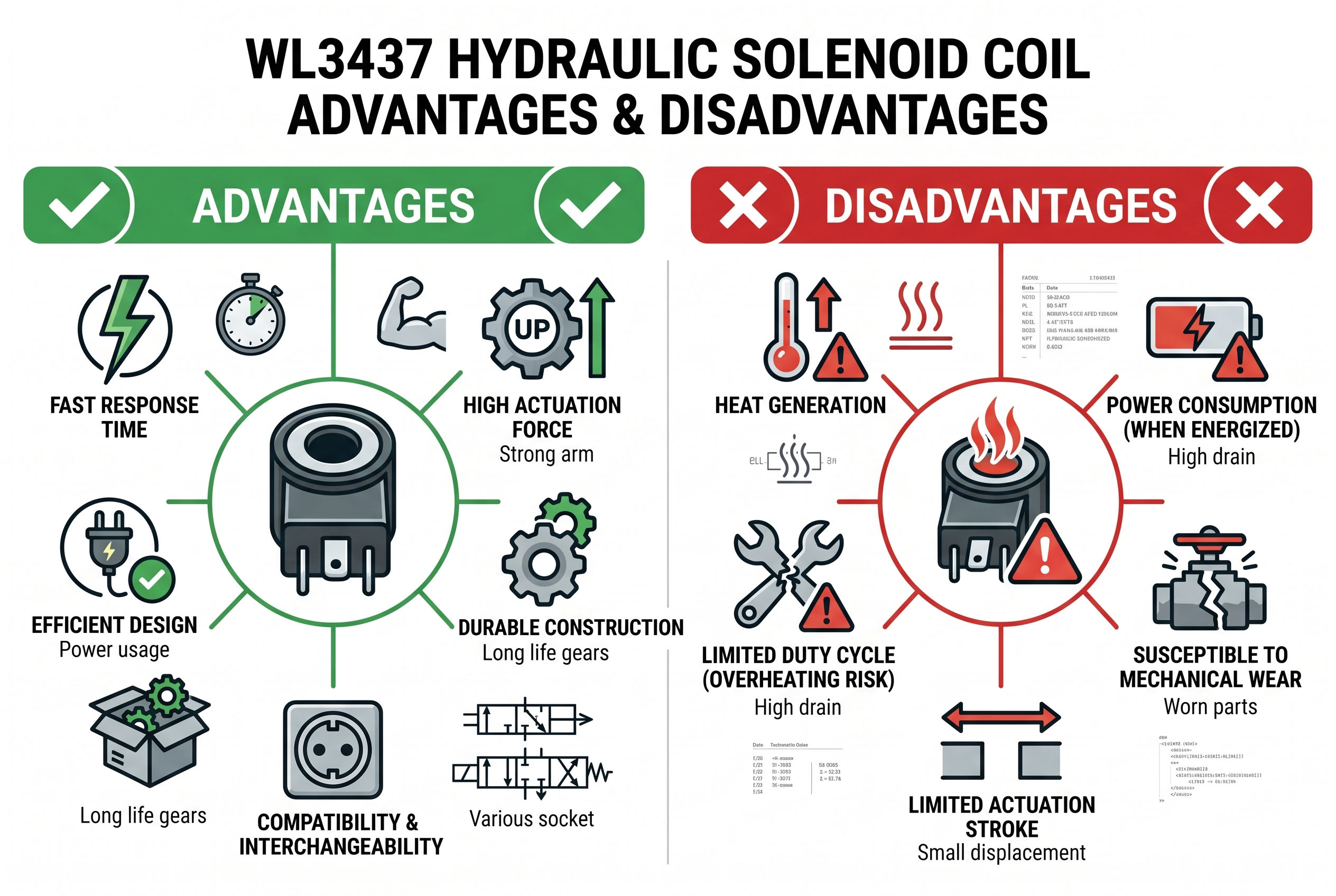
Find the wattage, current & resistance needed. Too high power may cause overheating of the valve, but too low electromagnetic force may fail to actuate the valve.
4. Evaluation of Duty Cycle
The coil can be used intermittently or continuously. The coil designed for intermittent operation may overheat if used continuously.
5. Verify Operating Temperature
Take into account the ambient temperature and the heat generated by the coil. The high-temperature environment requires special insulation materials and design.
6. Choose the right connector.
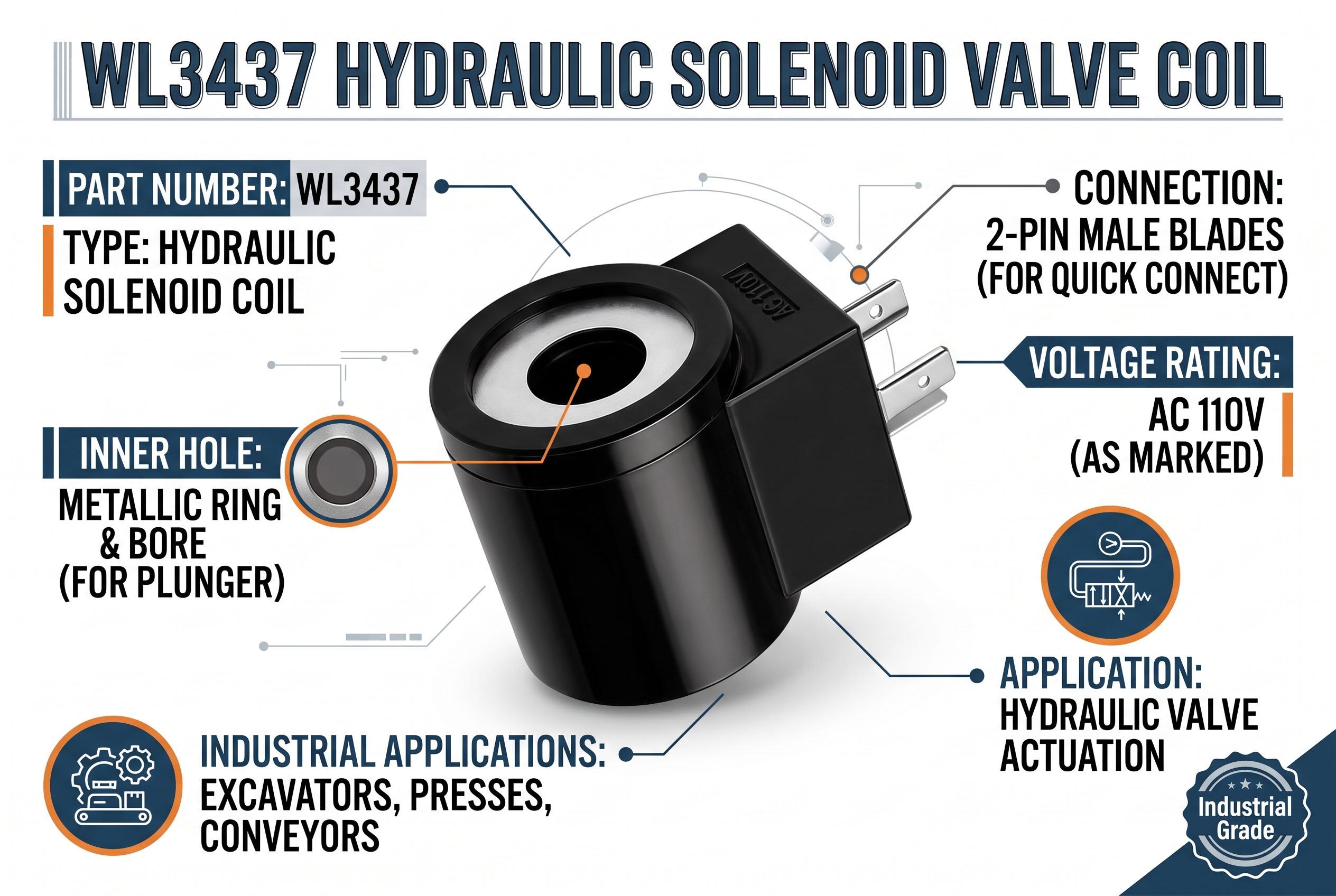
The connector type and orientation must be compatible with the machine wiring system. There are various types of connectors, such as DIN connectors, flying leads, automotive-style connectors, and custom terminals.
7. Protecting the Environment
Determine the environment where the coil is going to be used—moisture, oil, dust, vibration, and temperature changes for outdoor or mobile equipment. Proper sealing and protection will extend its life.
8. Check Electromagnetic Performance
The coil must be able to generate sufficient magnetic force to actuate the valve reliably. The electromagnetic performance depends on the resistance, winding design, magnetic circuit, and armature compatibility.
9. Consider OEM Customization
Sometimes for the new hydraulic equipment, the custom-designed coil will perform better than the off-the-shelf one.
Get samples before the mass production to verify voltage, current, temperature rise, actuating force, installation compatibility, and endurance under operating conditions.
Avoiding Common Mistakes in Hydraulic Solenoid Valve Coil Design
Poor valve performance or premature failure can be caused by a number of mistakes in design.
Mistake 1. Choosing the Coil Only by Voltage
Not all 24 V hydraulic valves can be controlled by a 24 V coil. The power, resistance, dimensions, and magnetic performance must also be the same.
Mistake #2: Neglecting the duty cycle
The coil designed for intermittent operation may overheat when used continuously.
Solution: Specify the duty cycle required before the design.
Error 3: Ignoring the temperature
The temperature rise of the coil during operation. The ambient temperature and heat generation should be considered.
Mistake 4: Choosing the wrong connector
The connector may fit physically but has the wrong pin configuration or electrical characteristics.
Mistake 5: Neglecting Environmental Protection
Outdoor hydraulic machinery is exposed to water, oil, dust, and vibration.
Solution: Specify the required level of environmental protection at the early stage of the design.
Error 6. The Forgotten Tolerance
The valve interface and coil dimensions must be manufactured within tolerances.
Mistake 7: Testing Only at Room Temperature
The coil may operate properly at 25°C but behave differently at higher temperatures.
Best practice: Test the samples under real voltage, temperature, duty cycle, and vibration conditions.