


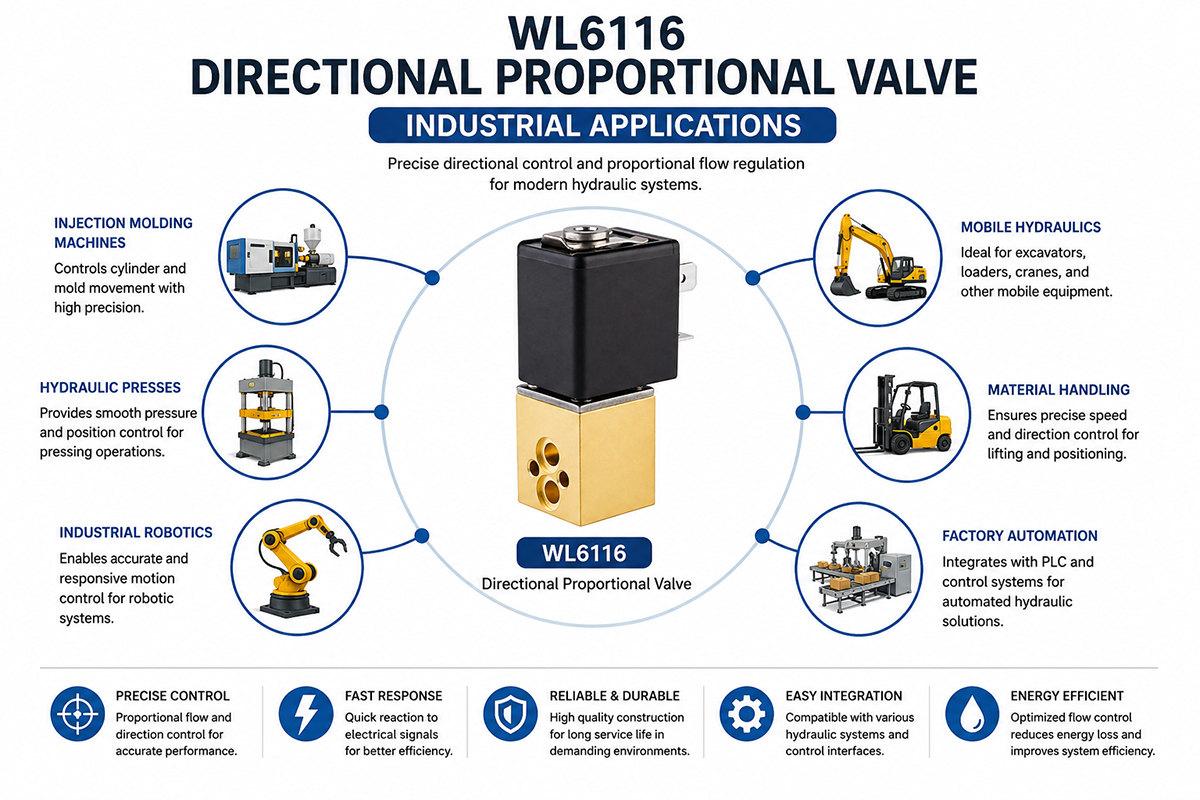
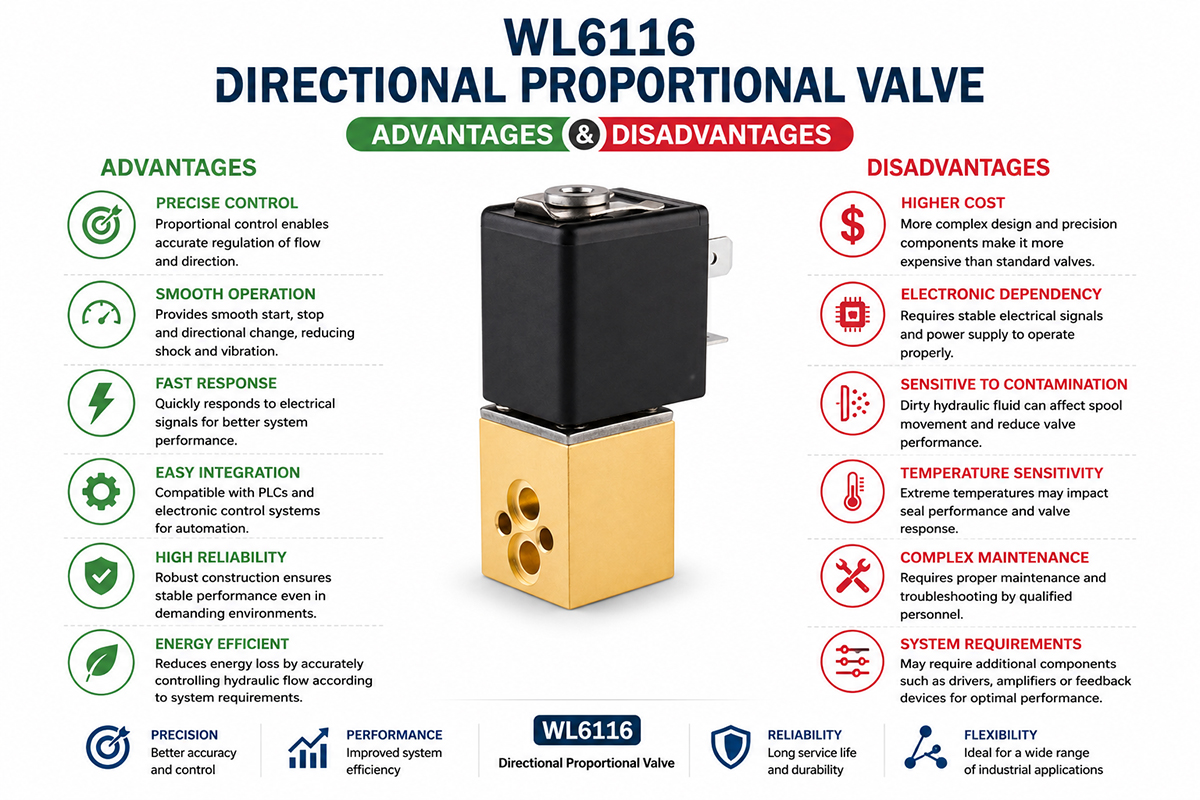
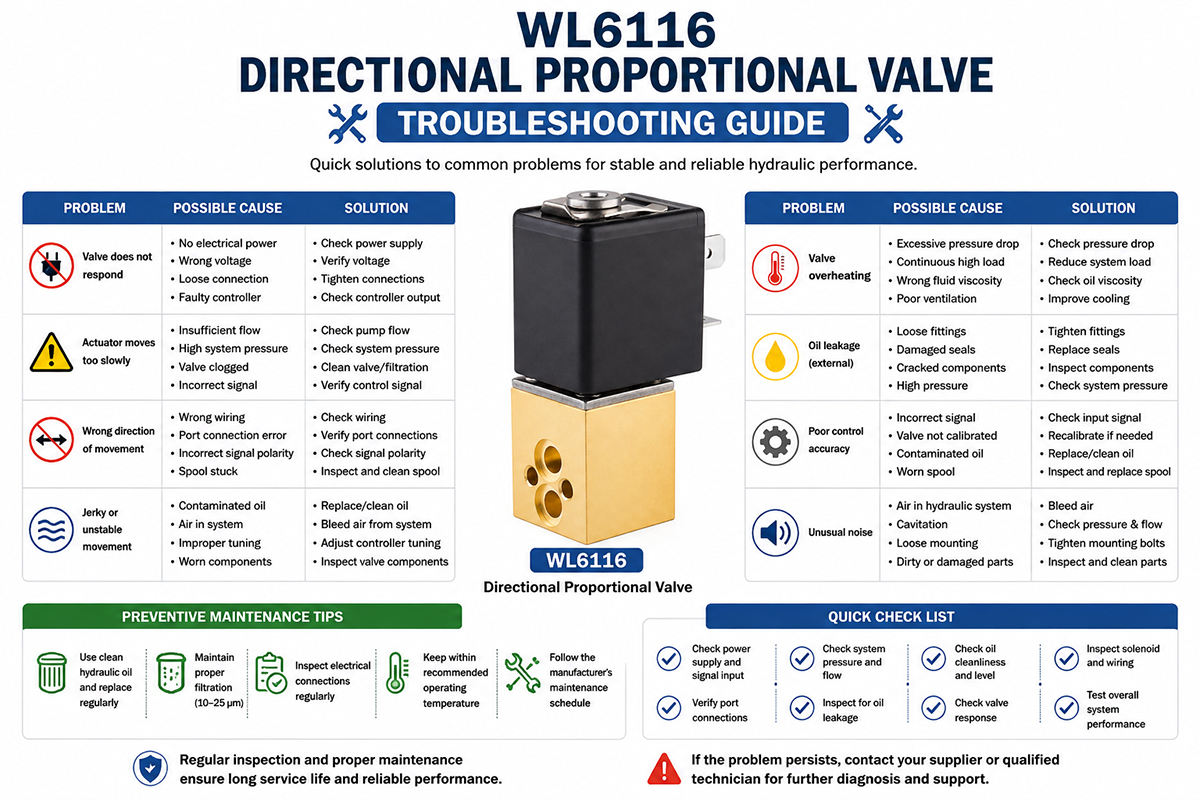
How to Select a Directional Proportional Valve
Selection of the right directional proportional valve involves selection of the valve so that the hydraulic, electrical, mechanical and environmental characteristics of the valve suit to the application.
1. Determine the Operating Pressure
Establish the operating pressure. Normal pressure. Maximum pressure. Select the valve with the higher pressure rating than in your service conditions. Average pressure is not a good basis for valve selection.
2. Calculate Required Flow Rate
Determine the maximum hydraulic flow for the cylinder or motor. Lack of flow capacity can result in pressure loss and reduction of the actuator speed. Over-sized valves can reduce control resolution.
3. Define Directional Requirements
Ensure that your application requires 2-way, 3-way, 4-way or some other valve spool configuration. The number and positioning of the ports should match the hydraulic circuit.
4. Investigate Proportional Control Accuracy
Establish the required accuracy of positioning, repeatability, hysteresis, response time and flow resolution. Some high precision automation applications require valves with built-in electronics or feedback.
5. Establish Electrical Compatibility
Match PLC, controller or drive to the valve. Voltage, current, input signal, connector and control method should be matched to the valve. Typical command types are analog voltage, digital command or current.
6. Assess Response Dynamics
Valves with fast response are used in motion control, robots, CNC machines and automatic machines. But the fast response has to be balanced with the stability of the system.
7. Investigate Fluid and Temperature Requirements
Ensure compatibility of the hydraulic fluid, viscosity range, operating temperature and sealing materials. Contamination control is also important to avoid problems with spool shifting.
8. Verify Installation Requirements
Assess mounting dimensions, port dimensions, flow direction, manifold compatibility and installation space.
9. Environmental Conditions
Vibration, dust, humidity, corrosion and temperature fluctuations should be assessed when working with outdoor and mobile equipment. Select the right enclosure and protection level.
10. OEM and Supplier Support Assessment
Select supplier who will provide you technical documentation, testing, customization, spare parts and engineering support. For custom machinery OEM customization will help you to optimize valve performance and integration.
Directional Proportional Valve Design: Tips to Avoid Common Pitfalls
Do not select too small the valve. Lack of flow capacity will result in pressure drops and actuator motion slowing down.
Avoid oversized valves. Oversized valves have poor low flow resolution and thus more complicated control.
Always take into account both normal and maximum system pressures. Match pressure ratings:
Select the right valve spool configuration. Wrong valve spool setup can lead to wrong actuator motion.
Check electrical signals Voltage, current, signal type, connector and controller compatibility.
Take response time into consideration. Slow responding valve can reduce the machine precision and productivity.
Control hydraulic contamination. Dirty fluid can lead to spool sticking, wear, leaking and unstable performance.
Consider the temperature. Select appropriate seals and materials for the right temperature range.
Pressure compensation is required in the case of variable loads to maintain consistent flow control.
Filtration is critical for accurate spool shifting.
Think about fail-safe behavior. What should the valve do if the power or control signal is lost.
Test your system as a whole. Valve performance should be tested with the pump, actuator, controller, sensors and hydraulic circuit.


