


How to Choose an Electromagnetic Lifting Magnet
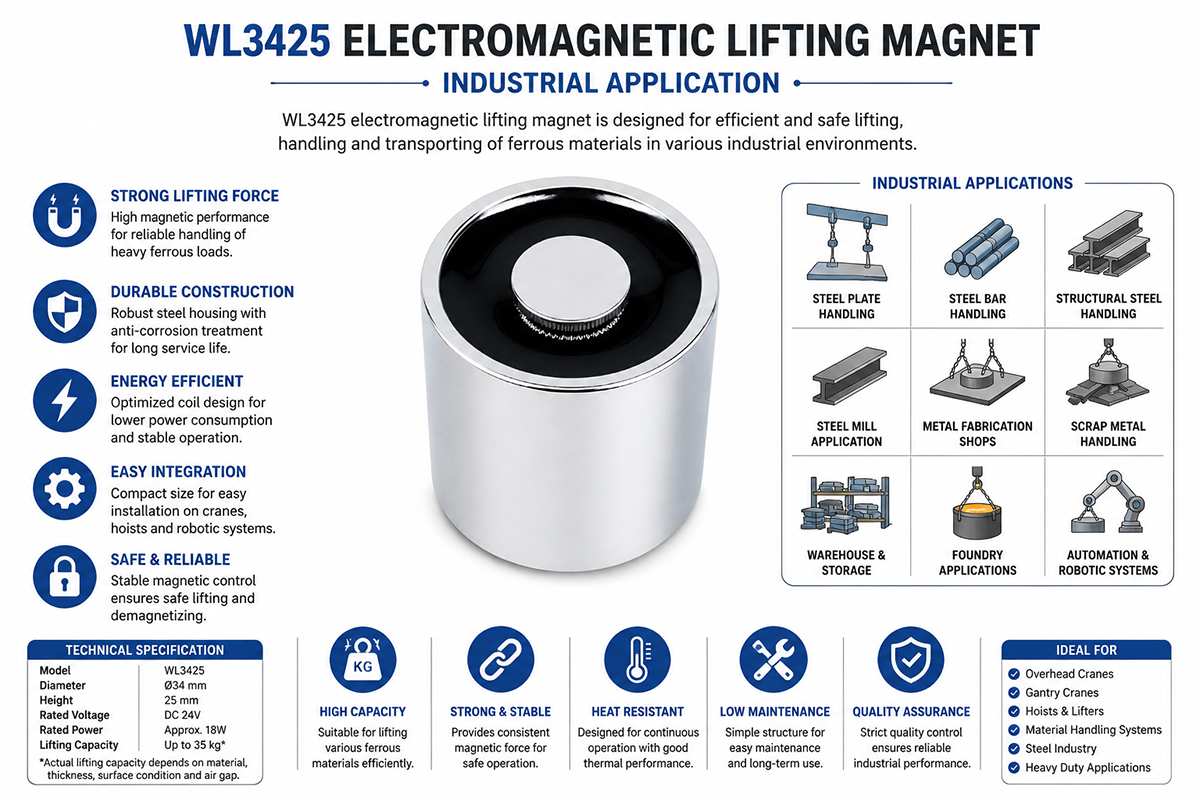
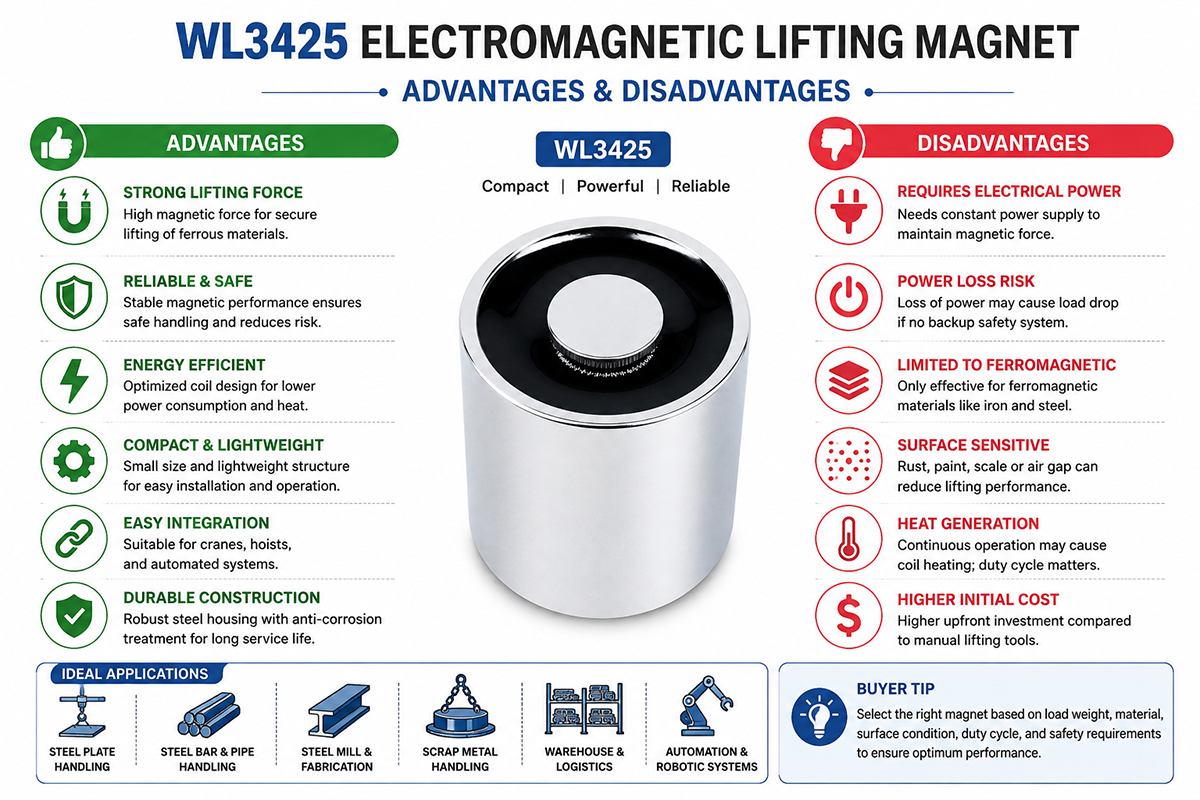
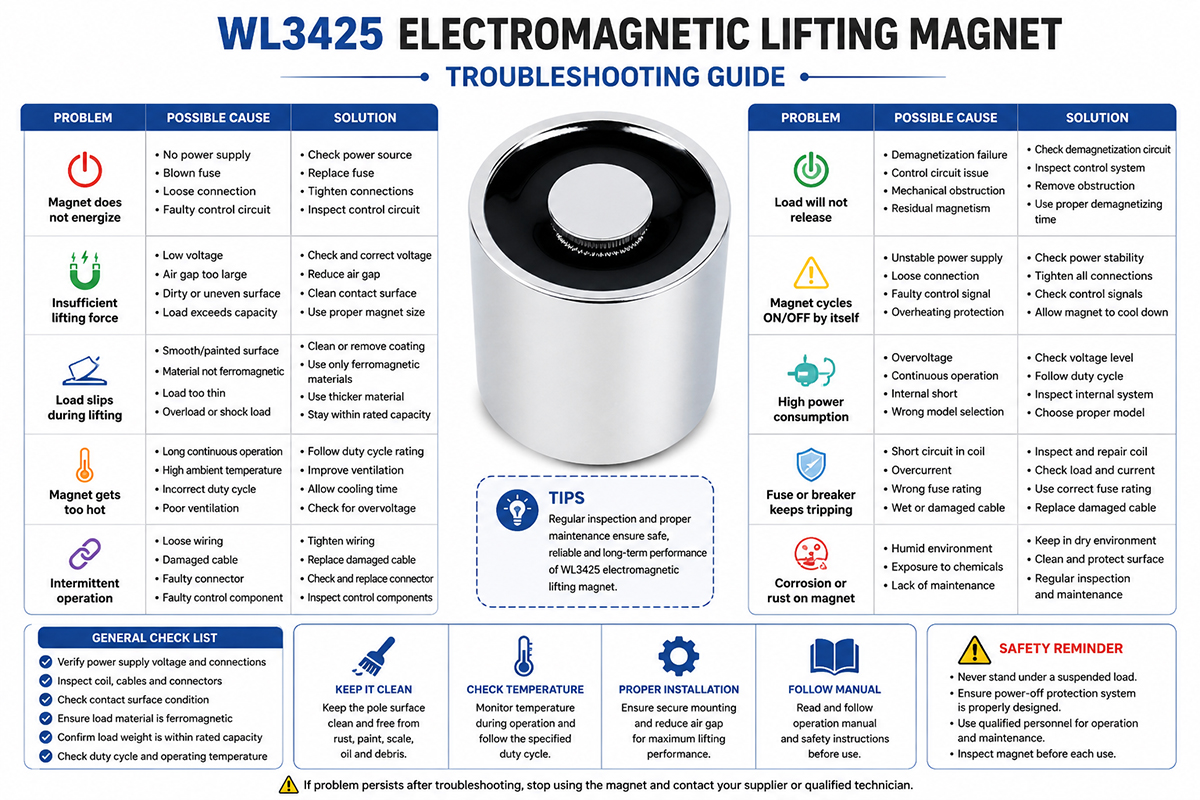
Prior to selecting the electromagnetic lifting magnet, it must be properly matched with the maximum weight of the load and more. The complete lifting application must be evaluated prior to the product selection.
1. Load weight evaluation
Identify the minimum, mean and maximum weight of load. Use an appropriate capacity with appropriate safety margin in accordance with applicable standards.
2. Material identification
Electromagnetic lifting magnets are mostly used with ferromagnetic materials. Generally, magnetic attraction is possible with steel and iron materials, but stainless steels and alloys would have different magnetic properties.
3.Evaluate the load dimensions
Length, width, thickness, diameter and shape evaluation of the load. A magnet which is specifically designed for the steel plates may not give the same result for the curved pipes, thin sheets, irregular and narrow bars.
4. Surface condition evaluation
Rust, paint, scale, dirt, moisture, gaps and unevenness could reduce the magnetic coupling. Consider the real surface condition of the load, not the laboratory performance.
5.Air gap consideration
Small air gaps between the magnet and the load could significantly affect the magnetic holding force. Select a magnet which is suitable for the real surface condition.
6. Electrical power requirement evaluation
Check the voltage, current, control method, duty cycle, cable requirements and the electrical supply available. The electrical power supply must be suitable for the magnet.
7. Operating frequency consideration
In the case of repetitive operations, consider the required duty cycle and thermal performance. More cooling and thermal protection would be required in the case of high frequency or continuous operation.
8. Lifting equipment compatibility
Consider the compatibility of the magnet with cranes, hoists, gantries, robotic arm and automated systems. Verify the magnet installation locations, total weight, size and controls.
9. Safety requirements evaluation
Evaluate the power loss characteristics, emergency release, backup systems, overload protection, monitoring and applicable lifting standard.
10. Personalization considerations
For special load or automated operations, the manufacturer could be consulted for special pole arrangement, mounting structure, control system, voltage options and dimensional requirements.
Common Mistakes During Electromagnetic Lifting Magnet Design Tips to Avoid
Don’t design only for the maximum load weight. Load geometry and material properties influence the magnetic holding force.
Don’t ignore the air gaps. This affects the magnetic force
Don’t ignore the surface condition issues. Such as paint, rust, scale, dirt and uneven surface conditions will reduce the magnetic holding force.
Don’t rely on the nominal capacity as the effective working capacity. Assess real operating conditions and safety margins.
Consider the temperature issues. Repeated lifting operations could increase the coil temperature.
Don’t make wrong choices in the power supply. Voltage, current, duty cycle and control has to be appropriate for the magnet.
Don’t ignore the load thickness issues. Thinner steel will have more magnetic force compared to the thick steel.
Demagnetization. Remember. Release has to be predictable and suitable for the application.
Don’t forget about the power loss protection. This is critical for the safe lifting operations.
Don’t underestimate the mechanical attachments. The lifting eye, brackets, housing and crane interface has to be able withstand the mechanical loads for which they are designed.
Testing Do not skip the testing. Testing of prototype and production units will validate magnetic performance, thermal performance, electrical operation and mechanical strength of the magnet.


