


How to Choose a High Force Holding Magnet
The right high force holding magnet is selected based on application requirements, operating conditions and performance expectations.
Firstly determine the required holding force. The magnet must be strong enough to hold the load safely. Consider whether the force will be subjected to vibrations, movements, shocks or dynamic loading.
Second,Choosing the right magnet type Electromagnetic holding magnets are ideal for applications where controlled activation and release is needed. Permanent magnets are the right choice for continuous holding applications with no power consumption.
Thirdly consider operating conditions. Magnet performance can be affected by temperature, moisture, dust, chemical exposure and corrosion risks. Select appropriate materials and protective coatings for the service conditions.
Fourth, consider the size and installation method. The magnet must be sized appropriately to fit into the available mounting space and to provide good contact with the target material. Magnetically efficient if aligned and having little air gaps.
Fifth, check the quality of magnetic material. Neodymium magnets provide very high force in small sizes, and ferrite magnets provide economical solutions in large applications.
And finally safety requirements and long-term reliability. Select magnets with stable performance, appropriate operating temperature ratings and safety factors.
Cooperation with experienced manufacturer allows to optimize magnetic design, increase efficiency and guarantee the high force holding magnet selected will meet industrial requirements.
Tips for Avoiding Common Mistakes in Magnetic holding systemt Design
Don’t select Magnets based only on Size – calculate the magnetic force needed.
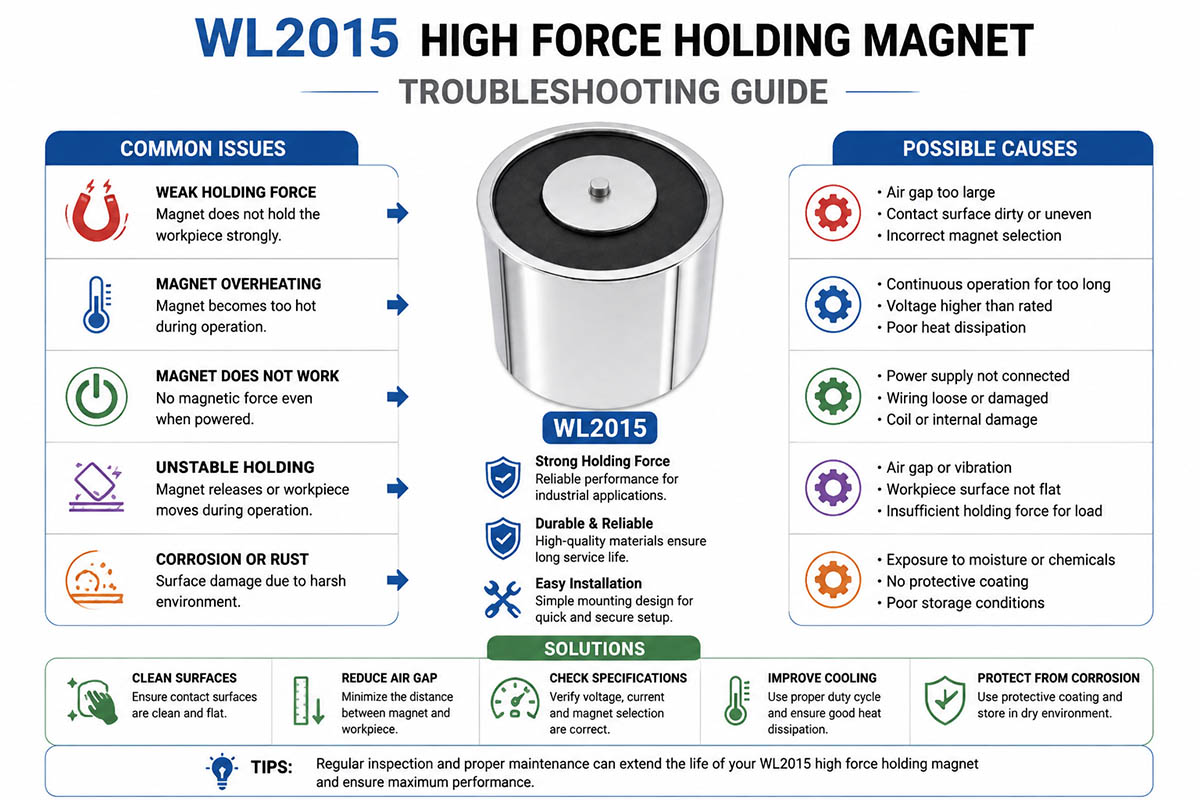
Don’t overlook air gaps, even a small gap can greatly reduce the holding force.
Be careful with temperature effects. Too much heat can degrade magnetic performance.
Safety factors should not be underestimated when dealing with heavy loads.
Correct alignment of the magnet and the material to be attracted.
Avoid using unsuitable magnetic materials in harsh environments.
Installation space and mounting restrictions to be considered before final design.
Testing of prototypes under operating conditions before mass production.


