

Chapter 1:Introduction
Precision Engineering is mandatory for high performance solenoid, but one of the essential details is frequently overlooked – the metal stamping part. Most of the engineers spend time on coil winding, magnetic force calculations or electrical parameters, but the quality of stamped metal parts affects the performance of the whole solenoid assembly.
No matter if you are going to build a push-pull, tubular, rotary, latching or solenoid valve, every stamped frame, bracket, yoke, housing and magnetic pole contributes to the magnetic circuit. Even slightest dimensional deviations lead to magnetic force reduction, increase of power consumption, noise generation or shortened lifespan.
This guide will help to optimize the metal stamping parts for solenoid performance improvement, manufacturing efficiency and lower production costs.
Chapter 2:Importance of Metal Stamping Part in Solenoids
Solenoid is a device that converts electrical energy to mechanical force with the help of electromagnetic force. In order to ensure maximal efficiency, the magnetic circuit should have minimum possible reluctance.
Major magnetic parts are mainly produced via precision metal stamping, including:
Yoke
Figures
Poles
Mounting and brackets
End caps
Magnetically enclosures
Keep plates
Flange plate
Spring retainers
Every metal stamping part is an important element of the magnetic circuit. Low dimensional accuracy or wrong material selection will influence the magnetic flux.
Low quality stamping will lead to the following issues:
Lower pull force
Larger operating current
Excessive heat production
Higher vibrations
Noise operation
Shortened lifespan
Premature wear and tear
Chapter 3: Understanding the Magnetic Circuit
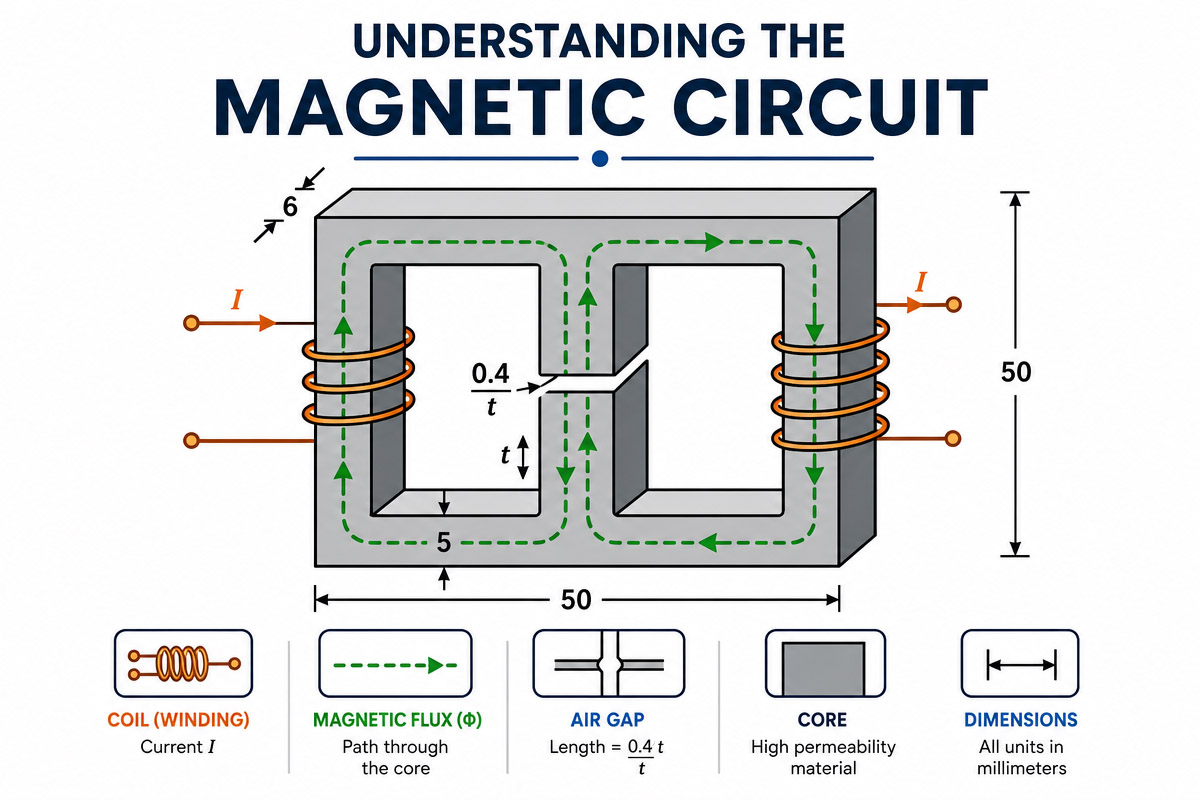
Many engineers consider the force output is determined only by the coil.
Actually, the magnetic circuit is constituted by:
Copper coil
suckered
Housing
I pole piece I
Yoke
Gap in the air
All metal stamping parts for magnetic
If there are many burrs, the part is not flat enough or it has incorrect dimensions, magnetic reluctance of the stamped part increases significantly.
The result is:
Decrease of magnetic efficiency
Low strength
Increased energy consumption
Every stamped part is designed in such a way to ensure that the magnetic field will flow freely through the circuit.
Chapter 4:Material Selection
Material selection is the base of any quality metal stamping part.
Common materials are:
4.1 Mild steel
Positive features:
Good magnetic permeability
Low cost
Easy to produce
Suitable for the majority of DC solenoids
Typical marks
SPCC (
SPCD
AISI 1008 steel
AISI 1010
4.2 IRON (Pure)
Benefits:
Very high magnetic permeability
Maximum magnetic force
Coercivity low
Commonly used in:
Solenoids of great force
Actuators of high precision
Automation & Robotics
4.3 Silicon Steel
Best for:
Solenoids – AC
Eddy current loss reduction
High frequency applications
4.4 Stainless steel Steel
Used to resist corrosion.
However:
Low magnetic properties are common to most stainless steels.
Only some specific magnetic stainless alloys can be used in magnetic circuit parts.
Chapter 5:Precision Tooling Design
Stamping consistency depends on high quality tooling.
Well designed progressive die will give:
5.1 Correct dimensions
Consistency
Long tool life
Less material waste
Important aspects of the tooling are:
Punch Gap
Reasons for wrong clearance:
Burrs.
Distortion of front edge
Bad fit accuracy
Better punch clearance leads to higher edge quality and longer tool life.
5.2 Die Alignment
Reasons for misalignment:
Unequal size
Scratches on the surface
Part editing
Precise alignment ensures quality consistency of millions parts produced.
5.3 Choice of Tool Steel
Common high quality dies are:
SKD11
DC53
Carbide inserts
These materials have high wear resistance.
5.4 Tight Tolerances
Small changes in dimensions can lead to significant differences in performance.
Typical tolerances are:
Feature Tolerance (recommended)
hole diameter +/-0.02 mm
Outside dimensions ±0.03mm
Flatness <0.05mm
Parallelism < 0.03 mm
Thickness ±0.01mm
It is important to maintain tolerances to ensure correct assembly and magnetic performance.
5.5 Burr Control
Burrs may be small, but they are a big deal in the solenoid performance.
Issues with burrs:
Increase of air gap in the magnetic circuit
Difficult assembly
Damage of the coil
Increase of friction
Reduction of the service life
Manufacturers reduce burrs by:
Die gap optimization
High quality tooling
Regular tool maintenance
Deburring operations
Finishing – vibratory
Chapter 6: Optimization the metal stamping part Surface Finish
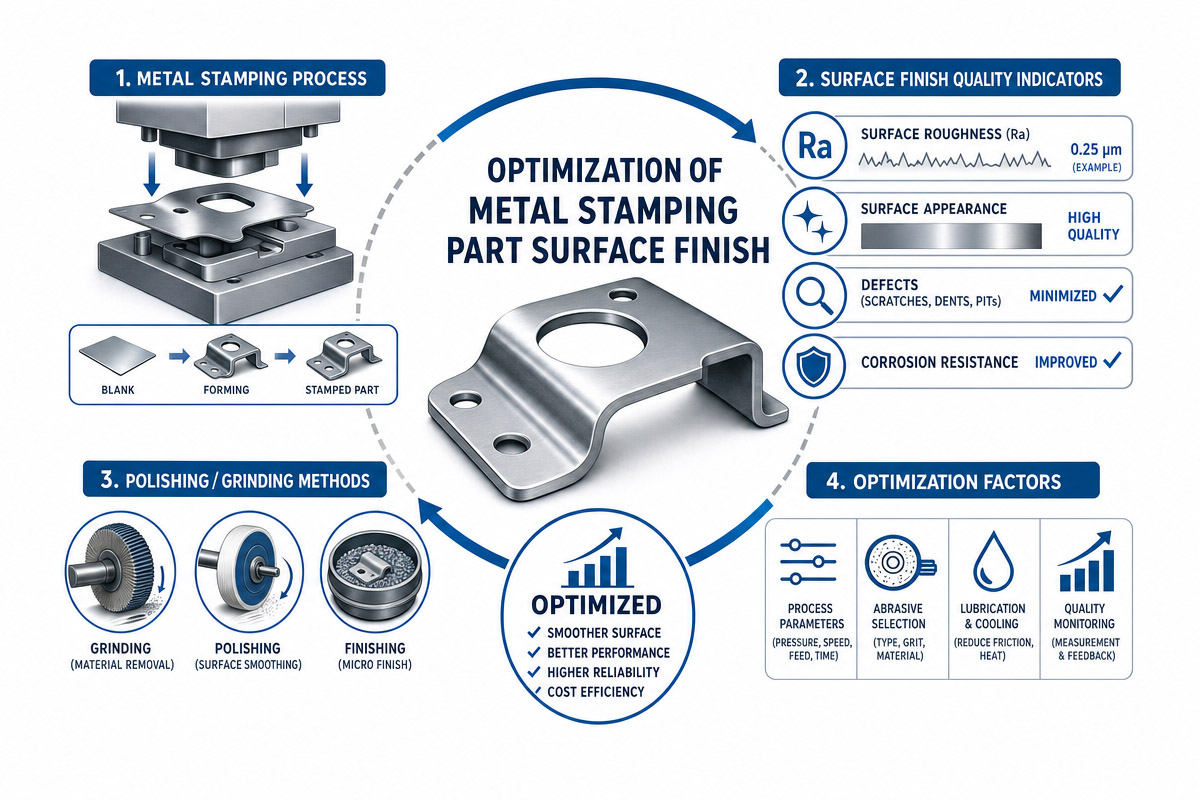
Surface finish is an important aspect influencing assembly and magnetic performance.
Most popular finish types are:
6.1 Zinc Coating
Includes:
Corrosion protection
Attractive appearance
Affordable price
6.2 Zinc Nickel Plating
Positive features:
Corrosion resistance
Increased wear resistance
Good outdoor durability
6.3 Nickel Electroplating
Suitable for:
Nice appearance
Moderate corrosion resistance
6.4 Phosphate Coatings
Positive features:
Lubrication
Increased resistance to wear
Friction reduction
6.5 Heat Treatments
Heat treatment improves mechanical properties and magnetic performance.
Methods of heat treatment are:
Stress Reduction
Annealing
Hardening
Modification
Annealing is especially important after stamping, as it restores magnetic permeability lost due to cold work.
6.6 Levelling
Flatness has a direct impact on magnetic contact surfaces.
Low flatness increases air gaps.
resulting in reduction of:
Pulling force
Retention ability
Magnetic properties
Manufacturers check flatness using:
Granite surface plates
Optical metrology systems
Coordinate Measuring Machine (CMM) is
6.7 Progressive Die Stamping
Progressive die technology has many advantages.
Benefits are:
High speed of production
Reproducibility
Lower cost of manufacturing
Minimal waste
Automation
In case of large-scale solenoid production progressive dies guarantee quality consistency of millions cycles.
Chapter 7:Metal stamping part Quality Control for solenoid
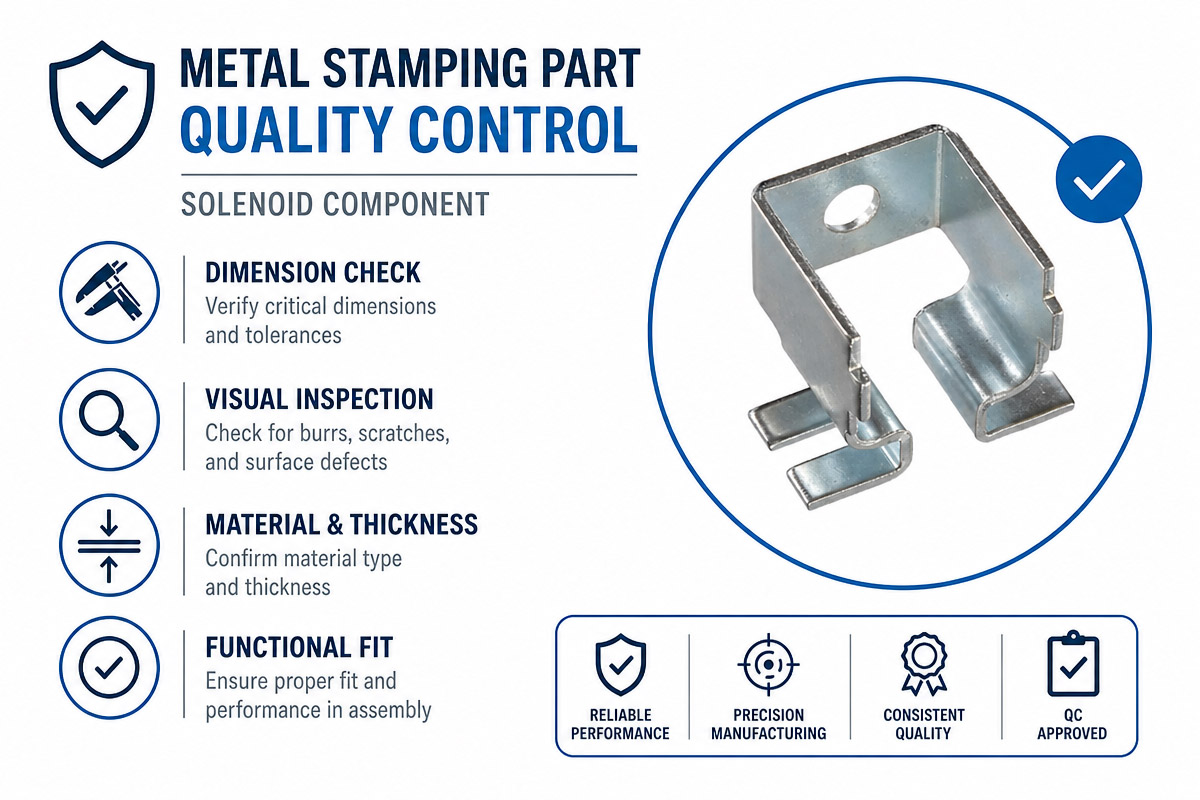
Every single metal stamping part should be inspected.
Inspections include:
7.1 Verification of the New Material
Inspected aspects:
Material grade
Thickness
Hardness
7.2 Surface finish quality
Inspection During Process
Inspected aspects:
Critical dimensions
Burr height
Hole position
Tool wear
7.3 Final Inspection
Inspected aspects:
Visual inspection
Dimensional metrology
Surface finish assessment
Plating thickness
Uniformity
Assemblies functional testing
7.4 Automation Improves Consistency
Production automation is common in modern stamping facilities.
Automation includes:
Servo-operated feeders
Progressive presses.
Vision inspection
Robotic manipulation
Automatic sorting (automatic sorting)
Advantages:
Reduced human error
Faster Manufacturing
Improved repeatability
Reduced production cost
Chapter 8:Collaboration Between Stamping and Solenoid Engineers
To ensure successful optimization, collaboration is important.
Interest of the Stamping Engineers:
Manufacturability
Tool life
Materials usage
Focus of Solenoid engineers:
Magnetic efficiency.
Power output
Coil performance
Collaboration helps to ensure that every stamped component positively impacts the total electromagnetic design.
Chatper 9 : Mistakes That Should Be Avoided
Many manufacturers inadvertently sabotage the performance of the solenoid with the simple mistakes.
Common mistakes are:
9.1 Non-magnetic materials usage
It negatively affects the magnetic circuit.
Burr height ignoring
Even small burrs lead to the increase of the magnetic air gap.
9.2 Over Plating thickness
Too thick plating changes the dimensions.
9.3 Flatness problems
Low flatness reduces magnetic force, as it makes the contact surface uneven.
9.4 Worn Die
Wear of the tool leads to dimensional inconsistency.
9.5 Poor quality control
Regular inspection is necessary to prevent dimensional deviation during production.
Chapter 10: Pros and Cons of Optimized Metal Stamping Parts
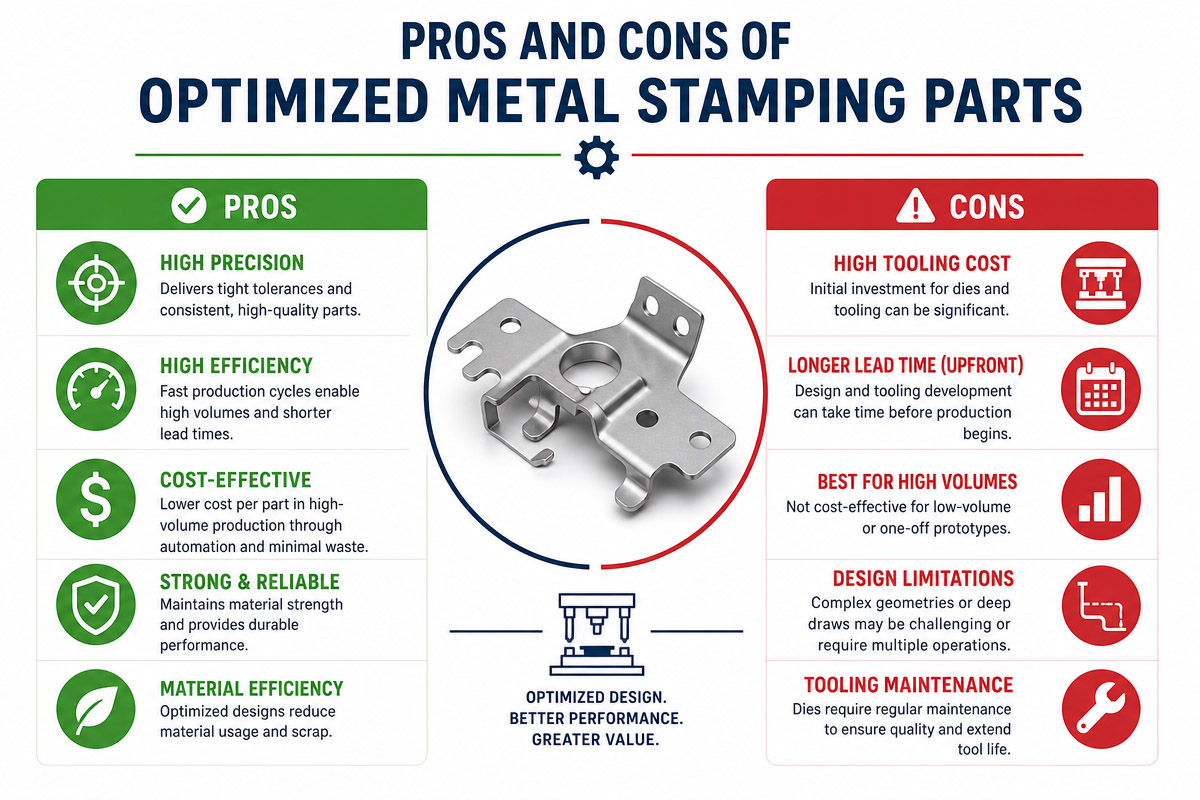
It is essential to optimize every metal stamping part used for the production of solenoids in order to manufacture high-performance devices. Precise stamped components such as housings, yokes, pole pieces, mounting brackets, and flange plates contribute significantly to the formation of a magnetic circuit. Even though optimized metal stamping has several manufacturing and performance benefits, there are certain challenges associated with this approach as well.
Pros of Optimized Metal Stamping Parts
10.1 Improved Solenoid Performance
The first benefit that comes from using optimized metal stamping parts is increased solenoid performance since precise tolerances, smooth surface contacts, and high-quality magnetic materials decrease the magnetic reluctance of the circuit, thus allowing the passage of a higher amount of magnetic flux. As a result, the pulling and response capabilities increase along with the holding performance of the device.
10.2 Consistency of the Product Quality
Precision tooling and progressive die stamping guarantee consistent dimensions, which makes it possible to create a stable product. In addition, the use of precision stamping increases the reliability of a solenoid in such industries as automotive, medical equipment, industrial automation, and smart locking systems.
10.3 Reduced Manufacturing Costs
Even though creating precision tooling is expensive, optimized metal stamping considerably reduces production expenses in case of medium and high manufacturing volumes because it allows decreasing material waste, production cycle time, and labor costs. Moreover, progressive die stamping is one of the cheapest manufacturing techniques for mass production.
10.4 Increased Product Lifespan
High-quality stamped components minimize mechanical wear and vibration as well as eliminate misalignment during the work of a device due to proper surface treatments and burr-free edges.
10.5 Increased Assembly Efficiency
Due to accurate stamping, components fit perfectly and allow for a fast assembly of solenoids as well as minimize the need for manual adjustment of components, which reduces production time.
10.6 High Design Flexibility
With modern metal stamping technologies, it is possible to produce metal stamping parts with complex shapes, hole patterns, embossments, and customized flanges required for the creation of a certain solenoid.
Cons of Optimized Metal Stamping Parts
10.7 High Initial Investment in the Tooling Design
One of the main disadvantages of optimized metal stamping technique is the relatively high expense of precision tool design for stamping dies. Progressive tooling represents a rather considerable investment, especially if a solenoid has a complex design. However, it is usually compensated by lower per-unit cost in the medium and high production volumes.
10.8 Longer Development Time
The process of high-precision tool design involves such stages as engineering, simulation, testing, and validation of the tool. It takes much more time compared to regular machining or prototyping.
10.9 Lack of Economic Efficiency at Low Production Volumes
In case of low production volumes or prototype manufacturing, optimized metal stamping is not the most efficient approach. For small batches, such manufacturing techniques as CNC machining or laser cutting are preferable.
10.10 Need for Tool Maintenance
Stamping dies get worn out in the course of high-volume production and require regular maintenance, sharpening, and sometimes replacement to preserve dimensions and prevent burr formation. Otherwise, product quality deteriorates over time.
10.11 Material Limitations
It should be noted that not every material is equally suitable for precision stamping due to the necessity of special processing or tooling.
Chapter 11:How to select a metal stamping company for your solenoid project
Choosing a good metal stamping company is a crucial step for the successful development of a high-performing solenoid. It will be the quality of every part produced – from housing, frames, and yokes to poles, pieces, and brackets – which will determine the level of its magnetic efficiency and durability.
First of all, pay attention to the supplier’s experience in precision metal stamping manufacturing of electromagnetic products. Only a company aware of solenoids manufacturing can help to get parts with necessary dimensions, magnetic material, and other attributes required for achieving consistency of pull force and service life.
The next thing to consider is the presence of in-house capabilities. Companies offering tooling design, progressive die stamping, CNC machining, surface treatment, assembling, and quality inspection at their own plants can guarantee higher production quality and shorter lead times. Integrated manufacturing helps to introduce engineering changes more quickly during the product development.
One more thing worth considering is the supplier’s expertise in metals. Only a professional metal stamping manufacturer can choose the best magnetic material – low-carbon steel or pure iron according to the requirements of your particular application and offer appropriate surface treatment – zinc, zinc-nickel, or nickel plating without any effect on the magnetic performance.
It is also crucial to pay attention to the supplier’s approach to quality control and manufacturing process. Try to select those manufacturers who use the most modern inspection equipment – coordinate measuring machines (CMM), optical measurement systems, and conduct a wide range of functional tests. Certificates (e.g. ISO 9001) are an additional guarantee of high-quality manufacturing process.
Finally, it is important to find a supplier that can provide you with a good level of engineering support – it will include checking your drawings, optimizing designs for manufacturing, creating 3D models, and producing prototypes.
Chapter12:FAQs on metal stamping part
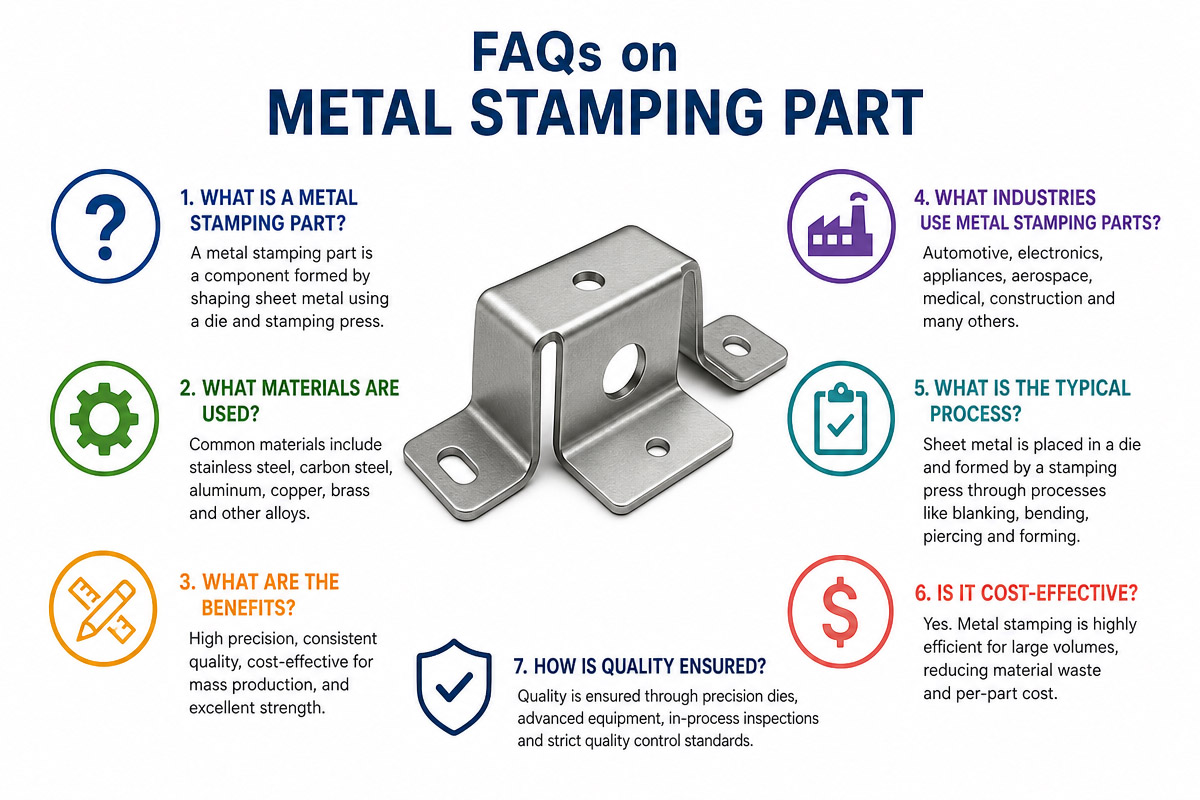
12.1 What is the metal stamping part in solenoid?
Metal stamping parts are precise formed parts manufactured from metal using stamping dies and press. Stamped parts in a solenoid are housing, frame, yoke, pole piece, end cap, flange plate and mounting brackets. They form magnetic circuit and mechanically support the solenoid assembly.
12.2 What is the effect of metal stamping parts on solenoid performance?
The magnetic efficiency is influenced directly by metal stamping parts of the solenoid. Increased magnetic reluctance can be caused by low dimensional accuracy, burrs, incorrect flatness or incorrect material selection. It results in magnetic force reduction, increased power consumption and operating temperature. The high quality stamped components enable maximum magnetic flux.
12.3 What is the best material for solenoids metal stamping parts manufacturing?
Low carbon steel is commonly used as it has excellent magnetic permeability and is cost effective. In case of high performance applications manufacturers use pure iron or special magnetic alloys. For AC solenoids the material of choice is usually silicon steel, as it decreases eddy current losses.
12.4 Why is burr control important in metal stamping?
Burr is a small raised edge formed during the stamping process. These small burrs can increase the magnetic air gap, cause difficulties in assembly, damage coil insulation and increase friction between the moving parts. Proper tooling maintenance and burr control are the ways to ensure the consistency of the solenoid performance.
12.5 What are typical tolerances required for precision metal stamping parts?
Depending on application tolerances can differ, but high performance solenoids often require dimensional tolerances of ±0.02 mm to ±0.05 mm on critical features. Close tolerances are required for proper assembly, consistency of magnetic force and reliable operation.
12.6 Is a solenoid affected by plated surfaces?
Yes. Surfaces treated with zinc plating, zinc-nickel plating and nickel plating provide corrosion protection and increase product durability. However, it is important to control plating thickness, as too thick coating will change dimensions and reduce magnetic efficiency.
12.7 How to Improve the Quality of Metal Stamping Parts for Manufacturers
The manufacturers should use precision progressive dies, choose good quality magnetic materials, maintain stamping tolerances, perform heat treatments when necessary, control burrs, apply correct surface finishes and perform thorough quality inspections.
12.8 Why work with a manufacturer that offers in-house metal stamping?
The integrated manufacturer that provides tooling development, metal stamping, CNC machining, coil winding, assembly and testing under one roof can help you to gain control over product quality, save production lead times, increase design flexibility and ensure that every metal stamping part is optimized to achieve the highest solenoid performance. Also it allows to improve engineering support for custom OEM and ODM projects.
12.9 This FAQ section is aimed at longer-tail keywords like:
What is a metal stamping part?
How Metal Stamping Parts Influence Solenoid Performance?
Best Material For Stamping Metal Parts
Tolerances for metal stamping
Burr Control in Metal Stamping
Solenoid precision metal stamping
Metal Stamping Company
custom stamped metal parts
Engineers, buyers, and OEM sourcing pros search for these questions often, so you are very likely to get the correct answers. This will improve SEO performance.
Chapter 12:Conclusion
It is not only the coil that determines the solenoid’s performance. Every metal stamping part – from frame and yoke to pole piece and mounting bracket – plays a vital role in the formation of an efficient magnetic circuit. Proper material selection, burr control, heat treatment and strict quality inspection with the use of precision tooling and tight tolerances positively affect magnetic force, energy consumption and lifespan.
High quality metal stamping processes lead to better repeatability and performance. Those manufacturers, who invest in metal stamping, get better results with their solenoids. OEMs can collaborate with the manufacturing partner to optimize each stamped component and improve the quality and lower the production costs of their products.
Weilong Intelligent Technology provides in-house metal stamping, tooling development, CNC machining, coil winding, assembly and testing under one roof. Integrated manufacturing approach allows us to provide precision engineered custom solenoids meeting demands of industrial automation, automotive systems, medical devices, smart locks and many other applications.
If you want to make your next solenoid project better, one of the ways to achieve higher performance and reliability is to optimize each metal stamping part.


