


Rotary Solenoid Motor Factory Advice for Buyers and Engineers
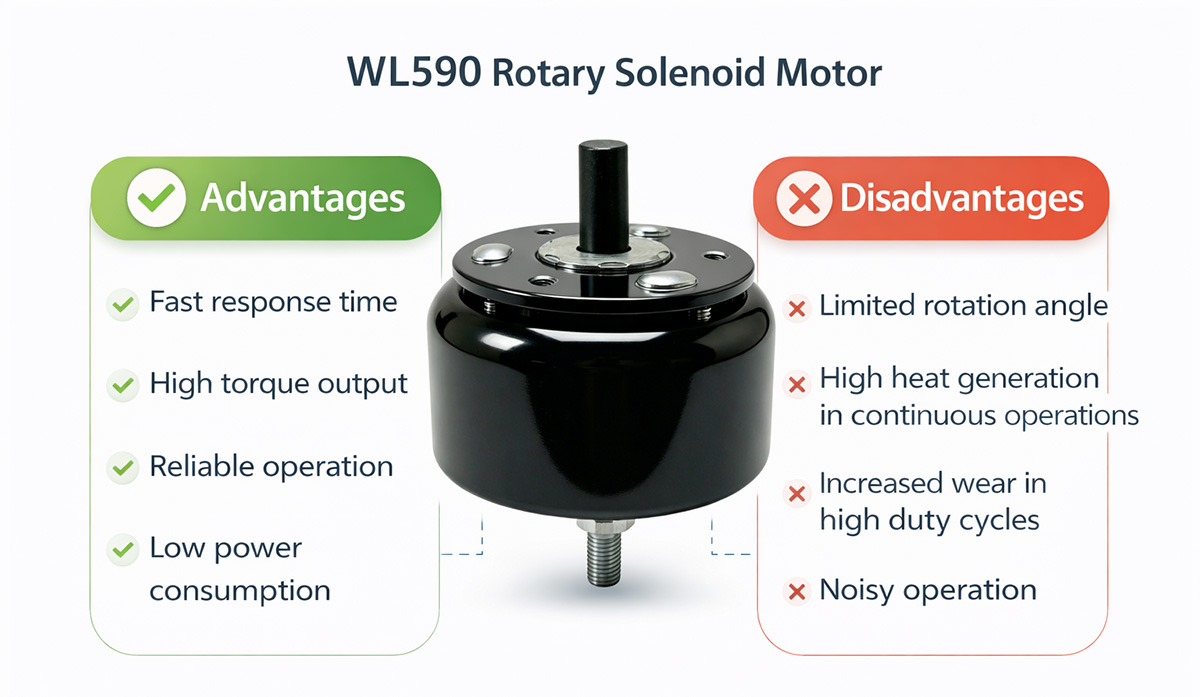
A rotary solenoid might not be the best choice if your application needs to rotate all the time or has long duty cycles. Instead, you should look into stepper motors or servo motors. They will last longer and work better.
You need to find a balance between the mechanical needs (torque and angle) and the electrical limits (voltage and duty cycle) when choosing a rotary solenoid. This guide shows you the most important settings you need to make in order to find the best fit for your needs. 1. Find out what you need mechanically.
First, you need to know what the solenoid needs to do in the real world.
What angle does the shaft need to turn? For instance, 25°, 45°, or 95°? You can use external end-stops to stop rotation, but standard angles are more common. For bistable solenoids, rotation is usually measured as an angle from the center.
Required Torque: This is the amount of force you need to move your load. The supplier’s “starting torque” is usually the same as the gross torque. The load can only use the gross torque minus the spring’s resistance if the solenoid has a return spring.
Important: The torque changes depending on how far you turn it. In the datasheet, you can find the graph called “Torque vs. Angle.”
Speed of operation: How fast does it need to spin? Some models can switch in less than 5 milliseconds, but this depends a lot on how much power and load they have.
1. What kind of movement
Unidirectional (Standard): When the power is on, the shaft turns in one direction and then goes back to where it started.
Bidirectional (Bistable): Uses permanent magnets to keep two stable states, like open and closed, even when there is no power. The electrical pulse’s polarity makes it go in a different direction.
⚡ 2. Check out your electrical environment.
The type of coil you can use depends on the power supply you have.
Duty Cycle (ED%): This is the amount of time the solenoid is “ON” and “OFF” during a cycle.
Continuous (100%): Low force; it runs forever.
Intermittent (25–50%): Medium force.
Pulse (<10%): A lot of power for a short time.
Key Insight: You can get a lot more torque if your application lets you have a short on-time (for example, 90W at 10% duty cycle vs. 9W at 100% duty cycle).
Supply Voltage: Most standard options work with common DC voltages, such as 12V and 24V. Manufacturers give you a “Coil AWG” table to help you pick the right wire size for your voltage and duty cycle.
Temperature Rise: Solenoids heat things up. Most of the time, the data comes from a 20°C environment with a specific heat sink. If the temperature in your area is higher, you should check the coil temperature rise to make sure the insulation doesn’t melt. It usually lasts up to 120–155°C.
3. Consider the limits of the environment and the machine
Space and Mounting: Measure the length, width, and height of your space. Check the datasheet to find out what kinds of mounting options (like flange mounts and threaded studs) and shaft changes (like D-cut and cross-hole) are available.
Environment: If the air is humid or dusty, you probably need a sealed enclosure or dust cover to keep the ball bearings and raceways clean.
Check the rated cycles to see how long it will last. Standard units can last between 2 and 5 million cycles, while high-quality or long-life units can last more than 50 million cycles.
4. Final Selection List
When you call a supplier or look at a datasheet, be ready to answer these questions:
Angle of Rotation Needed: (for instance, 45°)
Required Torque: (for example, 0.15 Nm at the start of the turn)
Duty Cycle and Supply Voltage: (for example, 24V DC, 25% duty cycle, 1 second on, 3 seconds off)
Clockwise, counterclockwise, or both are the directions of rotation.
The room’s temperature, dust, and humidity are all factors that affect it.
A flange mount with a D-cut shaft is one of the things that mounting and shaft needs.
If you need to stay in one place without using power or making heat, a bistable rotary solenoid is the best choice. A standard rotary solenoid is probably the best choice if you only need to turn something on and off and a spring can return the load.
What specific purpose are you using this solenoid for? You can figure out the torque and angle needs by knowing what kind of device or machine it is.
5. A Quick Comparison: Standard Rotary Solenoid Motor vs. Bistable Rotary solenoid
| Feature | Standard (Unidirectional) | Bistable (Bidirectional) |
| Power State | Needs power to hold position; spring returns when off. | Requires no power to hold either end position. |
| Movement | Rotates one way (spring returns). | Rotates both directions based on polarity. |
| Heat | Generates heat during the “ON” time. | Generates very little heat (short pulses only). |
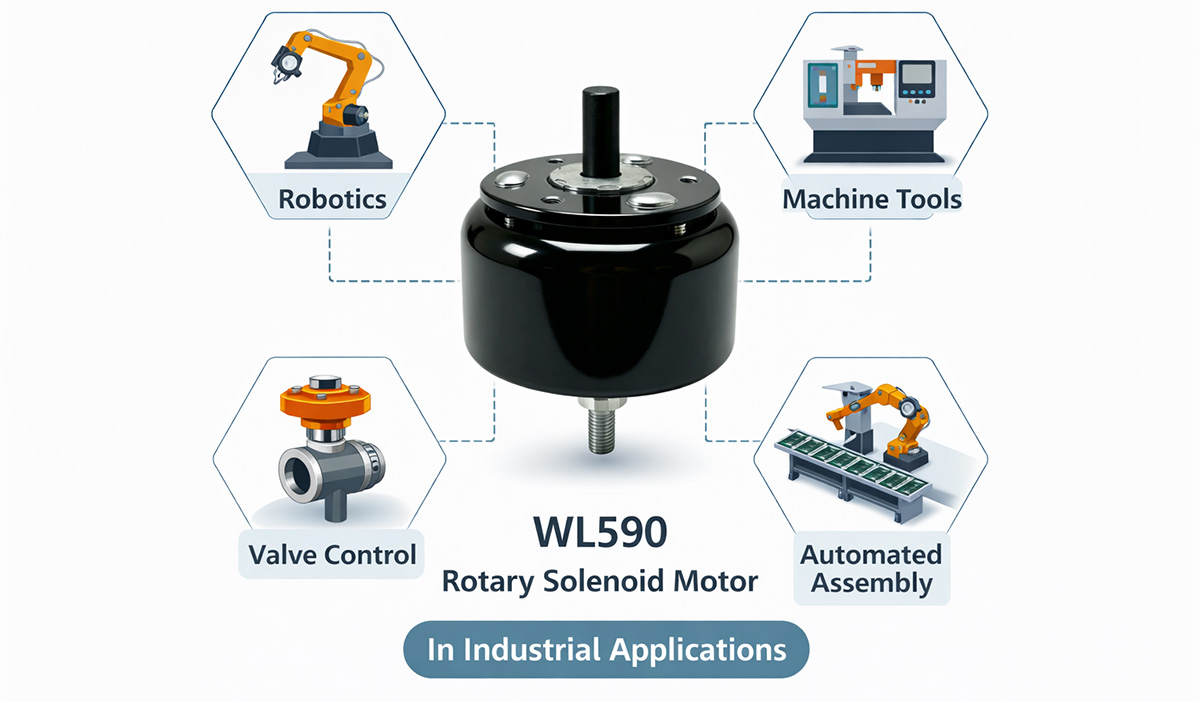
| Best For | Valve actuation, locking mechanisms. | Low-power-operated devices, optical shutters, and sorting gates. |


