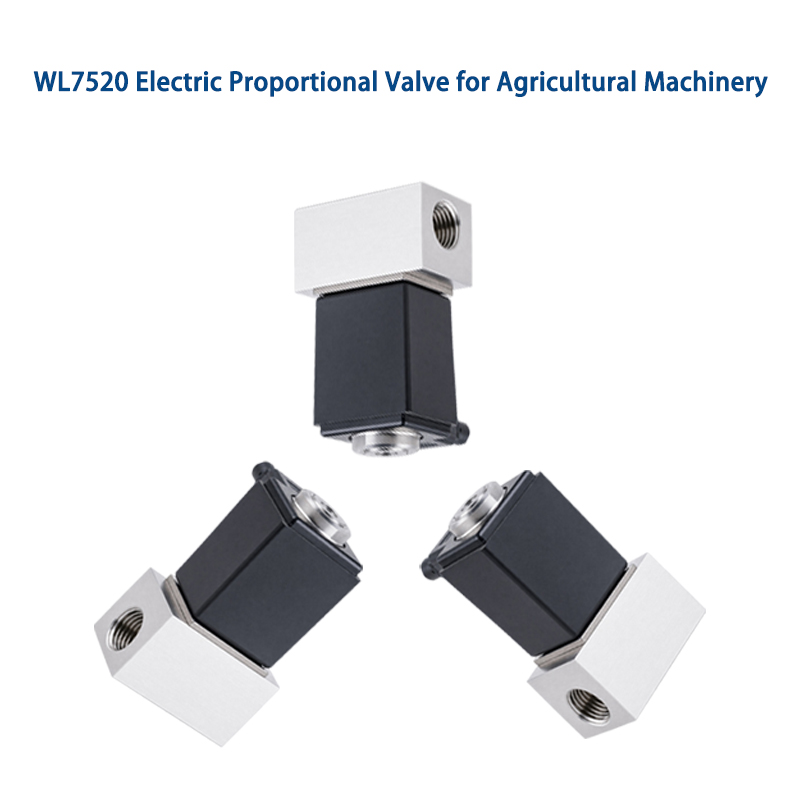
How to Choose the Electric Proportional Valve?
When selecting an electric proportional valve, the valve should be selected taking into account the hydraulic or pneumatic system, electrical controller, operating environment and control performance.
1.Define pressure requirements. • Determine the operating pressure and peak pressure. Select a valve with the proper pressure rating and safety margin.
2.Determine the required flow. Determine the minimum and maximum flow rates required for the actuator. Oversizing reduces the resolution of the low flow control, and an undersized valve can create flow restriction and pressure drop.
3.Verify the control type. Decide if the system operates on the voltage control, current control, PWM control or …. Ensure that the valve and the driver are electrically compatible.
4.Select the required function. Decide if you need proportional flow, pressure, direction or combination of control. Verify the port configuration and the spool characteristics.
5.Measure time-to-respond. Robotics, CNC machines, automated production equipment and dynamic motion applications require fast response. Match the controller requirements to the valve response characteristics.
6.Verify fluid compatibility. Hydraulic fluid type, viscosity range, temperature and seal material check. A spool can move reliably only if the fluid is clean and filtration is appropriate.
7.Consider mounting. Verify port size, mounting dimensions, manifold compatibility, connector location and available installation space.
8.Assess environment. For outdoor or mobile equipment take into account vibration, dust, moisture, corrosion and temperature variations. Select appropriate protection and materials.
9.Evaluate control accuracy If accurate positioning is needed then all the hysteresis, repeatability, resolution, stability and feedback requirements become critical.
10. Estimate total cost of ownership. Compare purchase price to the energy efficiency, maintenance, service life, spare parts and technical support.
11. Consider OEM customization. Equipment: Custom voltage, connectors, mounting, spool characteristics, materials, seals and performance requirements.
The best electric proportional valve is not only a valve with high performance ratings. The valve provides proper pressure, flow, control accuracy, response, compatibility, reliability and integrability in the machine.
Tips for Avoiding Common Mistakes in Electric Proportional Valve Design
Common mistakes can degrade performance and life of electric proportional valves. First, don’t select a valve based on port size alone. You should evaluate pressure, flow, response, signal type and load conditions also.
Second, don’t oversize the valve needlessly; excess capacity reduces low flow control resolution. Third, check electrical compatibility between the valve, driver, PLC and power supply before installation.
Fourth, choose seals and materials based on the fluid type and operating temperature. Fifth, ensure proper filtration, since contamination can cause spool sticking, erratic motion, leakage and premature wear.
Sixth, consider pressure drop and heat generation in continuous operation. Seventh Specify the desired fail-safe position in case of power failure or signal failure.
Eighth, don’t ignore response time, hysteresis and repeatability for precise motion control. Ninth. Provide enough installation space and protect connections from vibration and moisture.
Finally, the whole system should be tested with real loads and not just a valve. Adopting these practices can provide buyers with better control, predictable performance, lower maintenance costs and long service life of the equipment.