


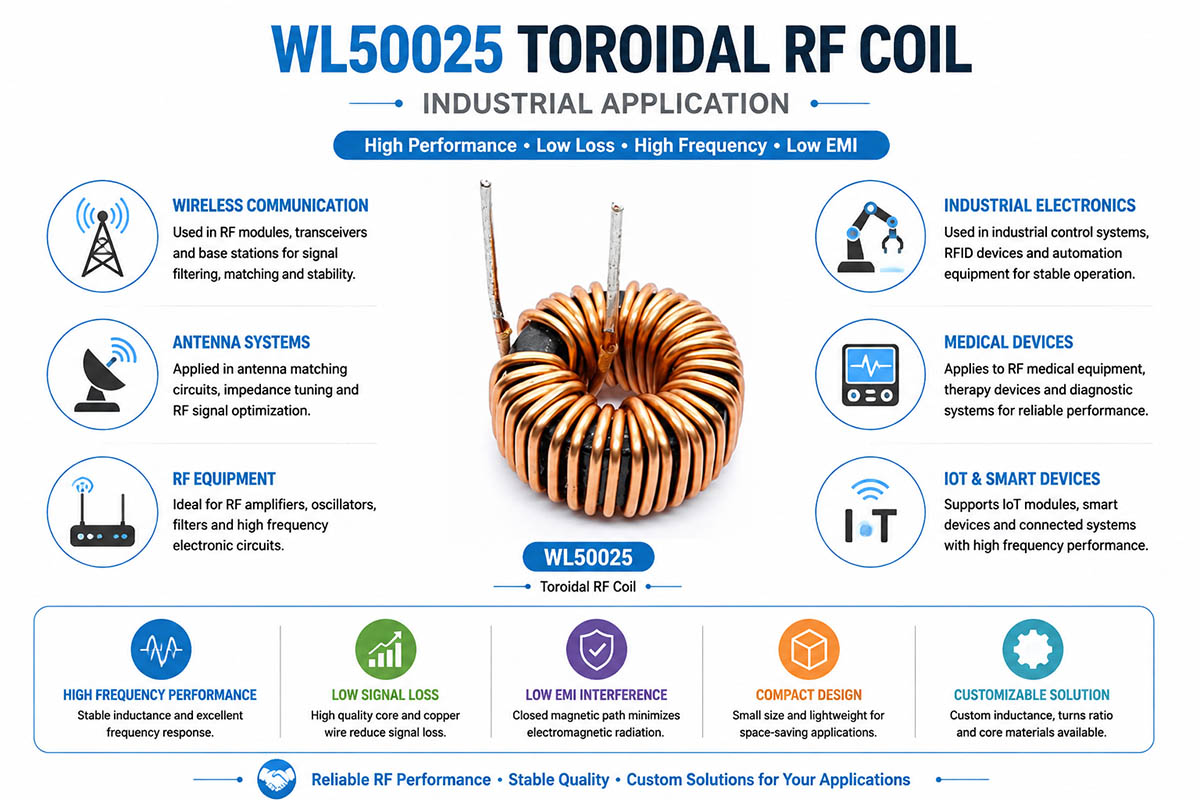
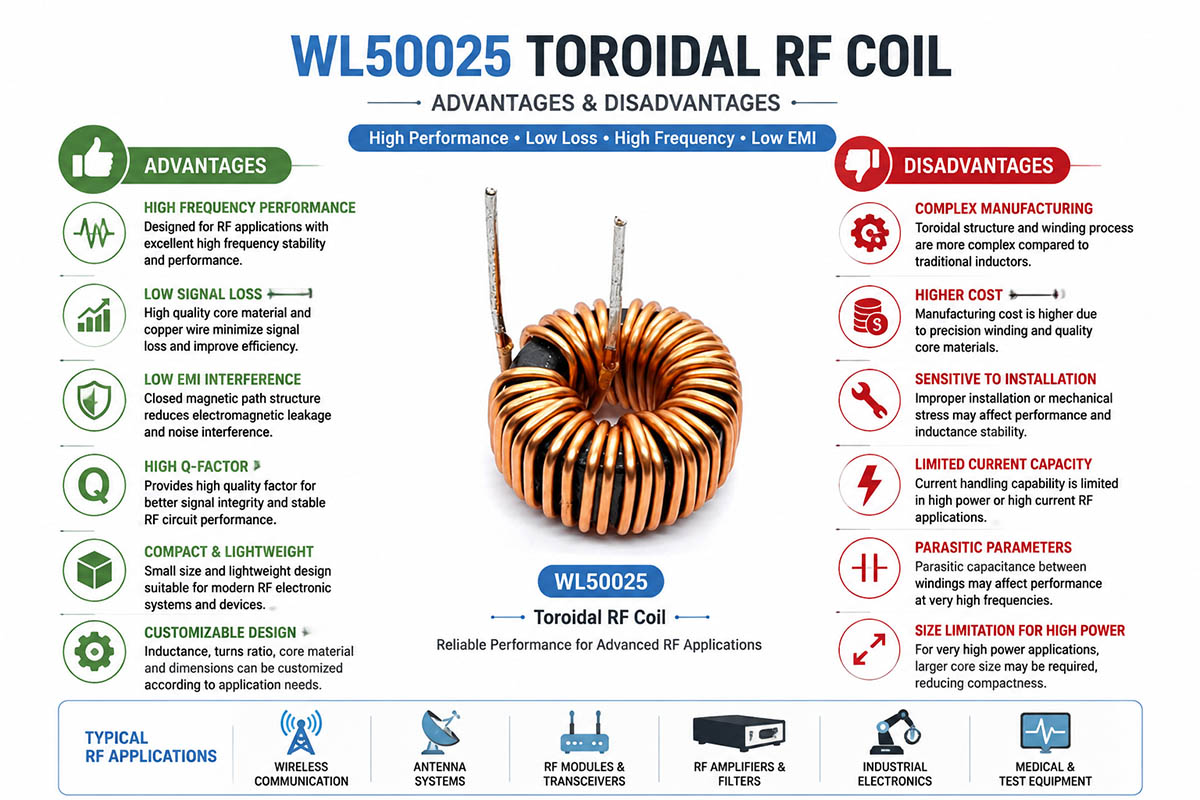
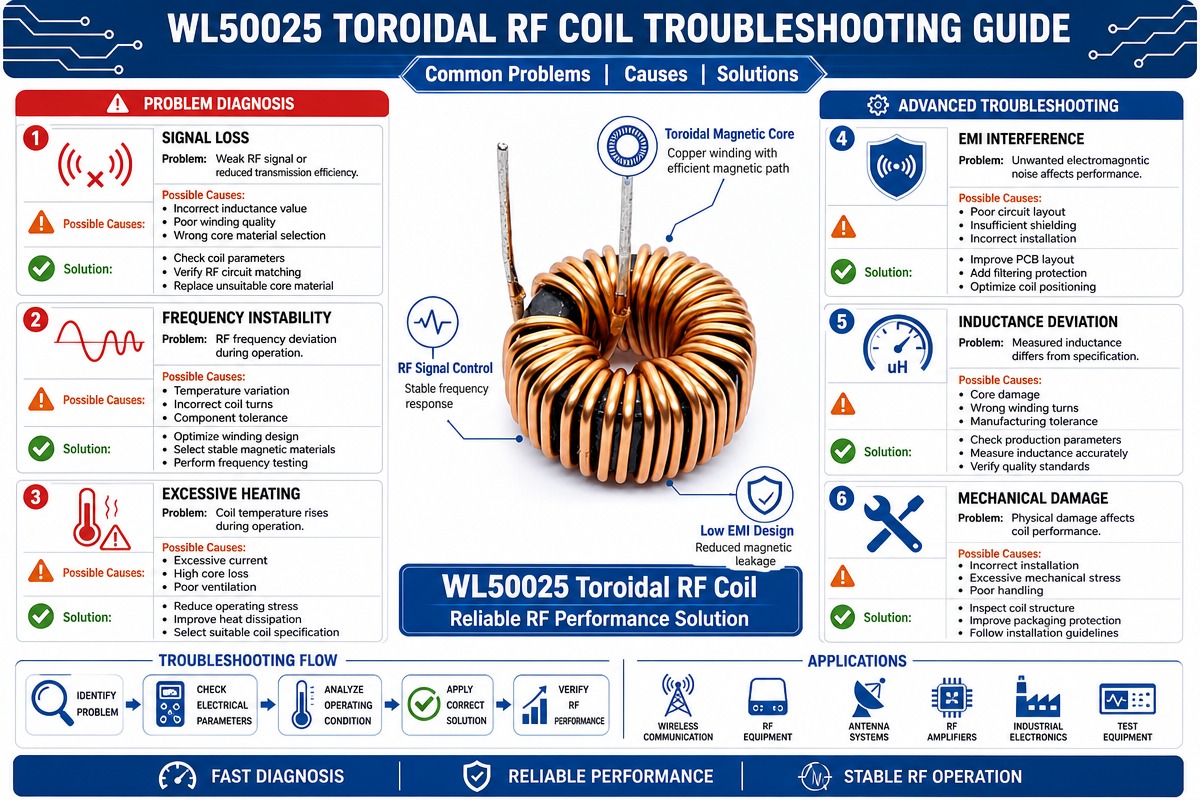
How to Choose a Toroidal RF Coil?
Selection of the right toroidal RF coil requires a careful analysis of electrical, mechanical, and application requirements.
First, determine the operating frequency range. RF coils should be designed for the target frequency since their performance is highly dependent on the core materials and winding structures.
Secondly, select the right core material. Ferrite cores are widely used in high-frequency applications due to low losses and good magnetic properties. However, for high-energy-handling applications, powdered iron cores may be used.
Another important thing to consider is the inductance value required. Engineers should calculate the required inductance for filtering, tuning, or impedance matching circuits.
Current handling capacity is also an important parameter. The coil should be able to withstand the operating current without overheating or loss of performance.
The Q-factor is also an important parameter. It represents the efficiency and quality of the coil. Higher Q-factor values usually result in better RF performance.
Physical dimensions to fit the available installation space. Before selection, coil size, mounting method, and environmental conditions should be considered.
Stability to temperature is also an important parameter in industrial applications. Selection of the material capable of operating well at the expected operating temperature should be done.
Manufacturers can customize the product for particular applications:
Diameter of Center
Diameter of wire
Number of turns
Insulating materials
Frequency properties
Prototyping should be done before mass production to verify the electrical performance.
Proper selection of the toroidal RF coil improves the signal quality, reduces the interference, and increases the system reliability.
Common Mistakes in Designing Toroidal RF Coils—Tips to Avoid
Do not ignore the operating frequency requirements.
“Don’t choose the wrong core materials.
Consider the impact of temperature on magnetic performance.
Make sure the number of turns in the winding is correct for the inductance.
Don’t apply excessive current, resulting in overheating.
– Consider the impedance matching requirements.
Don’t add any parasitic capacitances.
Do RF testing before production.
Consider EMI requirements in the layout design.
Consider mechanical installation conditions.


