


How to Select a Linear Latching Solenoid?
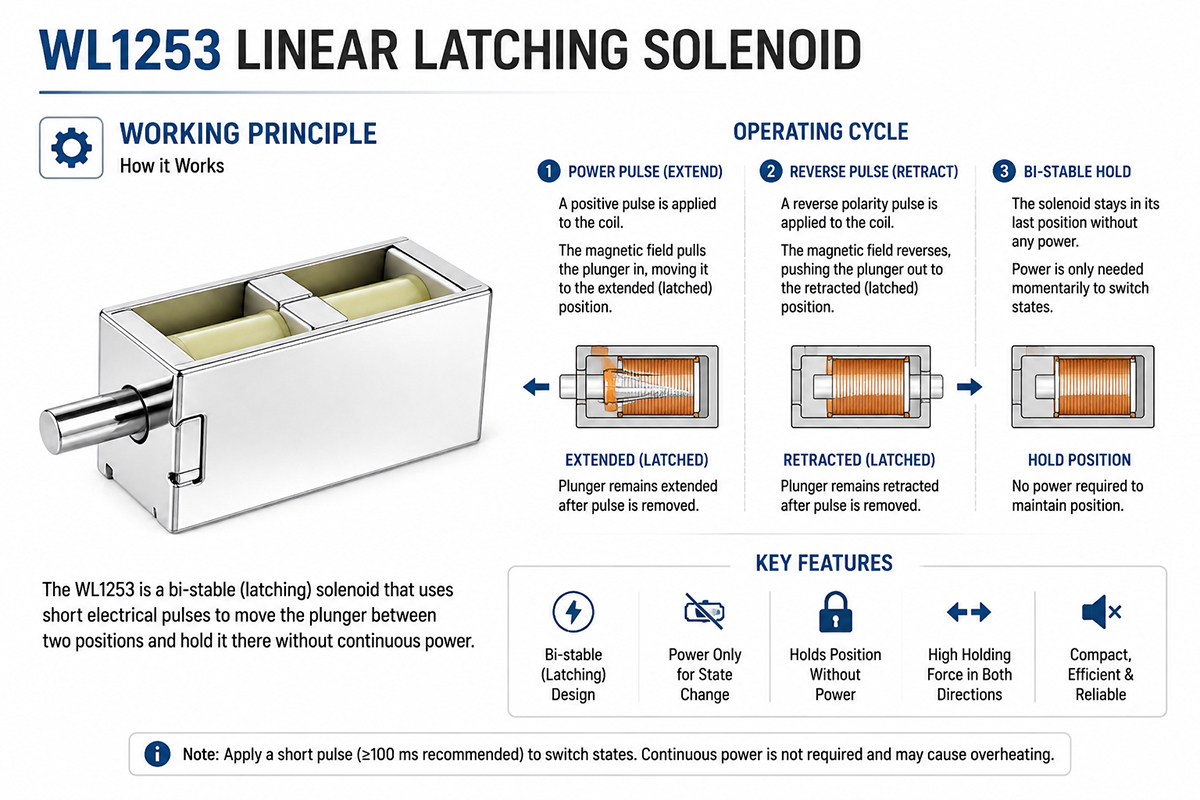
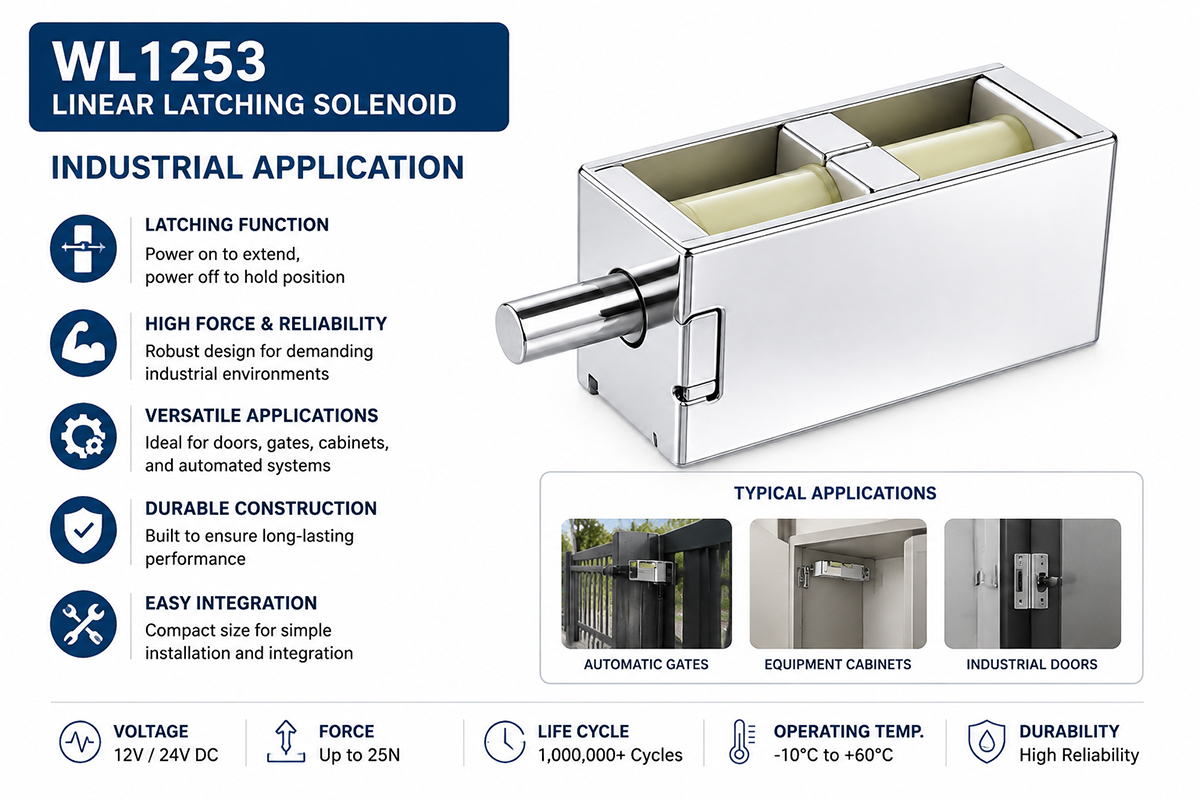
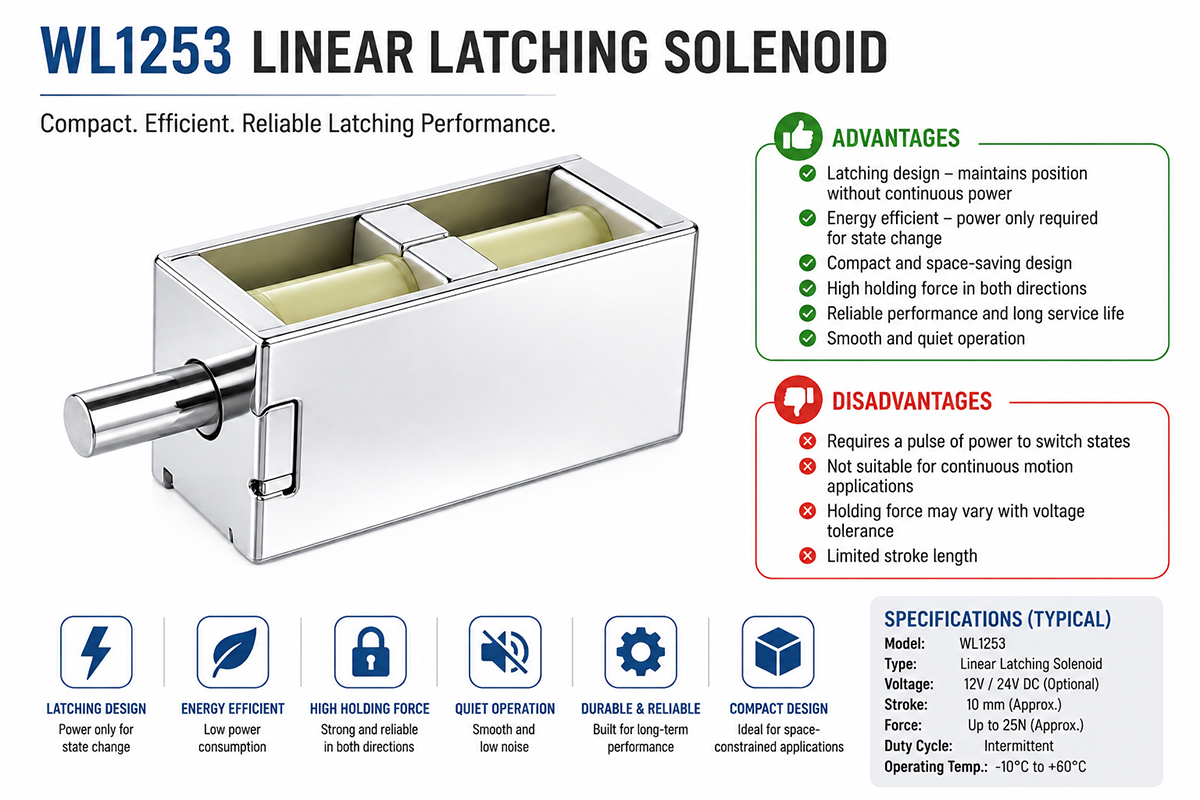
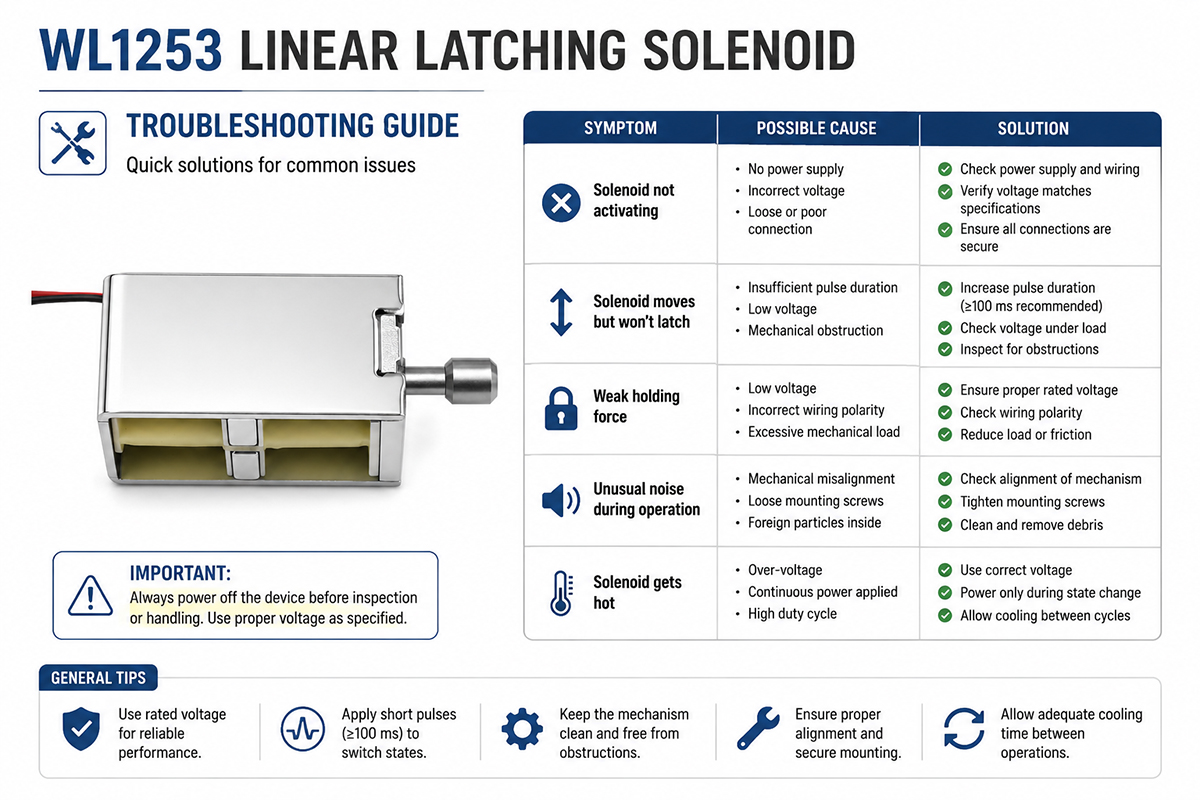
To properly select a Linear Latching Solenoid consider the following characteristics:
1 Force and Stroke.
First, determine the maximum holding force (the amount of force required to displace the plunger against an external load) and stroke (distance plunger travels). The holding force of a solenoid with the magnet is normally listed. Make sure it exceeds the maximum worst case load with 30% additional margin. As for the stroke, typical Linear Latch Solenoids offer anywhere between 2 mm and 10 mm. Longer stroke lowers the holding force.
2 Electrical Parameters
Determine the voltage (typical values are 6V, 12V and 24V DC) and pulse duration you can afford (30-100 ms). You will have to supply sufficient number of watt seconds to overpower the holding force of the magnet. The more often you pulse the solenoid, the higher its power consumption and faster it will burn out. You need to calculate the coil resistance and the peak current you need to overcome. The coil resistance can be calculated based on the power consumed. Check the power consumption of your driver circuitry (H Bridge or relay contacts).
3. Physical Characteristics.
Measure the space available for installation. Larger size means more force available. Determine how you plan to mount the solenoid. The gravity may aid or obstruct the holding process. Some solenoids include internal return spring, thus mono stable. Bi stable solenoids will require no opposition to their movement from external springs.
4. Environmental Parameters.
In case the solenoid is exposed to moisture or outdoor conditions, choose waterproof or IP-rated models. Permanent magnets suffer reduced efficiency when temperature rises (Neodymium loses their strength around 80 degrees C). If the environment is subject to vibration, then check whether the plunger might become detached from the latched position due to impact.
5. Drive Circuit.
A Linear Latch Solenoid requires bi-directional current drive (reverse polarity to unlatch). Use either H-bridge or dual contact relays to achieve the desired effect. Make sure to add flyback diodes to reduce voltage spike. – Never run Direct Current through latching coils since it will destroy the coils as it wasn’t designed to dissipate power at DC.
6 Mechanical Life (100,000 cycles).
Make sure to check the product documentation on mechanical lifetime. Rapid pulsing might damage the permanent magnet and shorten its effective lifetime. In that case, regular (non-latching) solenoids should be used.
7 Finally
test the actual load to check for reliable operation, especially as the battery runs low.


