Hydraulic Control Valve Technology for Liquid Control
Hydraulic Control Valve Industrial Fluid Management Guide
Hydraulic Control Valve System Integration Solutions
Hydraulic Control Valve Advanced Control Technology
Hydraulic Control Valve for Heavy Duty Industrial Machines
Hydraulic Control Valve Custom Design Solutions Supplier
Hydraulic Control Valve Technology for Liquid Control
Hydraulic Control Valve Industrial Fluid Management Guide
Hydraulic Control Valve System Integration Solutions
Hydraulic Control Valve Advanced Control Technology
Hydraulic Control Valve for Heavy Duty Industrial Machines
Hydraulic Control Valve Custom Design Solutions Supplier

WL4551 Hydraulic Control Valve Flow Pressure Control Solutions

Modern hydraulic systems depend on hydraulic control valves as the key elements to regulate the flow and pressure of fluids and actuator movement. Such valves guarantee accurate flow control of hydraulic oil, providing smooth operation, increased efficiency, and stable performance of the industrial equipment. Hydraulic control valves are commonly used in hydraulic power units, automation equipment, injection molding, construction, and industrial processing equipment.

Depending on the system requirements, a hydraulic control valve can be manually, hydraulically, pneumatically, or electronically operated. High-end designs provide accurate pressure regulation, quick response, and long life under the challenging operating conditions. Hydraulic control valves are selected by industrial users due to their reliable performance, compact design, and excellent adaptability to various hydraulic applications.


Hydraulic Control Valve Product Overview

Modern hydraulic systems depend on hydraulic control valves as the key elements to regulate the flow and pressure of fluids and actuator movement. Such valves guarantee accurate flow control of hydraulic oil, providing smooth operation, increased efficiency, and stable performance of the industrial equipment. Hydraulic control valves are commonly used in hydraulic power units, automation equipment, injection molding, construction, and industrial processing equipment.

Depending on the system requirements, a hydraulic control valve can be manually, hydraulically, pneumatically, or electronically operated. High-end designs provide accurate pressure regulation, quick response, and long life under the challenging operating conditions. Hydraulic control valves are selected by industrial users due to their reliable performance, compact design, and excellent adaptability to various hydraulic applications.

How does a hydraulic control valve work?

A hydraulic control valve regulates the flow of hydraulic oil in a hydraulic system. The fluid entering the valve changes its flow path via internal valve components such as spools, pistons, or diaphragms according to the control signal.

The valve can regulate:

Flow rate—Controls the speed of hydraulic actuators.

Pressure—To prevent the system overload and maintain the safe operating pressure level.

Direction—Regulates the flow of the oil for hydraulic parts.

Typically, in the system, a pump is used to pump pressurized oil to the control valve. The valve controls where the oil is directed and directs it to hydraulic cylinders or motors. Changing the control signal changes the position of the valve, thus changing the amount of the oil flow.

Modern hydraulic valves may have sensors and electronic control features to automatically control the valve for higher precision and energy efficiency.

Key Features of Hydraulic Control Valves

In industrial applications, hydraulic control valves have several key advantages. They provide accurate flow control, pressure regulation, and direction switching to ensure the stable operation of the hydraulic system. The compact design allows easy installation in tight spaces, and the usage of durable materials provides excellent resistance to high pressure, vibrations, and tough environments. Many hydraulic control valves have quick response, low leakage performance, and long service life. Some high-end models have electronic control functions for automation systems. Hydraulic control valves are flexible in design and reliable in operation. They are applicable in various industrial machines requiring precise oil liquid management and efficient hydraulic power control.


Compact Hydraulic Control Valve Video Presentation

Compact Hydraulic Control Valve Details Display

Compact Hydraulic Control Valve Datasheet

Brand Weilong Model Number WL4541
Rated Voltage (V) DC 12V or 24V Rated Power (W) 15W
Work Mode Hydraulic Valve Working Pressure (N) 0.5 MPa
Airflow Rate 0-50 L/minute Reset Time(s) 1 S On, 1S Off
Service Life 200 Thousand Times Certification CE, ROHS, ISO9001,
Material Superior Magnet Iron Lead Wire Length (mm) 200 MM
Install Style Screw Tolerance of Dimension ± 0.1 MM
Water-proof None Insulation Class B
Hi-Pot Test AC 600V 50/60Hz 2s Non-excitation Holding Force 0
Working Temperature -10°C-100°C Duty Cycle 1-100%
Thread Depth (mm) / Payment Term TT, or LC at Sight
Sample Order Yes. Warranty 1 Year
MOQ 1000 pcs Supply Ability 5000 pcs per week
Delivery Time 30 Days Port of Loading Shenzhen

Hydraulic Valve vs. Proportional Valve: Complete Guide Comparison
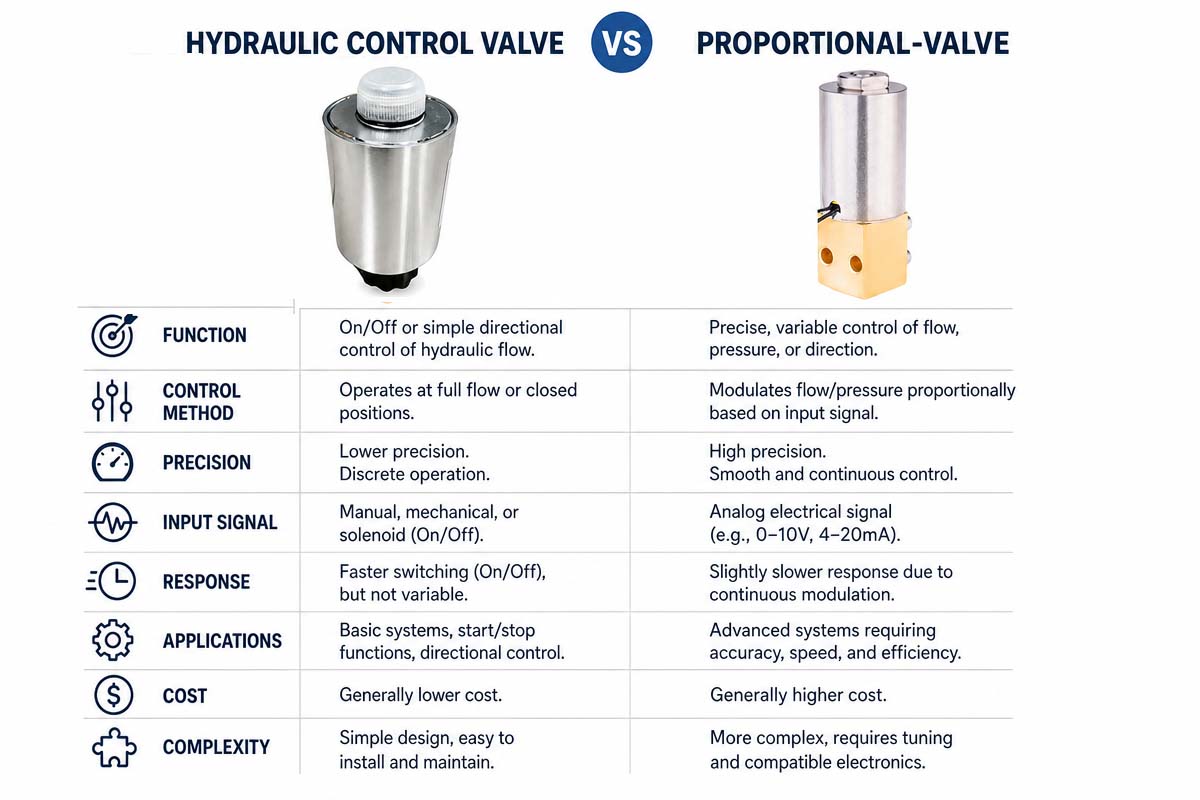
Hydraulic Control Valve VS Proportional Valve

Both hydraulic valves and proportional valves are vital components in hydraulic systems, but they serve different control requirements. The main difference is that a hydraulic valve will provide simple flow, pressure, or directional control, while a proportional valve offers continuously variable control based on an electric signal. Choice of valve depends on application requirements regarding accuracy, complexity, response time, and cost.

What Is a Hydraulic Valve?

A hydraulic control valve is a device that controls the direction, pressure, and flow rate of hydraulic oil in a hydraulic system. It works by changing internal flow paths through mechanical, hydraulic, pneumatic, or electrical control methods.

Main types are

Directional control valve

Pressure control valve

Flow control valve

Non-Return Valves

Sequencer Valves

Hydraulic valves are extensively used in industrial machinery, hydraulic power units, construction machinery, agricultural machinery, and manufacturing systems requiring fluid control.

What is a proportional valve

Proportional Valve: It is an advanced hydraulic control valve that uses an electrical input signal for regulating the hydraulic flow, pressure, or direction. Proportional valves are not limited to only open or closed positions; they allow variable control in response to the command signal.

For example:

0-10V signal

4-20 mA signal

PWM control input

It results in more accurate and smooth hydraulic movement. The valve opening is proportional to the input signal.

Proportional valves are extensively used in:

Numerical Control machine

Robotic technology

Injection press machines.

Precision Automation Equipments (India)

Hydraulic system of aerospace

Hydraulic Valve vs. Proportional Valve Comparison

Item Hydraulic Control Valve Proportional Valve
Main Function Basic flow, pressure, and direction control Precise variable hydraulic control
Control Signal Mechanical, hydraulic, ON/OFF electrical Analog electrical signal
Control Accuracy Medium High
Response Speed Normal Faster
Flow Adjustment Fixed or step adjustment Continuous adjustment

Difference in Working Principle

Working principle of hydraulic control valve

The movement of the oil is controlled by a hydraulic control valve, which changes the position of internal components such as spools, springs, and pistons. Thus, the valve changes its position, and hydraulic oil is directed into different circuits.

For example:

Pump → Hydraulic Control Valve → Cylinder → Mechanical Movement

The valve regulates oil flow, directs it, and applies pressure to it.

How Does a Proportional Valve Work?

The proportional valve works based on the proportional control of an electromagnetic solenoid or electronic actuator according to the electrical input signal.

For example:

Controller Signal→Proportional Solenoid→Valve Positioning Adjustment→Accurate hydraulic movement

The stronger the electrical signal, the greater the valve opens and provides accurate control of hydraulic flow and pressure.

Hydraulic Control Valve Ad Hydraulic control valves are low cost and have a simple structure, making them suitable valves for general industrial applications.

  1. Highly Reliable

Reliable operation in harsh industrial environments with fewer electronics components.

  1. Simple Maintenance

Simple structure for easier inspection and replacement.

  1. High Duty Capacity

Ability to work in high-pressure hydraulic systems and heavy-duty machinery.

  1. Compatibility With Most Standard Hydraulic Systems.

Advantages of Proportional Valve

  1. Increased Precision

Flow and pressure can be precisely regulated using proportional valves.

  1. Increased Automation Performance

Integration with PLCs, sensors, and intelligent control systems is straightforward.

  1. Smooth Movement Control

They reduce mechanical shock and increase actuator travel.

  1. Improved Energy Efficiency

Accurate control reduces unnecessary hydraulic loss.

  1. Suitability for Complex Systems

Ideal for high-end manufacturing and precision equipment.

5 Disadvantages Comparison

Hydraulic Control Valve Proportional Valve
Limited adjustment accuracy Higher purchase cost
Less suitable for precision control More complex installation
Slower response in some applications Requires electronic control system
Limited automation capability Higher maintenance requirements

Hydraulic Control Valve or Proportional Valve: How to Choose?

Choose a hydraulic control valve if:

The application requires ON/OFF control.

Cost-effectiveness is important.

High reliability is important.

No need for precision adjustment

The system operates in harsh conditions.

Choose a proportional valve when?

Precise control of speed or pressure is required.

The machine needs to be integrated with automation.

Smooth movement is important.

Real-time adjustments are necessary.

The system uses PLC or intelligent controllers.

Examples of Industrial Use Cases

Industrial Use Cases for Hydraulic Control Valve

Hydraulic presses

Construction machinery

Agricultural machinery

Hoisting systems

Hydraulic power packs

Machinery for manufacturing

Applications of Proportional Valve:

Robotic System

Injection-molding machines

CNC machinery

Automated production line

Precision hydraulic control systems

Bottom Line:

Hydraulic control valves and proportional valves are not rivals but different solutions for different application needs. Hydraulic control valves are suitable for reliable and economic fluid control in industrial systems, while proportional valves provide advanced precision and automation capabilities.

Generally speaking, for the normal hydraulic systems, hydraulic control valves are usually the best option because of their reliability and convenience. In contrast, proportional valves are better suited for high-precision automation equipment that requires real-time adjustments and intelligent control.


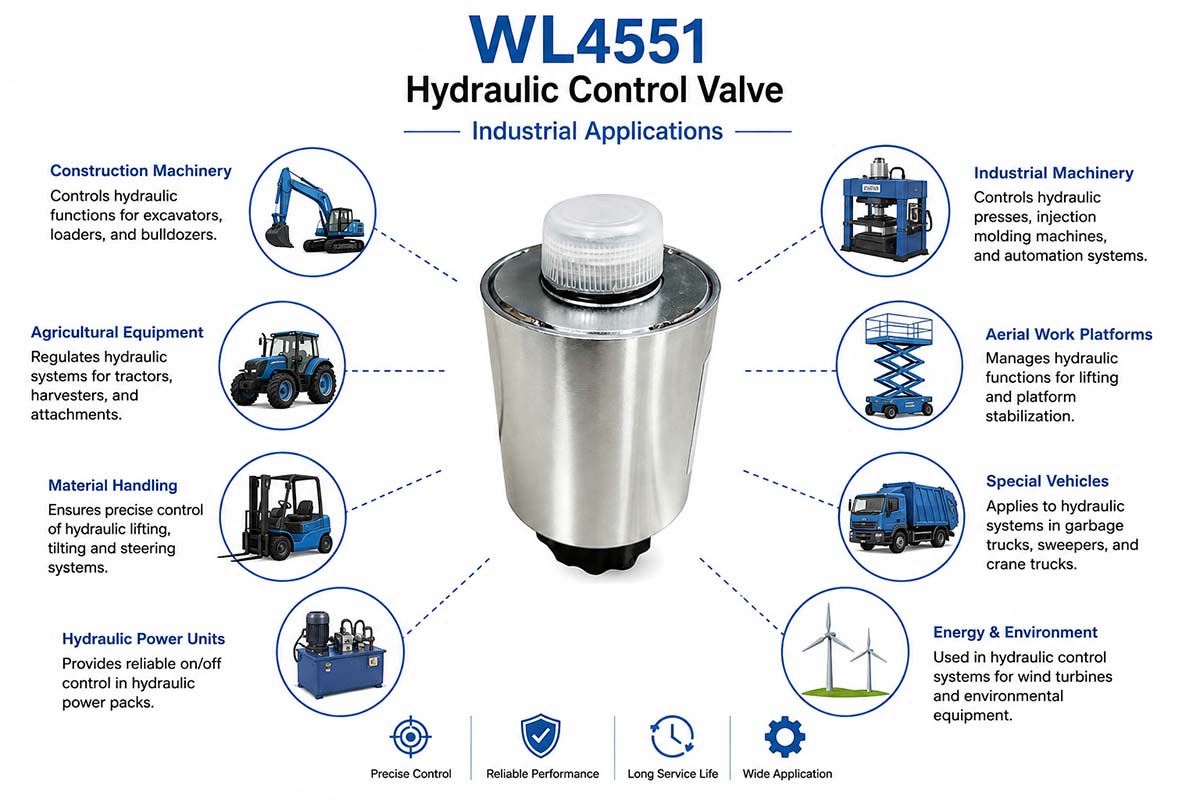
Hydraulic Control Valve Industrial Application

Compact Hydraulic Control Valve Industrial Application

Hydraulic  valves are widely used in industries requiring accurate fluid control. They control hydraulic cylinders and actuators in manufacturing automation systems for production lines, assembly machines, and material handling systems.

Hydraulic control valves are used in construction equipment for the control of the hydraulic power transmission in excavators, loaders, cranes, and lifting systems. They are crucial for the demanding applications, as they can withstand high pressure and heavy loads.

Hydraulic valves are applied in vehicle production equipment, hydraulic presses, braking systems, and testing machines in the automotive industry. These valves are used in farming machinery to control hydraulic steering, lifting devices, and farming equipment.

Hydraulic control valves are also highly important in oil & gas, marine, aerospace, and energy industries. They provide reliable control for hydraulic systems in drilling equipment, offshore equipment, and power generation systems.

Thanks to their flexibility, durability, and accurate control capability, hydraulic control valves are still the preferable solution for industrial oil liquid control applications.

Why Are Hydraulic Valves Becoming Popular for Industrial Oil Liquid Control Solutions?

The modern industries require efficient, reliable, and precise fluid management systems, and therefore hydraulic control valves are becoming popular. Hydraulic control valves provide good control of pressure, flow, and actuator movement at high power conditions.

Advantages of hydraulic control valves are better automation, increased energy efficiency, and more flexible systems as compared with traditional mechanical control methods. They are compatible with industrial automation systems; thus, they can be used in smart factories.

There is increasing demand for reliable hydraulic control solutions due to increasing demand for heavy machinery, robots, renewable energy equipment, and automated production lines.


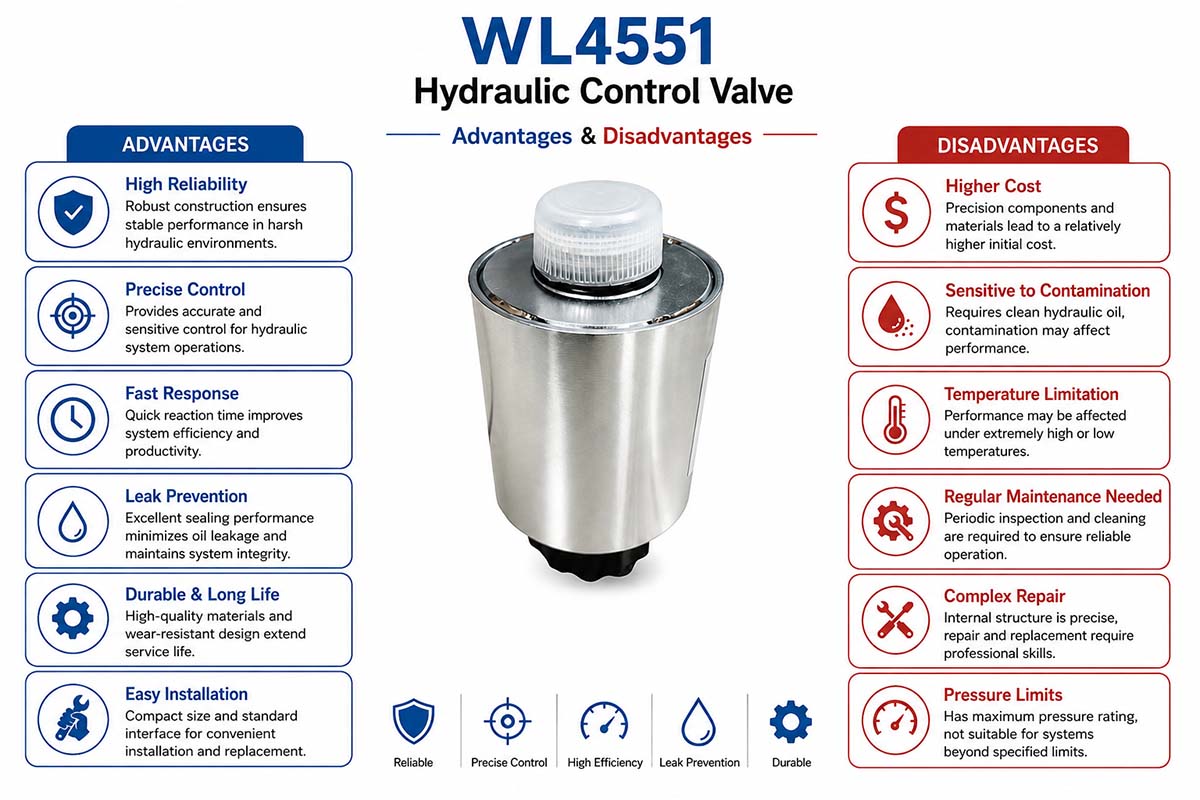
Hydraulic Control Valve Advantage and Disadvantage

Hydraulic Control Valve Advantage and Disadvantage

Hydraulic Valve Advantage

Hydraulic valves are ideally suited for high-power industrial systems. They can operate at high pressure and flow rate without compromising their stability. They are also highly durable and best suited for heavy-duty machinery and industrial applications.

One advantage is that hydraulic control valves offer flexibility. There are a wide variety of hydraulic control valves to suit different flow, pressure, and control requirements. Furthermore, hydraulic control valves offer smooth movement control and minimize mechanical shock and increase equipment longevity.

Hydraulic Valve Shortcomings

But there are also certain disadvantages of hydraulic control valves despite their benefits. Hydraulic systems require maintenance, as oil contamination affects the performance of hydraulic control valves. Contaminants can lead to wear, leakage, or sticking of the valve.

Certain hydraulic control valves are slower in response speed and have less accuracy as compared with electronic control valves. Installation and design of the system are also required to achieve optimal performance.

Thus, hydraulic control valves remain the perfect solution for industrial applications requiring fluid control.

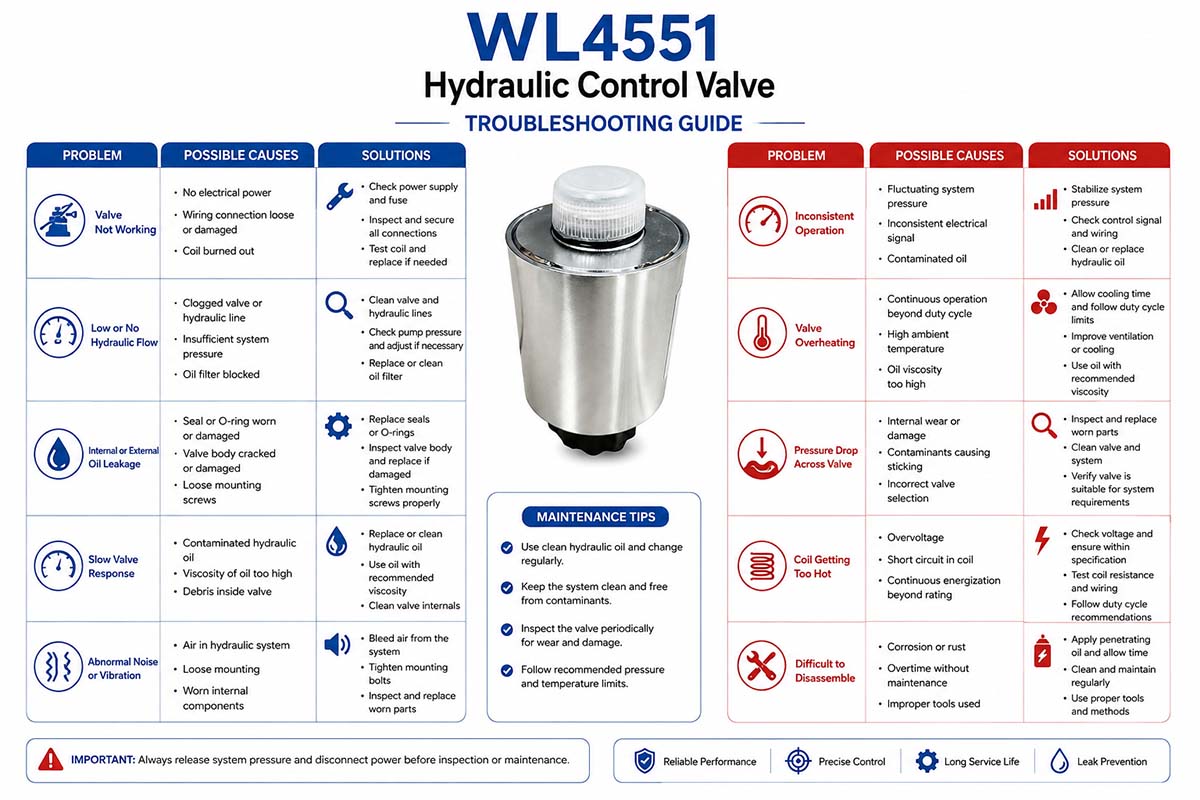
Hydraulic Valve Troubleshooting Manual

Hydraulic Control Valve Troubleshooting Guide

Common issues with hydraulic control valves are leakage, pressure fluctuation, slow response, and abnormal noise.

1. Valve Leaks

Leakage may be caused by damaged seals, internal wear, or high pressure. Check for damage to the seals and replace them if necessary.

2. Slow valve action

Valve slow operation can be caused by contamination of hydraulic oil, incorrect pressureor a lackgs, or lack of hydraulic oil. You can solve these problems by cleaning the system and checking the pressure.

3. Pressure vibration

Pump failure, improper valve adjustment, or air contamination in hydraulic systems can cause pressure vibration.

4. Stuck valve

Internal contamination of the valve prevents the valve spool from moving smoothly. Oil filtration and maintenance are advised.

5. Excessive noise

Noise can be an indicator of cavitation, air contamination, or improper installation of the system.

System inspection, proper management of hydraulic oil, and preventive maintenance can significantly improve the reliability of hydraulic control valves.

8 Common Questions About Hydraulic Control Valves

1. What is hydraulic valve?

A hydraulic valve controls the flow, pressure, and direction of hydraulic oil in a hydraulic system. It is used to control cylinders, motors, and other hydraulic actuators.

2. How does a hydraulic control valve work?

A valve changes the flow path of the hydraulic oil in the valve using a spool, piston, spring, and actuator. It controls where the oil goes and how much pressure or flow rate should be provided.

3. Types of Hydraulic Control Valve

Common types of valves include directional control valves, pressure control valves, flow control valves, check valves, and proportional valves. They have different types with different control functions.

4. Selecting the proper hydraulic valve?

It is necessary to take into account required operating pressure, flow rate, type of hydraulic oil, temperature, valve size, method of control, connection type, and response speed of the system. The valve should comply with the maximum operating conditions of the system.

5. Why hydraulic control valves leak?

Typical causes include damaged or worn seals, overpressure, contamination, improper assembly, and internal wear. Inspection and cleaning Hydraulic oil can help prevent leaks.

6. What is the life of hydraulic control valve?

The service life of a pump depends on the operating pressure, duty cycle, oil cleanliness, temperature, and maintenance. Appropriate selection and maintenance can guarantee long-term service.

7. Are hydraulic control valves used in industrial automation?

Hydraulic control valves are widely used in industrial automation, hydraulic presses, manufacturing machinery, construction machinery, material handling systems, and production lines. Electrical control versions can also be used with PLC-based systems.

8. Difference between hydraulic control valve and proportional valve?

A hydraulic control valve provides basic flow, pressure, or directional control, while a proportional valve provides continuously adjustable hydraulic control using variable electrical signals. Thus, proportional valves are suitable for precision automation applications


How to Choose a Hydraulic Control Valve?

Choosing the right hydraulic control valve requires several considerations. This includes the requirements of the system, the environment in which it will operate, and the expected performance.

1. Valve Function Check

Firstly, determine whether the application requires directional control, pressure regulation, flow adjustment, or proportional control. Different valve types have different control functions.

2. Operating Pressure Check

The selected valve must have the maximum system pressure rating. Leakage, damage, or safety hazards may arise due to the insufficient pressure rating of the valve.

3. Consider the Flow Rate

The flow capacity influences the speed of actuators and system efficiency. The flow rating of the valve should correspond to the output of the hydraulic pump and the demand of the actuators.

4. Evaluate Control Methods

Hydraulic control valves can be manually, mechanically, hydraulically, pneumatically, or electronically controlled. Automated systems typically require electrically controlled or proportional valves.

5. Review Environment and Materials

Industrial environments can be prone to vibrations, temperature changes, and dusty or corrosive environments. Select the valves with the appropriate materials, coating, and sealing solutions.

6. Test Response Speed and Accuracy

For the applications where the accuracy and the control response time are the critical factors. High-performance valves provide smoother operation and better system stability.

7. Assess Maintenance Requirements

Select valves with reliable components, easy access for maintenance, and long life to minimize downtime.

The right choice of the hydraulic control valve will increase the reliability of the equipment, reduce energy consumption, and extend the life of the hydraulic system.

Tips to Avoid Common Mistakes in Hydraulic Valve Design

Never neglect the actual operating pressure and flow requirements.

Do not size valves based on the looks of the equipment.

Consider the changes in oil viscosity and temperature during service.

Sealing materials must be compatible with hydraulic fluid properties.

Do not lose too much pressure due to the incorrect size of the valve.

Design the system with maintenance in mind.

Test the valve response time before mass production.

Test the operation of the valve and hydraulic parts.

Avoid unnecessary complexity, which adds to the risk of failure.

Pick the suppliers with manufacturing experience that you can trust.


Get A Free Quote Now

Contact Form

Related Products

Related News

Scroll to Top

Get A Free Quote Now !

Contact Form
If you have any questions, please do not hesitate to contact us.
Weilong Solenoid Company Culture