


How to Choose a EMI Filter Coil
When choosing the appropriate Toroidal Copper Coil to ensure the reliable operation, there are a lot of electrical and mechanical parameters to evaluate.
1.Calculate Inductance Requirements
One of the most important parameters is the inductance value. Choose a coil with the appropriate inductance according to the circuit design, frequency of operation and energy storage requirements.
2.Pay attention to Current Rating
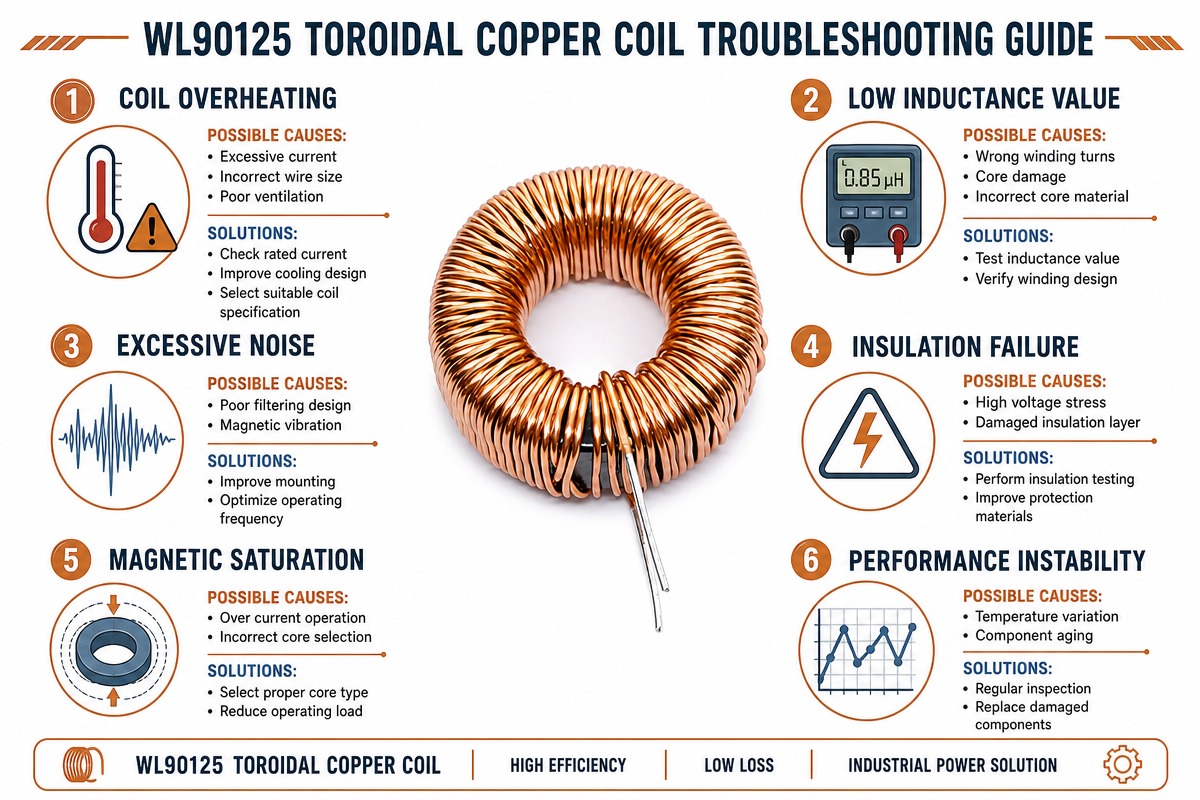
The coil should be able to carry the required operating current without overheating. Choose the copper wire thickness and winding design that will not overheat and cause power loss.
3.Choose the Right Core Material
Different magnetic materials provide different performance features. There are two types of cores : ferrite cores for high frequency applications and iron powder cores for energy storage and power applications.
4.Consider Operating Frequency
The frequency affects the efficiency and magnetic losses. Appropriate core materials and winding designs should be chosen for the design of coils for high frequency circuits.
5.Criteria for Size Measurement
The physical size of the Toroidal Copper Coil should be designed to fit into the available space for installation with the required electrical performance.
6.Consider Temperature Performance
In industrial applications, coils that can operate at high temperatures may be required. Choose materials with the appropriate thermal resistance and insulation characteristics.
7.Consider Quality Standards
The electrical testing, insulation testing, inductance measurement and performance verification should be available from reliable manufacturers.
8.Choose Custom Solutions If Necessary
For special applications, custom winding techniques, wire gauges and core designs can be used to improve the system efficiency and reliability.
The right choice will result in the lower energy losses, stable operation, long service life and overall better performance of the whole system.
Tips to Avoid Common Mistakes in Toroidal Copper Coil Design
Do not choose wire size without considering current requirements.
Do not neglect thermal management when operating at high power.
Do not use inappropriate core materials for the operating frequency.
Do not wind too much to add parasitic cap.
Always consider magnetic saturation limits.
Think about safety insulation requirements.
Test prototypes before full-scale production.
Consider the consistency of mechanical dimensions with installation conditions.


