


How to choose a toroid coil?
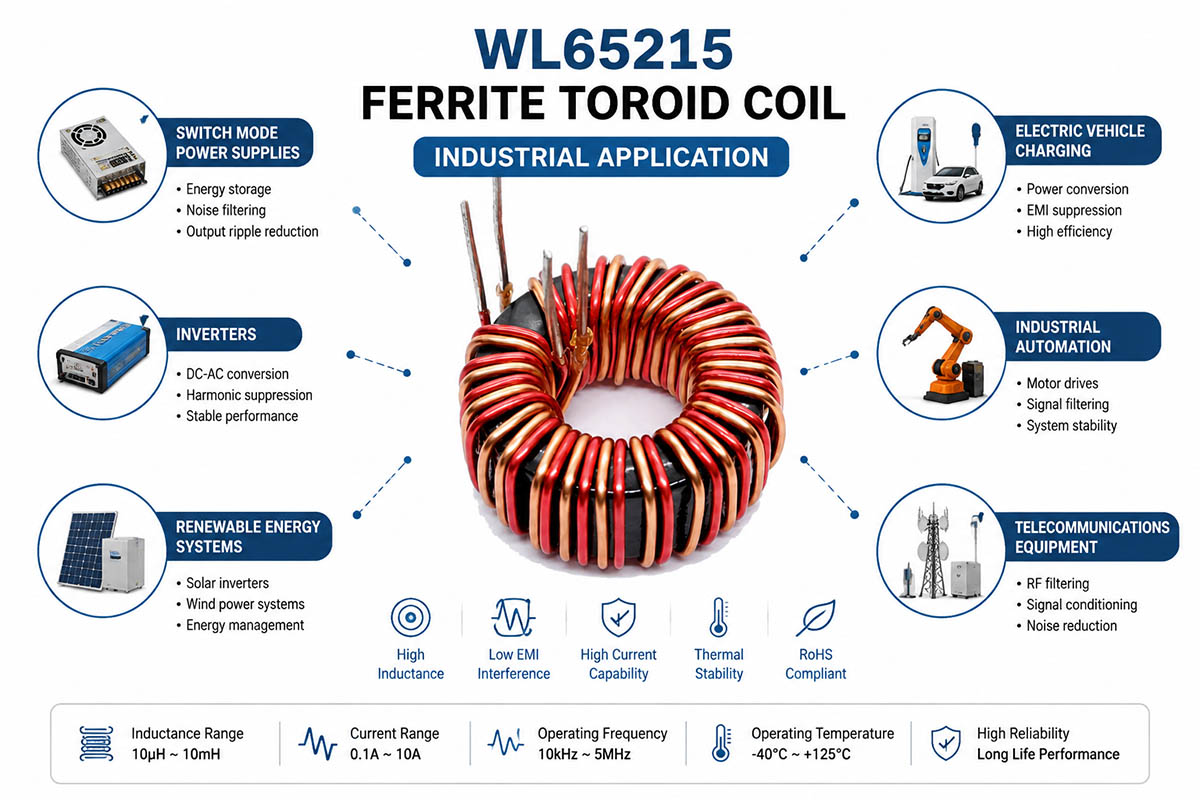
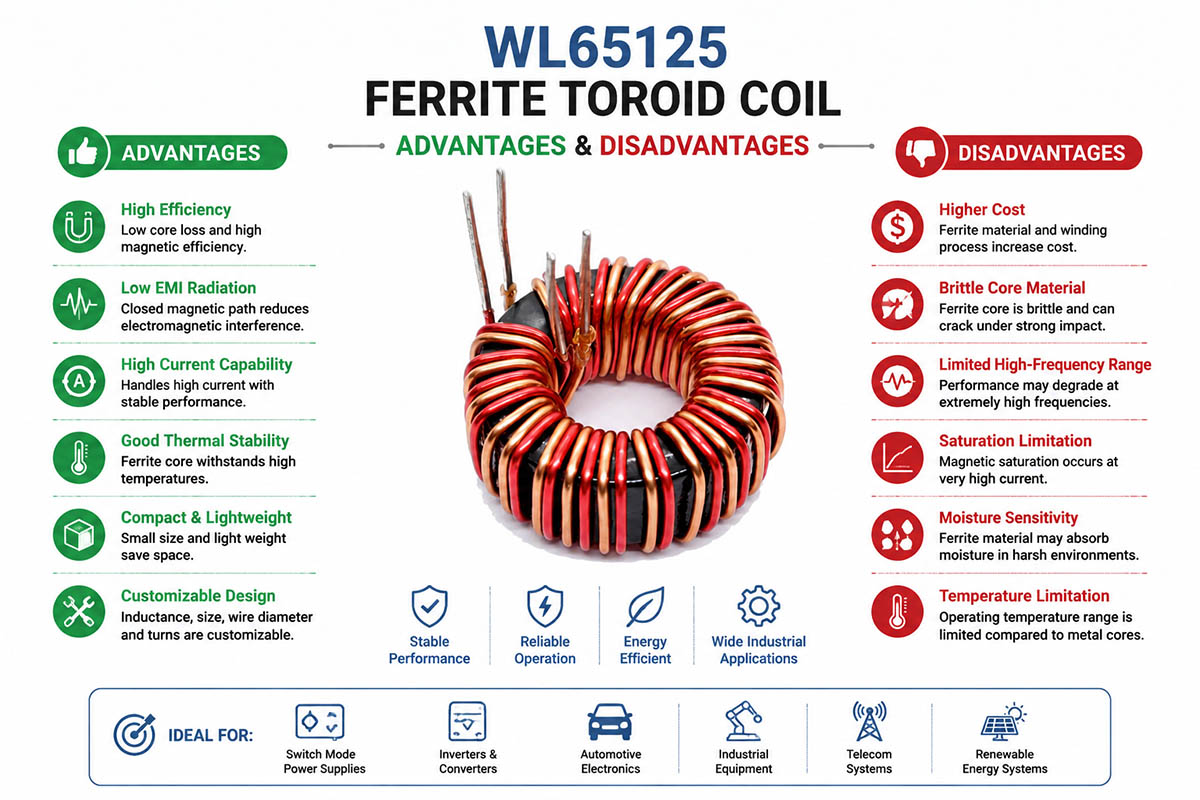
The choice of the appropriate Ferrite Toroid Coil depends on its electrical performance, operating environment and application requirements.
1.Find Inductance Value
One of the important parameters is the inductance value. The engineer should choose the coil with appropriate inductance for the circuit. The poor filtering and instability in the circuit may occur due to wrong inductance value.
2.Consider the operating frequency
The frequency characteristics of ferrite materials are different. For high frequency applications the ferrite cores with low loss at the frequency of interest should be chosen. The correct material is selected so that it would be efficient and do not overheat.
3.Verify Current Rating
The coil should be able to carry the appropriate current without temperature rise or magnetic saturation. For high current applications, thick wire and large core sizes are required.
4.Choose the Correct Core Material
The magnetic characteristics of ferrite materials are different. Some materials are good for power applications, while some others are better for high-frequency filtering and RF applications.
5.Determine Size Requirements
The toroidal coil should be physically sized to fit into the available installation space. The smaller coils use less space, while the larger cores have higher power capabilities.
6.Check out Temperature Performance
The operating environment temperature affects the reliability of the coil. Choose coils with appropriate thermal performance for industrial applications.
7.Opt for a Trustworthy Manufacturer
The professional manufacturer should offer customized winding solutions, quality control, electrical testing and consistent production capability.
Assessing the inductance, frequency, current, material, size and reliability needs allows choosing the best ferrite toroid coil for your application requirements.
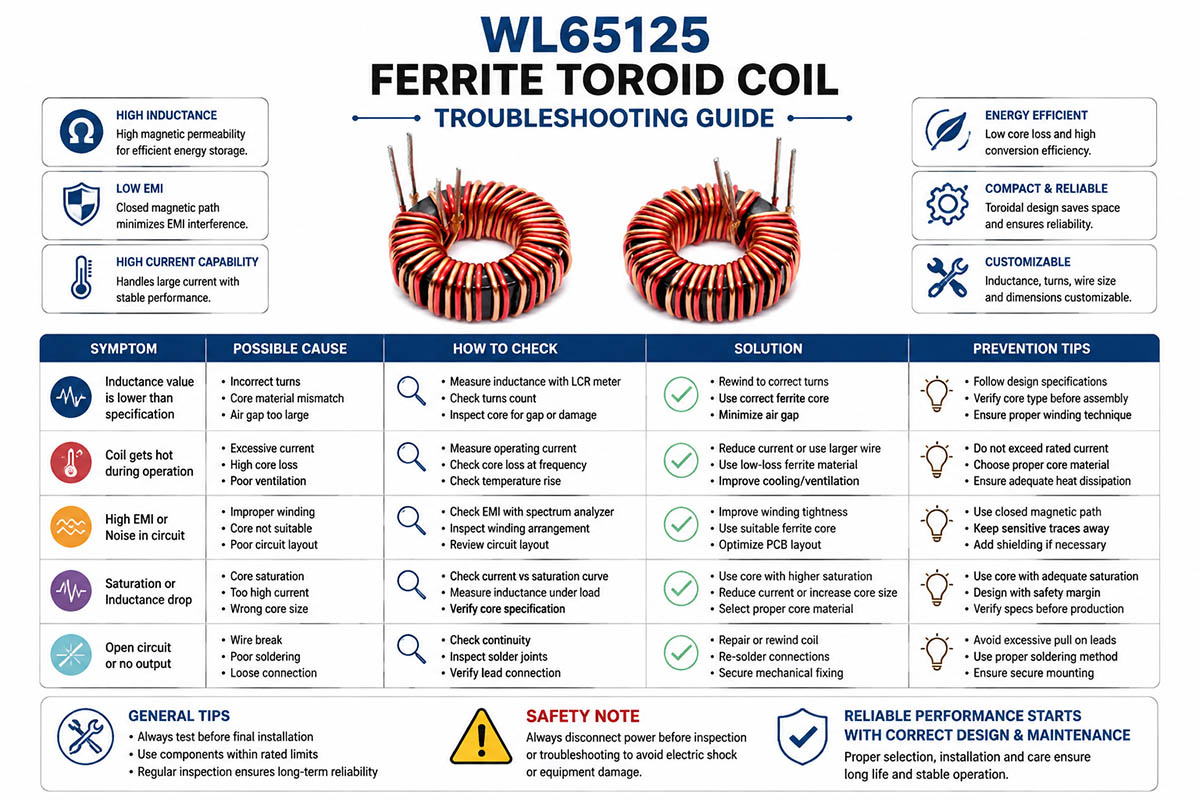
Common Mistakes to Avoid When Designing Ferrite Toroid Coils
Choosing the wrong ferrite material for the operating frequency.
Ignoring the saturation of the magnetic flux.
Using a wire size that is too small for high current applications.
Ignoring temperature rise during continuous operation.
Using bad winding techniques that increase leakage inductance.
Product Design: EMI requirements Not considered.
No test of inductance under real operating conditions.
Not using a core size that can handle required power levels.


