
There is a big need for a standardized and controlled process of producing a solenoid to have ensured quality, performance, and timely delivery. In this place, however, we would now like to explain our process of making a solenoid from planning to shipment for Customer knowledge.
Chapter 1: Why a Standardized Solenoid Production Process is Important
Solenoids are custom-made electromagnetic devices. A variation in the design and inspection of solenoids can impact the following:
- Pull / holding force
- Stroke accuracy
- Coil temperature rise
- Service life and reliability
Our production process covers these important components:
- Stable Mass Production
* Traceable quality control
- Customer specifications compliance
Chapter 2: Step-by-Step Solenoid Production Procedure
2.1 Production Planning
Prior to the production process, we engage in extensive production planning based on the following:
- Customer drawings & specifications
- Force, stroke, voltage, and duty cycle required
- Application environment (temperature, humidity, type of duty)
- Order quantity and delivery schedule
The output of planning entails:
- BOM (Bill of Materials)
SOP Guide Book
- Process flow chart
- Quality control specification
- Daily production opt & real data sheet
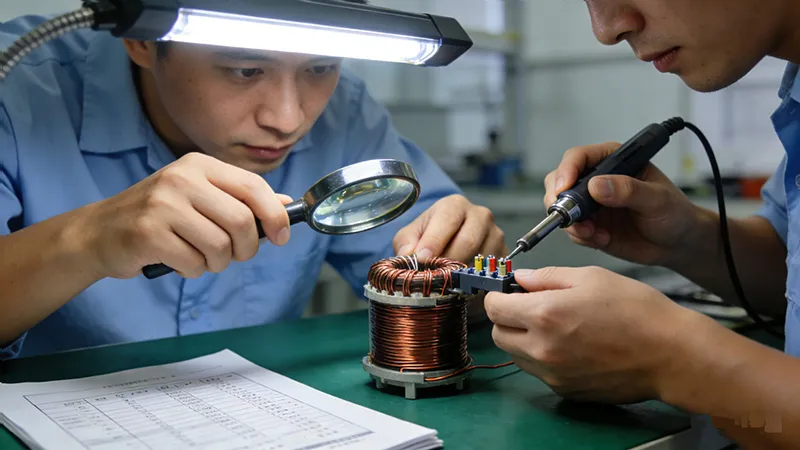
2.2 Pilot Run (Trial Production)
The pilot production is done before mass production to check:
- Feasibility of design
- Assembly Consistency
- Performance Stability
2.3 We test the following during the pilot run:
- Electrical Parameters
- Mechanical movement
- Force vs. Stroke Curve
- Temperature increase
The pilot run process can enable the removal of any possible risks regarding the final production process of computer chips.
Chapter 3: Material Check
All materials are thoroughly inspected for acceptance, including:
- Copper wire (dia., grade insulation)
- Core and case iron composition
- Springs, shafts, and other moving parts
- Insulation components
Inspection techniques involve:
- Dimensional measurement
- Material specification verification
- Visual Inspection
- Random sampling tests
The only qualified material is put to production.
Chapter 4: Verification of Fixtures & Tooling
Before assembly, all fixtures, jigs, and tools receive an exhaustive inspection to check that:
- Dimensional Accuracy
- Consistency of performance
- Simplified assembly
This first step is vital for:
- Standard product sizes
- Fewer errors in assembly processes
- Quality in mass production
Chapter 5: First Sample Inspection (FAI)
Initially, the first-ever assembling solenoid undergoes a series of inspections and tests, which include:
- Overall dimension
- Stroke length
- Pull and holding force
- Resistance and current values
- Functional testing
The First Article Inspection approval is necessary before the start of mass production.
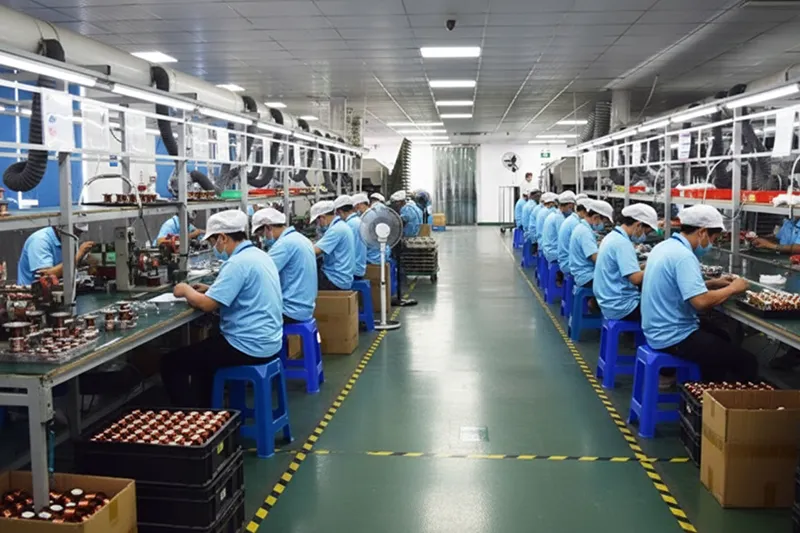
Chapter 6: Production Processing & In-Process Checks
During mass production, in-process control of quality is done at key steps such as:
- Coil winding inspection
- Assembly accuracy verification
- Electrical Parameter Testing
- Functional movement validation
These controls are intended to ensure a defect-free batch and a stable level of production quality.
Chapter 7: Logo Printing and Product Identification or Labeling
As soon as assembly and testing of the product is completed,
- Logo printing (laser marking or ink printing, depending on a case)
- Model number and voltage marking:
- Date Code or Batch Number identification
- Labeling
This stage guarantees that the
- Brand recognition
- Product traceability
- Simplified after-sales service
Chapter 8: Packing Process:
Solenoids are packed depending on:
- Product size and weight
- Modes of transport
- Customer packaging requirements
Packaging decisions involve:
- Individual protective packing
- Anti-static packaging
- Carton/pallet packaging
- Custom logo packaging
Chapter 9: Final Checking & Quality Inspection
Before the goods are packed and sent, a final check is done:
- Appearance inspection
- Random performance testing
- Quantity verification
- Packaging inspection Only 100% qualified products qualify for shipment.
Chapter 10: Shipment & Delivery After final approval:
- Preparation of shipment documents
- The products are transported by airplane, ship, and courier services
- Tracking information is offered to customers Timely delivery and product quality are guaranteed throughout the logistics process.
Chapter 11: Conclusion
Professionals and Experts at Every Production Stage In our production laboratory, we depend not only on the use of automation and semi-automation machinery, but also on the knowledge and skills of experts in the field of solenoid production. In each phase of production, human intervention, precision, and expertise have an important role to play, beyond the capability that can be done by machines. Each newly hired employee undergoes a formal training process of at least 3-5 days before they can be allowed in the production line. Only those employees who clear the basic operating skills and technical knowledge test are allowed to undertake the production process. By maximizing the efficiency of both machine tools and human expertise, we achieve the greatest efficiency in production and the quality of the solenoid assembly.
By strictly following a solenoid assembly procedure, we are guaranteed to receive:
- Robust electromagnetic characteristics
- Durable and long-lasting
- Consistency in Production
- Guaranteed deliverability in OEM and industrial segments
