
Chapter 1: Introduction
Modern ventilators are becoming increasingly necessary in intensive care, emergency transport, and home respiratory care as smart medical devices continue to improve in quality. The air supply system of the ventilator is an important feature of the ventilator, as it has a direct influence on the quality of the treatment, the safety of the patient, and the dependability of the ventilator.
The use of electromagnetic air pumps is becoming increasingly popular in the design of ventilators, as they are compact, have rapid response, and have precise control of airflow, making them suitable for long-term use.
This article examines the use of electromagnetic air pumps in the engineering of ventilators as medical devices through an in-depth look into the system requirements, design, implementation, and practical engineering insights in a step-by-step fashion.

Chapter 2: System Requirements: Basic Needs of the Ventilator Air Supply
The basic requirement of the ventilator is to provide airflow according to the patient’s condition and type of ventilation used in the treatment of the patient.
The air pump must meet extremely stringent medical and engineering criteria.
2.1 Stable Pressure and Accurate Flow Control.
The ventilators must provide CPAP, BIPAP, and volume-controlled ventilation, which require a consistent airflow and precise pressure control, as small changes in pressure and airflow can significantly affect the quality of the treatment and patient comfort.
2.2 Little noise and little vibration
The ventilators are often placed near the patient, and as such, it is quite important, especially in home care, to have little noise and vibration.
2.3 High reliability and continuous operation
For extended periods of time, many ventilators operate all the time. Air pumps must supply air at a constant rate and not wear out significantly.
2.4 Control behavior that is safe and predictable
Medical devices must work safely even if something goes wrong. When there is a blockage, leak, or loss of power, air pumps must behave in a way that is under control and predictable.
2.5 Compact Design and Thermal Stability
Portable and easily movable ventilators must be light and take up little room. Good thermal stability is extremely significant for reliable and long-term operation.
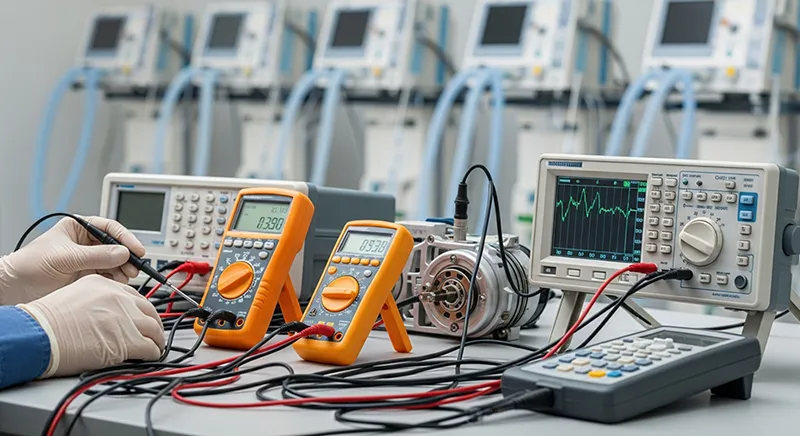
Chapter 3: Solution Design—Adding Electromagnetic Air Pumps to Ventilator Systems
In addition to that, electronic controllers and sensors, and pneumatic systems and electromagnetic air pumps, are integrated to design a ventilator system that can assist people in their breathing.
3.1 What the Ventilator Does for You
- Provide a constant supply of air as the primary source of breathing
- Use proportional valves and solenoid valves to control air pressure
- Help control quick changes from inhaling to exhaling and vice versa
3.2 Choosing the Right Pump
There are vibrating electromagnetic pumps and diaphragm-type electromagnetic pumps that are commonly used for ventilators. These oil-free pumps ensure that the air supplied is clean enough for medical use and minimize maintenance.
3.3 Important Engineering Factors
- Dependence of flow rate and pressure on how air is supplied
- Noise levels that meet medical device criteria
- Power supply that works with both primary and backup power systems
- Things to Think About When It Comes to Materials and Hygiene
- To ensure a clean process, the airflow passage has to be constructed using medical-grade materials.
Chapter 4: Putting it into action and fixing bugs: Making the system work better in real life
The engineers continually tweak the prototype, making small changes to ensure the proper working of the air pump, the electronic control system, and the mechanical parts of the system.
4.1 Setting the Pressure and Flow
To ensure the optimal working pressure and flow rates during the ventilation process, specific sensors and measuring equipment are used.
4.2 Putting together control algorithms
- To ensure the proper working of the phases involved in the breathing process, the air pump has to work in conjunction with the ventilator software.
- Cutting Down on Noise and Vibration
- To reduce the noise levels, optimized parts are incorporated into the system.
4.3 Testing for Continuous Operation
To test the working efficiency of the system, long-term testing is done, simulating the working conditions in the real world.
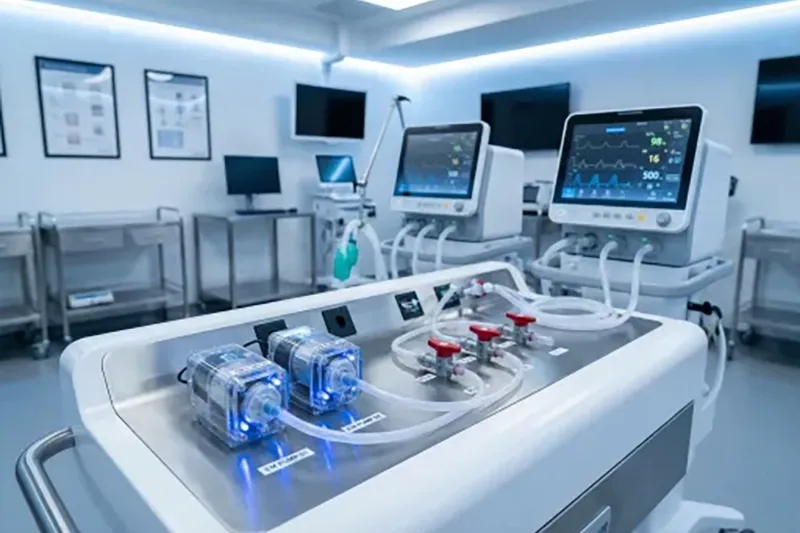
Chapter 5: Performance Verification: Checking for reliability and safety
To ensure the proper working efficiency and safety, the ventilator system is tested before being used in the hospital or manufactured in large numbers.
5.1 Testing for Consistency
To ensure the stability of the pressure and flow, the system is tested under different working conditions.
5.2 Testing for durability and lifespan
To ensure the working efficiency, long-term testing is done, which determines the stability, longevity, and frequency of repairs required.
5.3 Testing for Safety and Faults
Engineers devise artificial scenarios to test the systems when the airways are blocked, the air is leaking, and the electricity is out, ensuring that the safety features function as expected.
5.4 Simulation of a Clinical Setting
The artificial lungs replicate the breathing patterns of the real patients to test the effectiveness of the system and its reliability.
Chapter 6: Engineering Lessons Learned from Real-World Use
The different engineering projects aimed at creating a ventilator have taught the following engineering lessons:
- Long-Term Stability is More Important than Peak Performance
- Reliability is vital as compared to the production of high rates of airflow.
- Optimizing the Whole System Is Important
- Air pumps, valves, sensors, and control systems ought to be a single entity as compared to being separate components.
- In order to reduce the noise produced, the structure ought to be done by a structural engineer
- In addition to the pump type, the structure design, airflow path, and vibration reduction should also be considered.
- It is necessary to have a safety and redundancy system
- There ought to be a safety feature to avoid any change of pressure as well as breakdown.
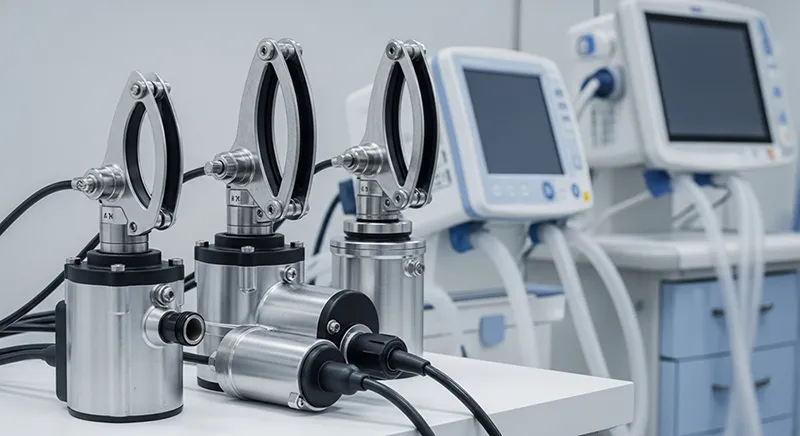
Chapter 7: How to avoid the comment mistake when using the electromagnetic air pumps on Medical Ventilators
Electromagnetic air pumps are crucial components of medical ventilators because they allow controlling air flow and guarantee constant pressure delivery. Ventilators belong to the group of critical medical devices and therefore choosing the right air pump is essential for proper functioning, safety and long life of the machine. Various factors may influence the effectiveness of the air pump and cause early failure. The following tips can help engineers to avoid common mistakes during selection and application of the air pump.
1. Choose Right Pump Specifications
One of the biggest mistakes in selection is basing it only on voltage or the size of the pump. Engineers should take into account various factors: air flow, pressure, vacuum, voltage, current, power consumption, duty cycle and working temperature.
The pump has to provide sufficient air flow and pressure in practical working conditions and not only in laboratory ones. In case if the pump is too small it will work constantly at maximum flow rate thus increasing the temperature of the device and reducing its lifespan.
2. Do Not Forget about the Duty Cycle
Electromagnetic air pumps working continuously produce significant amount of heat. Working the pump over its duty cycle limit overheats the coil and decreases the reliability of the components.
It is necessary to clarify whether the ventilator will work constantly, intermittently or with the variable cycle of working before selection of the air pump. In case of constant working choose a pump designed for this type of application and check the temperature during its work.
3. Beware of Excessive Pressure
One more mistake made by the engineers is running the pump against higher pressure then its maximum output pressure. High backpressure reduces the air flow, increases power consumption and generates additional heat.
Therefore it is necessary to evaluate all the pneumatic system, including the tubes, filters, valves, connectors and the patient circuit as a whole. In case if the tubing and filters become clogged the resistance of the system grows and the performance of the pump becomes less efficient.
4. Pay Attention to the Purity of Air Flow
Medical ventilators require pure air flow. Any dust, humidity, particles and contaminants can negatively affect the diaphragm, valves or other components inside the pump.
If this feature is required in the system design then appropriate filters have to be installed. But filters should not increase the resistance. Engineers should check the pressure drop across the filter and make sure that the pump can supply sufficient air flow and pressure.
5. Noise and Vibration Control
Medical equipment – Noise and vibration are important factors. The electromagnetic air pump produces mechanical vibration while working which is transferred to the ventilator housing.
Using special vibration-isolation material, appropriate mounting structure and proper tube connection can reduce the transmission of vibration and noise. Also the pump has to be checked under practical working conditions and not only under no-load conditions.
6. Practical Conditions Test
At last, it is not correct to choose an air electromagnetic pump just using the information from its datasheet. The test has to include practical conditions of voltage, air flow, pressure, temperature, duty cycle, tubing, filters and other components used in the ventilator.
Engineers have to check the startup characteristics, steady-state performance, pressure stability, temperature, noise, vibration and long-time durability. It will help to find possible problems in advance and solve them before the beginning of mass production.
Chapter 8: Frequently Asked Questions on Electromagnetic Air Pumps (FAQs)
Q1: Are electromagnetic pumps appropriate for the operation of a ventilator at all times?
Yes.
Q2: How might electromagnetic pumps help to reduce the loud noise of the ventilator?
Vibration damping mounts, improved airflow channels, acoustic insulation, and improved control frequency management are just a few things that can help in reducing noise.
Q3: What are the advantages of the electromagnetic pumps over the normal compressors?
They are very good for portable and mid-sized ventilateffective as they consume less power, are small in size, and respond quickly.
Q4: How do you ensure that the air flow is clean?
This cleanliness is ensured by the absence of oil in the pump and the medical-grade filters, which guarantee clean air flow to the patients.
Chapter 9: Conclusion on Electromagnetic Air Pump Application
It is very important to understand the significance of the electromagnetic air pumps in the modern ventilator, as they play a very important role in ensuring that the ventilators work very well and efficiently and the patients receive the best medical care possible. The electromagnetic air pumps play a very important role in ensuring that the ventilators work very well and efficiently, and that the patients receive the best medical care possible, as they carry out extensive requirement analysis, integrated system design, extensive testing, and engineering optimization.
It is very important to understand the significance of the electromagnetic air pumps in the modern ventilator, as they play a very important role in ensuring that the ventilators work very well and efficiently and the patients receive the best medical care possible. The electromagnetic air pumps play a very important role in ensuring that the ventilators work very well and efficiently and the patients receive the best medical care possible, as they carry out extensive requirement analysis, integrated system design, and extensive testing. Weilong offers the pinch valve and air pump for the medical equipment. If you have any questions, please contact our engineer.
