

Weilong Technology offers custom solenoid design technical services right from development to validation and regulatory testing and compliance. Being over 20 years experienced in custom-designed solenoid valves and actuators, our team of engineers takes care that all custom solenoid designs have high performance and reliability and are also easily assembling.
Chapter 1: Custom solenoid design and project planning
All projects involving custom solenoid design has an extensive engineering process that promotes transparency, viability, and budget management.
Our cusom solenoid design concept encompasses:
Design: Team structure and responsibilities
Chapter 2 : Description Custom Solenoid design in Details
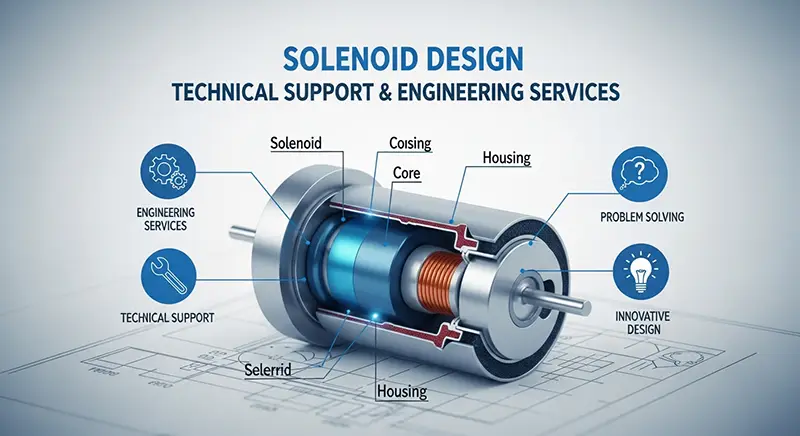
This custom solenoid desing List of major components (coil, core, plunger, housing, spring, connector, etc.)
Project timeline and development phases
Design for Manufacturing (DFM) and Cost Optimization Recommendations
Design for manufacturing and
The structured methodology assists in shortening the time needed for the development phase and overcoming possible risks in the design.
Chapter 3 : Custom Solenoid Design Verification And Validation (DV&DV)
Design validation is validating that the design outputs for a solenoid valve contain all the necessary requirements. The requirements include:
Detailed specifications of electricity, including voltage, current, power, and resistance.
Magnetic properties – force, stroke, response time, etc.
Tolerances and fit. Mechanical tolerances and the fit of parts
Thermal properties and insulation classification.
The validation of design also ensures that the solenoid valve operates as intended and takes into consideration the following:
The actual workload and the usage rate of the valve.
The environmental conditions it will be subjected to.
Certain Functional Scenarios specified by the Customer.
Activities such as verification and validation are performed under engineering processes that conform to ISO standards.
Chapter 4: Custom solution and certification
A full custom solenoid test plan should be developed and applied, in parallel to the design verification.
Testing of custom solenoid
Functionality and Performance Testing
Electrical durability and life cycle tests
Heat rise and insulation resistance test
Vibration and shock testing (automobile and industrial)
Environmental tests (humidity, temperature cycles)
Institutional Approval and Certification
If required, Dr.Solenoid offers third-party accreditation and institutional recognition, including:
UL, CE, FCC, CSA, JET
RoHS, REACH, and ERP
Additionally, our compliance engineers make sure that our solenoid valve designs comply with regulatory requirements in particular markets, thus allowing for accelerated times-to-market.
Chatper 5: Custom solenoid design ensures reliability engineering
The design ensures that the custom solenoid design is able to meet both the long-term requirements of quality and reliability.
Apart from the usual design reviews, we also perform the following advanced analyses:
Mean Time Between Failures (MTBF) Analysis
DFMEA Design Failure Mode and Effects Analysis
Monte Carlo simulation
Tolerance Superposition Analysis
Other custom analysis work may be carried out based on specific customer requirements or on the recommendations of design assurance engineers with experience at Weilong Technology
Chapter 6 : Electronic design of custom solenoid systems
Our electronic design services also include support for:
Custom Solenoid valve control and actuation systems.
Digital Circuit Design at the Product Level
Custom solenoid valve actuators and protective circuits
Development of control, diagnostic, and test software
Support for application-specific firmware
Et cetera
– This ensures stable operation and precise control.
Chapter 7 : Mechanical Design & 3D Modeling
Weilong has a mechanical design group that supplies reliable, manufacturable designs of small precision solenoids as well as large electromagnetic parts.
Professional knowledge in mechanical design
Sheet metal housing for industrial solenoid valves
Resin packaging for small handheld devices
Optimierung zur Verbesserung der Lebensdauer und Senkung der
Design tools
PROENGINEER & SolidWorks
3D parametric modeling in mechanics.
Complex Surface and Structural Design.
ZWC
Detailed 2D part drawings and tolerances.
Model Flow Analysis.
Simulation of plastic injection molding.
Early warning of tool risks.
Optimize part design without investing in molds.
Chatper 8: Custom solenoid Regulatory Compliance and Market Access
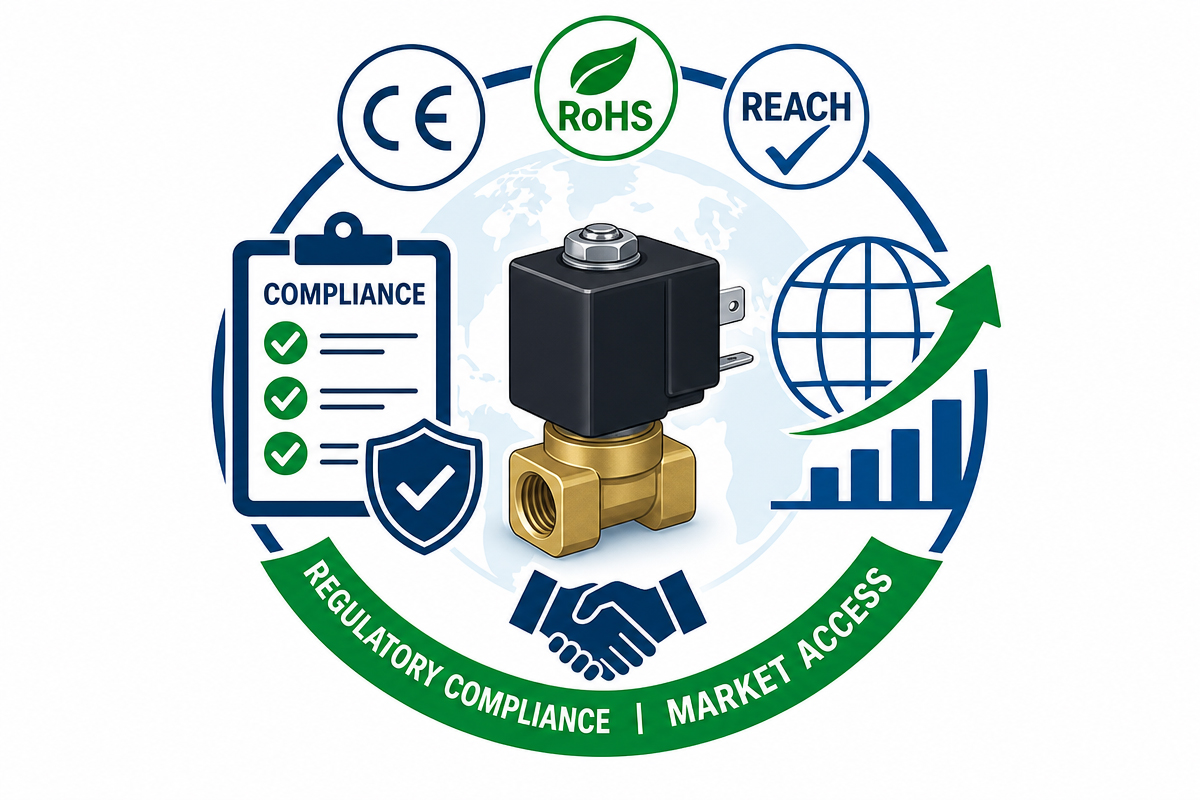
For a custom solenoid manufacturer, market access isn’t just about product performance. The company needs to comply with regional regulations, industry standards and environmental directives in order to succeed in the global markets. Certifications demonstrate not only the quality and safety of your products but also build confidence in your customers and provide access to highly regulated industries such as automotive, medical equipment, industrial automation, aerospace and hazardous environments.
8.1. Quality and Environment Management
All reputable solenoid manufacturers should have internationally recognized management systems.
ISO 9001 is a quality management system which ensures consistent quality of products.
ISO 14001 showcases a commitment to environmental responsibility and sustainable manufacturing.
These certifications are a prerequisite for many OEMs and multinational companies before approving a supplier.
8.2. RoHS, REACH Material compliance
Environmental compliance for electrical and electronic products is now a worldwide requirement.
RoHS (Restriction of Hazardous Substances)
RoHS restricts the use of hazardous materials such as:
Lead (Pb) Mercury (Hg) Cadmium (Cd) Hexavalent Chromium (Cr6+) Polybrominated Biphenyls (PBB) and Polybrominated Diphenyl Ethers (PBDE) flame retardants
RoHS compliance is needed for products sold in the European Union and is commonly accepted in many international markets.
REACH
REACH (Registration, Evaluation, Authorisation and Restriction of Chemicals) is the EU regulation for the safe use of chemical substances. Manufacturers shall be able to demonstrate that all materials used in their solenoids are compliant with REACH and do not contain restricted substances.
8.3. Regional Market Certification
Each country has its own conformity assessments before products can be sold.
European Community
The CE Mark demonstrates that a product meets the requirements of applicable EU directives concerning:
Safety Health Protection of the environment
electromagnetic compatibility (EMC) UK
After Brexit products entering Great Britain generally need the UKCA Mark, which replaces the CE marking for many product categories.
North America.
For United States and Canada, electrical safety certifications are strongly suggested.
8.4 Underwriters’ Laboratory (UL)
CSA (Canadian Standards Association)
These certifications ensure electrical safety and greatly boost customer confidence.
8.5 China Regulation complaince
Many electrical products need the China Compulsory Certification (CCC) before they can enter the Chinese market.
Furthermore, manufacturers should ensure that product labels, technical specifications and certificates of compliance are consistent in full. Any discrepancy between the product markings and supporting documentation may result in customs delays, additional storage costs or rejection of the shipment.
8.6 Industry Certifications
1 Auto Industry
Automotive suppliers need to comply with:
IATF 16949:
Customer specific quality requirements
These standards guarantee reliable production, traceability, defect prevention and continuous improvement in the supply chain.
2 Medical Equipment
Medical applications require the highest product reliability.
Some of the important certifications are:
ISO 13485 – Medical device quality management system
IEC 60601 – Safety of Medical Electrical Equipment
Depending on the application, manufacturers may also have to demonstrate biocompatibility and long-term reliability.
Class I – Hazardous Locations
Solenoid’s need to remove ignition sources in explosive environments such as oil & gas, mining and chemical processing.
The main certification is:
ATEX
Related standards include:
EN 60079-18 EN IEC 60079-0
Certified products are designed to operate safely in explosive atmospheres and meet assigned temperature ratings.
3 Military & Aerospace
Durability and reliability of a superior quality are required in military and aerospace applications.
Manufacturers may be required to conform to:
MIL-SPEC Military Specifications
MIL-PRF specifications
Requirements of Aerospace Customers
CMMC certification when working with U.S. defense information.
8.7 Essential Certification Checklist
| Certification | Purpose | Primary Markets |
|---|---|---|
| ISO 9001 | Quality Management | Global |
| ISO 14001 | Environmental Management | Global |
| IATF 16949 | Automotive Quality | Global Automotive |
| ISO 13485 | Medical Device Quality | Global Medical |
| RoHS | Hazardous Substance Restriction | EU & Worldwide |
| REACH | Chemical Compliance | European Union |
| CE | Product Conformity | European Union |
| UKCA | Product Conformity | United Kingdom |
| UL | Electrical Safety | United States |
| CSA | Electrical Safety | Canada |
| CCC | Mandatory Product Certification | China |
| ATEX | Explosion Protection | EU Hazardous Areas |
8.8 Best Practices for Compliance
1. Compliance by Design
Compliance has to start at product development, not at production.
Manufacturers will:
Choose RoHS and REACH compliant materials
Design coils with adequate insulation systems
Add thermal protection where necessary
Design to the EMC performance early in the process
Design with target certifications in mind from the start
Early planning reduces certification costs and reduces product development cycles.
2. Conduct Vigorous Quality Control
Reliable manufacturing demands comprehensive quality assurance at all stages of production.
Common measures include:
Receiving inspection of materials
Statistical Process Control (SPC)
Automated Inspection of Assemblies.
Coil resistance check
Stroke and force verification
100% functional test before shipment life-cycle testing
These controls provide consistent product performance and minimize field failures.
3. Ensure Full Documentation and Traceability
Regulatory compliance is all about documentation as much as it is about product performance.
Manufacturers should keep:
Certificates of Compliance (CoC)
Technical Data Sheets (TDS’s)
Material Declaration
RoHS and REACH reports
Test reports
Production Reports
Traceability by batch
Proper documentation makes custom clearance easy and helps in customer audits.
4. Adopt a Multi-Certification Approach
There are a lot of major manufacturers who make products that meet a number of international standards at the same time.
One solenoid rated for:
CE UKCA UL CSA EAC
can be sold in the European, North American, UK and Eurasian markets with minor product changes. This approach reduces the complexity of inventory, lead times, and expands global sales opportunities.
Chapter 9 : Functional and Environmental Validation
In addition to project engineers carried out a thorough validation of functional and environmental requirements, including:
Product characteristics & Operational performance
Reliability and Life Testing
Environmental safety (RoHS/
Analysis and Corrective Actions- DFMEA
This also ensures that all the solenoid valves meet the expectations of the customers.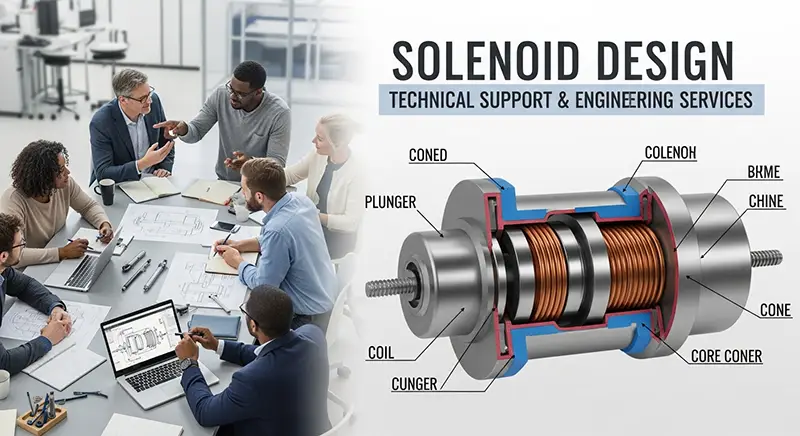
Chapter 10 : How Weilong guarantee the solenoid performance and quality ?
As a custom solenoid manufacturer, ensuring performance, quality, and on-time delivery requires a systematic methodology that integrates stringent quality management, streamlined production, and proactive communication. This is what Weilong can do.
10.1 Quality Assurance by Certification and Process Control
A beginning of quality is the implementation and maintenance of internationally recognized management systems. Weilong can do the IATF16949 certification, the quality standard of the automotive industry that guarantees a rigorous control of the processes and continuous improvement This standard requires strict control of suppliers, process validation and prevention of defects, which is a very good basis for quality assurance.
Besides IATF16949, the ISO9001, CE/CB and UL certification shows the compliance with global quality and safety standards . These certifications require documented quality procedures, regular audits and traceability through the supply chain.
For the solenoid coils, all production steps should be followed by automatic function tests such as insulation resistance test (DC500V, ≥50MΩ between coil and bobbin), high voltage test (DC700V for 1 second) and dimensional accuracy verification . Full vertical integration—manufacturer winds, molds and inspects coils in-house—provides total quality control and traceability of solenoid valve production .
10.2 Performance Guarantee Through Technical Expertise
Professional R&D Team: Weilong has dedicated technical staff with an average of 10+ years experience in solenoid design. This enables the development of new products per month and efficient processing of OEM/ODM orders -6. This expertise ensures that designs are optimized for performance parameters such as magnetic force, response time, insulation resistance, and lifecycle durability (tested to over million operations)
Material Selection: The use of quality raw materials such as enameled copper wire, magnetic materials with high transmissibility and low remanence, and brass or stainless steel tubes with good corrosion resistance, directly affects the performance of the solenoid -. Material consistency is maintained by utilizing pre-qualified vendors.
Testing and Validation Thorough testing should cover resistance measurement, inductance verification with LCR meters, insulation resistance testing, and high-voltage withstand tests. For custom designs, prototype validation in the real operating conditions (temperature, humidity, duty cycle) ensures the solenoid meets the specified performance criteria before mass production.
10.3 Schedule Assurance Through Optimized Processes
The typical cycle time for production of custom solenoids is 15-30 days, however, there are a number of ways to reduce and guarantee delivery times .
Improved Production Capacity: The factory is equipped with CNC winding machines, automatic coil winding equipment, testing instruments and heating chambers. This allows for the efficient production of large quantities and/or specific requirements within specified timeframes . For urgent orders, we can offer express delivery options, such as a day turnaround, provided we have adequate production capacity and a stock of raw materials .
10.4 Efficient Communication and Design:
Talk to customers early and often to clarify environmental conditions, performance parameters and dimensional requirements. Avoid custom solenoid design modifications in mid-production that cause delays. Standardized and modularized design approaches facilitate the flow of production and thus reduce lead times.
Quality inspections are done at the same time as production, not after production, so any defects are found and fixed right away, avoiding end-of-line failures that delay schedules . A dedicated quality team (for instance, quality personnel with a lot of experience) makes sure standards are met, so production can continue without interruption while quality assurance happens alongside
10.5 Integrated Quality and Schedule Management
Weilong can combine these techniques into one system:
| Area | Action | Impact |
|---|---|---|
| Quality Systems | IATF16949/ISO9001 certification, full vertical integration | Traceability, defect prevention |
| Technical Support | 10+ year experienced R&D team, 24-hour technical response | Rapid custom solutions, minimized redesign delays |
| Production | Automated winding, in-house molding and inspection | Consistent quality, controlled cycle times |
| Testing | In-line automatic function checks, comprehensive electrical testing | Early defect detection, no rework delays |
| Material Supply | Pre-qualified vendors, raw material inventory | No supply-chain delays |
| Communication | Early specification clarification, proactive progress reporting | Alignment, no late-stage surprises |
The combination of certified quality systems, experienced technical teams, automated production and proactive customer communication allows Weilong to consistently produce custom solenoids to performance specifications, quality standards and agreed project timelines.
Chatper 11 : Frequently Asked Questions on Custom Solenoid
Q 1: What information is required to initiate a custom solenoid design project?
The critical factors will involve voltage, force, stroke, duty cycle, size constraints, environmental factors, cost.
Our engineers can help you refine the specifications.
Q 2: Can you verify and test custom solenoid designs?
R2: Yes. We conduct custom solenoid design verification and validation testing, functional testing, and reliability testing according to international requirements and customer requirements.
Q3: Can Weilong technology offers regulatory certifications?
Of course. For custom solneoid design, we endorse UL, CE, FCC, RoHS, REACH, and many market-specific approvals.
Q4: How can custom solenoid be ensured for reliability?
We employ the use of Design Failure Mode and Effects Analysis (DFMEA), Mean Time Between Failures (MTBF) Analysis, tolerance analysis, or life-cycle testing in the elimination process.
Q5: Can this design be optimized for mass production?
Yes. All designs use the concepts of DFM and DFA to ensure that the product is of high quality and made at competitive costs through mass production.
Chapter 12 : Custom Solenoid Design Conclusion
We have an overall system of custom solenoid design, verification, validation, test, and compliance, which helps us remain a trustworthy collaborator in high-performance solenoid valves and their manufacturing. Starting from designing right up to mass manufacturing, we can help you minimize risks, cut-down time, and make reliable custom solenoid devices for the gloable international market. For more information abut us, please contact us now.
