

Introduction to Electromagnet Noise Reduction
Electromagnets are used widely in automation, solenoid valves, locking systems, medical appliances, automotive systems, and precision devices. Electromagnets are capable of generating powerful electromagnetic force and quick responses. However, the problem of operating noise may become an issue in numerous instances.
The noise created by electromagnets consists of buzzing, clicking, vibration, and impact sounds and may affect product quality, user comfort, and overall system reliability. Reducing the noise level is an important design objective for medical devices, office equipment, smart locks and precision instruments.
Electromagnetic noise reduction requires a complete engineering solution that includes mechanical design optimization, electrical control, and application of advanced materials. This handbook considers the main causes of electromagnet noise and engineering techniques for lowering noise levels.
Chapter 1: Where do locks and electromagnet noise come from?
Before starting to apply technologies for reducing electromagnet noise, it is necessary for the engineer to know what causes the noise generation in electromagnets.
1.1 Magnet vibration and core movement
Magnetic vibration is one of the most frequent sources of electromagnetic noise. When current passes through the coil, the magnetic field generated pulls the iron core or plunger. The vibration and buzzing noises may occur due to small movements between magnetic components.
Sources of vibration increase are:
irregular magnetic gap;
loose components;
poor plunger/core alignment;
fluctuation of magnetic force;
power-frequency vibrations;
The appropriate magnetic circuit design greatly helps to reduce vibrations and lower noise levels.
1.2 Mechanical impact noise
Many electromagnets and solenoids generate noises when the plunger hits the end position. The impact of metal on metal produces a clicking sound.
Causes may include:
fast plunger movement;
no cushioning mechanism;
metal-on-metal impact;
excessive stroke length;
bad spring design;
In applications that require silent operation, mechanical impact is one of the most important problems in electromagnet noise reduction.
1.3 Coil and electrical noise
The electrical design influences electromagnet noise. The vibration is often caused by instability of power supply or an inappropriate driving method.
Common sources of electrical noise are:
changing of the AC magnetic field;
resonance of PWM frequency (???)
large current ripple;
incorrect voltage selection;
coil heating up;
The electrical drive system may be adjusted to lower vibration and noise.
Chapter 2: Reduction of Structural Design Techniques for
Electromagnet Noise Reduction
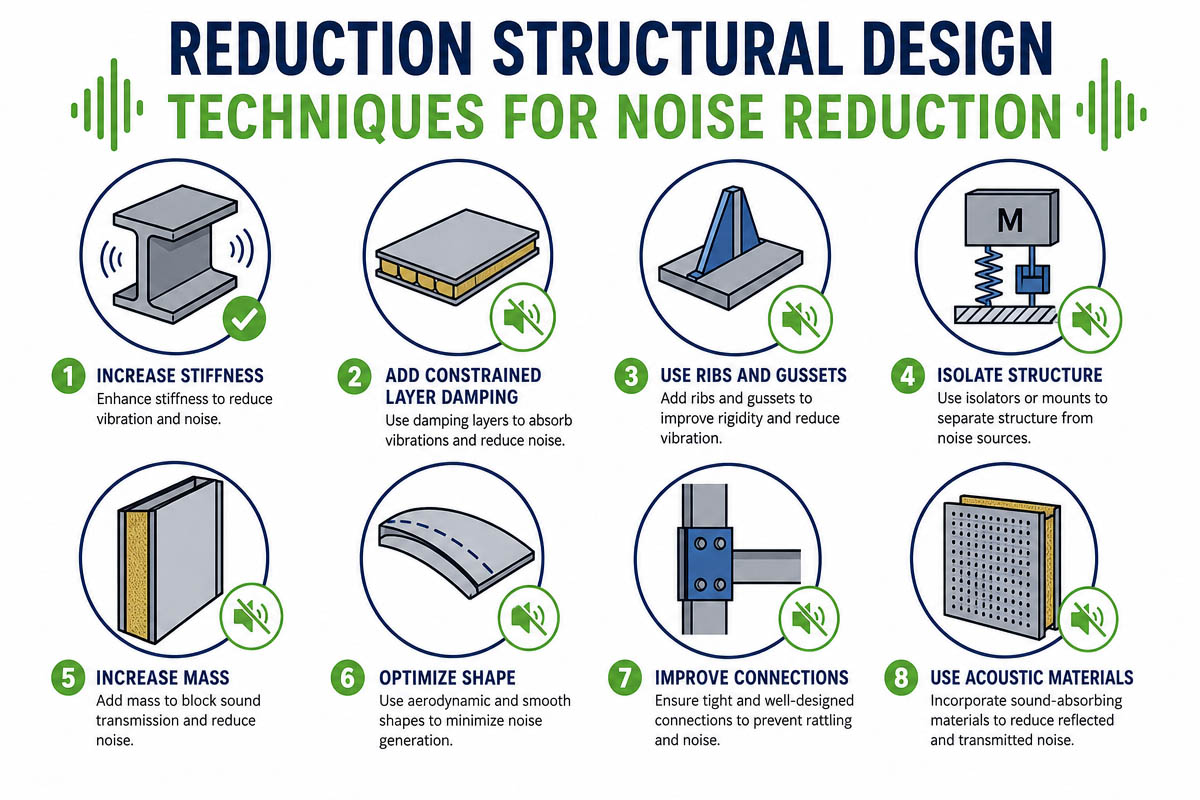
The mechanical design greatly influences noise control in electromagnets.
2.1 Magnetic gap optimization
The size of the gap between magnetic components is critical for the force and vibration.
An incorrectly designed gap may lead to:
instabilities of the magnetic field;
more shaking;
operating noise;
lower efficiency;
It is necessary to optimize the following parameters:
size of the gap;
plunger position;
shaft surface accuracy;
magnetic circuit geometry;
The appropriate magnetic structure guarantees smoother movement and electromagnetic noise reduction performance.
2.2 Improve the accuracy of plungers and core
The higher the precision of manufacturing, the higher the noise.
Main innovations are:
precision machining;
concentricity control;
surface roughness reduction;
increasing the sliding clearance;
Uneven movement of the plunger in the tube causes additional vibration and friction.
Precision machining of the inner tube and plunger is extremely important for noise reduction in tubular electromagnets and solenoids.
2.3 Addition of damping and cushioning material
Damping solutions help to reduce mechanical impact.
Approaches:
rubber bumper;
silicon-damping rings;
shock absorbers, polymer materials;
soft landing frame;
These materials absorb the impact energy when the plunger reaches the end position.
For applications with high cycle numbers, the damping material must be durable enough, as it has to endure repeated impacts.
2.4 Spring design optimization
The return spring influences the impact force and the speed of movement.
An incorrectly designed spring may cause:
vibrations;
hyper-impact;
slow response time;
noise;
Parameters to optimize:
spring force;
wire diameter;
compression length;
material selection;
Spring design takes into account performance and electromagnetic noise reduction.
Chapter 3: Electrical Design Techniques for Electromagnetic Noise Reduction
Electrical design is another important factor influencing noise reduction in electromagnets.
3.1 Use of direct power instead of alternating if possible
The vibration is generated naturally due to the fluctuation of the magnetic field in the frequency of AC electromagnets.
Advantages of D.C. electromagnets are:
less vibrations;
stable magnetic force;
less noise buzz;
higher control precision;
DC electromagnets are usually preferred in applications requiring silent operation.
3.2 Increase the driving current
Also, the magnetic force and the speed of movement depend on the driving current.
Excess current will lead to:
powerful magnetic effect;
temperature increase;
increase of vibration;
shorter lifespan;
Electrical engineers can improve performance by:
using existing control circuits;
PWM control usage;
driving current reduction after activation;
The two-stage current control technique is usually used:
high current for quick activation;
current reduction to maintain position;
This technique lowers energy consumption and improves electromagnetic noise reduction.
3.3 Selection of the right PWM frequency
Today PWM control is widely used in electromagnet applications.
However, incorrect selection of PWM frequency may result in noise generation.
Solutions:
avoid PWM frequency in human audible range;
selection of the frequency according to coil characteristics;
vibration testing at various loads;
This will allow lowering the noise while maintaining a fast response with an appropriate PWM driver design.
Chapter 4: The choice of the material will have a great influence on vibration, friction, and durability.
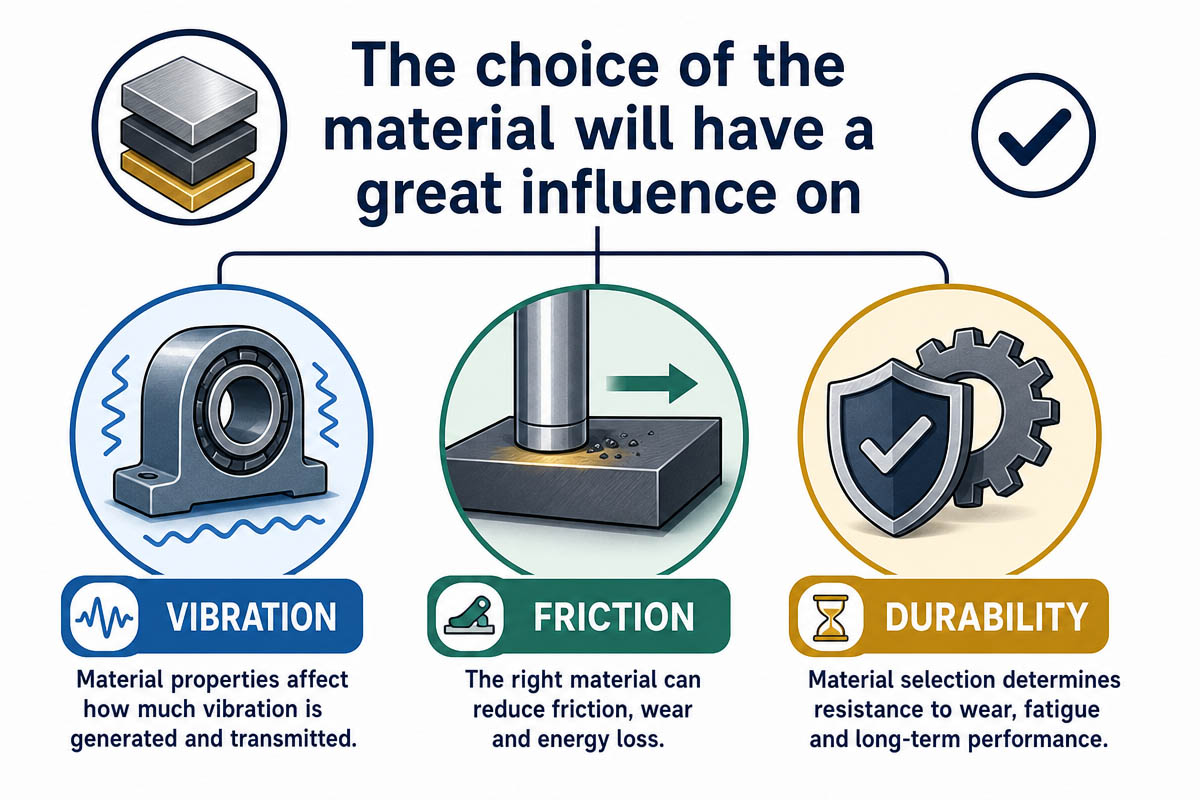
4.1 Magnetic Core Materials
High-quality magnetic materials for increasing magnetic efficiency and vibration reduction
Common materials are:
soft iron (mild steel);
low-carbon steel;
electrical steel;
special magnetic alloys;
High-quality magnetic materials have the following properties:
increased permeability;
reduced magnetic loss;
smooth operation;
less vibration
4.2 Treatment of the plunger surface
The plunger usually moves inside the housing of the electromagnet. Surface treatment for smooth movement and friction reduction
Common treatments are:
nickel plating;
zinc-nickel plating;
chrome plating (hard);
low-friction coating;
Advantages:
friction noise reduction;
improved corrosion resistance;
longer life;
smoother movement;
4.3 Insulation materials for coils
The coil becomes hot while working. If thermal management is inadequate, the coil expands and vibrates.
High-quality insulation materials provide:
thermal stability improvement;
less deformation.
improved reliability;
Common materials are:
insulation: Class B;
Class F is insulated.
high temperature resin;
Chapter 5: Advanced Electromagnet Noise Suppression Solutions
Other engineering techniques can improve performance in demanding applications.
5.1 Magnetic Circuit Optimization
The simulation software is used to optimize:
distribution of magnetic flux;
force diagram;
magnetic saturation;
air gap performance;
A force curve with fewer abrupt changes will reduce vibration.
5.2 Technology of encapsulation
The vibration is reduced by coil encapsulation, fixing the internal components.
Advantages:
less movement of the coil;
waterproofing protection improvement;
mechanical stability improvement;
less operating noise;
Encapsulation is widely used in medical devices and outdoor applications.
5.3 Low-noise solenoid design
For applications requiring very silent operation, special low-noise solenoid designs will provide:
precision plungers, guided;
silent return techniques;
damping mechanisms.
optimized magnetic circuits;
These techniques will be particularly useful in the following applications:
intelligent locks;
medical appliances;
automation of office appliances;
laboratory devices;
Chapter 6: Electromagnet Noise Suppression Testing Procedures
All improvements in electromagnet noise reduction have to be tested with proper procedures.
Acoustic Testing Measurement
Sound pressure level (dB);
operation frequency;
noise spectra;
Vibration Testing
Calculate:
mechanical vibration;
resonance frequency;
structural stability;
Life Cycle Testing
Check:
noise variation after several operations;
wear-resistance;
part longevity;
A complete testing procedure guarantees efficient electromagnetic noise reduction.
Chapter 7: Common Mistakes Causing Electromagnet Noise
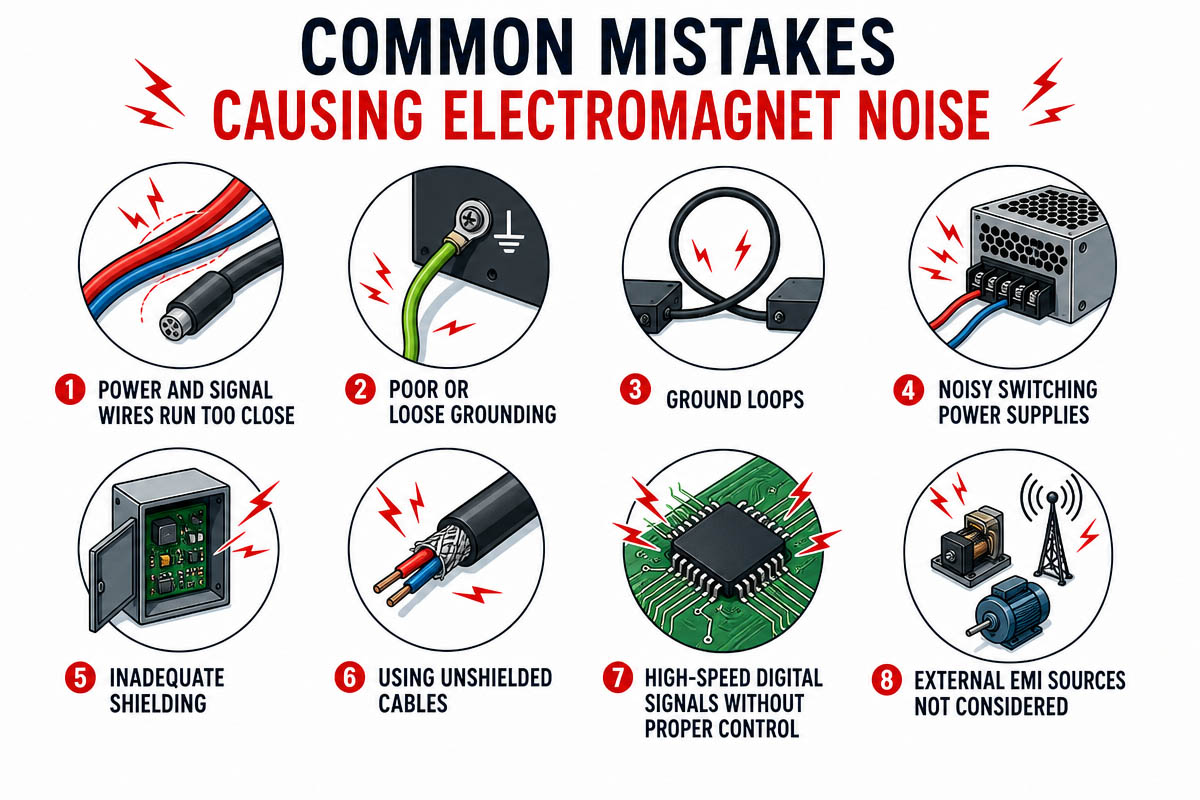
Do not commit these design errors:
7.1 Powerful magnetic force
The more force, the more impact and vibration.
7.2 Incorrect stroke selection
The longer stroke increases the distance of movement and impact energy.
7.3 Manufacturing tolerance
Unstable movement is caused by loose clearance.
7.4 Incorrect voltage selection
Overvoltage will increase the force, heat and noise.
7.5 Lack of mechanical damping
Without cushioning, the impact noises are inevitable.
Chapter 8: FAQ About Electromagnet Noise Reduction
8.1 Why does my electromagnet buzz or hum?
This buzzing sound of the electromagnet is caused by magnetic vibration, unstable current, loose mechanical parts, or AC power frequency fluctuations. When the magnetic field rapidly changes, the core and plunger may vibrate and generate noise. To improve electromagnet noise reduction performance, the magnetic circuit design is improved, the power supply is changed to DC, mechanical tolerances are optimized, and driving current is controlled.
8.2 How to reduce the operating noise of an electromagnet?
There are several methods to get an electromagnet. Noise Reduction:
air gap optimization between magnetic parts;
addition of damping materials or rubber buffers;
plunger and core machining accuracy improvement;
impact speed reduction at the end position;
PWM current control;
magnetic materials selection;
The best results are usually achieved by combined mechanical, electrical, and material improvements.
8.3 Will the use of DC power reduce electromagnet noise?
Yes. DC electromagnets are usually quieter than AC electromagnets because the magnetic force is more stable. AC electromagnets suffer from fluctuations of magnetic field at the power frequency that cause vibrations and humming noises. In applications requiring silent operation, DC electromagnets with optimized control circuits are used more frequently.
8.4 Can noise be reduced by changing the electromagnet material?
Yes. Noise & Vibration—Material selection is an important aspect. The use of high-quality magnetic materials with improved permeability will reduce magnetic losses and improve stability. Special low-friction surface coating for the plunger—nickel plating—will help to reduce friction noise.
8.5 Why does my solenoid click loudly when I turn it on?
If the plunger hits the end stop too forcefully, the clicking noise appears. Causes are:
excessive stroke length;
fast plunger activation speed;
absence of cushioning structure;
inappropriate spring force;
bad mechanical alignment;
The addition of a damping buffer, spring design tuning, and stroke optimization will greatly improve the reduction of electromagnet noise.
8.6 Can PWM control reduce the electromagnet noise?
Yes, PWM control will reduce the electromagnet noise by appropriate current control of the coil. It is common to activate the solenoid with a high current and then reduce the current after the plunger reaches the desired position.
8.7 Will manufacturing precision affect the electromagnet noise?
The more precise the manufacturing, the more vibration and noise. The movement may become uneven if the plunger, core, or housing is out of alignment or has excessive clearance. Precore, machining, tight tolerances, and surface finishing will improve movement and reduce electromagnet noise.
8.8 Which factors should be considered in low-noise electromagnet design?
In the design of a low-noise electromagnet, the following should be considered:
magnetic circuit optimization;
proper air gap selection;
accuracy of plungers’ guidance;
balance of spring force;
damping material selection;
coils driving method;
stability of voltage;
heat regulation;
Considering these factors at the design stage will ensure noise reduction, increased life, and reliability of industrial and consumer devices.
Chapter 9 : Conclusion
To reduce electromagnet noise effectively, the integrated engineering approach is required, including mechanical design, electrical control, and materials.
The best techniques include air gap optimization, machining accuracy improvement, current control, materials selection,, and damping additions.
For engineers designing electromagnets, solenoids, and actuators, noise reduction is not only a user comfort issue but also a product reliability and efficiency issue.
These proven electromagnetic noise reduction techniques provide the opportunity to design modern electromagnetic devices with powerful force output and quiet operation.
