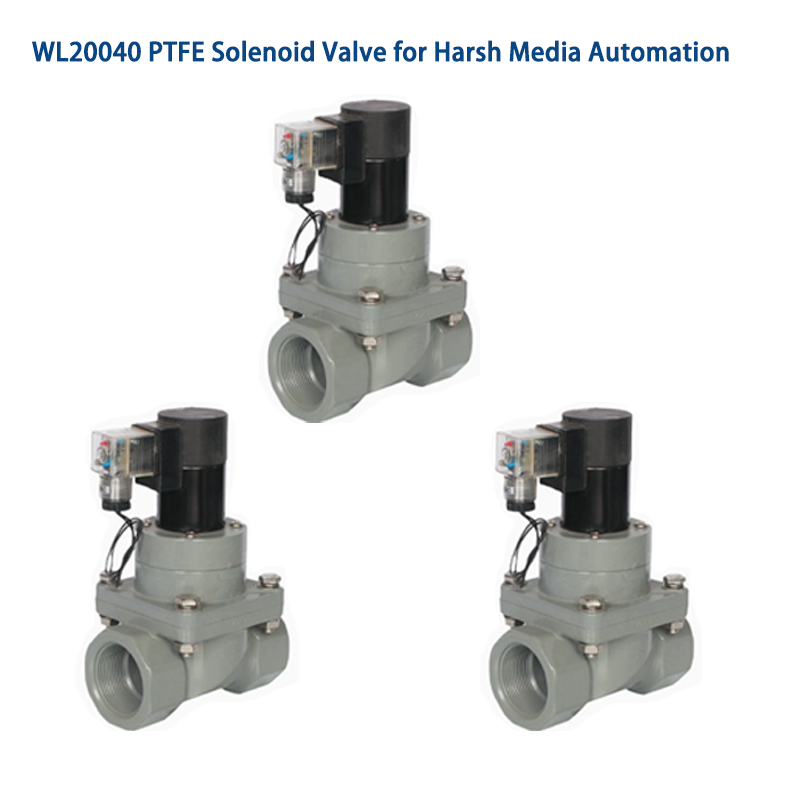
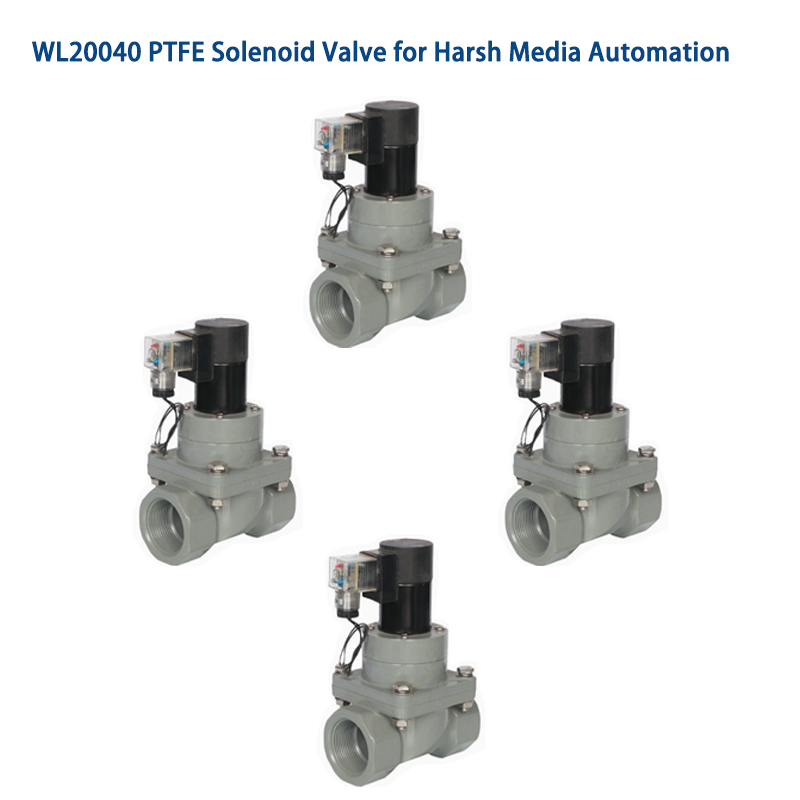
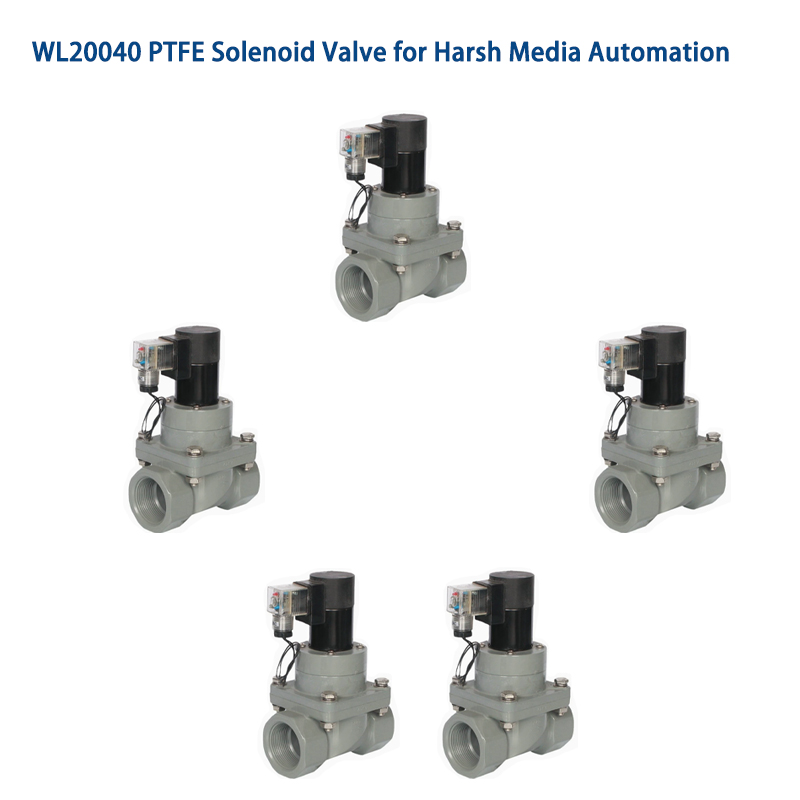
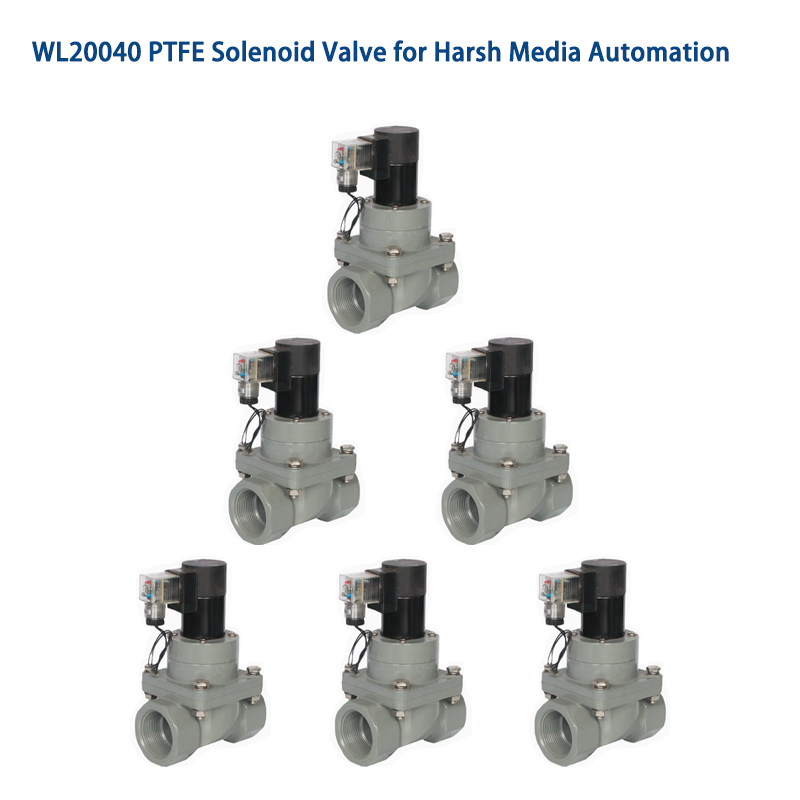
Laktawan ang slider ng larawan
PTFE Solenoid Valve for Chemical Manufacturing Overview
PTFE Solenoid Valve for High Purity Handling Automation
PTFE Solenoid Valve for Corrosive Liquid Automation
PTFE Solenoid Valve for Laboratory Equipment Automation
PTFE Solenoid Valve para sa Paggamit ng Serbisyo na Lumalaban sa Kaagnasan
PTFE Solenoid Valve for Chemical Process Control Design

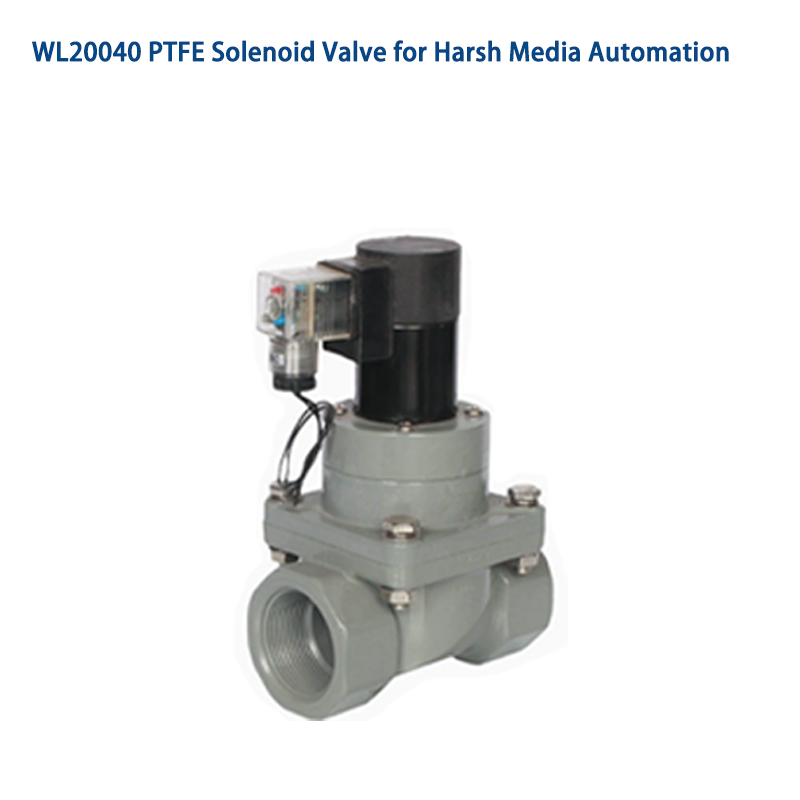
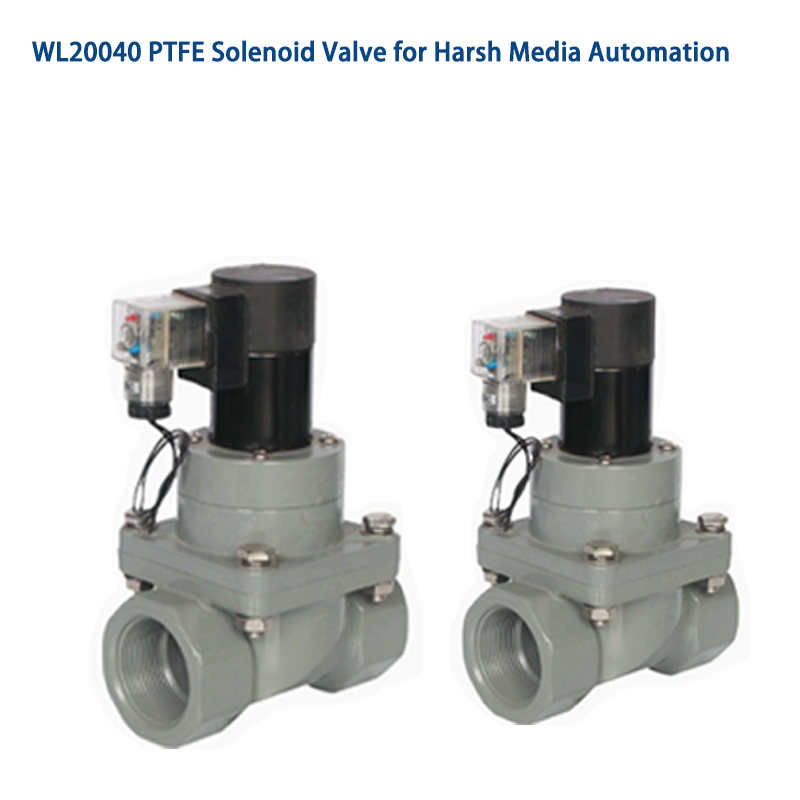
WL20040 PTFE Solenoid Valve para sa Harsh Media Automation

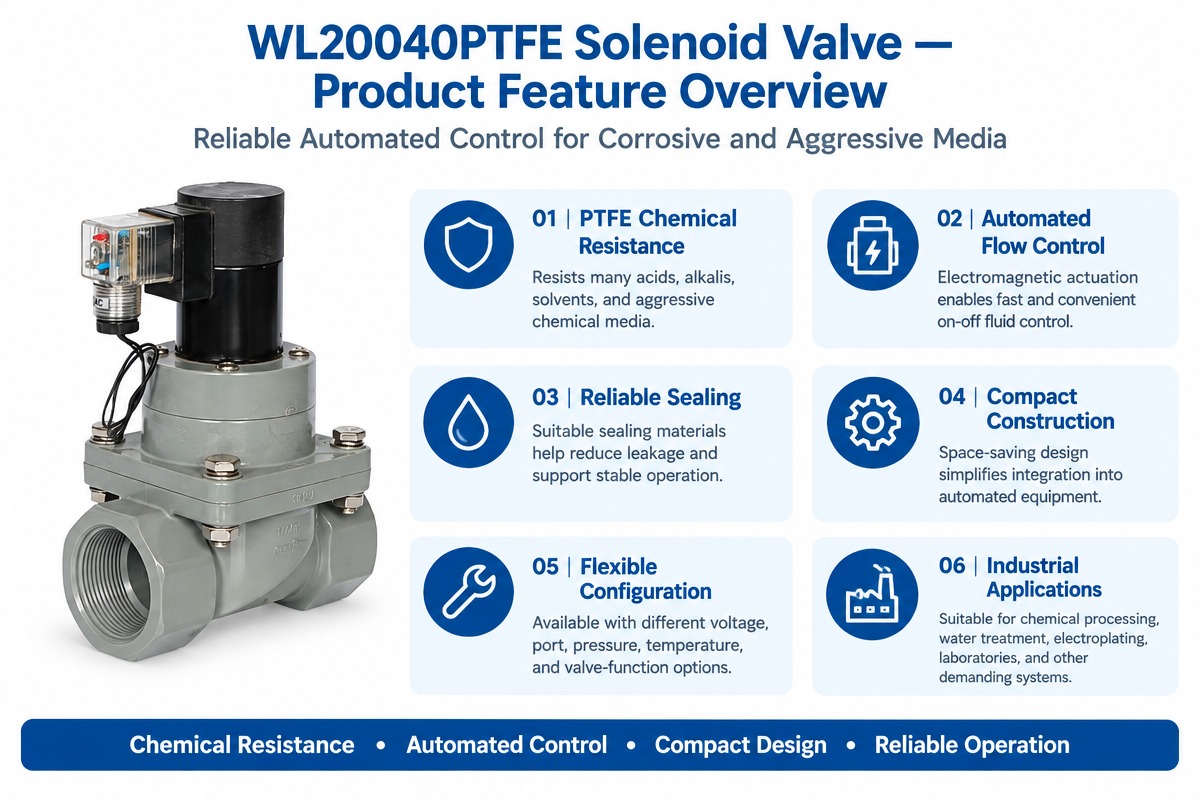
The PTFE Solenoid Valve is a control valve using electric energy to provide accurate on/off control of liquids and gases in demanding industrial applications. PTFE components ensure high resistance to corrosive chemicals, acids, alkalis, solvents and media. It unites automatic actuation with positive sealing providing the ability to control the fluid flow remotely and efficiently. PTFE valve construction reduces corrosion-related maintenance and increases service life of a valve being matched with the process medium, pressure, temperature and flow. Typical applications include chemical processing, water treatment, electroplating, semiconductor manufacturing, pharmaceutical production, laboratory equipment, and industrial cleaning. Compact design makes PTFE solenoid valves suitable for automated equipment in limited space for installation. Proper specification ensures reliable media isolation, switching performance and process control. Matching of the voltage, pressure, temperature, seal material and installation procedure are vital for the stable performance and to reduce leakage, downtime and early replacement in industrial continuous operations.

PTFE Solenoid Valve Description

What Is a PTFE Solenoid Valve?

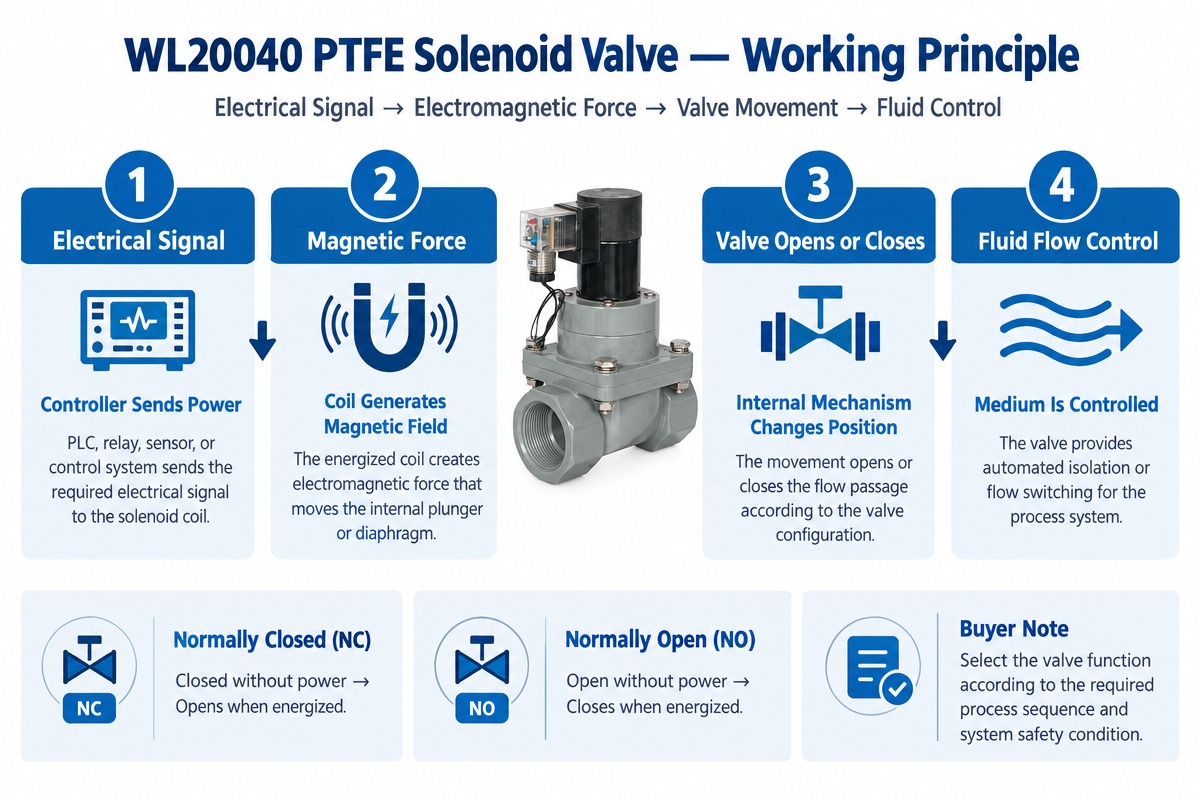
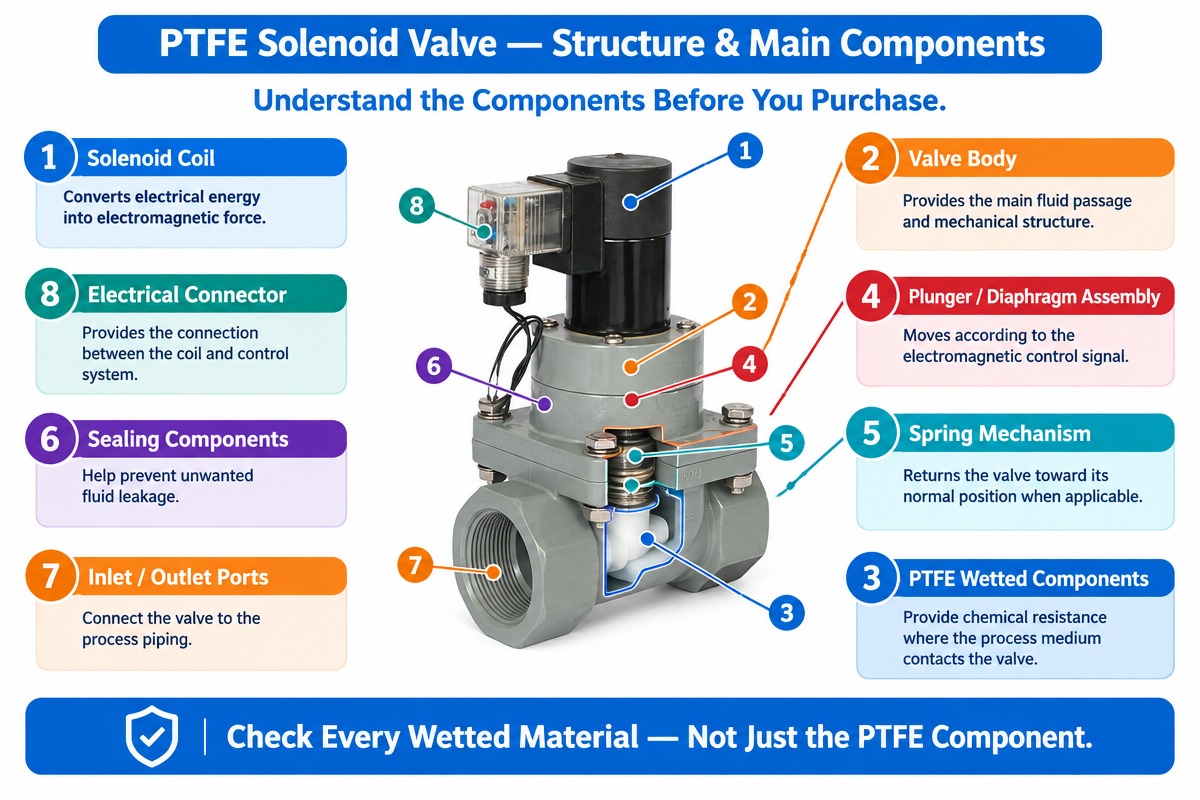
The PTFE solenoid valve is a valve actuated by the electric power via an electromagnetic coil for opening and closing of the internal plunger or diaphragm. PTFE (Polytetrafluoroethylene) is a material used for wetted parts, liners or seals. PTFE has a high resistance to corrosive chemicals and aggressive media. The electrical signal is supplied to the coil generating magnetic force moving the mechanism to open or close the fluid passage. When the power is off the valve is returned back to its normal position due to spring or pressure difference as provided by the design. PTFE solenoid valves are widely used for chemical processes, water treatment, electroplating and laboratory systems with the requirement of reliable fluid shut-off.

How Does a PTFE Solenoid Valve Work?

PTFE Solenoid Valve is an electric signal transformed to the mechanical actuation of the valve.

The control system supplies the voltage to the solenoid coil generating an electromagnetic field. The magnetic force drives an internal plunger or diaphragm that changes the position of the valve opening or closing the fluid passage.

For the normally closed (NC) valve the fluid passage is closed when the coil is de-energized. Applying the voltage to the coil the valve opens allowing the fluid flow.

In case of the normally open (NO) valve the fluid passage is open and the valve closes when the voltage is applied to the coil.

The valve returns to its normal position when the voltage signal is turned off either due to a spring action or the pressure difference as per design.

PTFE materials are in contact with the process medium and provide high chemical resistance. Correct operation requires compatibility of materials, pressure, temperature, voltage, flow rate and installation.

PTFE Solenoid Valve Video

PTFE Solenoid Valve Detail Display

PTFE Solenoid Valve Data Sheet

Tatak Weilong Model Number WL 20040
Na-rate na Boltahe (V) DC12V o 24V Na-rate na Power (W) 10W
work Mode Balbula ng Kontrol ng Hangin o Likido Presyon sa Paggawa (MPa) 60KPa
Bilis ng Daloy ng Hangin 21 litro/minuto I-reset ang Oras(mga) 1 S Naka-on, 1 S Naka-off
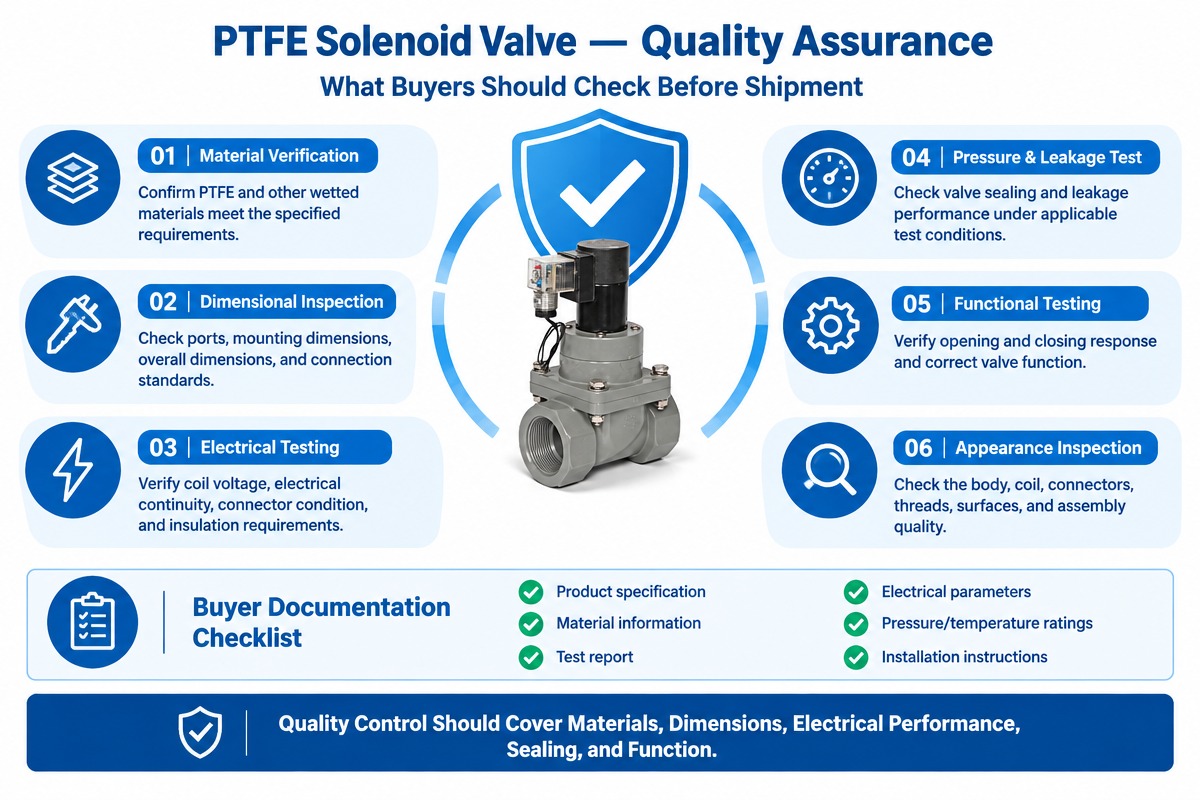
Buhay ng Serbisyo 200 Libo-libong Beses certification CE, ROHS, ISO9001,
Pintuan ng Tubo  loob: 4.0 mm Haba ng Kawad na Tingga (mm) 200 MM
I-install ang Estilo tornilyo Pagpapahintulot sa Dimensyon ยฑ 0.1 MM
Hindi nababasa Wala Pagkakabukod Class B
Hi-Pot Test AC 600V 50/60 Hz 2s Puwersang Paghawak na Hindi Nagpapasigla 0
Paggawa Temperatura -10 ยฐ C-100 ยฐ C Duty Cycle 1 100-%
Lalim ng Sinulid (mm) / Kataga ng Pagbabayad TT, o LC Sa Paningin
Halimbawang Order Oo garantiya 1 Taon
MOQ 1000 pcs Supply para sa Kakayahang 5000 piraso kada linggo
Oras ng Paghahatid 30 Araw Port of Loading Shenzhen

Why are PTFE Solenoid Valves Becoming so Popular?

PTFE Solenoid Valves are gaining popularity because of increased demand for reliable automated control in chemically aggressive fluids. The material is useful in the applications where traditional materials can have a shorter life, because of high resistance to many acids, alkalis, solvents and corrosive process media.

Valves can interface with PLCs, sensors, controllers and automated production equipment using electrical actuation. Compact design allows integration in space constrained systems and provides fast and repeatable on-off control.

Increased demand is also supported by chemical processes, water treatment, semiconductor manufacturing, electroplating, pharmaceutical production and laboratory automation. PTFE valves are adapted to diverse operating conditions due to advanced material combination, seals, coils and connections.

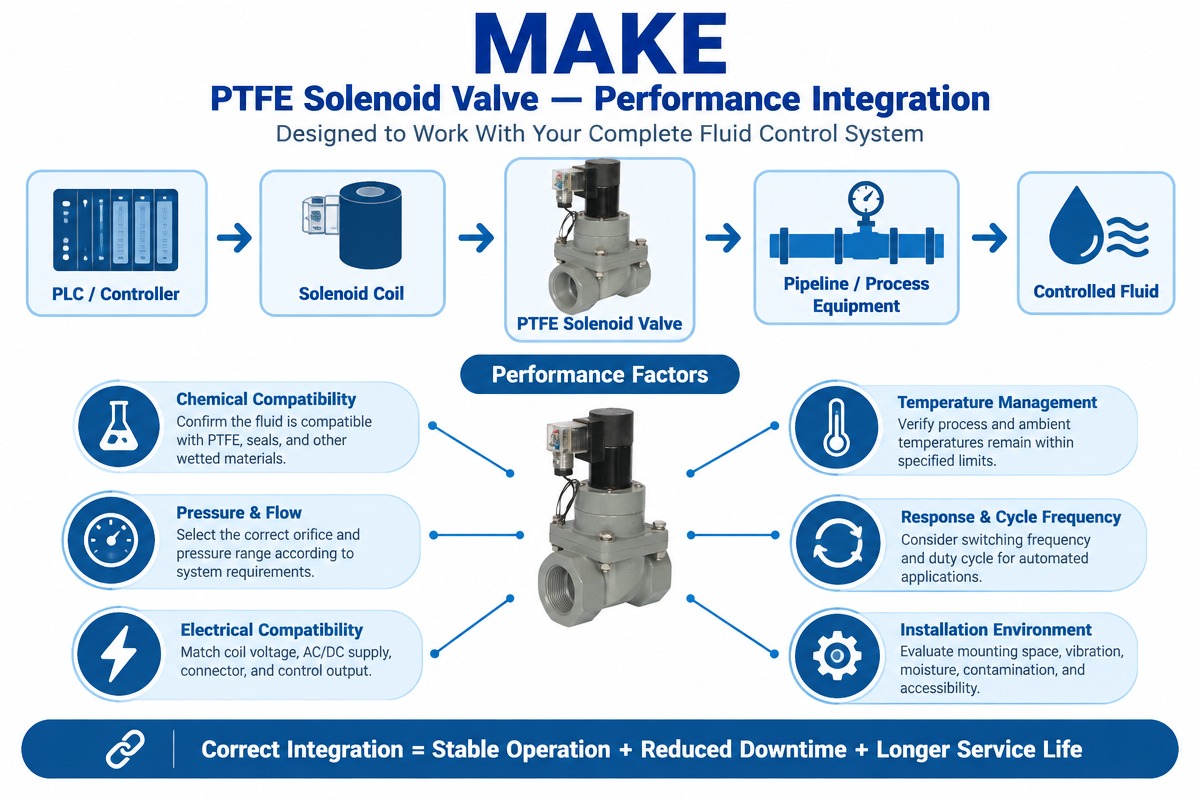
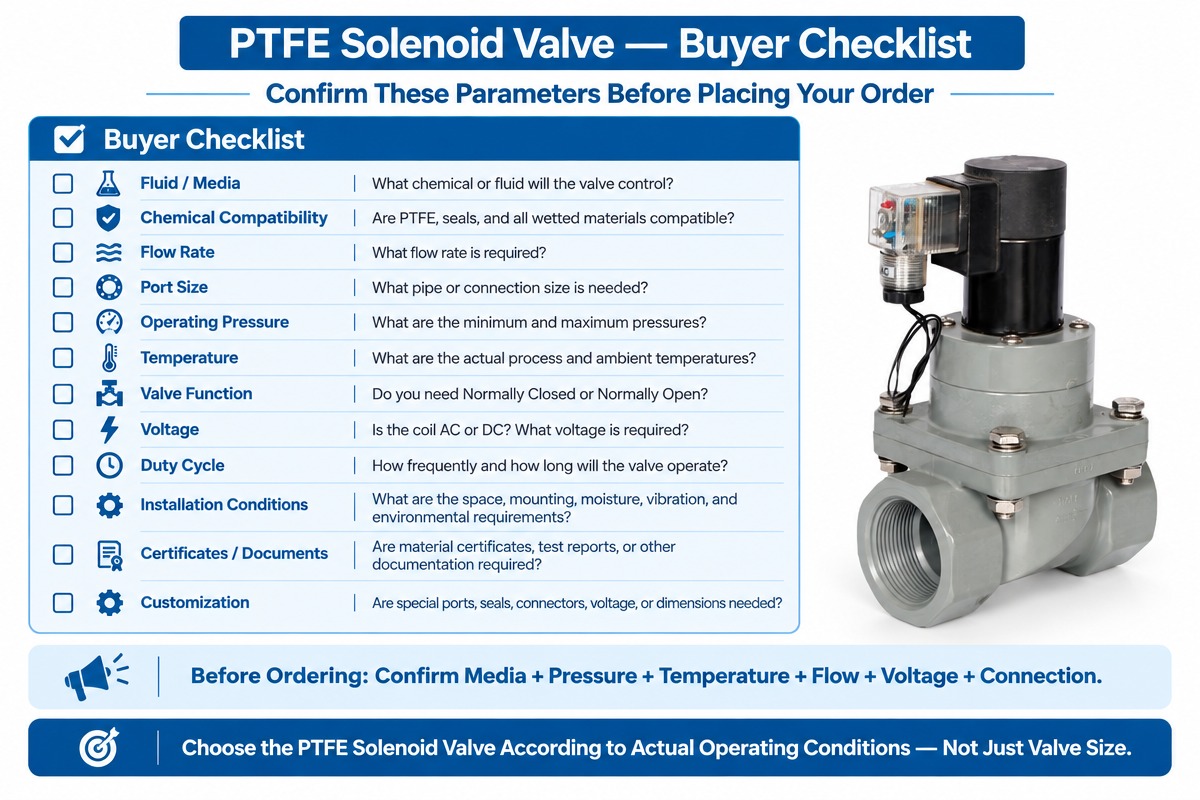
But not every PTFE solenoid valve is suitable for every application. The engineers have to verify the chemical compatibility, pressure, temperature, flow, voltage, duty cycle and installation conditions before selection.

PTFE Solenoid Valve Applications

PTFE Solenoid Valve for Precise Flow Control Automation

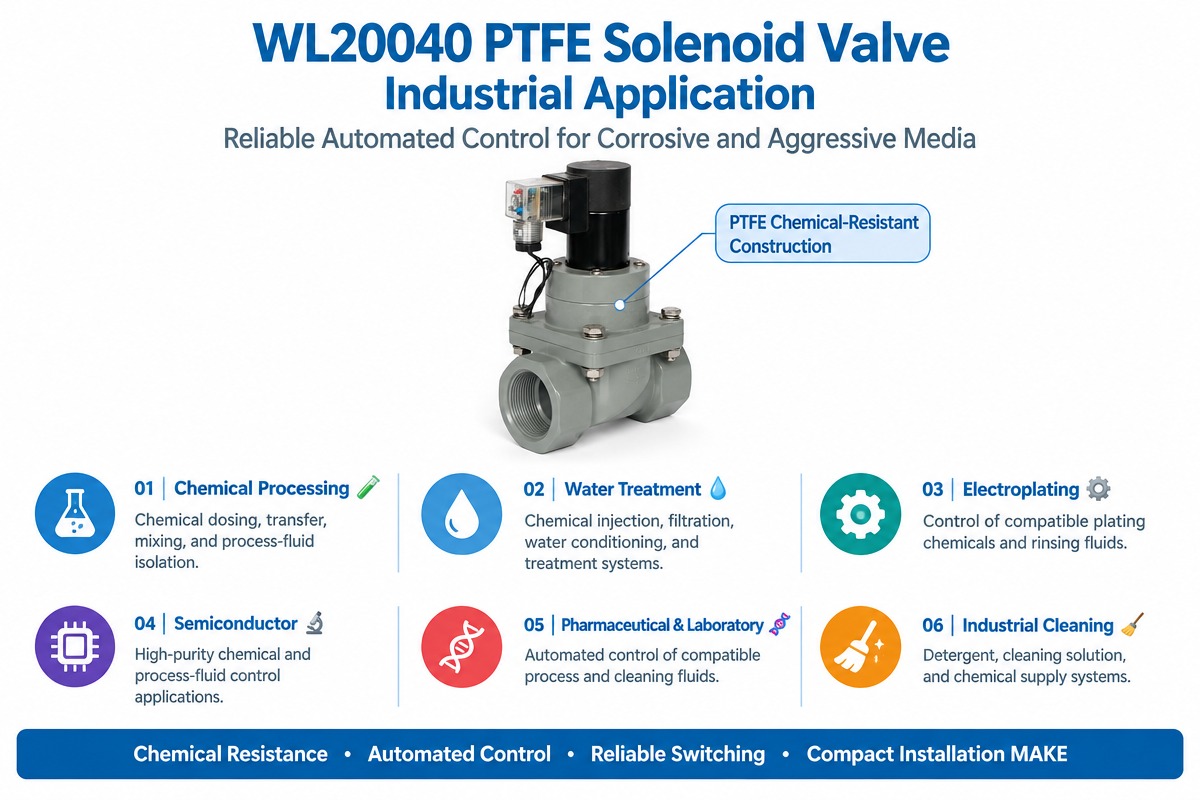
PTFE Solenoid Valves are widely used in the applications requiring automated fluid isolation where the process medium can be chemically aggressive. In the chemical processing plants the valves control acids, alkalis, solvents, cleaning fluids and other compatible chemicals in dosing, transfer, mixing and equipment isolation systems.

Water and wastewater treatment equipment use solenoid valves to control chemical injections, filtration and process-fluid switching. Corrosion resistant valves control treatment chemicals and rinsing solutions in electroplating systems. High purity fluid control is used in semiconductor manufacturing and laboratory equipment where material compatibility and cleanliness are important.

PTFE valves, when properly designed, can control chemicals, cleaning and utility-fluid control in pharmaceutical and biotech equipment. The solenoid valves are used in industrial cleaning machines to automate the supply of detergents, rinse water and chemicals. Useful application is the PTFE solenoid valves in printing, analytical instruments, surface treatment, battery production and special automation equipment.

The success of the application depends on the suitability of the valve construction to the actual medium. Proper sizing and installation will maintain the stable flow control and reduce leakage and maintenance during continuous operation. Many automated systems use these valves in the vicinity of pumps, dosing units, reactors, tanks or analytical modules to obtain required localized flow isolation and sequence.

PTFE Solenoid Valve Adv. & Disadv

PTFE Solenoid Valve for Chemical Fluid Isolation Design

Advantages and Disadvantages of PTFE Solenoid Valve

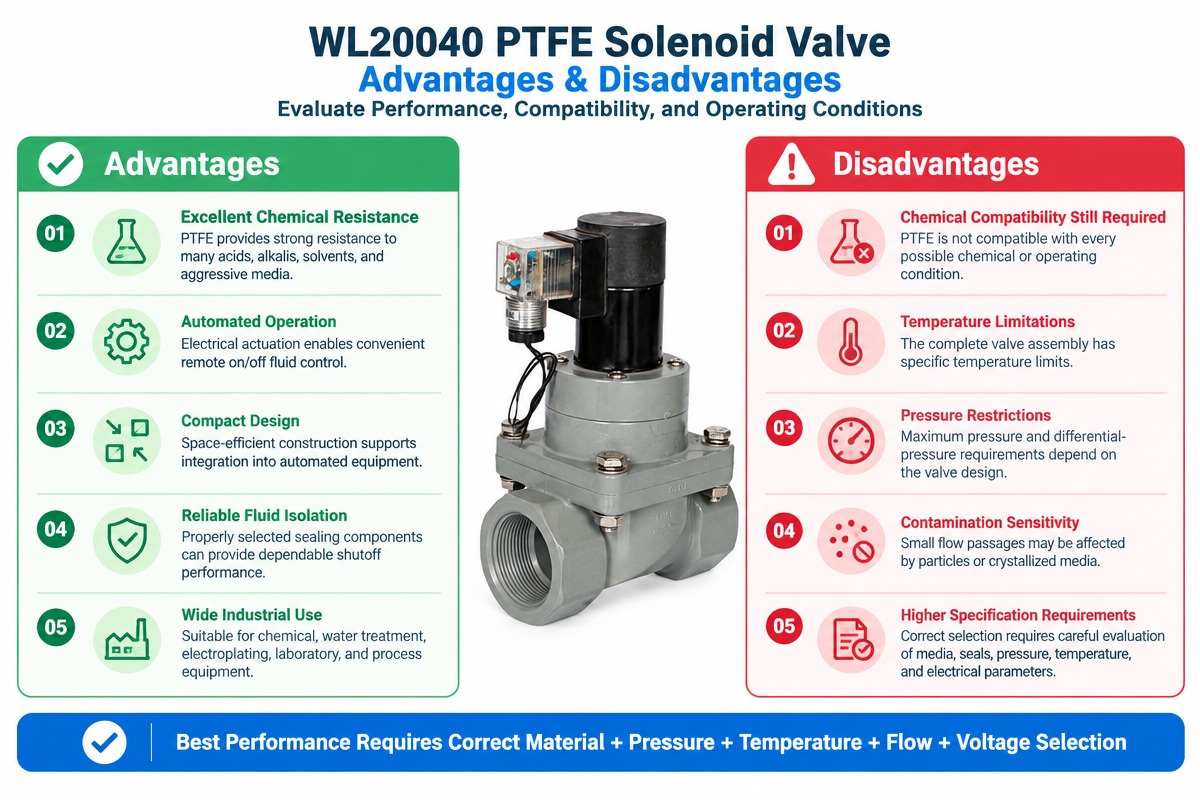
PTFE Solenoid Valves have a lot of advantages in controlling fluids. Main advantage is high resistance to the wide range of corrosive chemicals, acids, alkalis and solvents which help to provide corrosion protection of the wetted parts. Electrical actuation provides automatic on/off control and thus easy integration with PLCs, sensors and process controllers. Space-saving design saves the installation space and the fast switching allows effective process sequencing. PTFE materials also reduce corrosion-related maintenance when properly matched with the process medium.

But there are disadvantages of PTFE Solenoid Valves. PTFE is not compatible with all chemicals, temperatures, pressures and operating conditions. Application specific material verification is still required. Because of the materials and construction the cost of the valve can be higher than standard valves. The design can have temperature, pressure or flow capacity limitations. Fine orifice passages are vulnerable to particles, crystallization or contamination. Seals, diaphragms and other non-PTFE components can affect the overall compatibility. Incorrect sizing can cause pressure drop, slow response or unstable operation.

Prior to selection of a PTFE solenoid valve, the engineers have to consider media compatibility, flow requirements, pressure, temperature, electrical specifications, maintenance access and total operating cost. With the right model specified the corrosion resistance, automation, compact installation and maintenance can be achieved.

PTFE Solenoid Valve for Automated Chemical Process Tips

PTFE Solenoid Valve Troubleshooting

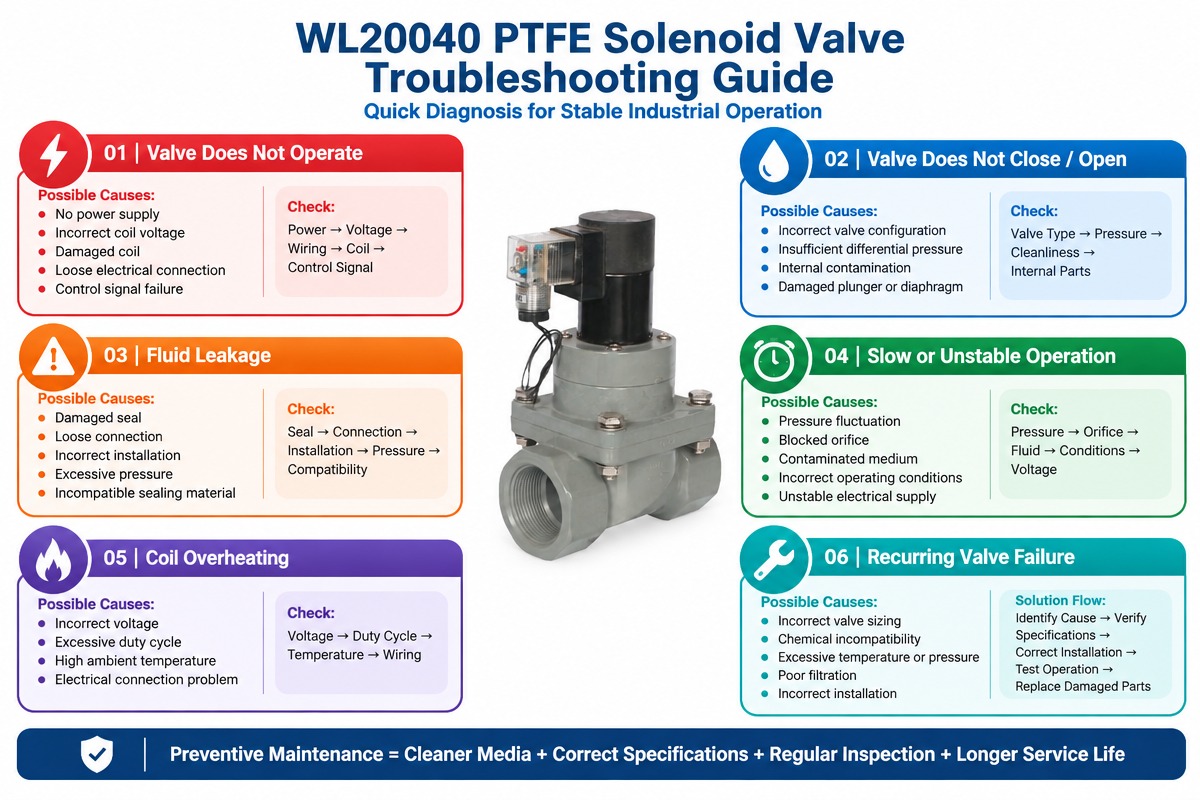
PTFE solenoid valve troubleshooting starts with isolation of the valve for safety and verifying the operating conditions. If the valve doesnโ€™t open or close, check power supply, coil voltage, wiring, connector and control signal. Measure the coil according to the electrical specifications of the manufacturer and replace damaged components if necessary.

If the valve leaks, check the seal, connection, valve body and installation conditions. Verify that the medium is compatible with PTFE and selected sealing materials. Check the high pressure, incorrect flow direction, damaged sealing surfaces or presence of foreign particles.

If the operation is slow or erratic, check the inlet pressure, differential pressure, temperature and flow requirements. If the contamination is suspected, clean the valve using cleaning methods compatible with PTFE and other internal materials. Verify that the orifice is not partially blocked.

If the coil temperature becomes too high, check voltage, duty cycle, ambient temperature and electrical connection. If you hear or feel any unusual noise or vibration, check the mounting, pressure fluctuations, loose fittings and flow conditions.

Many failures can be caused by improper sizing, incompatible media, temperature too high, contamination or unsuitable operating conditions. Symptoms and operational data should be recorded prior to replacing parts. After maintenance check the normal operation of the valve. Inspection and filtration can reduce the recurrent failures.

FAQ

1. What is PTFE Solenoid Valve?

PTFE Solenoid Valve is a kind of electrically operated valve which automatically controls fluid flow. PTFE parts have a very high resistance to most of the aggressive chemicals, acids, alkalis and solvents thus making the valve suitable for difficult industrial applications.

2. What kinds of fluids are PTFE Solenoid Valves suitable for?

The valves are suitable for a variety of chemically aggressive fluids such as compatible acids, alkalis, solvents, chemicals and treated water. But the fluid compatibility depends on the concentration, temperature, pressure and the nature of the materials used in sealings and other wetted parts.

3. Why are solenoid valves manufactured in PTFE?

PTFE has excellent chemical resistance and non-sticking characteristics. This material can help protect the wetted parts from corrosion and chemical aggression. Thus PTFE can be useful in chemical processing, water treatment, electroplating, labware and many other applications where aggressive fluids are involved.

4. Is PTFE Solenoid Valve applicable in high temperatures?

PTFE has good temperature resistance, but the maximum operating temperature is defined by the entire valve design. The coil, seals, diaphragm, valve body and other materials may have different temperature resistance levels. Before installation always refer to the manufacturerโ€™s data on the operating temperature range.

5. What should I know about choosing PTFE Solenoid Valves?

There are several parameters to consider when choosing the valve such as type of fluid, chemical concentration, flow rate, operating pressure, temperature, port size, voltage, valve purpose, seal material and the duty cycle. Appropriate matching of these parameters will provide reliable operation and long life of the device.

6. How do Normally Open and Normally Closed PTFE Solenoid Valves differ?

Normally Closed (NC) valve is closed without the electrical power supplied to the coil and opens with the current supplied to the coil. Normally Open (NO) valve is open in a de-energized state and closes when energizes. The correct choice depends on the control sequence and failure mode.

7. Why my PTFE Solenoid Valve leaks?

There may be several causes of the leaking problem โ€“ damaged sealings, improper installation, high pressure, incompatible media, contamination or worn-out internal parts. First check your connections, sealing surfaces, operating conditions and chemical compatibility of the media before replacement of the parts.

8. How to service my PTFE Solenoid Valve?

Regular checking of the valve, its electrical connections, sealings, fittings and operating conditions is recommended. Try to avoid contamination of the flow path and use proper filtering if necessary. Regular monitoring of pressure and temperature and replacement of worn out parts with compatible ones will ensure reliable operation of the device.

Paano Pumili ng PTFE Solenoid Valve

Ang pagpili ng PTFE Solenoid Valve ay hindi lamang tungkol sa pagpili ng materyal na lumalaban sa kalawang. Ang unang hakbang ay ang pagtukoy sa fluid, kabilang ang konsentrasyon, temperatura, lagkit, kalinisan, at kemikal na komposisyon. Susunod, tiyakin ang pagiging tugma ng medium sa PTFE at lahat ng basang materyales ng selyo. Pagkatapos, kalkulahin ang kinakailangang flow rate at piliin ang tamang orifice at laki ng port. Ang sobrang laki ay maaaring makabawas sa kahusayan ng kontrol habang ang maliit na laki ay maaaring lumikha ng mataas na pressure drop at makabawas sa kapasidad ng sistema.

Ang pagsuri sa saklaw ng presyon ng operasyon kabilang ang minimum at maximum na presyon at ang pagkakaiba ng presyon ay isang mahalagang yugto. Mahalaga rin ang temperatura dahil ang balbula, mga selyo, coil at mga nakapalibot na materyales ay kailangang gumana sa loob ng kanilang mga rated na limitasyon. Piliin ang normally closed o normally open na operasyon ayon sa control logic at mga kinakailangan sa kaligtasan ng kagamitan.

Ang mga espesipikasyon ng kuryente ay kailangang tumugma sa sistema ng kontrol. Tiyakin ang boltahe ng coil, suplay ng AC o DC, konsumo ng kuryente, uri ng konektor, mga kinakailangan sa insulasyon at mga magagamit na output ng PLC o relay. Kung inaasahan ang madalas na paglipat, tiyakin ang duty cycle at ang tagal ng serbisyo.

Kailangang mapatunayan ang wastong mga kondisyon ng pag-install tulad ng posisyon ng pagkakabit, pagkakaroon ng espasyo, pamantayan ng koneksyon ng tubo, pagkakalantad sa kapaligiran, panginginig ng boses at mga kinakailangan sa proteksyon. Kung ang balbula ay ilalagay sa labas o sa lugar na may washdown, piliin ang naaangkop na enclosure at proteksyon ng koneksyon.

Panghuli, isaalang-alang ang direksyon ng daloy, oras ng pagtugon, mga kinakailangan sa pagtagas, access sa pagpapanatili, mga ekstrang bahagi at teknikal na suporta ng supplier. Humingi ng datos ng pagganap at pagiging tugma ng kemikal bago bumili. Ang pagpili ay isang balanse ng pagiging tugma ng media, presyon, temperatura, daloy, mga kinakailangan sa kuryente, mga kondisyon ng pag-install, pagiging maaasahan at gastos sa pagpapatakbo. Isaalang-alang din kung ang balbula ay gagamitin nang tuluy-tuloy, paulit-ulit o sa high-cycle na aplikasyon dahil ang pag-init ng actuator at pagkasira ng bahagi ay maaaring makaapekto sa buhay ng serbisyo. Para sa mga mapanganib o prosesong aplikasyon, beripikahin ang kinakailangang fail-safe na posisyon at diskarte sa kaligtasan ng sistema bago ang pag-install. Panatilihin ang mga talaan sa pagiging tugma ng materyal, mga rating ng kuryente, mga limitasyon ng presyon at mga agwat ng pagpapanatili upang ang pagpapalit ay maisagawa ayon sa mga orihinal na detalye.

Mga Karaniwang Pagkakamali sa Pagdidisenyo ng mga PTFE Solenoid Valve at Paano Iwasan ang mga Ito

Sa mga balbulang lumalaban sa kalawang, ang mga karaniwang pagkakamali sa disenyo ng mga sistema ng PTFE Solenoid Valve ay maaaring makabawas sa pagiging maaasahan.

Huwag pumili batay lamang sa materyal na PTFE. Tiyakin ang kemikal na pagkakatugma ng lahat ng basang bahagi, kabilang ang: mga seal, spring, diaphragm at mga fitting.

Hindi, huwag sukatin ang sukat batay sa diyametro ng tubo. Tukuyin ang flow rate, pressure drop at mga kondisyon ng pagpapatakbo bago piliin ang orifice.

Tiyakin ang mga kinakailangan sa presyon. Ang ilang disenyo ng solenoid valve ay nangangailangan ng isang partikular na pagkakaiba sa presyon sa balbula para sa maaasahang operasyon.

Tiyakin ang mga pangangailangang elektrikal. Tiyakin ang boltahe ng coil. Suplay ng AC/DC. Konsumo ng kuryente at duty cycle.

Tunay na temperatura ng pluido Huwag piliin ang balbula batay lamang sa temperatura ng paligid.

Kontrolin ang kontaminasyon. Ang maliliit na butas ay maaaring barahin ng mga deposito o kemikal o kristalisasyon.

Tamang pag-install. Sundin ang direksyon ng daloy kung naaangkop. Gamitin ang pagsasala kung kinakailangan.

Maglaan ng Daanan para sa Pagpapanatili Maglaan ng sapat na espasyo para sa inspeksyon, pagpapalit ng coil, pagpapanatili ng selyo, at mga koneksyon sa kuryente.

Dapat na maingat na suriin ang datos ng aplikasyon bago ang pangwakas na pag-apruba ng disenyo.
Kumuha ng Isang Libreng Quote Ngayon

Makipag-ugnayan sa Form

Kaugnay na Mga Produkto

Kaugnay na Balita

Panimula sa Tagagawa ng Pinch Valve Ang pinch valve ay isang mahusay na paraan upang kontrolin ang daloy ng likido o gas [โ€ฆ]

Mag-scroll sa Tuktok

Kumuha ng Libreng Quote Ngayon!

Makipag-ugnayan sa Form
Kung mayroon kang anumang mga katanungan, mangyaring huwag mag-atubiling makipag-ugnay sa amin.
Kultura ng Kumpanya ng Weilong Solenoid