How to select a heat-resistant solenoid valve
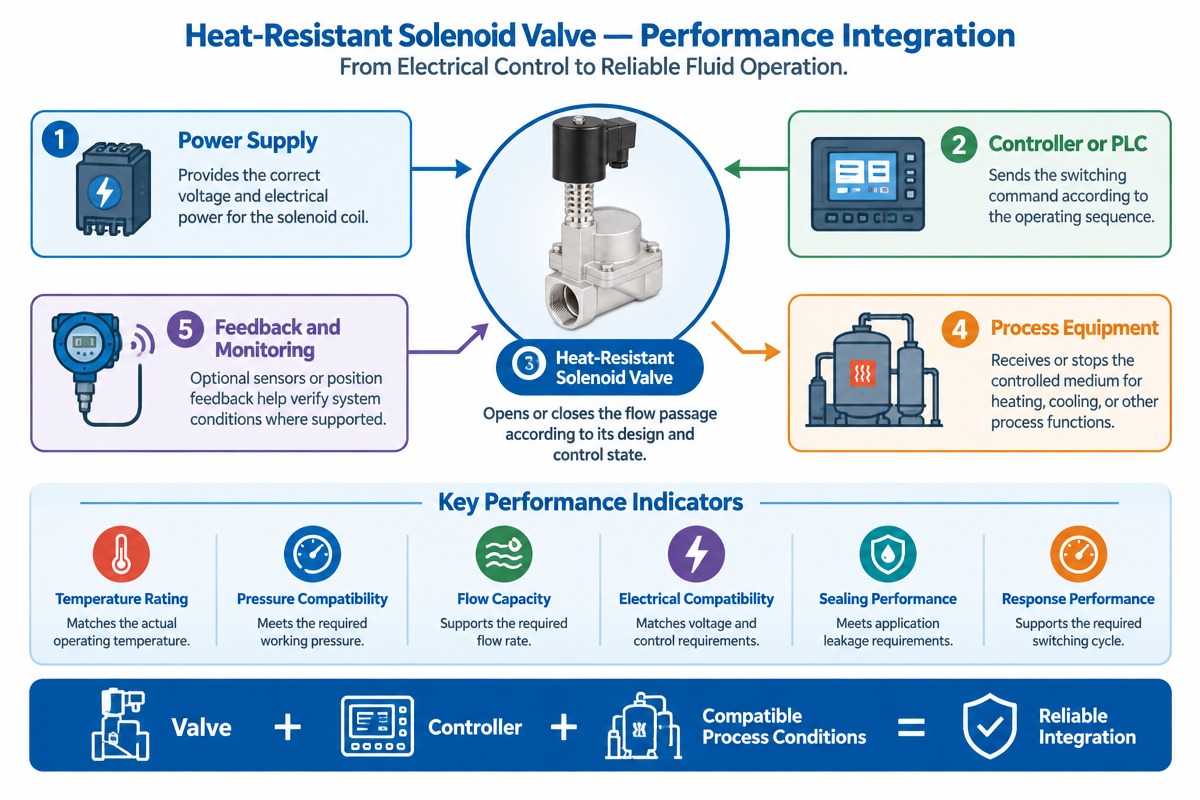
Selection of the heat-resistant solenoid valve implies a systematic evaluation of the operating conditions, media compatibility, and control. The following characteristics will help engineers to select an appropriate valve.
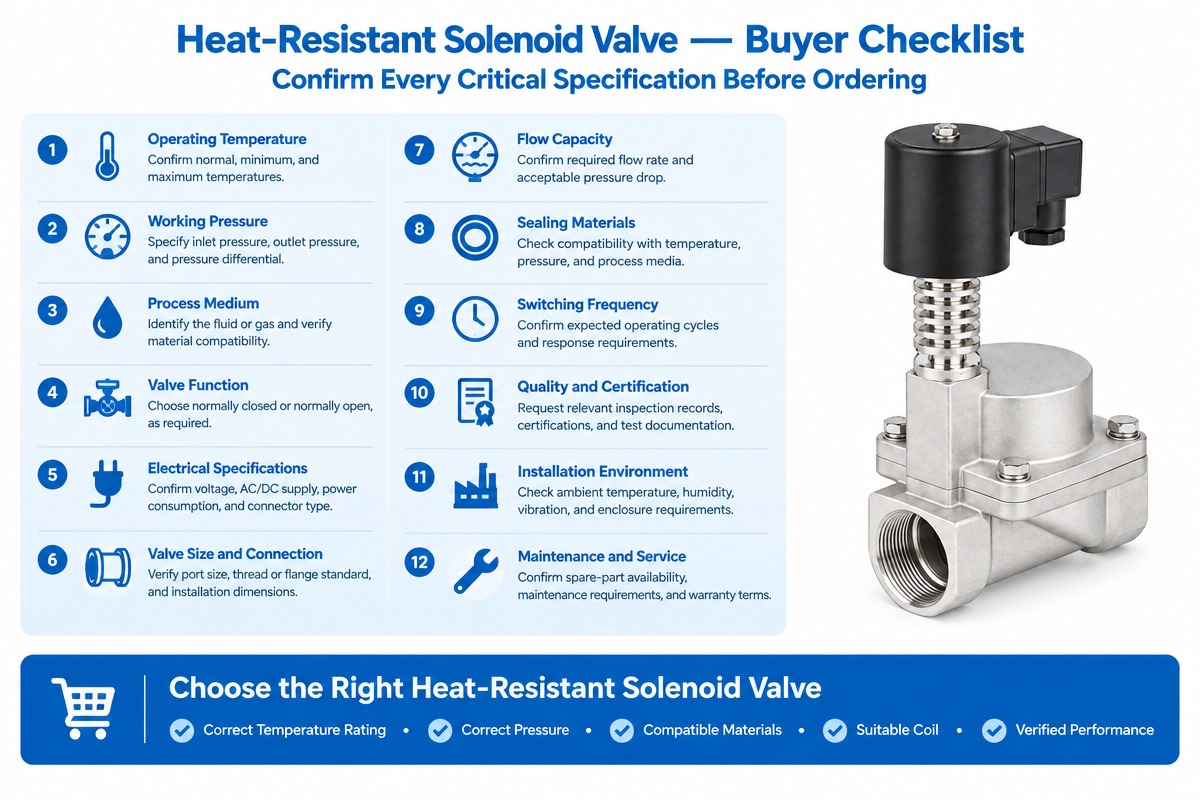
1.Determine the maximum operating temperature.
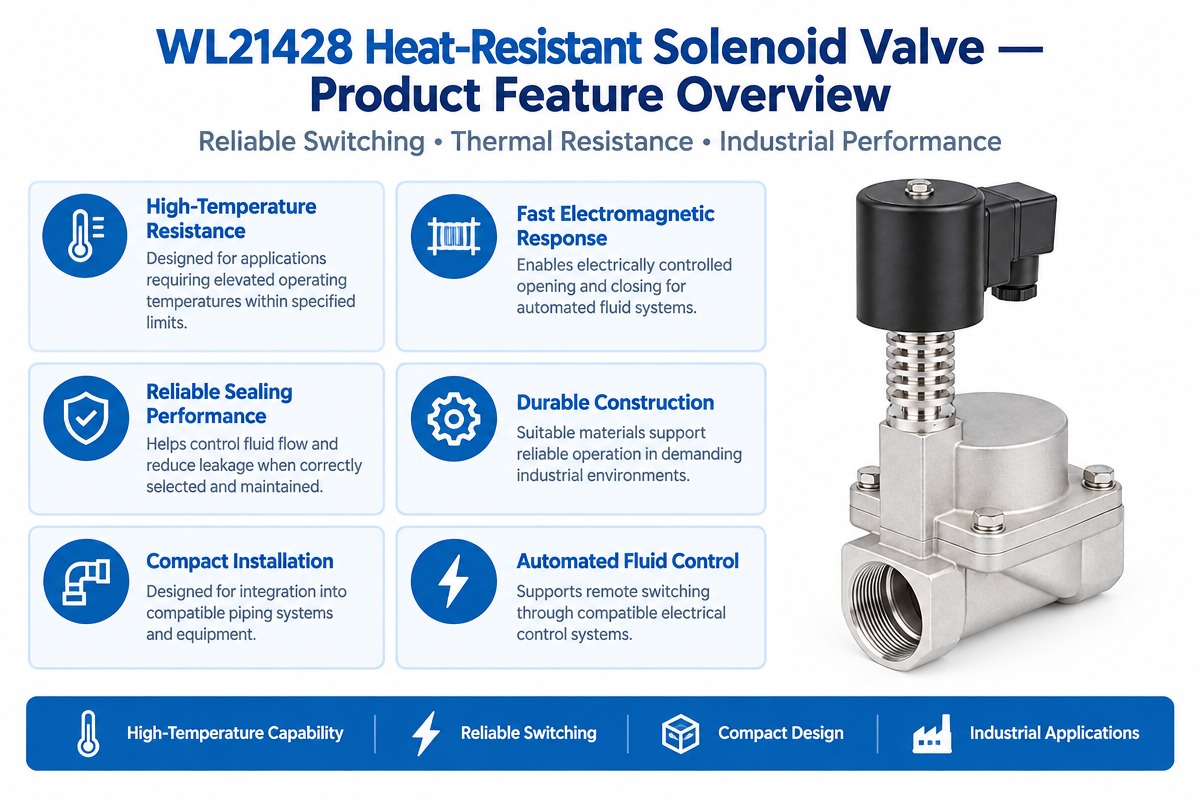
Check the normal, maximum, and peak temperature of the controlled medium and ambient environment. Find out the individual temperature rating of the valve body, seals, coil, and insulation. Do not assume that all the hot water valves can be used for steam.
2.Establish the operating medium.
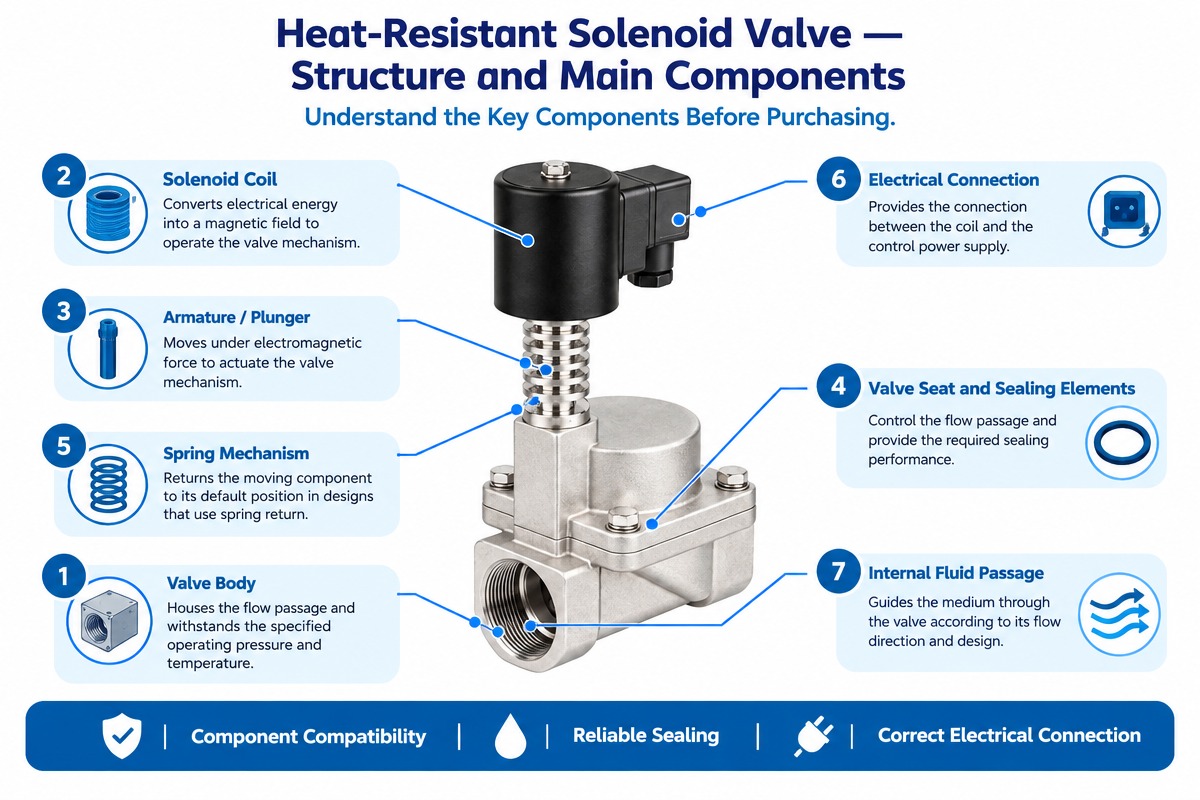
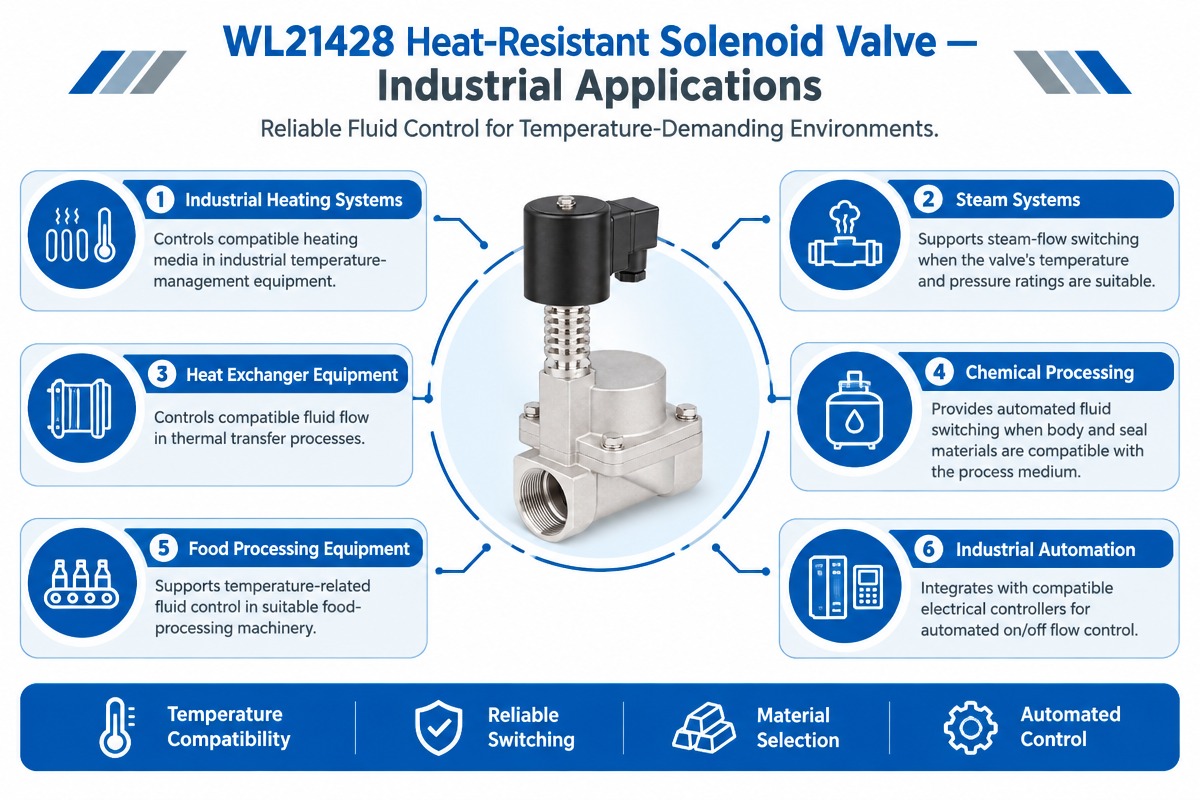
Decide whether the valve will work with the water, steam, thermal oil, chemicals, compressed air, or some other fluid. Check the compatibility of the body, seals, spring, and internal parts with the medium in elevated temperature.
3.Confirm the operating pressure.
Check the minimum and maximum inlet pressure, outlet pressure, and pressure differential. The valve may be either direct-acting or pilot-operated, therefore select a valve that will work at the full range of the pressure.
4.Calculate the required flow rate.
Establish the expected flow rate, pipe size, and allowable pressure drop. Select the valve with the appropriate flow coefficient and port size. Otherwise, you risk to have the too small or too large valve that will not work properly.
5.Make sure that the electrical specifications match.
Verify the required AC or DC voltage, power consumption, type of the connector, insulation, duty cycle, and environmental protection rating. Be sure that the coil can withstand the actual ambient temperature and conditions of constant energization.
6.Select the right configuration of the valve.
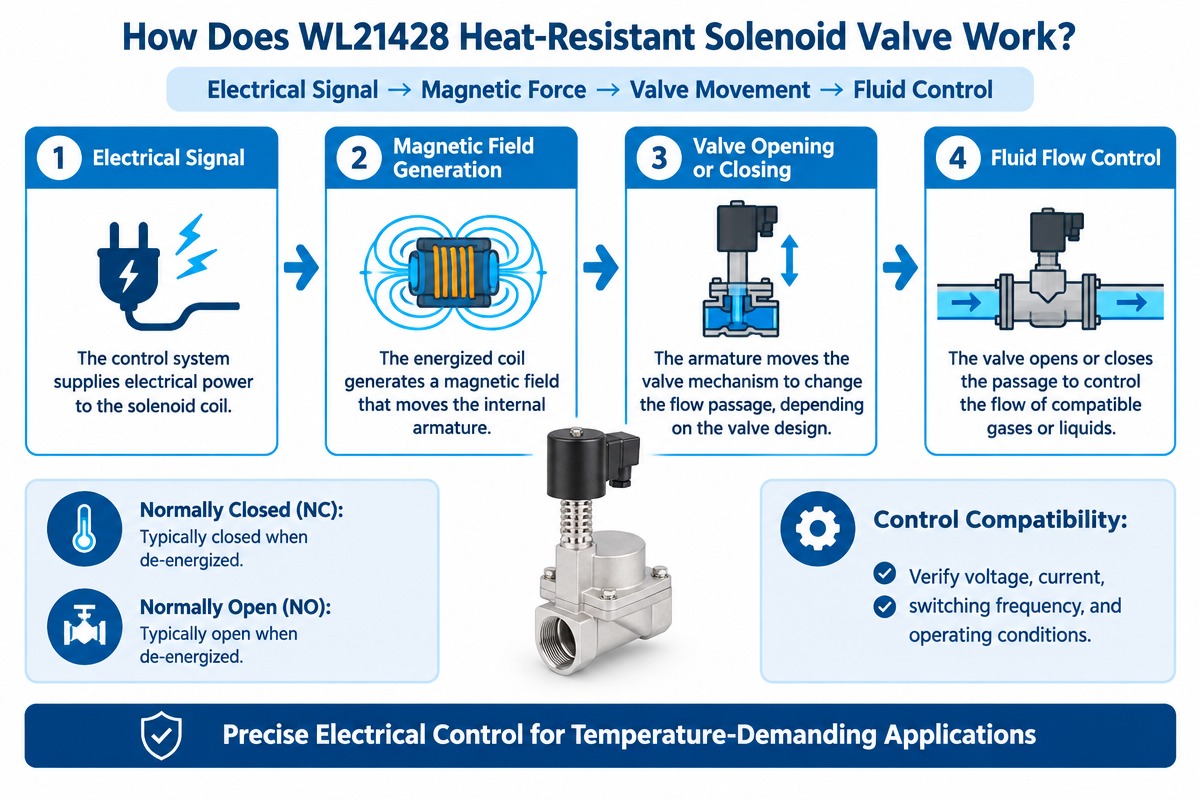
Choose the normally closed or normally open operation depending on the control sequence and the valve behavior in case of loss of power. Also, check flow direction, mounting, and response of the valve.
7.Evaluate installation and maintenance.
Check the connection standards, installation space, accessibility, filter requirements, and part availability. Consider the installation insulation or heat shield possibility.
8.Verify safety and technical documentation.
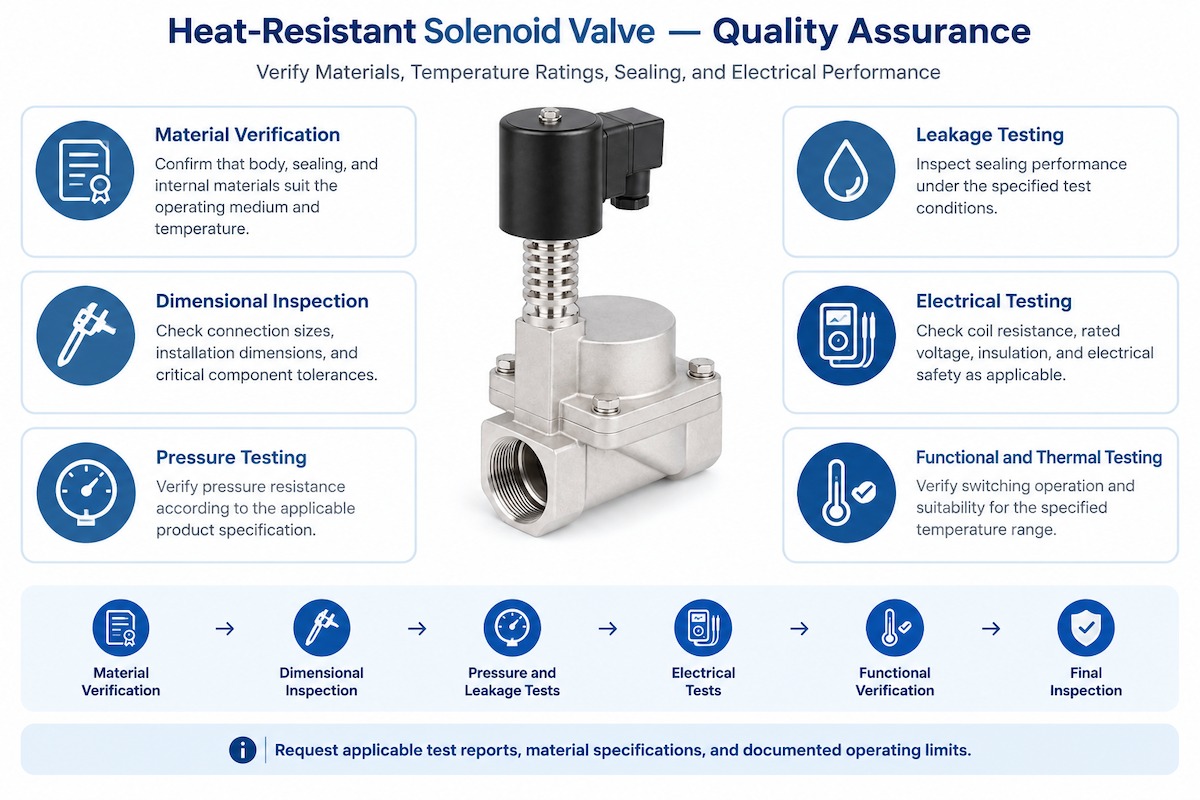
Obtain the dimensional drawing, performance curves, material specifications, temperature and pressure ratings, and compliance documentation. In critical systems, also consider the maximum leak rate and the consequences of the valve failure.
Finally, test the selected valve under operating conditions. This will help to ensure the proper operation of the valve.
Tips to avoid common mistakes during heat-resistant solenoid valve design
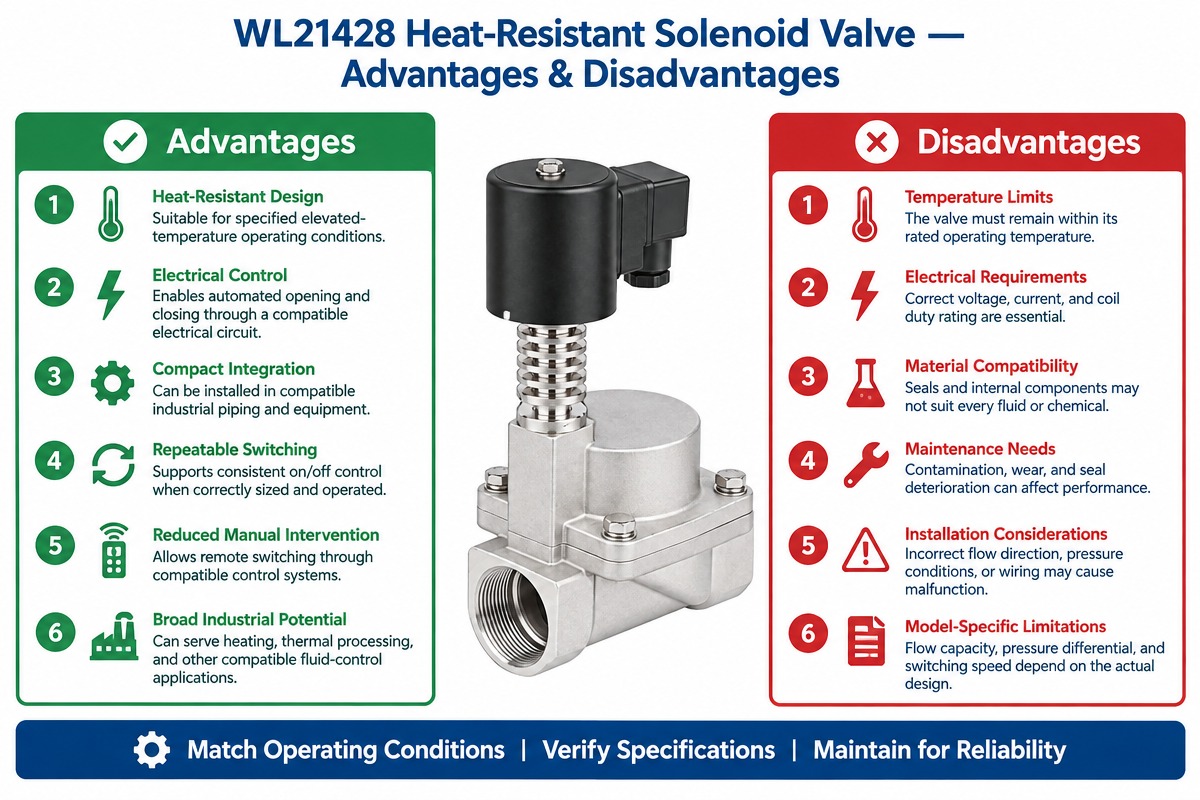
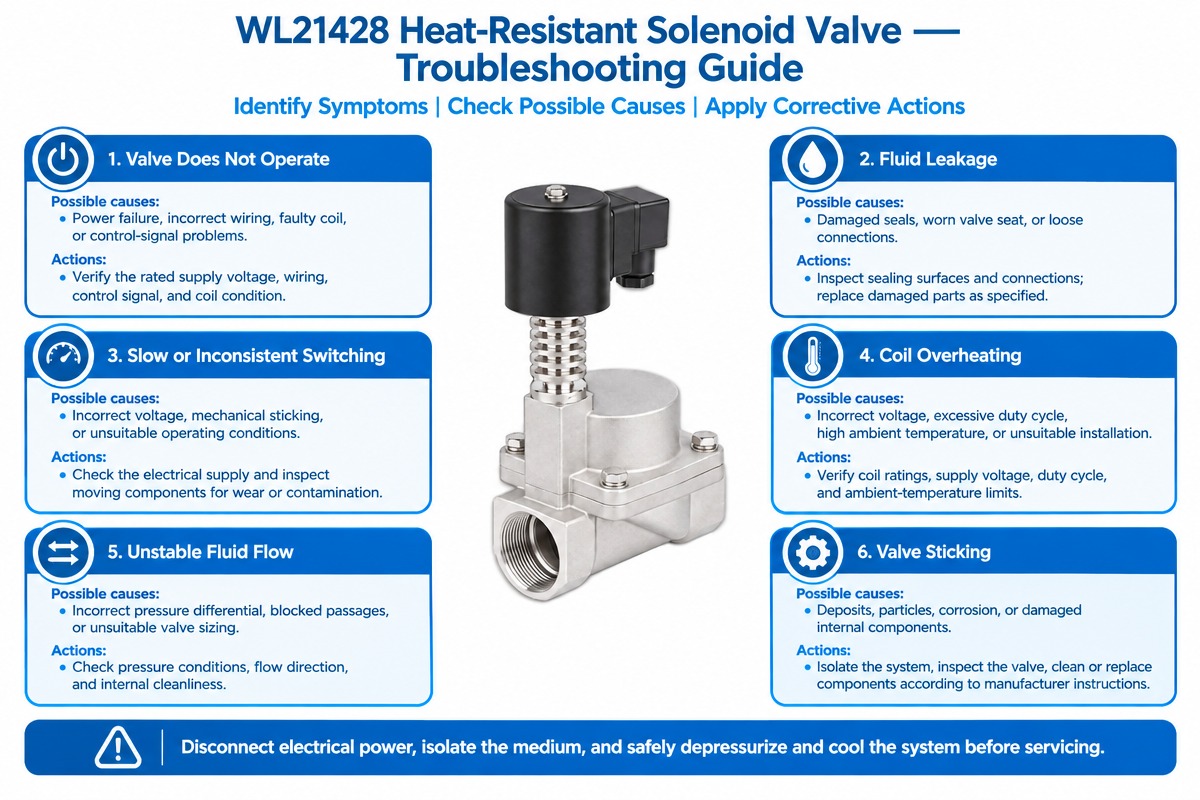
The design of the heat-resistant solenoid valve is much more complicated than just choosing a valve with the high-temperature coil. There are several common mistakes that can result in the valve leakage, overheating, rapid wear, or malfunction.
Ignoring temperature differences: check both media and ambient temperature limits. The heat produced by the other equipment may lead to the overheating of the coil exceeding its limits.
Choosing inappropriate seals: standard elastomers harden, swell, deform or become less elastic at elevated temperature.
Not paying attention to thermal expansion: the materials expand at different rates and clearances, alignment, sealing compression and other dimensions change during heating and cooling.
Underestimating coil insulation: select the coil insulation and winding rated for the expected electrical and thermal conditions. Consider the conditions of the constant energization of the coil rather than short-term tests.
Improper actuation design: decide whether the valve is direct-acting or pilot-operated and confirm its minimum differential pressure. Pilot-operated valve may not work properly under other operating conditions.
Making mistake with flow capacity: calculate the flow and pressure drop, do not just choose a valve by its pipe diameter.
Not checking chemical compatibility: check whether the body, seals, springs, and internal moving parts are compatible with the medium.
Overlooking the electrical protection: choose the appropriate connector, insulation, grounding, and enclosure protection.
Not considering the valve maintenance: think about the deposits, scaling, contamination, seal replacement, and coil accessibility at the design stage.
Skipping validation testing: test leakage, switching response, temperature increase, pressure and endurance.
The thorough design process includes the analysis of the thermal conditions, material selection, electrical engineering, calculation of the flow and valve validation.